REVIEW · SEOUL
Korean Grandma Cooking Class l Gimbap & Kimchi Pancake l Seoul
Book on Viator →Operated by Local Contents Lab · Bookable on Viator
Cooking with Grandma makes Seoul feel personal. In this class, you get a real home visit, a short look around the way people actually live, and a hands-on session where you make gimbap and a kimchi pancake with guidance and family recipes. It is not a factory-kitchen experience.
What I like most is the personal pace and the teacher’s skill. Grandma Sharon is described as patient, and her English is good enough to make the steps clear, even for kids. One thing to consider: you are focused on two signature dishes, so it is best if you want depth and confidence on those, not a huge menu of different foods.
In This Review
- Key Highlights You Can Feel Right Away
- Meeting Grandma Sharon In Her Seoul Home
- Welcome Tea And A Quick Tour That Makes The Cooking Make Sense
- Making Gimbap Like Grandma Teaches It
- Kimchi Pancake: Taste, Then Make It With Grandma’s Method
- Taking Photos And Sharing The Meal After You Cook
- Price And Value: What $52 Buys In A Real Home Setting
- Who This Seoul Cooking Class Fits Best
- Should You Book This Korean Grandma Cooking Class?
- FAQ
- What is the price for the Seoul Korean Grandma Cooking Class?
- How long is the experience?
- Where does the activity start, and does it end there too?
- What time does the class begin?
- What dishes do I cook in the class?
- Is this tour private?
- Will I get a mobile ticket?
- What is the cancellation policy?
Key Highlights You Can Feel Right Away
- A home visit, not a show kitchen: You start with a look inside Grandma’s house and kitchen setup.
- Hands-on gimbap instruction: You make your own gimbap, not just watch.
- Kimchi pancake made with Grandma’s kimchi: You taste her kimchi and turn it into pancake.
- English support that works for families: Communication is clear enough for children (and adults).
- Shared meal at the end: You sit together to eat what you made, then snap a photo with Grandma.
- Private format for your group: Only your group participates, so questions don’t get lost.
Meeting Grandma Sharon In Her Seoul Home
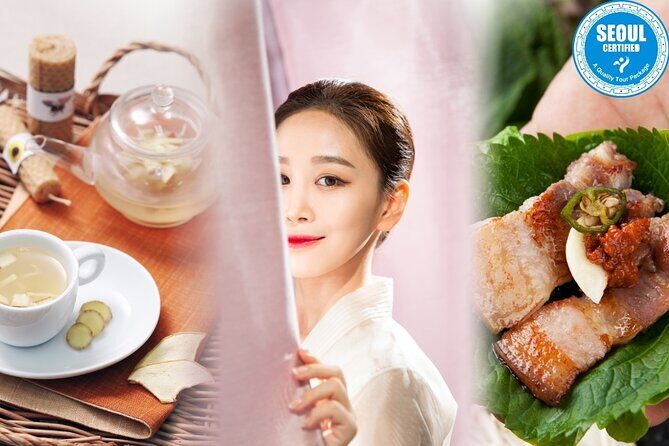
This is the kind of activity that starts before the cooking part. You meet at 메리츠화재연수원92 Ui-dong, Gangbuk-gu, Seoul, and the experience runs about 2 hours 30 minutes. It starts at 11:00 am, and it ends back at the meeting point.
From there, you visit Grandma’s house. The point is not just “see a kitchen.” It is the sense of place: how a Korean home feels, how the kitchen works in daily life, and how people set up cooking space in a way that is practical, lived-in, and familiar. If you’ve only done restaurant meals in Seoul, this gives you a different kind of understanding. You are not learning food theory. You are seeing the home environment that shapes food habits.
The tone is warm and simple. You get a greeting over welcome tea as you settle in. That short pause matters because you are about to work with ingredients and knives and sticky rice—without the usual “rushing class” energy. It’s also where you get oriented and meet your group.
A practical note: the experience is listed as near public transportation, so you’re not locked into a complicated taxi route just to get there. You also get a mobile ticket, so bring your phone and keep it charged.
You can also read our reviews of more cooking classes in Seoul
Welcome Tea And A Quick Tour That Makes The Cooking Make Sense
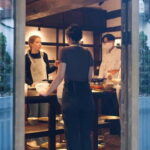
Before you touch ingredients, Grandma guides you through her home. Expect a brief tour that helps you connect what you’re about to learn with how the space is used.
This is one of my favorite parts because it changes how the cooking lesson lands. When you can picture the kitchen setup—counter space, where things are kept, how people move through the room—your brain stops treating recipes like abstract steps. You start thinking like a cook. You also understand that Korean home cooking is built for repetition: making the same dishes regularly, tweaking details, and using familiar methods.
The tour also adds cultural texture without turning the class into a lecture. You may hear stories and insights that explain why things are done a certain way, and you’ll get a sense of family recipes—exactly the kind of “why” that makes the food more meaningful.
Then you switch gears. After the tea and the tour, Grandma teaches the dishes directly. You don’t just get a list of ingredients and instructions you can forget five minutes later. You get a real teaching flow, with time for questions and hands-on practice.
Making Gimbap Like Grandma Teaches It
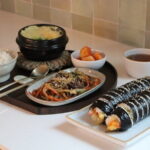
Now for the main event: you make your own gimbap.
In the class, Grandma teaches you how to make gimbap like Korean style. The key word here is yourself. You’re not observing; you’re doing. That matters because gimbap is one of those foods where technique changes everything—how you handle ingredients, how you balance fillings, and how you form the roll so it holds together.
Grandma’s teaching style is part of why this works so well. The class is noted for patience and solid English. That combination is underrated. Cooking with someone who is calm makes it easier to focus on the actual skill. And when the instruction is in clear English, you spend less time guessing and more time learning.
If you’re bringing kids, this part is especially relevant. The experience has been described as a favorite for children around ages 9 and 11. That’s a strong sign that the lesson is approachable and not too chaotic. Gimbap is also well-suited to a hands-on format because you can see your progress in real time. Every step you finish is a step toward something you’ll eat.
What to expect in practice:
- You’ll be guided through gimbap preparation from start to finish.
- You’ll get help as you work, rather than a quick demo and a timer.
- You’ll leave with the satisfaction of rolling something yourself.
Kimchi Pancake: Taste, Then Make It With Grandma’s Method
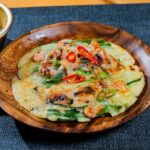
Next up: kimchi pancake, taught with Grandma’s kimchi.
You start by tasting Korean Grandma’s kimchi, then you make pancake with it. This is a smart setup. Instead of treating kimchi as a mystery ingredient, you experience the flavor first. Then you see how it behaves in batter and on the pan. That “taste first, cook second” approach makes the lesson feel practical.
Kimchi pancake is also ideal for a class setting because it’s interactive. You’re actively assembling and cooking, and you get immediate feedback from the texture and aroma. If your first attempt is not perfect, that’s fine—you’re learning technique, not passing a test.
One more benefit: kimchi is intensely personal, shaped by family preferences and routines. Since this experience is built around a grandmother’s family recipes, your pancake tastes like a real home approach, not a generic version designed for tourists. That is the whole point of the format: you’re learning from living practice, not just restaurant plating.
Taking Photos And Sharing The Meal After You Cook
After cooking, you gather around the table to share the dishes you prepared. There is a clear “eat together” moment built into the experience, and it is more than a formality. It’s where the class becomes memorable in a human way.
You can also take a picture with Grandma. That sounds simple, but it fits the structure: you start with tea and conversation, you cook with her guidance, and you end with a shared meal and a photo that captures that connection.
This is where groups tend to love the experience. Private tours can sometimes feel stiff, like you paid for a lesson and that’s it. Here, the social piece is part of the design. You talk, you taste, you compare what you made, and you get a calmer ending than the usual “run to the next stop” rhythm.
For families, this ending can be especially rewarding. Kids don’t always remember lectures, but they remember what they made and ate. And when the teacher is patient and the communication is clear, kids feel comfortable staying engaged.
You can also read our reviews of more tours and experiences in Seoul


Price And Value: What $52 Buys In A Real Home Setting
At $52 per person for about 2.5 hours, this isn’t a bargain in the “cheap snack tour” sense. It’s priced like a real teaching experience—because it is. You are paying for:
- a home visit and tour,
- welcome tea and conversation,
- hands-on cooking instruction,
- cooking ingredients and a shared meal.
The value gets better when you think about what you get that commercial classes often can’t recreate. A cooking class in a rented studio can teach techniques, but it can’t give you that living-home context. Here, the cooking happens inside a real home atmosphere, with family recipe storytelling and a personal teaching pace.
It’s also important that the experience is private for your group. That tends to help with attention and questions. Even if you’re just two or three people, you’re not stuck watching a crowded room where the teacher’s time gets diluted.
One more clue: the class is booked far in advance on average. That usually signals steady demand and a consistent experience. If you want this at a specific time, plan ahead rather than assuming you can grab it last minute.
My practical advice: think of this as a “cultural meal lesson” rather than a generic cooking activity. If you want to eat Korean food, you can do that anywhere. If you want to learn how one grandmother’s family cooks—and then eat it—you’ll feel the value quickly.
Who This Seoul Cooking Class Fits Best
This is a strong match if you want an authentic, personal experience in Seoul without jumping through a complicated schedule.
Best fit:
- Families who want something hands-on that can include kids comfortably.
- Groups who like small-scale cultural activities and conversation.
- Food lovers who want practical confidence with gimbap and kimchi pancake.
- Travelers who prefer learning from stories and home routines instead of formal classroom lectures.
You might want to look elsewhere if:
- You’re hoping for a large variety of Korean dishes in one session. This class focuses on two specific favorites.
- You want a super fast “cook in 30 minutes, then move on” kind of activity.
The overall format—tea first, home tour, cook together, then share the meal—creates a smooth flow. It feels less like a structured lesson and more like being welcomed into someone’s kitchen for an afternoon.
Should You Book This Korean Grandma Cooking Class?

If you like the idea of cooking in a real home and learning from Grandma Sharon’s patient, clear teaching style, this is an easy yes. The “hands-on + shared meal + photo” structure makes it memorable, especially for families and groups. You’ll come away with two dishes you actually made yourself: gimbap and kimchi pancake.
Here’s my quick decision rule:
- Book it if you want a personal, calm cooking experience that prioritizes learning and connection.
- Skip it if your top priority is covering lots of different dishes in one go.
FAQ
What is the price for the Seoul Korean Grandma Cooking Class?
It costs $52.00 per person.
How long is the experience?
The duration is about 2 hours 30 minutes.
Where does the activity start, and does it end there too?
It starts at 메리츠화재연수원92 Ui-dong, Gangbuk-gu, Seoul, South Korea, and it ends back at the same meeting point.
What time does the class begin?
The start time is 11:00 am.
What dishes do I cook in the class?
You will make gimbap and kimchi pancake, with kimchi included in the pancake.
Is this tour private?
Yes. It is a private tour/activity, and only your group will participate.
Will I get a mobile ticket?
Yes, the experience uses a mobile ticket.
What is the cancellation policy?
You can cancel for free up to 24 hours in advance for a full refund. If you cancel less than 24 hours before the start time, you won’t get a refund. If the minimum traveler requirement isn’t met, the experience may be canceled and you’ll be offered a different date/experience or a full refund.