REVIEW · SEOUL
Seoul: 4-Hour Guided Tour to Palace, Bukchon, Jogyesa Temple
Book on GetYourGuide →Operated by Paul Koo · Bookable on GetYourGuide
Seoul reads like architecture. This 4-hour private tour uses that idea to connect palaces, neighborhoods, and temples into one story, with Confucian thinking as the guiding thread. You get a clear route, a live guide, and enough time in each place to actually look instead of just walk past.
I especially like how Gyeongbokgung is explained as more than a pretty set of buildings. It is framed as a real Joseon-era statement of order and values, which makes the details feel purposeful, not decorative. And I also like the way Bukchon’s hanok village is treated like a living viewpoint, where traditional homes sit with the modern skyline in the background.
One thing to plan around: the tour price includes the guide fee, but palace/attraction admission, transportation, and food are not included, so your final cost will depend on what tickets you choose. Also, it is only 4 hours, so if you want long shopping breaks or long museum time, you may feel a bit rushed.
In This Review
- Key things you will notice right away
- Where the tour starts: Gwanghwamun Square and the easiest way to get oriented
- Gyeongbokgung Palace: Confucian architecture you can actually read
- The National Folk Museum: how ordinary people lived in the Joseon era
- Bukchon Hanok Maeul: hanoks, skyline views, and the joy of seeing layers
- Jogyesa Temple: Buddhism’s headquarters in the middle of the city
- Insadong stop: where traditional culture meets street life
- Bongeunsa Temple: an older spiritual stop with modern surroundings
- Price and value: $152 per private group and what that includes
- Who should book this tour (and who might not love it)
- Should you book this Seoul Palace, Bukchon, and Jogyesa tour?
- FAQ
- FAQ
- Where does the tour start?
- Is this tour private?
- What language is the guide?
- How long is the tour?
- What’s included in the price?
- What is not included?
- Which sites are included in the tour?
- What’s the cancellation policy?
- Can I reserve without paying right away?
Key things you will notice right away
- Confucianism as the lens: the guide ties what you see to Joseon values and how palaces were designed.
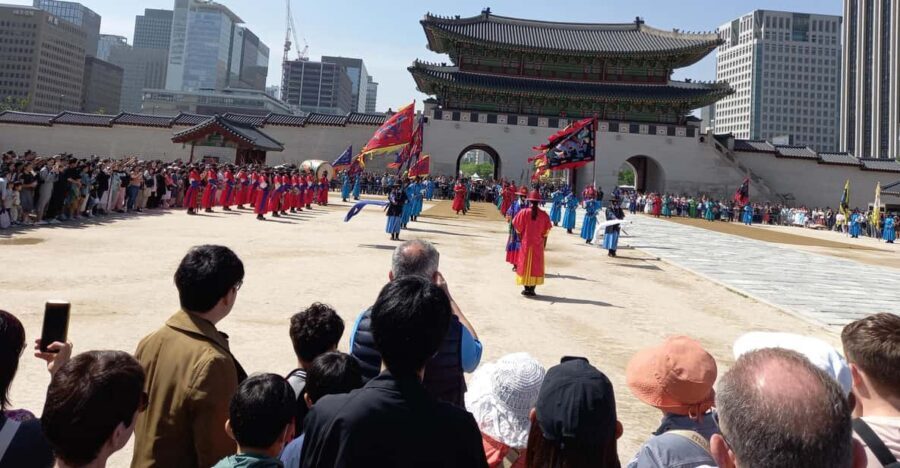
- Gyeongbokgung time gets protected: you spend over two hours there, not a token stop.
- National Folk Museum shows everyday lives in Joseon, from birth through illness and death.
- Bukchon views are the point: hanoks plus skyscrapers and N Seoul tower in the distance.
- Jogyesa is Buddhism’s headquarters in Seoul, even if the temple itself feels compact.
- Photo-friendly guidance: the guide shares where to stand for angles before you start snapping.
Where the tour starts: Gwanghwamun Square and the easiest way to get oriented
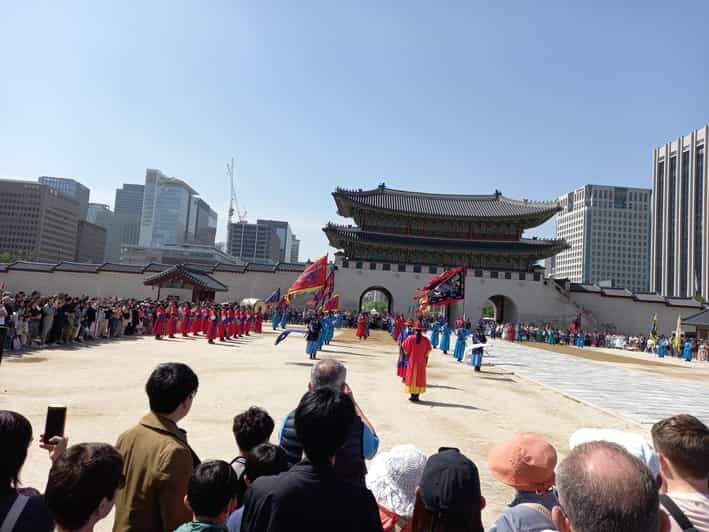
Meeting at Gwanghwamun Square is practical, because it is one of Seoul’s main “navigation anchors.” You do not have to figure out the city first and then chase a moving schedule. If you prefer, the meeting time and place can be chosen after booking, and you can even meet at your hotel.
Because the tour is private (up to 2 people per group), the pace can fit your rhythm. If you ask questions, you get answers. If you need a quick pause for photos, that is usually easier to do than in a large group.
You can also read our reviews of more guided tours in Seoul

Gyeongbokgung Palace: Confucian architecture you can actually read
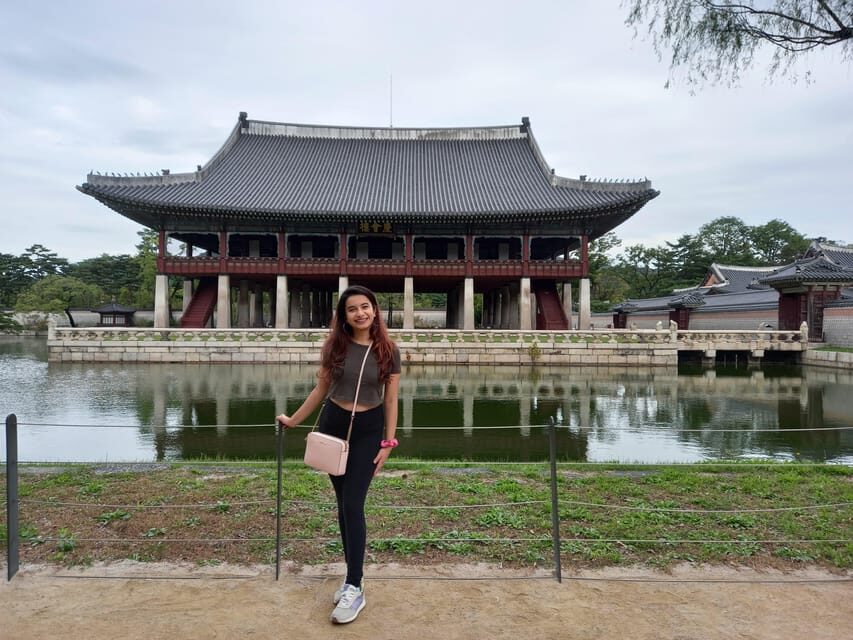
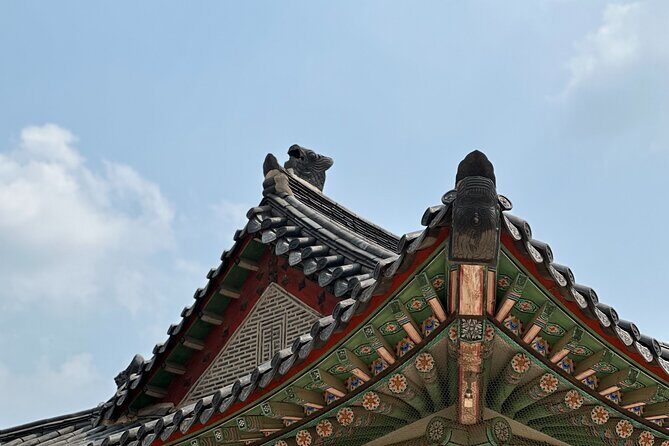
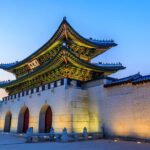
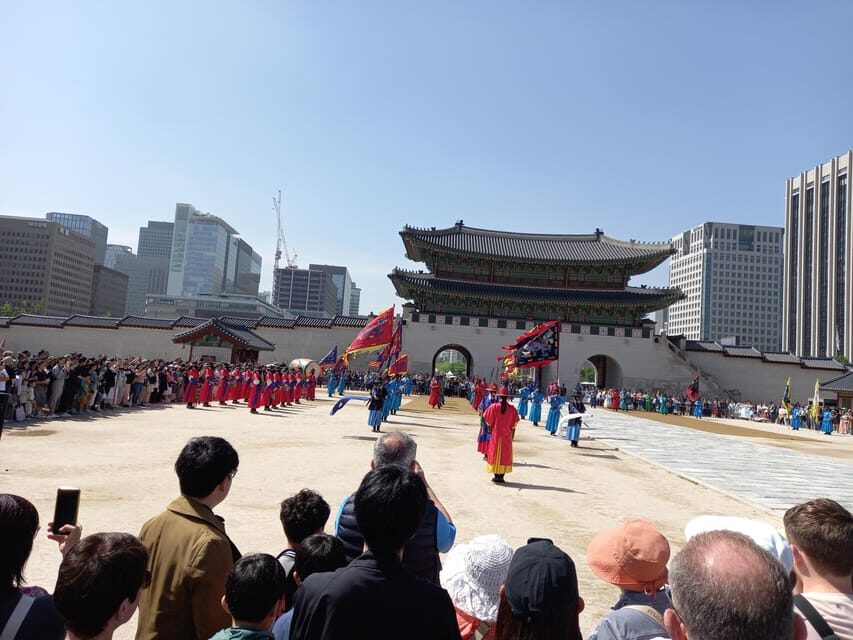
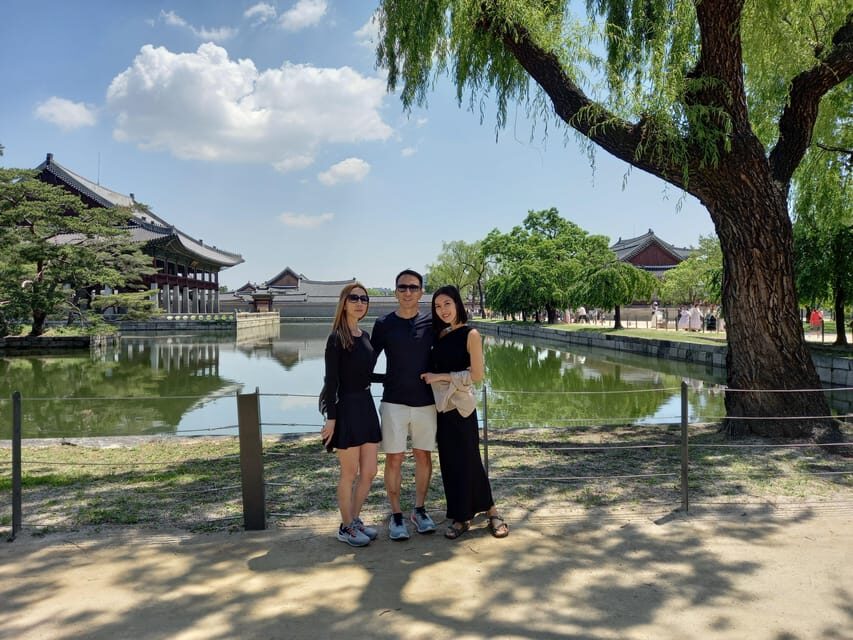
This is the centerpiece for a reason. Gyeongbokgung Palace is described as the most beautiful and must-see palace in Korea, built in 1395 as the main palace of the Joseon Dynasty. The key value here is how it is positioned in the tour: not as a generic royal complex, but as an architectural expression of Joseon ideology.
Here is how that changes your visit. If you understand the purpose of a space, doors and halls stop looking random. You start noticing symmetry, hierarchy, and the logic behind the layout. The guide’s Confucian framework is the difference between seeing buildings and understanding what those buildings were trying to communicate.
A few details are worth keeping in mind while you’re there:
- It is the largest and most magnificent palace of its kind.
- It is noted as the only palace built on flat land and still follows the authentic Confucian palace structure.
- It is tied directly to the national ideological identity of Joseon, with Confucianism treated as Korea’s cultural spine.
Two-plus hours at the palace means you can slow down. You can look at gates, courtyards, and the feel of the grounds without watching the clock every ten minutes. And since the tour is architecture-focused, you are not just collecting photos. You are learning what the building language is saying.
Practical tip: wear shoes you can stand in comfortably. Even with guidance, palace walking adds up fast.
The National Folk Museum: how ordinary people lived in the Joseon era
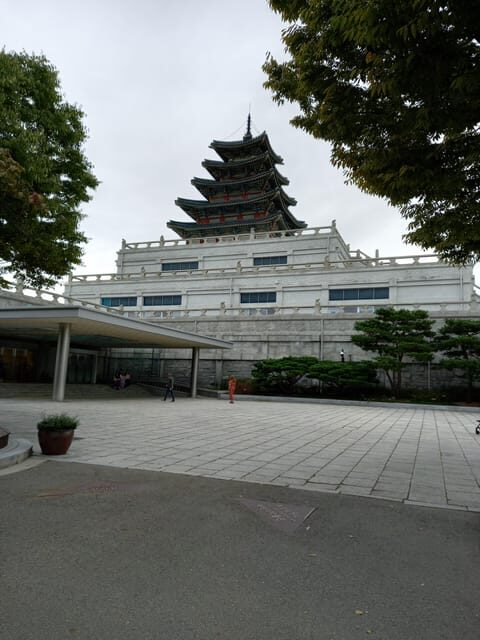
After the palace, the mood shifts from royal ideology to everyday reality at the National Folk Museum of Korea. This stop is shorter (about 30 minutes), so the best use of your time is listening for the storyline the exhibits are building.
What makes the museum feel different from many quick museum stops is the focus on common people’s life and seasonal activities. The museum approach covers a full life arc: growth, marriage, aging, illness and treatment, and even death. It also highlights ceremonial and commemorational rituals and events, so you see culture as practiced, not just imagined.
If you only connect Korea’s traditional culture to palaces, you miss how traditions were carried by normal people. This museum fills that gap. It gives you context for what the palace might have represented in daily life: the values, the rituals, and the rhythms behind the big official structures.
Because the stop is time-limited, you will likely get the most out of it by asking the guide what details matter most for understanding Joseon society. That is where a live docent earns its fee.
Bukchon Hanok Maeul: hanoks, skyline views, and the joy of seeing layers
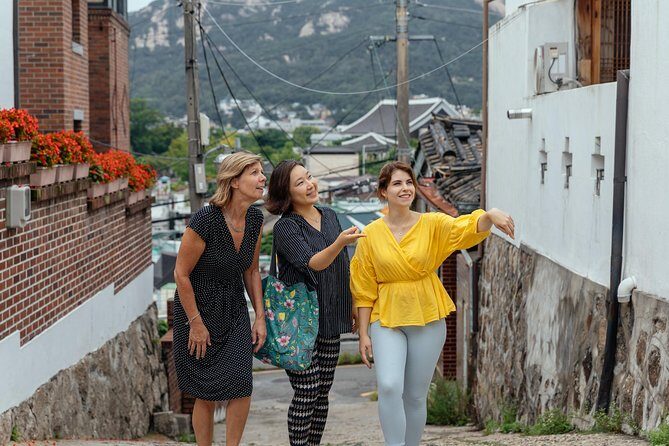
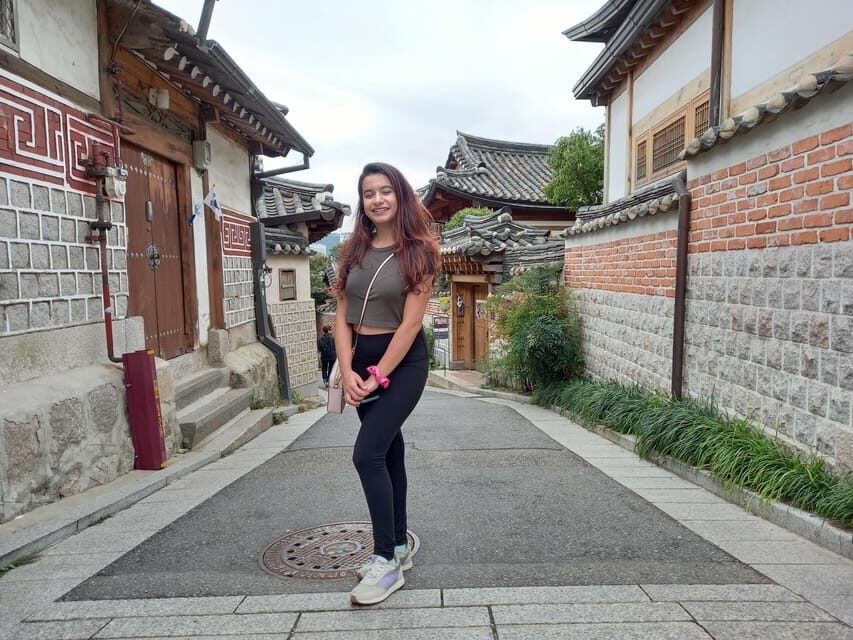
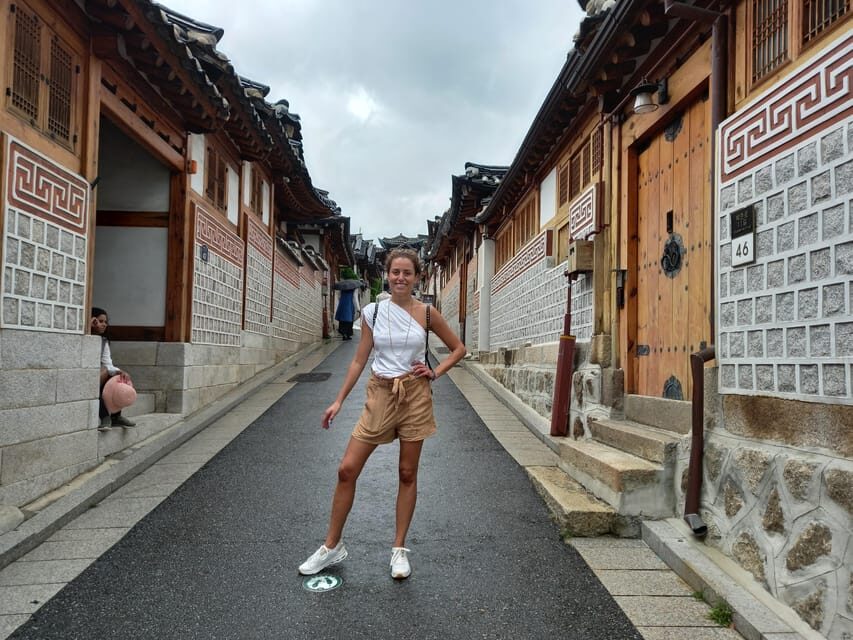
Next comes one of Seoul’s most satisfying visual contrasts: Bukchon Hanok Village (Hanok Maeul). The guide’s treatment of Bukchon is practical and scenic at the same time. You are not just walking through a pretty neighborhood. You are viewing how traditional housing fits into a modern city.
Bukchon is described as having a long history and a large cluster of about 1,000 hanoks. That scale matters because it changes the feel from “a few photo spots” to an actual historic district with depth.
The tour also leans into the view: traditional roofs and streets in the foreground, while metropolitan skyscrapers and the N Seoul tower show up in the background. That layering is one of the reasons this stop works well early or mid-tour. Your brain starts connecting time periods, instead of treating each place as a separate postcard.
This stop runs about 40 minutes in the guided flow. That is enough time to:
- Walk through the hanok streets,
- Pause for a few angles,
- And still get moving to the next site without feeling like you are stuck.
And based on what the guide is known for, you should expect help finding good places to stand for photos. One review specifically mentioned the guide knowing the best spot and angle, and it fits the tour style: instead of random snapshots, you get intentional framing.
Practical tip: if you want the best views, avoid expecting wide open viewpoints everywhere. Bukchon’s charm is narrow streets and changing angles. Look for small clearings and higher ground as you walk.
Jogyesa Temple: Buddhism’s headquarters in the middle of the city
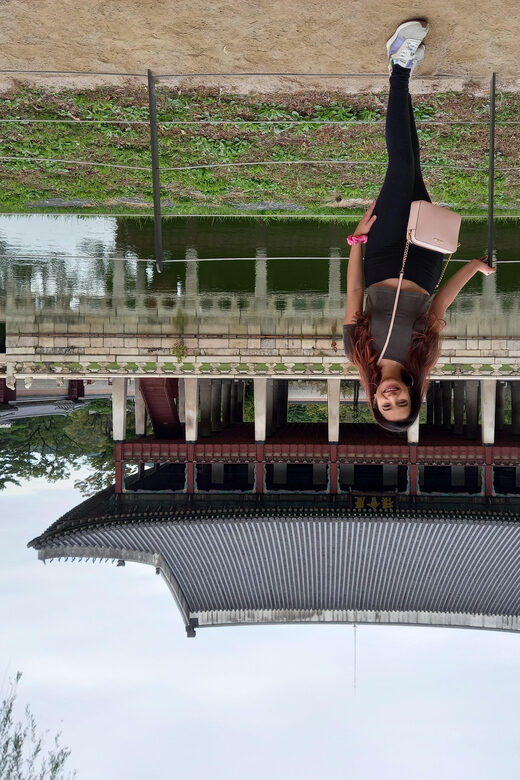
Then you hit a quieter kind of Seoul: Jogyesa Temple. Even if the temple itself is described as small, it has major significance. Jogyesa is identified as the headquarter of Korean Buddhism, built in 1926 in Insadong, and located adjacent to Gyeongbokgung.
That adjacency is the point. Many temples feel removed from city life. Jogyesa is the opposite. It teaches you how spiritual life and everyday urban Seoul coexist in the same area. In a tour that is already about Confucian culture and Joseon architecture, this is a useful counterpoint: you see another system of values taking physical form in the city.
While you’re there, try to notice how the tour’s “architecture matters” theme still applies. Even in a smaller temple setting, space, placement, and approach paths shape the experience. If your guide explains what Jogyesa represents institutionally as Buddhism’s headquarters, it makes the visit feel more grounded and less like a background attraction.
Insadong stop: where traditional culture meets street life
After the temple, the route includes Insadong with about a 30-minute guided walk. Insadong is where the tour’s traditional-modern theme turns into street-level browsing. It is the kind of place where you can learn how Korean heritage shows up in daily surroundings: craft shops, traditional-style storefronts, and the vibe of a neighborhood known for culture.
This part of the tour is shorter, so think of it as orientation plus a taste—not a full shopping marathon. If you want souvenirs or small gifts, you have time to pick one or two things. If you want a coffee break, plan it quickly so you do not end up skipping the final timing.
Practical tip: if shopping is high on your list, bring small bills and keep decisions simple. This is a good place for a targeted purchase, not endless comparison.
Bongeunsa Temple: an older spiritual stop with modern surroundings
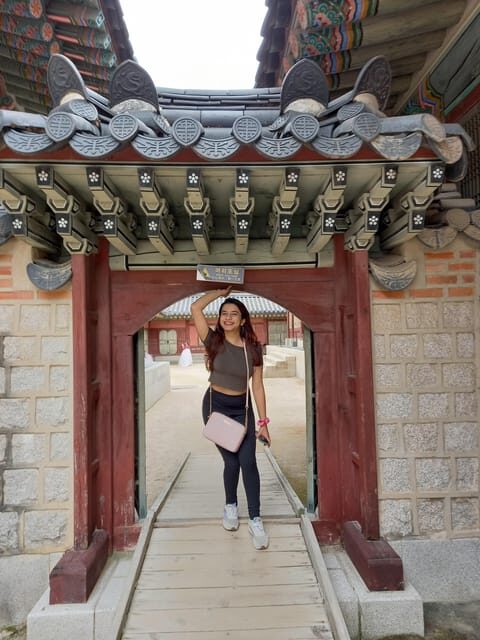
The highlights also mention Bongeunsa Buddhist Temple, which adds another layer to the religion-and-architecture theme. Even without a long explanation time listed for it, its role in the tour matters: it provides comparison.
You leave palaces (Confucian Joseon ideology), move into daily-life exhibits (Joseon common culture), then into a living urban Buddhism center (Jogyesa). Bongeunsa fits as a final reminder that Seoul’s spiritual architecture is not one-size-fits-all. Different temples can feel different in approach, atmosphere, and how they interact with the surrounding city.
If you like seeing contrasts more than repeating the same type of landmark, this inclusion is a win.
Price and value: $152 per private group and what that includes
At $152 per group (up to 2) for a 4-hour private English tour, the price can feel fair once you look at what is included and what is not.
Included:
- A live guide for 4 hours with guided information (this is the real core value)
Not included:
- Admission fees for palaces/attractions (you will need tickets you choose),
- Transportation between places,
- Food and drinks,
- Insurance.
So what are you truly paying for? You are paying for interpretation. This tour is built around architecture and cultural identity, and the guide’s specific angle is Confucianism. That framing is what turns a palace visit into a story you can retell, and it also makes a museum stop about everyday life feel connected rather than random.
It also pays off because it is private. You are not waiting for a group pace, and you can ask your questions. In the reviews, the guide (Paul Koo) is repeatedly described as clear and thoughtful, and one review noted that he takes time to share where to stand for pictures. That kind of help can save you time and help you see more, even when you are only on a tight 4-hour schedule.
Quick budgeting thought: if you want the smoothest experience, set aside a bit extra for palace admission and any other ticketed entries. Otherwise, you might reach a key site and need to pause for money and decision-making.
Who should book this tour (and who might not love it)
This tour is a strong fit if you:
- Want a guided explanation that connects architecture to cultural identity,
- Care about how traditions show up in both big buildings and everyday life,
- Enjoy structured sightseeing where time in each major site is planned,
- Prefer a private group and English live guidance.
It may be less ideal if you:
- Want a long, slow museum day with lots of independent browsing time,
- Plan to spend a lot of the 4 hours shopping and eating with zero hurry,
- Dislike tours where interpretation is a major part of the experience (since this one is built around reading what you see).
Should you book this Seoul Palace, Bukchon, and Jogyesa tour?
If your goal is to understand Seoul’s traditional identity instead of just collecting highlights, I think it’s a smart choice. The combination of Gyeongbokgung, the National Folk Museum, and a key temple like Jogyesa gives you three angles on culture: ideology, daily life, and religion. Then Insadong adds a practical “what it feels like now” layer.
I also like the guide-specific angle: Paul Koo’s approach is repeatedly described as engaging and detailed, especially through Confucianism. That matters because without that kind of explanation, palaces can turn into a blur of impressive scenery. With it, you get a clearer sense of why spaces were built the way they were, and you walk away with more than photos.
If you are okay budgeting for admissions and you want a tight, high-impact 4 hours, this is a book-worthy tour.
FAQ
FAQ
Where does the tour start?
The default meeting point is Gwanghwamun Square, but you can choose the meeting place and time after booking. Meeting at your hotel is also possible.
Is this tour private?
Yes. It is listed as a private group tour, and the pricing is per group up to 2 people.
What language is the guide?
The tour includes a live English guide.
How long is the tour?
The duration is 4 hours.
What’s included in the price?
The price includes the guide fee for 4 hours with guide information.
What is not included?
Palace/attraction admission fees, transportation, food and beverage, and insurance are not included.
Which sites are included in the tour?
The tour focuses on Gyeongbokgung Palace, Bukchon Hanok Village, and Jogyesa Temple, with additional time at the National Folk Museum of Korea and Insadong, plus the highlights mention Bongeunsa Buddhist Temple.
What’s the cancellation policy?
There is free cancellation up to 24 hours in advance for a full refund.
Can I reserve without paying right away?
Yes. It offers reserve now & pay later, so you can book while keeping your plans flexible.