REVIEW · SEOUL
Seoul: Korean Cooking Class at a Local Home and Market Tour
Book on GetYourGuide →Operated by HELLO K COOKING · Bookable on GetYourGuide
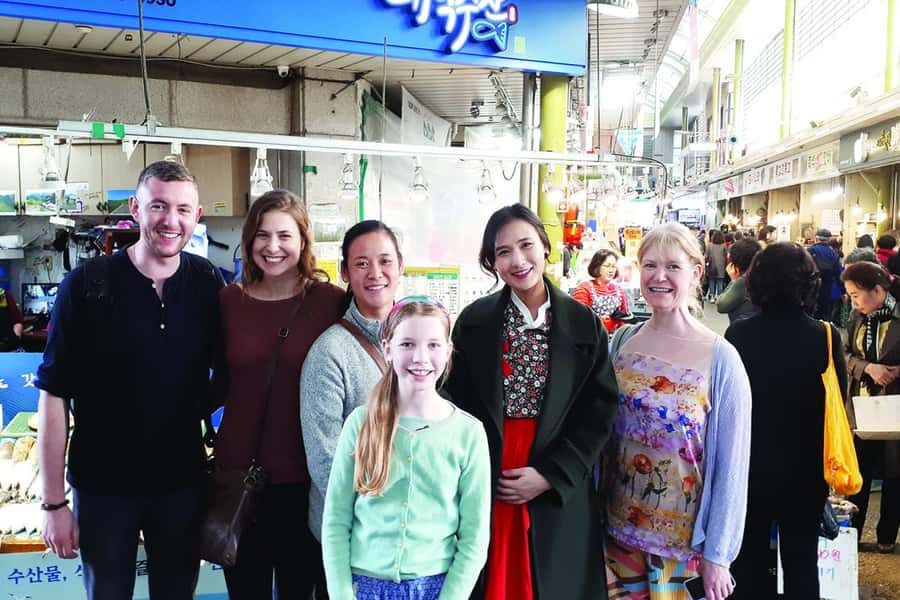
A market, a home kitchen, and real Korean skills. I love how this class pairs a neighborhood market walk with hands-on cooking, so you see ingredients up close and understand what matters before you touch a knife. You also get guided tasting of street food samples, which makes the whole experience feel like learning real life food, not just following steps.
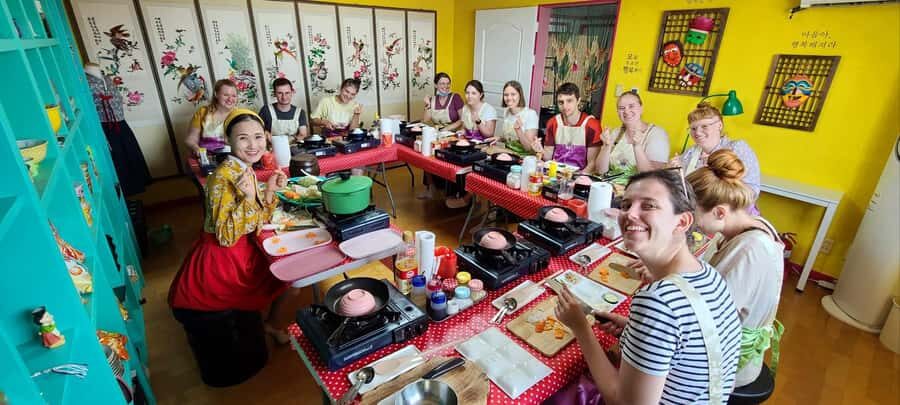
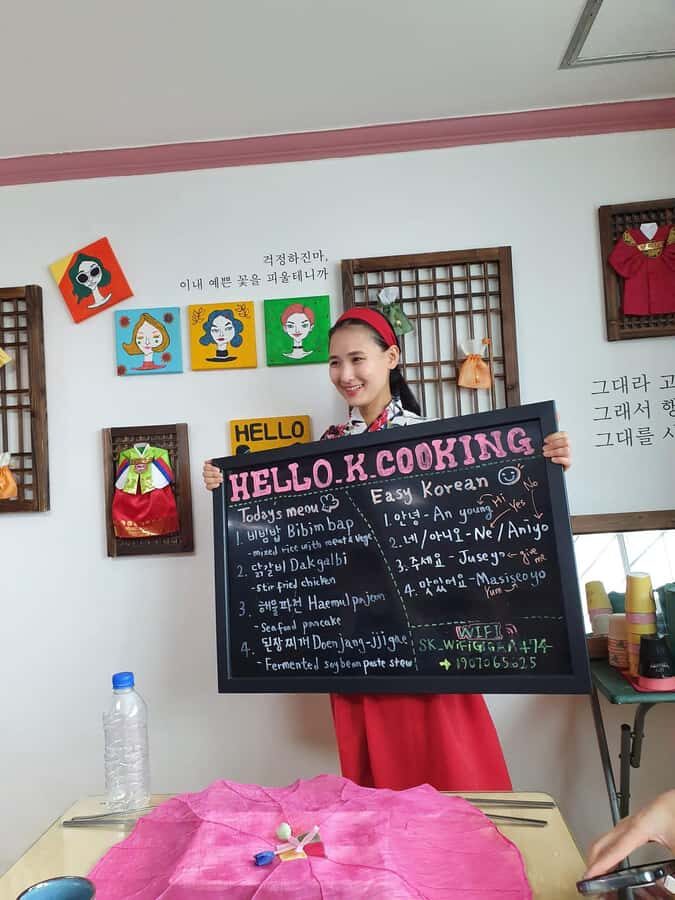
What I like most is the mix of cooking and eating together. You’ll make Bibimbap, Dakgalbi, Haemul-Pajeon, and Doenjang-Jjigae, then sit down to a proper Korean course meal style dinner with more than 10 side dishes (plus seasonal fruit and rice wine). One consideration: there’s no elevator to reach the home kitchen, so be ready for stairs.
In This Review
- Key highlights you’ll feel right away
- Mangwon market shopping: where your ingredients start telling the story
- Getting from the station to the local home kitchen
- The four dishes you’ll make (and why this lineup is a smart mix)
- Bibimbap: the mixed-rice lesson
- Dakgalbi: stir-fry with character
- Haemul-Pajeon: pancake technique and teamwork
- Doenjang-jjigae: fermented soybean paste stew
- Welcome tea, Korean phrases, and the Tal mask cultural moment
- Hanjeongsik dinner: why side dishes matter more than the main dish
- Price and value: what $98 buys you in real terms
- Who should book this class, and who might feel less at home
- Should you book? My practical take
- FAQ
- What is the duration of the Seoul Korean cooking class?
- Where do I meet the guide?
- What dishes will I cook?
- Is hotel pickup and drop-off included?
- What’s included in the meal and drinks?
- Is the venue accessible by elevator?
Key highlights you’ll feel right away
- Mangwon Station start: meet outside Exit 2, then head straight into local food mode
- Small group setup: limited to 10 participants, so you get real help while cooking
- Market tastings: you’ll taste street food and learn what to look for while shopping
- Cook 4 main dishes: Bibimbap, Dakgalbi, Haemul-Pajeon, and Doenjang-Jjigae
- Hanjeongsik course meal: a meal with 10+ side dishes, seasonal fruit, and rice wine
- Tal mask time: you can try on the artful mask worn at many Korean heritage festivals
Mangwon market shopping: where your ingredients start telling the story
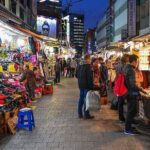
The experience kicks off with a walk through a traditional Seoul market where you shop for the ingredients you’ll cook later. It’s described as a popular market, but it’s still less touristy than the big name areas, which matters. When the stall owners and shoppers feel like part of daily routine, you pick up context that no recipe card can give you.
During the market portion, your chef-guide helps you notice things you might otherwise skip: the look of fresh produce, the way ingredients are grouped, and what’s commonly used for Korean home cooking. You also get street food samples, which is a smart move. You’re not just buying food. You’re learning how it tastes so your expectations line up before you cook.
This is also where the language bit starts to click. You’ll get a chance to learn a few Korean phrases, and it’s the kind of practice that actually sticks because you’re using it right in the environment where people shop and snack. Even if you only remember a couple of phrases, it turns the market into something you can interact with, not just pass through.
One more practical note: because you’re walking and eating, plan on light, comfortable clothing and shoes. This is a food-focused tour, but it still moves at a neighborhood pace.
You can also read our reviews of more shopping tours in Seoul
Getting from the station to the local home kitchen
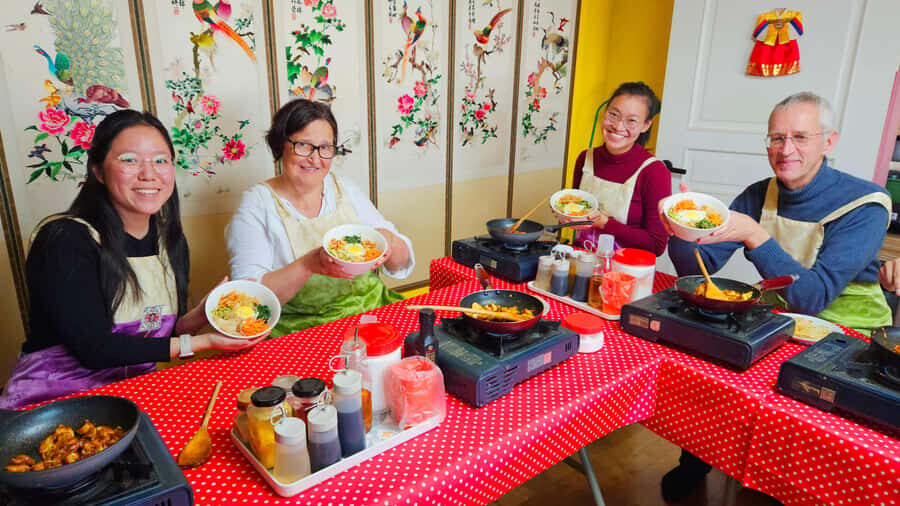
You’ll meet your guide at Mangwon Station, Exit 2 (outside). That’s the anchor point that keeps things simple. There’s no hotel pickup or drop-off, so you’ll want to build in a little buffer time to get to the station smoothly.
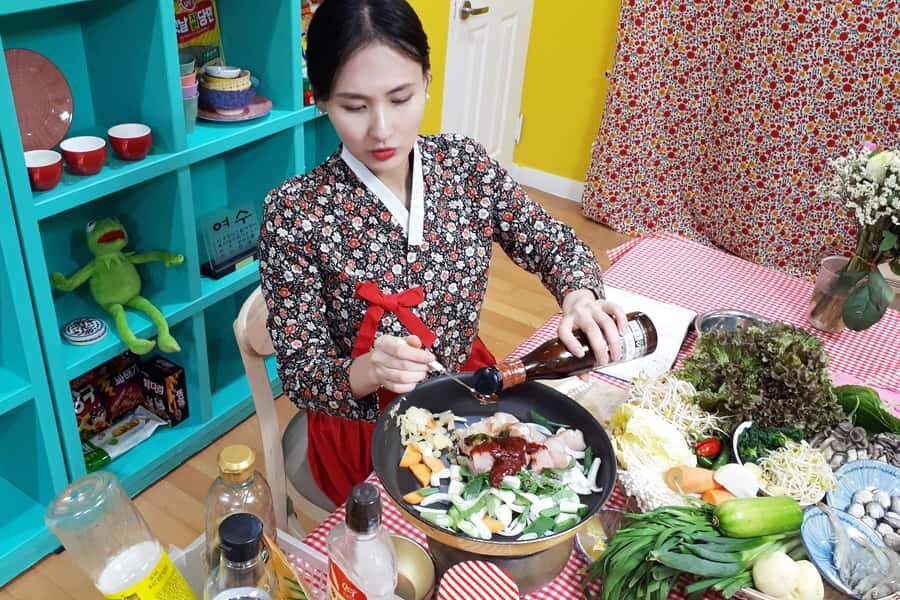
From there, you go to the cooking venue, which is a local home. This is where the tour earns its hands-on feel. Cooking in a home kitchen, not a commercial studio, changes the vibe immediately. You’ll be standing where Korean cooks stand, working at the kind of practical setup where real dinners happen.
The one downside to know before you go is right in the tour info: there’s no elevator to reach the home level. If you have mobility concerns, this matters more than you might expect, especially while carrying bags or dealing with a busy schedule. Wear shoes that handle stairs well, and keep your group together so you don’t lose time.
And yes, you’ll likely get a few photo moments. The experience includes photo and video service, so you’re not stuck with only your phone camera trying to capture everything while also cooking.
The four dishes you’ll make (and why this lineup is a smart mix)
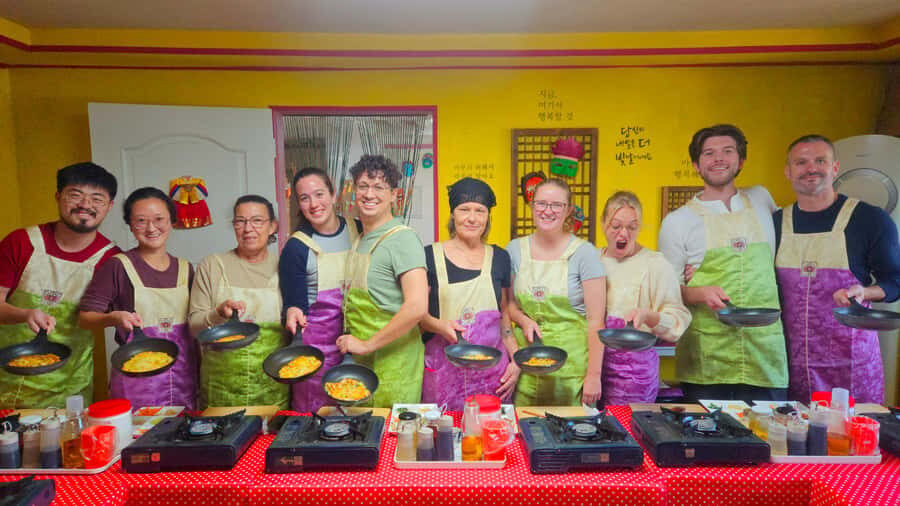
The class focuses on four Korean main dishes, with an experienced native chef-guide helping you step through technique and timing. The menu isn’t random. It gives you variety in flavor and texture, so when you cook at home later, you can recreate a more complete Korean meal.
Bibimbap: the mixed-rice lesson
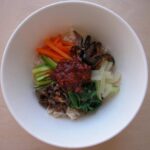
You’ll make Bibimbap, which is mixed rice topped with meat and vegetables. The value here isn’t only learning how to cook components. It’s learning the overall logic: how different ingredients work together in one bowl so every bite has balance. Bibimbap is also beginner-friendly compared with dishes that require long simmering or tricky shaping.
Practical takeaway for you: once you understand how toppings combine, you can mix and match vegetables and proteins at home instead of feeling locked into one exact version.
Dakgalbi: stir-fry with character
Next up is Dakgalbi, a stir-fried chicken dish. This teaches heat control and how sauce interacts with ingredients as they cook down. Stir-fry cooking rewards attention, and that’s exactly what a small group class is good for: you can ask, adjust, and keep moving.
If you like food that smells like it’s been cooking for hours but doesn’t take hours, this is your dish.
You can also read our reviews of more tours and experiences in Seoul



Haemul-Pajeon: pancake technique and teamwork
You’ll cook Haemul-Pajeon, a seafood and green onion pancake. Pancakes can look simple, but getting the texture right is the difference between good and great. This dish also makes sense for a group class because it naturally leads to hands-on coaching and shared laughs when something gets slightly more dramatic than planned.
Practical takeaway for you: learn the batter-to-pan rhythm, plus how to judge doneness by sight and sound rather than only by time.
Doenjang-jjigae: fermented soybean paste stew
Finally, you’ll make Doenjang-jjigae, a fermented soybean paste stew. This rounds out the meal because it’s comforting, savory, and built for spooning alongside rice and side dishes. If you’ve never worked with soybean paste flavors before, this is a great introduction. You see how it thickens, how it flavors the broth, and how it fits into a full table setting.
Practical takeaway for you: this is the stew you can recreate in smaller portions later, especially if you like meals that taste better as they sit.
Welcome tea, Korean phrases, and the Tal mask cultural moment
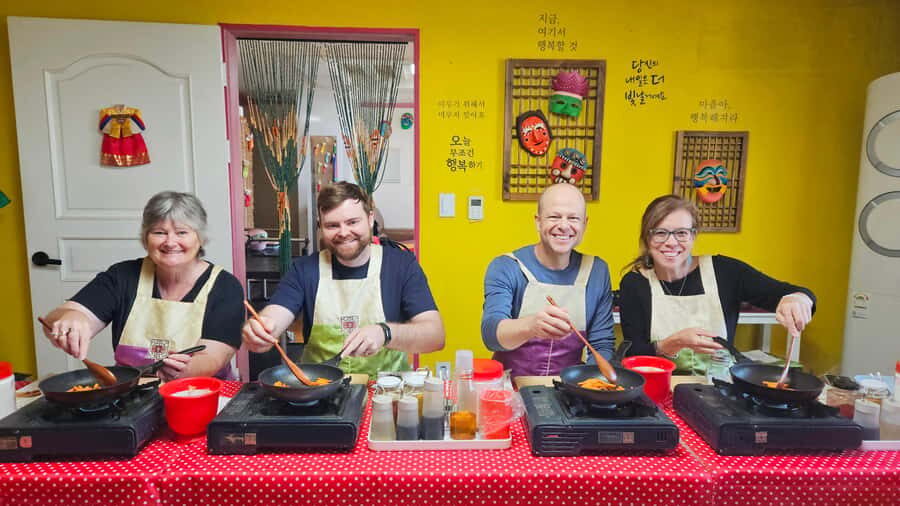
Before the cooking really starts, there’s a welcome moment at the venue. You’ll sip welcome tea while your guide gets you ready for what’s next. It’s a small detail, but it helps transition from market walking to kitchen work without feeling rushed.
You’ll also learn a few Korean phrases. The exact phrases aren’t listed, so don’t expect a full language lesson. Instead, treat it like a toolkit for real situations: greetings, simple requests, and food-related words that make the market feel more human.
Then comes the fun cultural stop: trying on a Tal mask, an artful mask worn at many Korean heritage festivals. This isn’t a museum lecture. It’s a hands-on photo-able activity that gives you a visual piece of Korean folk culture to take home in your memory (and in your pictures).
If you’re the type who likes your cultural experiences to be active, not just observed, this part lands well. It also breaks up the class rhythm so you don’t feel stuck in cooking mode the entire time.
Hanjeongsik dinner: why side dishes matter more than the main dish
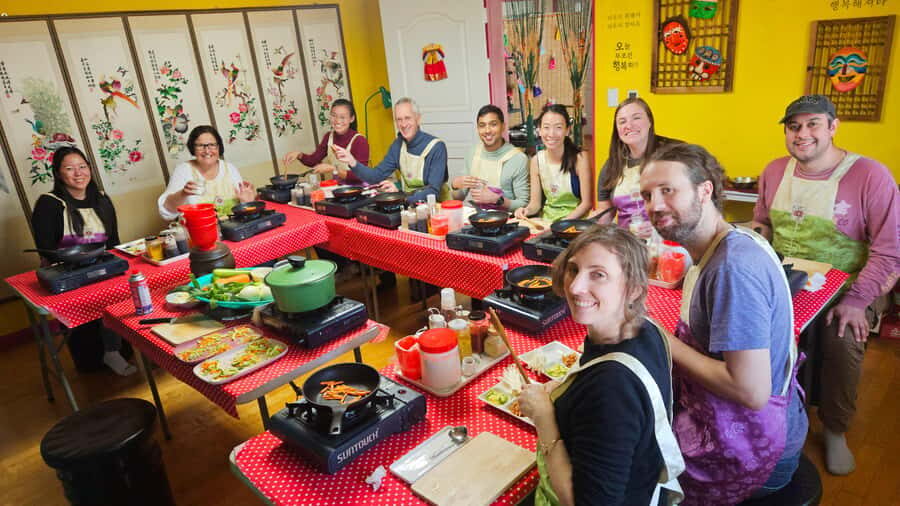
After you cook, you sit down to eat. This is where Korean meal style becomes the star: Hanjeongsik, a traditional course meal format with more than 10 side dishes, plus seasonal fruit and rice wine.
This matters because side dishes aren’t just extras. They change how the meal feels. One bowl of rice or one plate of stew can be satisfying, but the range of small dishes gives you contrast in flavor and temperature. It’s also practical: it lets you taste more, and it teaches you how Korean meals balance savory, fresh, pickled, and cooked flavors.
In this class, you’re eating the results of your cooking alongside the host’s spread. The side dishes are provided, and that removes the hardest part for beginners: you don’t need to know every element to understand how the meal should work.
This is also where you see a chef-guide’s thinking in action. Even if you only catch bits of explanation, the structure shows you what a complete Korean table looks like. It’s the difference between cooking a dish and learning how to host a meal.
And yes, you’ll drink rice wine with your dinner, plus water is included. From the review snippets, some people also mention tastings like makgeolli, which suggests the class may offer drink moments that vary by host and batch. Either way, the meal is meant to be social and relaxed, not just a final exam.
Price and value: what $98 buys you in real terms
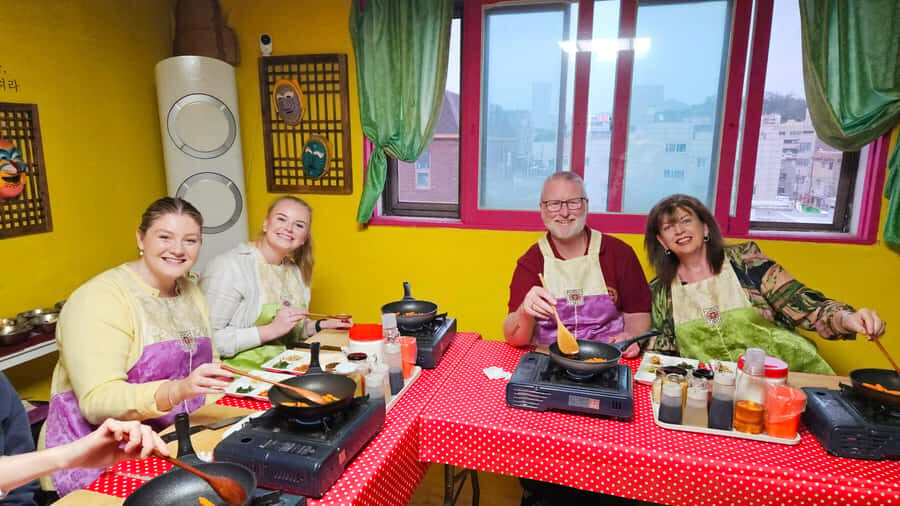
At $98 per person for a 3.5-hour experience, you’re paying for more than recipes. You’re paying for a guided market shopping trip, ingredient selection, hands-on cooking coaching, tastings, and a full meal setup with multiple side dishes.
Here’s what you actually get included:
- Market tour
- Cooking class with a professional chef
- Ingredients and equipment
- Street food samples
- Welcome tea
- Meals with side dishes
- Rice wine and water
- Photo and video service
- Recipes
For many visitors, the “recipe-only” classes feel underwhelming because they skip the ingredient education and the food context. This class includes the lead-in you need: market learning first, cooking second, and a proper course meal to anchor it all. That’s why it gets consistently high marks.
The class is also set up as a small group (up to 10). That’s a value point because it improves the instructor-to-student ratio. You’re more likely to get help when you’re cooking, not only during the lecture parts.
The only thing you should remember is that you’re responsible for your own way to and from the meeting point. If you’re relying on taxis or subway transfers, factor that time into your plan.
Who should book this class, and who might feel less at home
This is a strong fit if you:
- Want to learn Korean cooking skills you can reuse at home
- Enjoy markets and want ingredient context, not just kitchen time
- Like food experiences that include a proper meal format like Hanjeongsik
- Are traveling with friends or as a couple and want a lively but manageable group size
It’s especially appealing for first-time cooking class people. Reviews reflect that the hosts are very encouraging and clear, with lots of explanation and energy. If you’re a confident home cook, you’ll still appreciate the structured approach and the chance to compare your instincts to Korean home techniques.
You might think twice if:
- You need step-free access, since there’s no elevator to reach the local home
- You strongly dislike fermented flavors, because Doenjang-jjigae uses fermented soybean paste
- You prefer purely sightseeing with zero cooking time (this one is hands-on from the start)
Should you book? My practical take
If you’re choosing between a quick food tasting and a real cooking experience, I’d pick this kind of class more often. It gives you the full arc: buy ingredients, cook four dishes, then eat like a Korean meal deserves. The price is reasonable for what’s included, especially with recipes, photo/video service, and the Hanjeongsik side dish spread.
Book it if you want value through skills and context, not just a one-bite-and-done tasting. If stairs are a deal-breaker for you, or if you can’t be flexible about meeting at Mangwon Station Exit 2, then look for another option.
In short: this is one of the few Seoul food activities where you leave with both full plates and usable cooking confidence.
FAQ
What is the duration of the Seoul Korean cooking class?
The tour lasts about 3.5 hours. Starting times vary, so you’ll want to check availability for the time that fits your day.
Where do I meet the guide?
You meet your guide at Mangwon Station, Exit 2 (outside). The activity ends back at the meeting point.
What dishes will I cook?
You’ll prepare 3 Korean main dishes and 1 stew. The dishes listed are Bibimbap, Dakgalbi, Haemul-Pajeon, and Doenjang-Jjigae.
Is hotel pickup and drop-off included?
No. You are responsible for making your own way to and from the meeting point.
What’s included in the meal and drinks?
You’ll have meals with side dishes, rice wine, and water. Street food samples and welcome tea are also included.
Is the venue accessible by elevator?
No. The tour notes there is no elevator to get up to the local home, so plan for stairs.
![[DMZ Adventure] DMZ and optional Boat Voyage in River - Pickup in Myeongdong or Hongdae: Small Choice, Big Relief](https://7.seoulescapes.com/wp-content/uploads/dmz-adventure-dmz-and-optional-boat-voyage-in-river.jpg)