REVIEW · SEOUL
Seoul: War Memorial of Korea Private Guided Museum Tour
Book on GetYourGuide →Operated by Gangwon Peace Tours · Bookable on GetYourGuide
The Korean War feels personal here. This private 2-hour museum tour at the War Memorial of Korea turns a big, heavy place into a guided story, and it’s especially handy if you’re planning a later DMZ day. You start at the Statue of Brothers, then move through the Korean War Rooms I–III with an English guide who comes from history-and-peace backgrounds.
I love the way the guides build context from a neutral, well-balanced perspective—so you understand what shaped the conflict, not just what each side wanted remembered. The experience also comes with complementary materials, including pictures and copies of documents, which helps you slow down and actually track the details.
One thing to consider: at two hours, the tour can feel fast if you like to linger in every room. If you’re the type who reads every caption twice, plan a bit of extra time after the guided portion so nothing important gets missed.
In This Review
- Key things to know before you go
- Entering the War Memorial with a guide who frames the whole conflict
- Meeting at the Statue of Brothers: a quick, easy start
- The 2-hour walking plan: how the museum visit actually flows
- Korean War Rooms I–III: what the guided focus helps you see
- The value of a balanced presentation (and why it changes how you feel)
- Questions, pace, and why the private size matters
- Price and logistics: does $100 per group feel fair?
- What’s not included (and what you should plan for)
- Who this tour is for (and who might want a different plan)
- A couple of reality checks before you decide
- Should you book this Korean War Memorial guided tour?
- FAQ
- How long is the Seoul War Memorial of Korea private guided tour?
- What’s the price for the group?
- What areas of the War Memorial are covered?
- What’s included in the tour price?
- What’s not included?
- Where do we meet the guide?
- What language is the tour in?
- Is the tour wheelchair accessible?
- Is it suitable for visually or hearing-impaired visitors?
- Can I cancel or change my booking plans?
Key things to know before you go
- Private group up to five keeps the pace calm and questions on track.
- Korean War Rooms I–III are the focus, with an emphasis on what connects to modern Korea.
- English-speaking guides with backgrounds in Korean history/politics and peace studies bring structure to a complex topic.
- Handouts of pictures and document copies help you remember what you saw.
- Balanced, neutral framing means you’ll hear the conflict as more than one storyline.
- A walking route across the memorial helps you navigate a large site without getting lost in the size.
Entering the War Memorial with a guide who frames the whole conflict
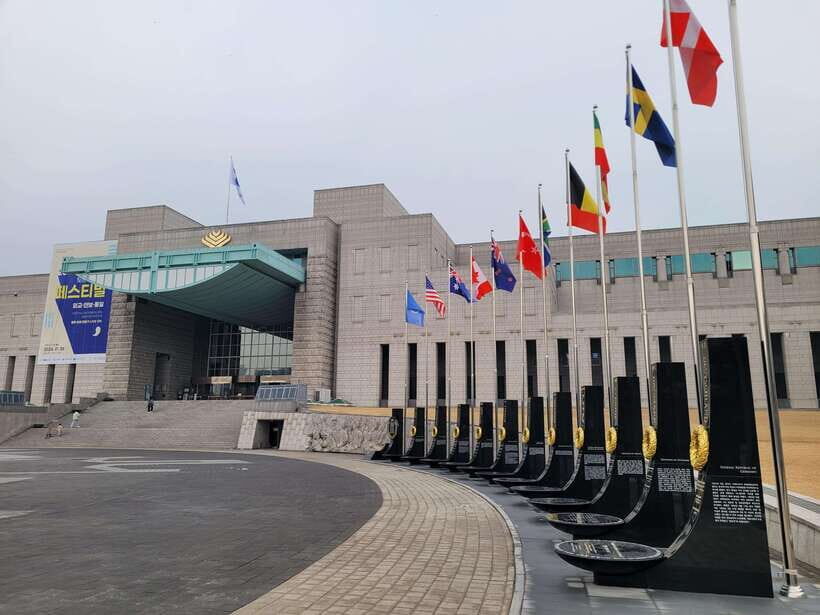
The War Memorial of Korea is not the kind of place you can fully “tour” in your head on autopilot. It’s huge, the story is complicated, and the museum’s most important value is how it helps you connect cause and consequence. This private guided walk is built for that exact problem: you get a human guide who can translate the big picture into something you can follow in a short visit.
I also like that the tour isn’t just military facts. The tour’s angle is civil and international—how the war reshaped everyday life and how global forces affected the peninsula. That matters because the Korean War is the key to understanding why the two Koreas look and act so differently today.
And if you’re going on the DMZ later, this is smart prep. The Korean War is the bridge between the armistice era you’ll see at the DMZ and the deeper reasons the border exists at all.
You can also read our reviews of more guided tours in Seoul



Meeting at the Statue of Brothers: a quick, easy start
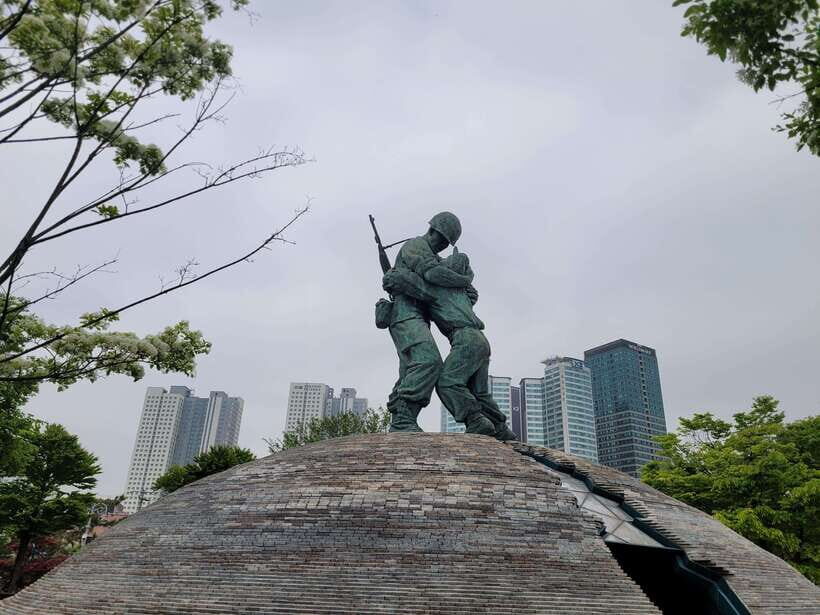
The meeting point is under the Statue of Brothers, on the south-west corner of the War Memorial’s exterior exhibit area. It’s easy to find if you’re coming from Samgakji Station Exit 12 on Subway lines 4 and 6.
If you arrive a few minutes early, you’ll avoid the usual “where exactly is the guide?” stress. Your guide will be waiting with a sign that reads Korean War Memorial Guided Tour by Gangwon Peace Tours, so you can spot the right person fast.
This matters because you don’t want to burn your limited time inside the museum doing logistics. The best part of this tour is what happens once you’re already moving.
The 2-hour walking plan: how the museum visit actually flows
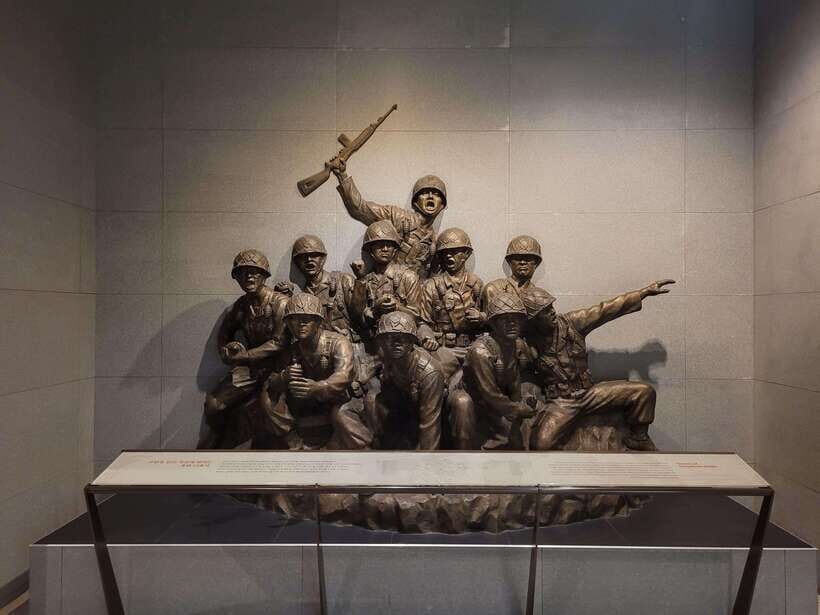
The core of the tour is a 2-hour walking museum session. Instead of trying to cover everything at once, your guide takes you through the Korean War story in a structured way, centered on the Korean War Rooms I–III.
Here’s what that means for you on the ground:
- You won’t just wander from display to display.
- You’ll get signposts—what to look for and why it matters.
- You’ll hear connections that help the rooms feel like chapters, not random hallways.
A couple of practical notes. The tour is for a private group of up to five people, so your questions don’t get squeezed out. It’s also wheelchair accessible, but the tour is not suitable for visually impaired or hearing-impaired people, so this one won’t work for every need.
Korean War Rooms I–III: what the guided focus helps you see
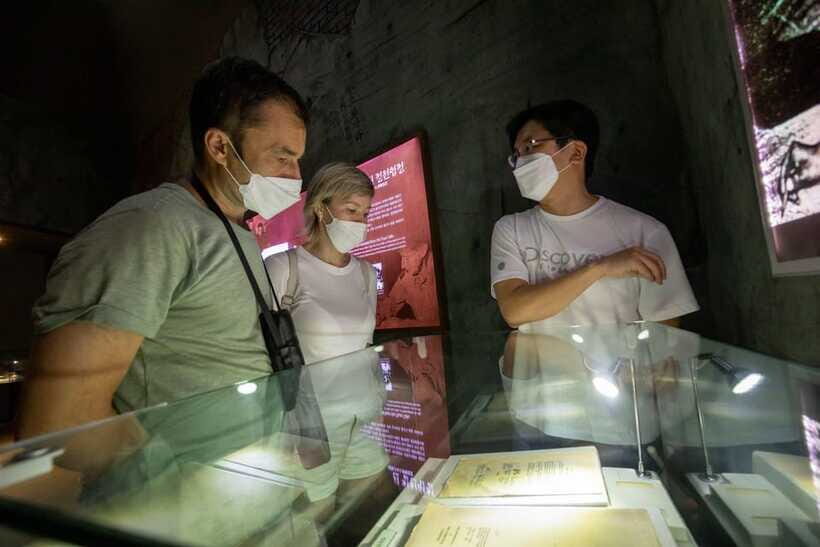
The museum rooms are where the story tightens. With a guided approach, you’re more likely to notice patterns—how different events connect, and how the narrative is shaped by what’s shown and what’s emphasized.
The tour description points to several themes your guide will bring out:
- The Korean War as a turning point for modern Korea
- How the conflict can be understood from a neutral, balanced perspective
- “Hidden stories” and less-obvious angles you might miss walking alone
- Features of the war that show up throughout the exhibition, but don’t always land clearly unless someone explains the links
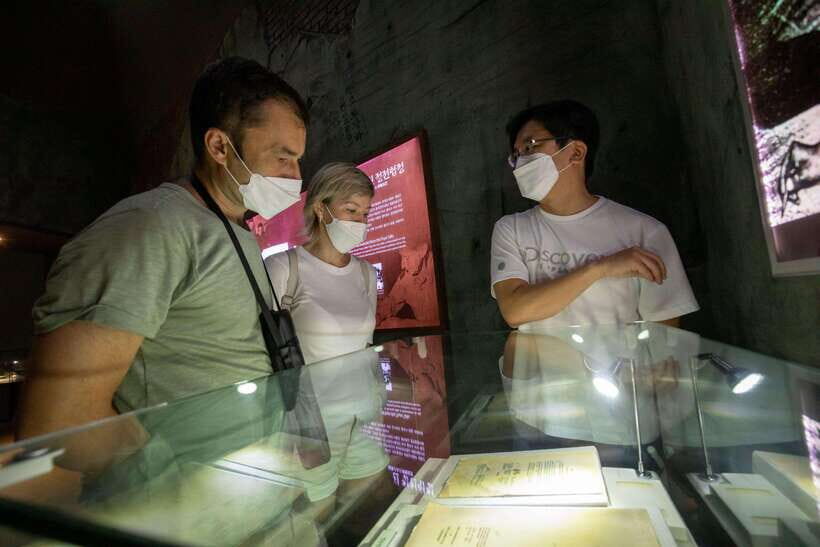
You’ll also get complementary materials: pictures plus copies of documents. That’s not a small add-on. In a museum like this, your attention gets pulled in a hundred directions. Handouts give you something to anchor to, so you can remember key points without needing perfect recall in the moment.
And because the guides are described as having backgrounds in Korean history and politics, peace activism or peace studies, and DMZ tours, the framing tends to be more than “what happened.” You’ll hear why it happened, what it did to the peninsula, and how people live with the consequences.
The value of a balanced presentation (and why it changes how you feel)
A lot of history tours go one of two ways. Either they feel like a lecture, or they feel like a collection of facts without much moral weight. This one tries to do something harder: a balanced, neutral perspective that still respects the human reality of war.
That’s one of the most praised parts of the experience. The guide approach aims to show incidents and facts from both sides of the conflict, not just the story the museum foregrounds most strongly. You end up with a clearer sense of what each side saw, and what the larger international picture contributed.
Even the idea of what the War Memorial is “hiding” in its exhibition should be taken in the spirit of critical viewing. You’re not being asked to distrust everything. You’re being taught how to notice perspective—what gets emphasized, what gets simplified, and what needs extra context to make sense.
This is where a guide is worth it. You could absolutely browse the museum on your own. But with this tour, the exhibits turn into an argument: here’s how the war shaped the peninsula, here’s why the present looks the way it does.
You can also read our reviews of more private tours in Seoul






Questions, pace, and why the private size matters
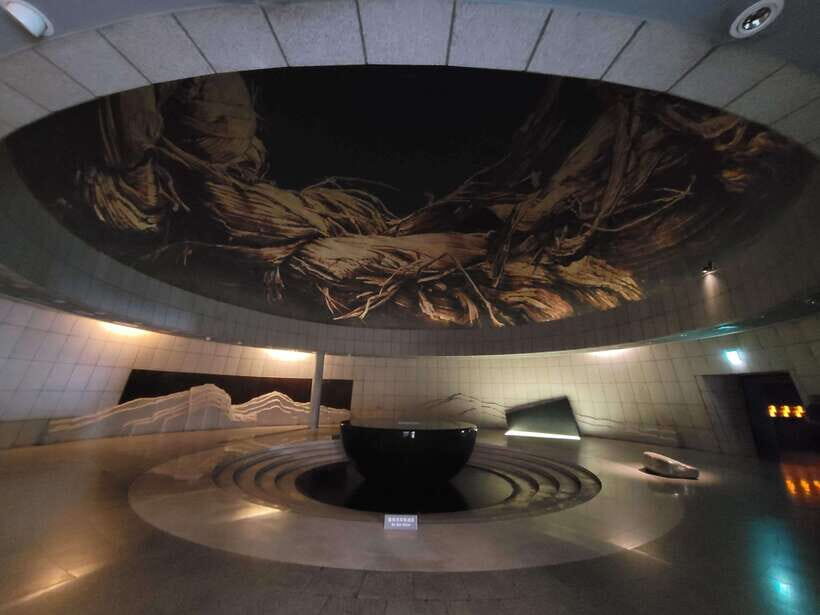
The tour is private for a reason: it stays responsive. When you’re in a big museum, your brain does this fun trick where it asks questions you can’t answer fast enough. The private format gives you time for follow-ups instead of watching your curiosity evaporate.
In practice, that means:
- You’ll get answers that connect back to what you’re seeing
- The guide can adjust explanations based on what your group is actually interested in
- The walk through a large memorial feels more manageable
This is also why the “private group up to five” price structure makes sense. You’re paying for guidance, not for access to a special room. If you go with a small group of friends or family, you get a lot of attention per person.
Price and logistics: does $100 per group feel fair?
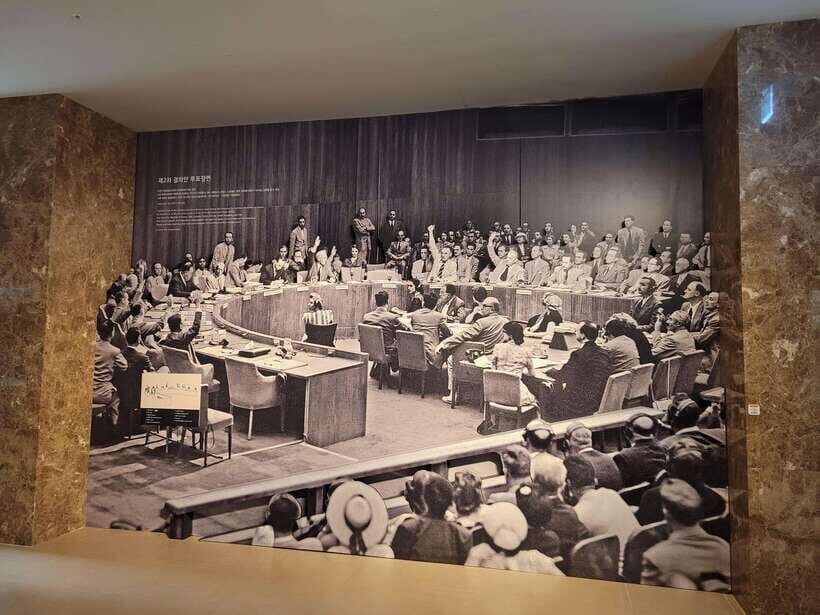
The price is $100 per group up to 5 for a 2-hour private guided walk. That’s not cheap in an absolute sense, but it is fair when you think about what you’re buying: an expert guide, a structured route through the Korean War rooms, and materials designed to help the story stick.
If you’re visiting the War Memorial with only one person, you’re paying essentially for the convenience and depth of a guide. If you’re two to five people, the per-person cost drops fast, and the tour starts to feel like better value than a solo guided experience.
Where this tour really earns its keep is time and clarity. With only two hours, you can’t realistically “solve” the Korean War by walking around. This gives you a guided path so you leave with a framework you can build on afterward.
What’s not included (and what you should plan for)
Food and drink are not included, so plan to have a snack either before or after. The tour is a walking session, and the War Memorial can take energy out of you.
Also, alcohol and drugs are not allowed during the experience. That’s standard for many tours, but it’s worth noting if you’re thinking of bringing anything along.
If you want the best flow, treat this as your “learn first, wander later” segment. Do the guided part to get oriented, then use any remaining time to slow down in the rooms that match your interests.
Who this tour is for (and who might want a different plan)
This is a great fit if you:
- Want modern Korea context before you do a DMZ-focused day
- Prefer a guided route through Korean War Rooms I–III over random wandering
- Like balanced explanations that discuss more than one angle of the conflict
- Appreciate physical materials like pictures and document copies
It may not be the best match if:
- You need a tour designed for visually impaired or hearing-impaired participants (this one is listed as not suitable)
- You want a long, unhurried museum session with no time pressure. Two hours is tidy. It’s not a half-day.
If your ideal museum day is “I want to understand,” this tour fits like a map.
A couple of reality checks before you decide
Two hours is two hours. One review account noted that the subject is broad enough to keep going longer, and that the time can feel a bit rushed if you stop frequently to read and dwell. That’s not a deal-breaker—just be honest about how you visit museums.
My practical advice: if you care deeply about details, arrive early, and don’t pack your schedule so tightly afterward that you feel forced to move on immediately.
Should you book this Korean War Memorial guided tour?
Yes, book it if you want your War Memorial visit to make sense fast and stick in your head. The best reason is the structure: you’re not just looking at exhibits—you’re learning how the Korean War connects to the modern two Koreas, with a guide who brings a war-and-peace perspective and a neutral framing.
Skip it only if you know you’ll want a slow, long-form self-guided experience that covers far more than the Korean War Rooms I–III. If that’s you, consider going on your own and spending extra time reading at your pace.
For most visitors, though, this is one of those “pay once, understand more” tours. You’ll walk out with a framework you can use immediately, and it will make the rest of your Seoul history days feel less like separate stops and more like one story.
FAQ
How long is the Seoul War Memorial of Korea private guided tour?
The tour duration is 2 hours.
What’s the price for the group?
The price is $100 per group, for up to 5 people.
What areas of the War Memorial are covered?
The guided focus is on the Korean War Rooms I–III.
What’s included in the tour price?
Included are the tour guide and the walking tour.
What’s not included?
Food and drink are not included.
Where do we meet the guide?
You meet under the Statue of Brothers at the south-west corner of the exterior exhibit area. It’s near Samgakji Station Exit 12 (Subway Line 4 & 6).
What language is the tour in?
The live tour guide language is English.
Is the tour wheelchair accessible?
Yes, the tour is listed as wheelchair accessible.
Is it suitable for visually or hearing-impaired visitors?
No, it is listed as not suitable for visually impaired people and not suitable for hearing-impaired people.
Can I cancel or change my booking plans?
Free cancellation is offered up to 24 hours in advance for a full refund, and you can reserve now and pay later.