REVIEW · SEOUL
Gwanghwamun Tour l 120 minutes to Understand Local Korean Society
Book on Viator →Operated by SeoulDude's Walking tours · Bookable on Viator
History shows up fast in Gwanghwamun. This 120-minute tour in central Seoul uses a simple stroll to connect big ideas—Joseon Confucian order, postwar capitalism, and how Korea talks about North Korea, Japan, and the U.S.—to everyday culture you’ll actually notice while you travel. It’s led by June, a historian-style guide who explains what different places mean, not just what they are.
I especially like the clear, structured way June teaches, with explanations that feel like a tight mini-lecture instead of random sightseeing. I also like the small-group pace (up to 20 people), which makes it easier to ask questions when something gets political or personal. The main drawback to plan around: it’s an easy walk overall, but there are a few uphill stretches, so wear shoes you don’t mind getting sweaty in.
In This Review
- Key points at a glance
- Why this Gwanghwamun tour feels different from a typical sightseeing loop
- What you’ll learn: Korean values, age hierarchy, coffee culture, and spa culture
- The 120-minute route from Gwanghwamun Square to the Blue House
- Stop 1: Gwanghwamun Square, Joseon’s center of gravity
- Stop 2: U.S. Embassy & Consulate area, influence and interpretation
- Stop 3: Samcheongdong-gil Road, modern work life with a retro feel
- Stop 4: Bukchon Hanok Village, preservation vs development tensions
- Stop 5: University of North Korean Studies, how Korea thinks about the North
- Walking logistics that actually matter: shoes, timing, and where you start
- Price and value: $14.10 for a 2-hour society lesson
- Who should book this tour, and who might want something else
- Should you book the Gwanghwamun 120-minute Korean Society tour?
- FAQ
- FAQ
- How long is the Gwanghwamun tour?
- What time does the tour start?
- How much does the tour cost?
- Where do I meet the guide, and where does the tour end?
- Is the walking route easy?
- What are the main stops on the tour?
- Do I need to pay admission fees at the stops?
- Is this tour a small group?
- Do I need a physical ticket?
- What if the weather is bad or the minimum number of travelers isn’t met?
Key points at a glance
- Big themes in 2 hours: Confucianism, age hierarchy, and modern economic life linked to specific places.
- June’s teaching style: clear explanations with moments of humor and room for Q&A.
- Five meaningful stops: from Gwanghwamun Square to Bukchon and the University of North Korean Studies.
- Free-entry sights along the route: each stop is listed as ticket-free for admissions.
- Easy strolling, with hills: mostly simple walking, but expect a couple of uphills.
- Ends near the Blue House: a memorable finish point in the heart of Seoul’s power district.
Why this Gwanghwamun tour feels different from a typical sightseeing loop
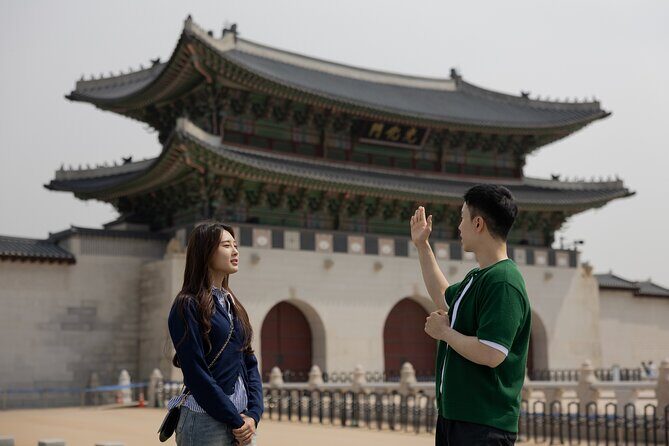
Seoul is packed with “see this, take a photo, move on” tours. This one is built to do the opposite: slow down just enough that the places start to explain the people.
The best part is how June connects what you’re looking at to how Koreans live today. You’re not only hearing about ancient palaces or old neighborhoods. You’re also getting explanations for why certain attitudes stick—like the age-based social order that still shapes everyday interactions. And you’ll hear how modern life took form after major historical breaks, including the post-Korean War era and its economic direction.
It’s also designed around real conversation topics. Based on the tour’s focus, you should expect discussion of how Koreans think about North Korea, Japan, and America, not in a slogan-heavy way, but as background for why certain opinions show up in daily life.
You can also read our reviews of more tours and experiences in Seoul.
What you’ll learn: Korean values, age hierarchy, coffee culture, and spa culture
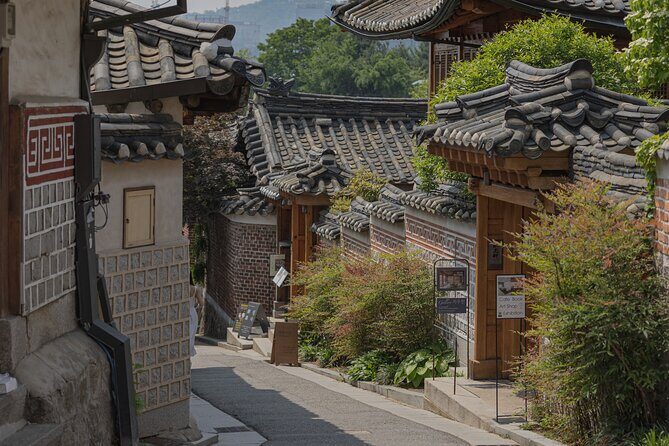
The tour’s themes are unusually practical for such a short time. Instead of dumping dates, it aims at mindset.
Here are the big “you’ll notice this later” topics the tour ties to the route:
- Korean age hierarchy: why age can matter in conversation, respect, and social rhythm.
- Modern coffee culture: how it fits into daily life and the pace of contemporary work.
- Korean spa culture: how leisure and social norms play out outside the home.
- Where opinions come from: how Korea’s relationships and tensions help explain what people talk about.
Even if you don’t agree with every historical interpretation (history is never simple), you’ll walk away with stronger context. That’s the difference between seeing Seoul and understanding it.
And since June is set up to handle questions during the walk, you can steer the conversation toward what matters to you—work culture, family expectations, politics, or why certain neighborhoods look the way they do.
The 120-minute route from Gwanghwamun Square to the Blue House
This tour is built around a straight line through central Seoul themes. You start at Gwanghwamun Square and finish in front of the Blue House (Cheong Wa Dae), which is a striking endpoint for such a history-and-society walk.
The total time is about two hours, with short stops that keep things moving. That makes it ideal if you want a brain-on version of Seoul without burning half a day.
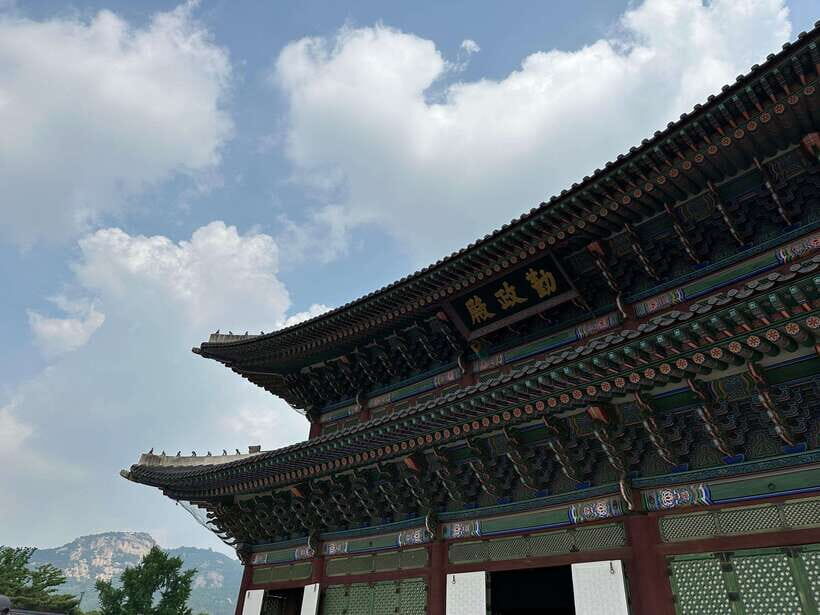
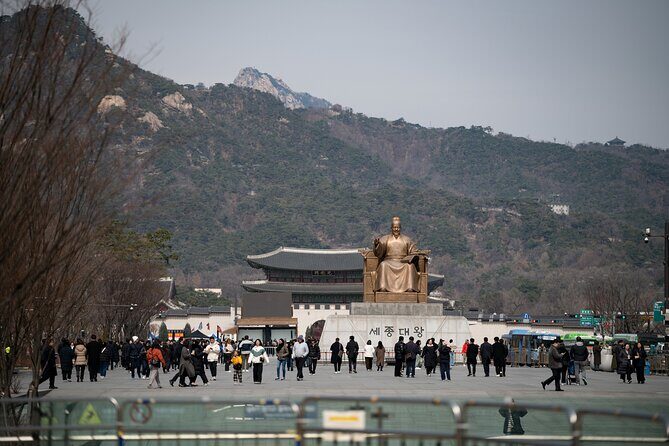
Stop 1: Gwanghwamun Square, Joseon’s center of gravity
You begin at Gwanghwamun Square, the city center over 600 years tied to the Joseon kingdom. This is one of those places where the scale can feel overwhelming—but the tour doesn’t ask you to guess. June points you toward the historical role of the area and connects it to what modern Korea still carries from that era.
Why it matters: when you understand how power and social structure were imagined in Joseon times, you’ll recognize echoes in today’s social expectations. That’s the tour’s theme in miniature: old structure influencing modern behavior.
Time here is short (about 15 minutes), so don’t expect deep monument hunting. Expect orientation plus context so the rest of the route makes sense.
Stop 2: U.S. Embassy & Consulate area, influence and interpretation
Next is the U.S. Embassy & Consulate in the Republic of Korea area. The focus isn’t just the building. It’s how U.S. presence and influence have shaped Korea from the establishment period to the present—plus how Koreans think about them.
This stop is valuable because it frames relationships as something people live with daily, not just something that belongs in textbooks. You’ll likely notice how easily geopolitics shows up in casual conversation once you have this background.
Time is also about 15 minutes, which keeps the tour balanced. You get the key angle without turning it into a political rant.



Stop 3: Samcheongdong-gil Road, modern work life with a retro feel
Then you head through Samcheongdong-gil Road, a retro-style street of shops and restaurants. On the surface, it’s a charming walk. The tour perspective adds another layer: how modern development brought benefits and side effects—and how working culture shows up in streets like this.
This is a great stop for photos if you like streets that feel lived-in, not just staged. But the real payoff is the interpretation: why certain commercial areas took off, and how that connects to daily routines.
Again, time is around 15 minutes. It’s more about reading the neighborhood than lingering.
Stop 4: Bukchon Hanok Village, preservation vs development tensions
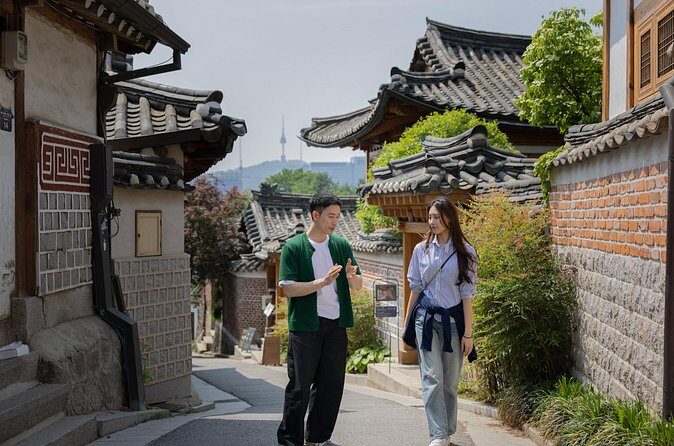
At Bukchon Hanok Village, you’ll move into a traditional setting and hear the tensions between preservation and development. This is one of the easiest places to feel the conflict yourself: you can see old houses, but you’re also watching a living city trying to keep history while staying modern.
Why this stop works on this tour: it doesn’t treat heritage as a museum piece. It treats it as something that has to survive real economic pressure and tourism demand—same as everywhere.
Time here is longer (about 25 minutes), giving you more room to take in details while June keeps the focus on how Koreans navigate change.
Stop 5: University of North Korean Studies, how Korea thinks about the North
Your final major stop is the University of North Korean Studies. This is where the tour’s political education becomes especially direct. The focus is on the relationship involving North Korea and how South Korea frames and thinks about it.
This is the kind of place many visitors miss completely, and it’s exactly why this tour can feel unusually educational for its short length. You’re not just learning facts about North Korea. You’re learning how a society trains students to interpret that relationship.
Time here is about 20 minutes, so it’s enough to understand the theme without turning overwhelming.
Walking logistics that actually matter: shoes, timing, and where you start
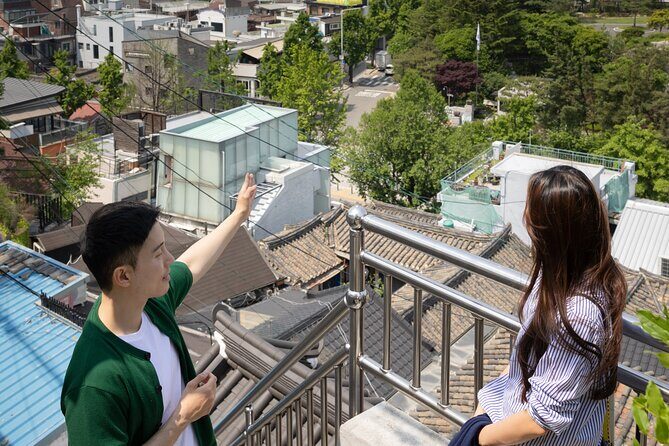
The tour is positioned as easy walking, and most people can join. Still, don’t ignore the note about “a few courses walking uphills.” That’s usually the difference between comfortable and miserable in Seoul. If you’re prone to shin pain or you’re in sandals, you’ll want to swap those early.
You also get a practical setup:
- Start time: 10:30 am
- Meeting point: 172 Sejong-daero, Jongno District, Seoul
- Finish point: in front of the Blue House (1 Cheongwadae-ro)
- Near public transportation: so you can plug it into a busy day
It runs in daylight and stays in central Seoul, so it’s a good morning brain-activation activity. And because it finishes at a major landmark area, it’s also easy to plan your next stop after.
Weather matters too. The tour requires good weather, so have a flexible plan for the day it’s scheduled.
Price and value: $14.10 for a 2-hour society lesson
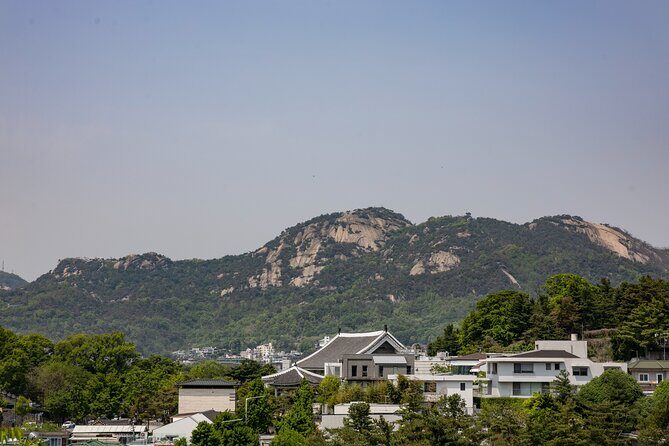
At $14.10 per person for about two hours, this tour is priced like you’re paying for a guide—not like you’re buying a big-ticket “attraction day.”
Here’s why the value is strong:
- Multiple stops in central Seoul with ticket-free admission at the listed stops.
- A guide who teaches history and current-day implications, not just directions.
- A small group size (up to 20), which can improve the quality of the Q&A and keep the pacing calm.
If your goal is “I want to understand the country beyond the obvious sites,” this is the kind of deal that tends to pay off. If your goal is purely hands-on cultural activity (like a workshop or cooking class), then a history-and-society walk won’t replace that. But for context, it’s good value.
Who should book this tour, and who might want something else
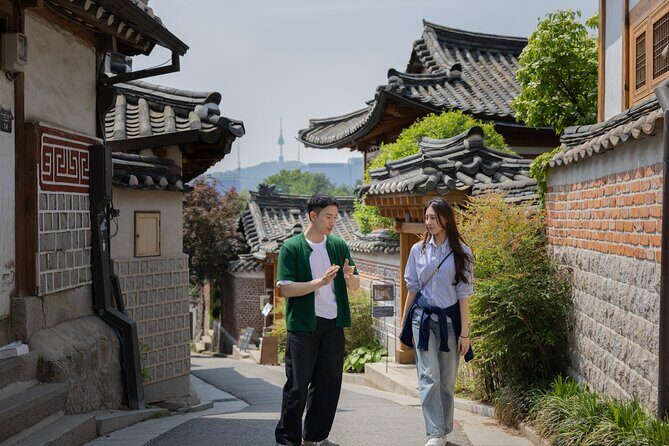
This tour fits best if you:
- like history when it connects to today’s behavior
- enjoy political and cultural context without needing a full museum day
- want a short, structured experience rather than open-ended wandering
- want a guide who is approachable and willing to answer questions
It may feel less ideal if you:
- only want scenic time with minimal explanation
- hate any discussion of geopolitics
- want a long, deep visit inside each stop (this is paced as a walk-and-interpret tour)
If you’re traveling solo, this kind of group walk can be a friendly way to meet other people who also like meaning, not just photos.
Should you book the Gwanghwamun 120-minute Korean Society tour?
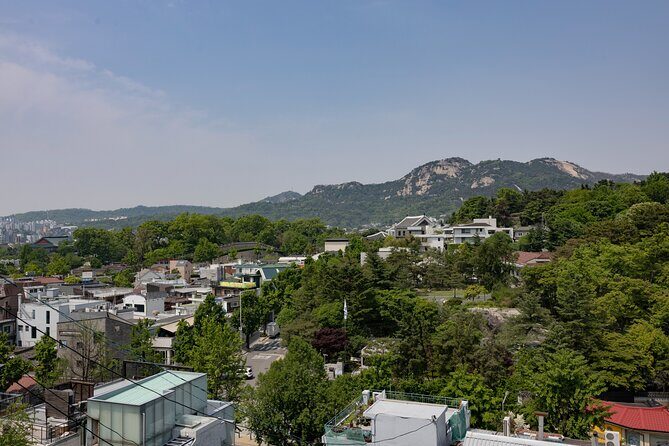
If you want to get your bearings fast and learn the “why” behind what you see, I think this is a smart booking. It’s short enough to fit almost any day, it stays in central Seoul, and it has a clear teaching approach through places tied to power, development, and how Korea thinks about the North.
Book it if you’ll appreciate historical context and you’re curious about social norms—especially age hierarchy, and how modern culture connects back to older systems. Pass on it if you prefer purely visual sightseeing or you’re not up for discussion that touches politics.
FAQ
FAQ
How long is the Gwanghwamun tour?
It’s about 2 hours.
What time does the tour start?
The start time is 10:30 am.
How much does the tour cost?
The price is $14.10 per person.
Where do I meet the guide, and where does the tour end?
You meet at 172 Sejong-daero in Jongno District and the tour finishes in front of the Blue House (Cheong Wa Dae) at 1 Cheongwadae-ro.
Is the walking route easy?
It’s described as an easy walk, but there are a few uphill stretches, so comfortable shoes help.
What are the main stops on the tour?
The route includes Gwanghwamun Square, the U.S. Embassy & Consulate area, Samcheongdong-gil Road, Bukchon Hanok Village, and the University of North Korean Studies.
Do I need to pay admission fees at the stops?
Admission is listed as free for the stops included.
Is this tour a small group?
Yes. It has a maximum of 20 travelers.
Do I need a physical ticket?
You use a mobile ticket.
What if the weather is bad or the minimum number of travelers isn’t met?
The experience requires good weather. If it’s canceled due to poor weather, you’ll be offered a different date or a full refund. If the minimum number of travelers isn’t met, you’ll also be offered a different experience/date or a full refund.