REVIEW · SEOUL
Seoul moonlight walking tour with local historian
Book on Viator →Operated by SeoulDude's Walking tours · Bookable on Viator
Seoul shines after sundown, and this tour uses that glow to show you parts of Seoul you’d miss on your own. I love the local historian storytelling that turns street corners into real cultural context, and I love the night-view payoff around Naksan and the Seoul City Wall.
One thing to think about first: this is a hill walk with plenty of stairs, so comfy shoes matter.
In This Review
- Key things to know before you go
- What This Moonlight Walk Does Better Than a Sightseeing Loop
- Price and Value: Why This One Costs About $32
- Meeting at Hyehwa: A Simple Start, Then You’re Off to the Hills
- The Two-Hour Route: What the Night Walk Feels Like
- Stop-by-Stop: Museum, Marronnier Park, Naksan, Ihwa, and the City Wall
- Stop 1: Seoul University Hospital Medical Museum (about 10 minutes)
- Stop 2: Marronnier Park (about 5 minutes)
- Stop 3: Naksan Park (about 10 minutes)
- Stop 4: Ihwa Mural Village (about 20 minutes)
- Stop 5: Seoul City Wall (about 20 minutes)
- The Night Views: How to Prep Without Overthinking It
- The Historian Part: What You Gain Beyond the Views
- Who This Tour Fits Best (And Who Might Want a Different Option)
- Should You Book This Moonlight Walk?
- FAQ
- How long is the Seoul moonlight walking tour?
- Where does the tour start?
- Does the tour include admission tickets?
- Is food included in the price?
- Is this tour a small group?
- What’s the ticket format?
- Do I need to bring special supplies?
- Is it an easy walk?
- What happens if the weather is bad?
Key things to know before you go
- Small group pace (max 20) so you can ask questions and keep moving at a human speed
- Free entry at every stop and no special gear needed for the walk
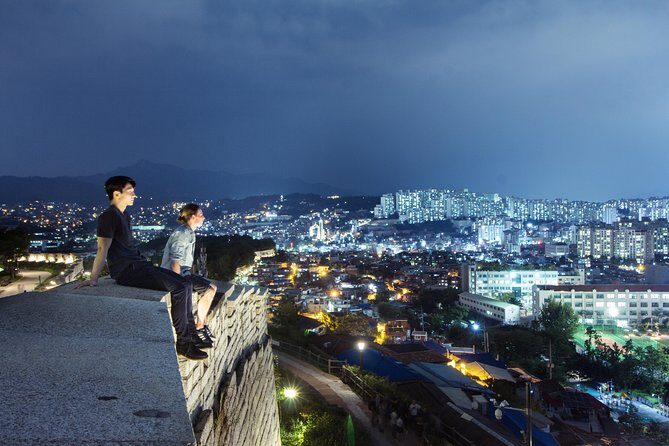
- City Wall night views with a “romantic atmosphere” vibe and great photo angles
- Ihwa Mural Village backstory tied to the lives of less wealthy residents on the hills
- Prep for stairs and phone power so you can actually enjoy the climb and capture the views
What This Moonlight Walk Does Better Than a Sightseeing Loop
This isn’t a checklist tour. It’s a night route built around neighborhoods and viewpoints, with a local historian doing the heavy lifting—turning what you see into why it matters.
The big idea is simple: Seoul looks different after dark. You get the same streets, parks, and walls, but with lighting that makes details pop. The tour’s focus on Naksan Park and the Seoul City Wall is where that logic really pays off, because the views are the reason you’re walking uphill in the first place.
And it’s not only about scenery. The route mixes everyday culture (theatrical life in Marronnier Park, student culture near the museum) with longer stories about the capital’s placement and how the city changed over time. That blend is what makes the night feel more than just pretty.
You can also read our reviews of more walking tours in Seoul
Price and Value: Why This One Costs About $32
At $31.98 per person for about 2 hours, this lands in the “good value” zone because most of what you’re paying for is expert guidance plus a timed path through viewpoints that are best at night.
You also don’t get hit with surprise entry fees along the way. Every scheduled stop lists admission tickets as free, including the Seoul University Hospital Medical Museum, Marronnier Park, Naksan Park, Ihwa Mural Village, and the Seoul City Wall.
The only optional extra mentioned is food after the tour. If you want it, you pay separately. If not, you’re not forced into a meal plan. That keeps the cost predictable.
Meeting at Hyehwa: A Simple Start, Then You’re Off to the Hills
You meet at Hyehwa120 Daehak-ro, Jongno District, and the tour ends back at the same spot. It’s also listed as near public transportation, which matters in Seoul. You don’t want to spend half your evening navigating a long transfer.
The group cap is up to 20 people, which usually helps with pacing. In a small group, it’s easier to stop for photos and questions without turning the walk into a slow bottleneck.
You’ll get a mobile ticket, so keep your phone ready. This is one of those tours where your phone matters twice: once for your ticket, and again for photos once the city lights kick in.
The Two-Hour Route: What the Night Walk Feels Like
The tour runs about 2 hours, and it’s structured as a set of short stops rather than one long slog without breaks. That’s a big deal on a night hike with stairs. You get micro-moments to regroup—then continue.
The pacing sounds moderate, but the terrain is the real story. Multiple stops are on hills, and the city wall viewpoint is reached by climbing. One practical theme from guide styles and group experiences is that the walk is doable, just not flat. You’ll want to plan for that up-front, not halfway through.
Weather also matters. This experience requires good weather, and if it gets canceled due to poor conditions, you’re offered a different date or a refund. For night viewing tours, that’s the difference between “great” and “why is everything cloudy.”
Stop-by-Stop: Museum, Marronnier Park, Naksan, Ihwa, and the City Wall
Here’s what you can expect at each stop and what makes it feel worth the walking.



Stop 1: Seoul University Hospital Medical Museum (about 10 minutes)
This start leans into student culture. The museum is described as the highest place students can go, and the guide focuses on university life in Korea—specifically the quirky, everyday culture around learning.
Even if you’re not a “museum person,” this works as an easy opener. It sets a tone for the rest of the night: Seoul isn’t only palaces and skyline photos. It’s also how people study, aim for success, and build identity through institutions.
Good to know: it’s a short stop and admission is free, so you’re not committing to a long indoor detour early on.
Stop 2: Marronnier Park (about 5 minutes)
This is a quick culture break. Marronnier Park is described as a cultural area tied to live theaters and live shows.
In practice, this stop helps you switch gears from “learn mode” to “feel the neighborhood” mode. At night, that kind of place gives you background context for Seoul’s creative energy—especially in areas where people go to watch performances and hang out.
It’s brief, so treat it as a reset, not a main event.
Stop 3: Naksan Park (about 10 minutes)
This is where the tour begins connecting geography to history. The key question here is how Korea’s capital was located in Seoul, and what changed as the city evolved.
Naksan Park is also an early positioning point for night views. Even before you reach the wall viewpoints, you start getting that “city lights are coming” feeling.
The main value is perspective. The guide’s stories give you a reason for looking around instead of just taking photos and moving on.
Stop 4: Ihwa Mural Village (about 20 minutes)
Now you shift to a more personal story. Ihwa Mural Village is described as a mural village of less wealthy people, with a reminder that many hillside areas here are tied to the lives of people who lacked money.
This is important because murals can look purely aesthetic if you don’t have context. With the historian guide, you’re more likely to notice what the murals are referencing and what the area’s history implies.
Time-wise, you get a longer stop here (about 20 minutes), which gives you room to walk slowly, look up, and take photos without feeling rushed.
Stop 5: Seoul City Wall (about 20 minutes)
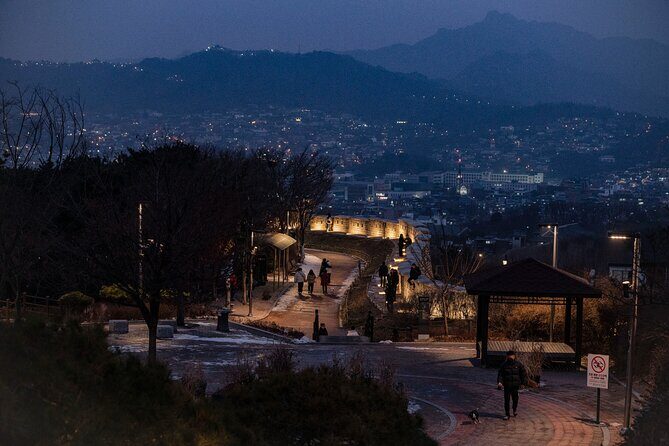
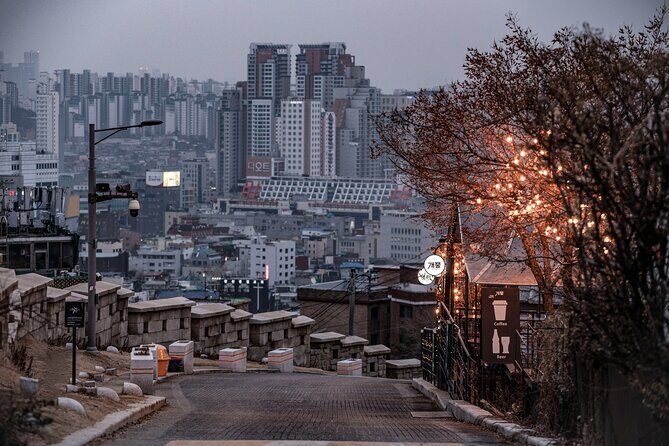
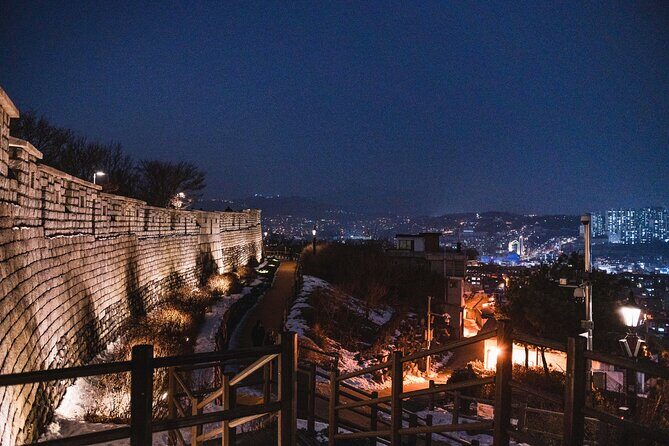
This is the big night-view target. It’s described as a historical monument with romantic atmosphere and awesome night views of Seoul. You’re also told it’s hidden, in the sense that it may not be the first thing visitors find on their own.
This stop is where the tour earns its name. City walls change how you see a city: you get layers—foreground shapes, middle roads, and then the lights in the distance.
It’s also one of the stops that benefits from preparation. If you want photos, you’ll want your phone charged, and you’ll want to be standing in the right place without rushing.
The Night Views: How to Prep Without Overthinking It
If you only remember one thing, remember this: wear shoes that can handle stairs.
This route includes uphill walking and stair sections. Multiple guide comments and common guidance point to that reality. It’s not a mountain hike, but it’s not a stroller-friendly stroll either.
Here’s what I’d do to make the night smoother:
- Wear comfortable walking shoes with good grip.
- Charge your phone ahead of time for photos and navigation.
- Bring bug spray if you’re sensitive to bites; it’s specifically called out as useful.
- Go on a night when the weather looks decent, since the tour depends on it.
When it all clicks, the city lights at the wall viewpoint make the effort feel fair. Seoul does night lighting well, and this route puts you in the spots where it matters.
The Historian Part: What You Gain Beyond the Views
The strongest part of this tour is the way it connects scenes to stories. You’re not only looking at places; you’re learning how Seoul’s social life and history shaped them.
A few themes show up clearly in the tour description and the guide styles people talk about:
- Education and student culture around university life and the pressure around entrance and success
- Capital history, including how Seoul’s location and role changed over time
- Social history on hills, especially the connection between Ihwa Mural Village and the lives of less wealthy residents
- How modern neighborhoods still carry older patterns, like walking paths and the logic of the city wall
The humor angle also matters. Guides running this route are repeatedly described as funny and entertaining, and that’s not a small detail. At night, when you’re walking uphill, a lighter tone keeps people engaged and helps you pay attention instead of just trying to survive the stairs.
Who This Tour Fits Best (And Who Might Want a Different Option)
This is a great choice if you want:
- a first-night orientation to a part of Seoul you might not explore well on your own
- history that stays tied to daily life, not only big monuments
- a night walk where the views are a real payoff, not an afterthought
It may be less ideal if:
- you’re not comfortable with stairs and uphill sections
- you want a fully flat, low-effort stroll
- you prefer quiet, silent sightseeing with no back-and-forth storytelling
Group size helps here. Up to 20 people usually keeps the vibe easy enough to enjoy the stops, even when it’s dark and you’re moving.
Should You Book This Moonlight Walk?
Yes, if you like your Seoul with context and your night with a purpose. For about $32, you get a short guided route through student culture, performance-life streets, mural history, and a city wall viewpoint that’s built for nighttime photos.
Book it early in your trip if you can. Starting your Seoul visit in a walking rhythm like this helps you learn the city’s “logic” fast: how neighborhoods connect, where the hills create different perspectives, and why the night views land where they do.
Just commit to the basics: comfy shoes, phone charged, and a weather check. Do that, and this tour is a fun way to see Seoul as something lived in—not just something photographed.
FAQ
How long is the Seoul moonlight walking tour?
It runs about 2 hours (approx.).
Where does the tour start?
The meeting point is Hyehwa120 Daehak-ro, Jongno District, Seoul, South Korea.
Does the tour include admission tickets?
Yes. The itinerary lists admission tickets as free for each stop.
Is food included in the price?
No. There will be an optional food session after the tour, but the fee is not included.
Is this tour a small group?
Yes. It has a maximum of 20 travelers.
What’s the ticket format?
You use a mobile ticket.
Do I need to bring special supplies?
No special supply is required for the walking tour.
Is it an easy walk?
Most travelers can participate, but expect hills and stairs, so wear comfortable walking shoes.
What happens if the weather is bad?
This experience requires good weather. If it’s canceled due to poor weather, you’ll be offered a different date or a full refund.