REVIEW · SEOUL
Buam dong Walking Tour Art, History and Parasite in Seoul
Book on Viator →Operated by ZenKimchi Experiences · Bookable on Viator
Hidden hill streets tell better Seoul stories. This 2.5-hour Buam-dong walk mixes art and Cold War history with mountain views over Bugaksan, Inwangsan, and Bukhansan, plus a Parasite filming spot. You also get a guided path through traditional Seoul that feels calmer than the big-name tourist loops.
I especially like the way you move between quiet cultural stops and larger historical landmarks without it feeling like homework. The Cheongun Literature Library is a peaceful pause in a traditional setting, and the finish at Mugyewon gives the whole day a graceful ending. One thing to consider: this is a hillside neighborhood, so if you have limited stamina, plan for a slower pace and follow your guide’s tempo.
In This Review
- Key highlights to expect on this Buam-dong tour
- Buam-dong at a human pace: art, Cold War stories, and real mountain views
- Price and value: what $38.50 buys you in Seoul time
- Getting oriented: meeting point, 2:00 pm timing, and the short bus ride
- Buam-dong streets first: Choi Gyu-sik Memorial Statue and neighborhood history
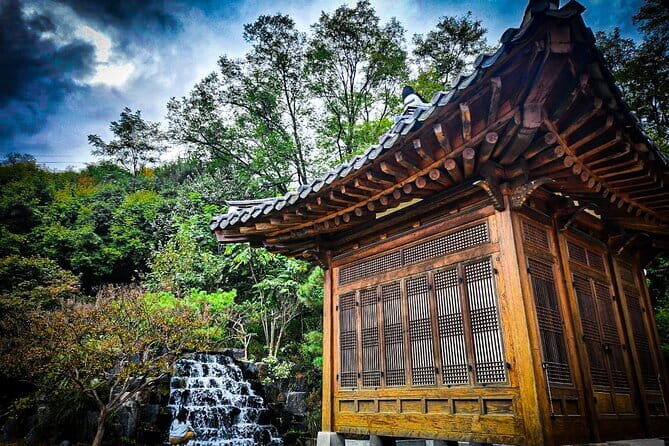
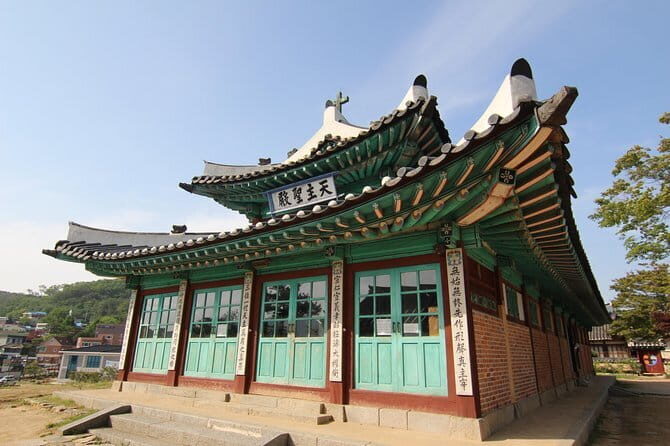
- Cheongun Literature Library: Seoul’s first Hanok library for quiet focus
- Seoul City Wall and Changuimun Gate: defense history you can visualize
- Poet Yoon Dong-ju hill and mountain viewpoints: when the photos make sense
- Parasite filming location: spotting how real streets become cinema
- Mugyewon finale: a Hanok cultural space connected to Grand Prince Anpyeong
- Group size, fitness, and how to make the walking portion feel easy
- Who should book this Buam-dong art, history, and Parasite walking tour?
- Should you book it?
- FAQ
- How long is the Buam-dong Walking Tour?
- How much does the tour cost?
- Where do I meet the tour?
- When does the tour start?
- What’s the group size?
- Is the tour mostly walking?
- Are there any admission fees at the stops?
- What places will we see?
- Is there a mobile ticket?
- Can I cancel if plans change?
Key highlights to expect on this Buam-dong tour
- Cheongun Literature Library as Seoul’s first Hanok library, with time to take in the atmosphere
- Changuimun Gate and the Seoul City Wall explained with the defense-and-heritage story that makes them click
- Parasite filming location stop tied to where the neighborhood’s look and mood come from
- Mountain views over Bugaksan, Inwangsan, and Bukhansan during the walk
- Small group limit (15 people) that keeps the tour from feeling like a factory line
- Mugyewon as a Hanok cultural space tied to Grand Prince Anpyeong
Buam-dong at a human pace: art, Cold War stories, and real mountain views
This is the kind of Seoul walk that makes you slow down without forcing you to. Buam-dong sits on the hillside, so you’ll feel the neighborhood’s natural rhythm as you go—steep spots, quiet corners, and sudden sightlines where the city falls away and you spot ranges like Bugaksan, Inwangsan, and Bukhansan.
The best part is the mix. You’re not just ticking off pretty streets. You’ll hear about the area’s background, including Cold War history, while you’re walking through a part of Seoul that still looks lived-in. And because it’s tied to art and literature stops, the stories land differently than they do in a purely historical itinerary.
The guide I saw referenced in reviews, Jon, is described as both funny and story-driven, which matters. Seoul history can get heavy fast. A good guide keeps it clear, moving, and understandable, so you leave with facts you can actually remember instead of a blur of names.
You can also read our reviews of more walking tours in Seoul


Price and value: what $38.50 buys you in Seoul time

At $38.50 per person for about 2.5 hours, this is priced like a focused neighborhood tour—small-group, guided, and built around multiple stops. For me, the value comes from two things: time efficiency and included access.
First, you’re not stuck figuring out how to connect locations across the city. The tour handles the flow, starting with a short ride into Buam-dong and then walking between key points. Second, the tour lists admission as free for the stops shown in the route. Even when a location is inexpensive on paper, your time is what you’re really paying for, and not having entrance hassle helps keep the day moving.
Also, with a maximum group size of 15 travelers, your questions don’t vanish into a crowd. That’s a real quality-of-life feature in a city where many tours run with far larger numbers.
Getting oriented: meeting point, 2:00 pm timing, and the short bus ride
You meet at 시민약국 106-3 Jeokseon-dong, Jongno District, Seoul with a start time of 2:00 pm. The tour also ends back at the meeting point, which is handy when you want to return to the same transit area afterward.
Right away, you’ll take a 10-minute bus ride to Buam-dong. That’s a smart move for two reasons. One, it gets you into the neighborhood without burning your tour time grinding through the city. Two, it sets up a smoother walking experience—less commuting, more actual sightseeing.
Because it’s near public transportation, you’re not signing up for a “now you’re stranded” situation. You should still plan to arrive a bit early to find the exact spot comfortably, especially if you’re navigating Korean transit signage for the first time.
Buam-dong streets first: Choi Gyu-sik Memorial Statue and neighborhood history
The tour begins with Buam-dong itself, and the guide uses that stretch to frame what you’re about to see. You’ll hear why Buam-dong is special and how its setting shaped daily life there.
As part of this early segment, you’ll visit the Choi Gyu-sik Memorial Statue. Even if you don’t know the name ahead of time, a guided stop like this is where the tour can teach you what matters—who this person was and why a memorial like this belongs in this neighborhood.
This section is also a good time to orient your eyes. Hills make directions tricky. Once you understand the neighborhood’s “up here, down there” logic, later viewpoints feel easier to enjoy.
Cheongun Literature Library: Seoul’s first Hanok library for quiet focus

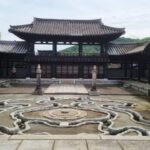
One of the most practical stops on the route is Cheongun Literature Library, described as Seoul’s first Hanok library. You get about 20 minutes here, and that time window is intentional. It’s enough to settle in, look around, and absorb the feel of a traditional structure without turning the tour into a long sit-down.
This is where you feel the contrast between Seoul’s modern pace and the quieter cadence of a Hanok-style library. You’re surrounded by traditional architecture, so even if you’re not there to read, you’ll notice how space changes behavior: voices soften, movement slows, and you actually pay attention.
If you tend to speed-run museums, this stop might be the reminder you need to slow down. It’s not just a pretty building. It’s a small pocket of Seoul built for words, not rush.
You can also read our reviews of more historical tours in Seoul



Seoul City Wall and Changuimun Gate: defense history you can visualize
A lot of city walls sound like “big old stone stuff” until someone explains why they mattered. Here, you’ll explore the Seoul City Wall and spend time at Changuimun Gate (Jahamun Gate), with the focus on how these structures played an important role in Seoul’s defense and heritage.
You get about 15 minutes at the gate area. That’s enough time to understand the purpose and connect the physical structure to the story. The key is the guidance: instead of treating the wall like a photo backdrop, you learn how these lines of fortification shaped movement and protection.
One small consideration: like many historic wall areas, the terrain around gates can mean uneven footing. Wear shoes that you’re comfortable walking on for a couple hours, not just “nice sandals for photos.”
Poet Yoon Dong-ju hill and mountain viewpoints: when the photos make sense
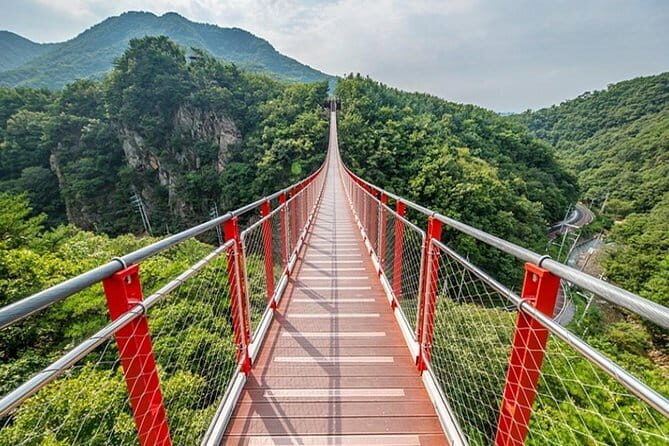
The tour also includes the Hill of Poet Yoon Dong-ju and mountain views over Bugaksan, Inwangsan, and Bukhansan. This is the section where the neighborhood landscape becomes part of the story.
What I like about viewpoint moments is how they help you remember everything else. When you’re standing somewhere higher and looking out, the neighborhood’s geography stops being abstract. You start to understand why memorials, gates, and libraries sit where they do—how people would have seen, traveled, and lived through this terrain.
If you’re the type who cares about photos but hates forced photo stops, this works better than many. The views are tied to the tour’s narrative, not just “stand here, smile.”
Parasite filming location: spotting how real streets become cinema

You’ll also visit a Parasite filming location. The value of this stop isn’t just the name. It’s the chance to see the neighborhood through a different lens.
When you’ve just walked through Hanok-style architecture, city-wall history, and hillside pathways, you’re primed to notice what filmmakers love: angles, textures, quiet streets, and how the city feels at pedestrian speed. You’ll get a sense of why this kind of neighborhood can carry a story so well.
Practical tip: keep your phone ready, but don’t lock yourself into taking shots only. Use the guide’s comments to understand what you’re looking at, then take a photo afterward.
Mugyewon finale: a Hanok cultural space connected to Grand Prince Anpyeong
The tour ends at Mugyewon, a traditional Korean house used as a cultural space. You’ll have about 20 minutes here, which is a nice landing spot after a walking-heavy afternoon.
Mugyewon matters because it connects you to old-world prestige: it was once the villa of Grand Prince Anpyeong. That detail gives the building context beyond “nice house, good for pictures.” It’s easier to appreciate the scale and significance when you know who it was built for and how such spaces fit into Korea’s past.
As a wrap-up, Mugyewon is a good way to switch gears. You’ve spent time learning, then walking, then looking outward at mountains. Now you’re back in a traditional interior setting where the tour can feel like it’s closing a chapter rather than rushing onward.
Group size, fitness, and how to make the walking portion feel easy
This is capped at 15 travelers, which keeps things friendly and manageable. In practice, smaller groups usually mean fewer delays and more time for the guide to explain in a way you can actually follow.
The tour also calls for moderate physical fitness. That makes sense for Buam-dong. Even if the total time is only 2.5 hours, hillside neighborhoods can add up quickly—small rises, uneven steps, and a steady walking rhythm.
My advice: wear comfortable shoes, bring water, and don’t treat it like a power-walk. A slower pace lets the stories and views land. You’re not trying to “win” the tour. You’re trying to understand a piece of Seoul.
Who should book this Buam-dong art, history, and Parasite walking tour?
You’ll likely love this if you want:
- a guided neighborhood walk with art, literature, and history mixed together
- Hanok experiences that aren’t just photo stops
- a route that includes both hillside viewpoints and major heritage landmarks like the city wall and Changuimun Gate
- the chance to connect a modern pop-culture reference with the real streets and structures around it
It might be less ideal if you hate walking on hills, or if you prefer museum-style tours where you stay seated longer.
Should you book it?
Yes, I think you should book this tour if you’re drawn to Seoul beyond the headline sites. The strongest reason is the structure: you get calm cultural stops like Cheongun Literature Library and Mugyewon, plus bigger historical context at the city wall and gate, plus a Parasite filming location woven into the neighborhood’s actual look.
If you’re short on time in Seoul, the 2.5-hour format is a workable compromise. And if you care about value, the tour’s stops are listed with free admission, which keeps the day from turning into an extra-fee puzzle.
If you want a full day of sightseeing with lots of time to linger, you might pair this with one or two independent activities afterward. But as a focused afternoon route, this is a smart pick.
FAQ
How long is the Buam-dong Walking Tour?
It’s approximately 2 hours 30 minutes.
How much does the tour cost?
The price is $38.50 per person.
Where do I meet the tour?
The meeting point is 시민약국 106-3 Jeokseon-dong, Jongno District, Seoul, South Korea.
When does the tour start?
The start time is 2:00 pm.
What’s the group size?
The tour has a maximum of 15 travelers.
Is the tour mostly walking?
It’s a walking tour with a short bus ride involved at the beginning, and it’s listed for travelers with moderate physical fitness.
Are there any admission fees at the stops?
Admission is listed as free for the stops included in the route.
What places will we see?
You’ll visit Buam-dong and stops including Cheongun Literature Library, Seoul City Wall and Changuimun Gate (Jahamun Gate), and Mugyewon. The tour also includes a Parasite filming location.
Is there a mobile ticket?
Yes, the tour includes a mobile ticket.
Can I cancel if plans change?
Yes, free cancellation is available up to 24 hours in advance for a full refund.