REVIEW · SEOUL
Gyeongju UNESCO Sites Tour by KTX train; The Museum Without walls
Book on Viator →Operated by Tagytravelkorea · Bookable on Viator
Gyeongju turns into a one-day classroom when you take the fast KTX and let a guide run the timing. You get two big wins right away: a tight route through the most meaningful Silla sites, plus smooth hotel pick-up and transport that keeps you out of transit puzzles. The main trade-off is simple: it is a long day (8–9 hours) and several stops are outdoors, so bad weather can cut the fun.
I like the way the tour is built around seeing the story in the right order, not just checking boxes. First you meet the royal burial world, then you learn the context in the Gyeongju National Museum, then you move through observatory, palace pond, and top Buddhist stops at Bulguksa and Seokguram. Also, you are not stuck figuring out trains alone; pick-up partners like Andrew have helped people onto the KTX and guided them through stations, while guides such as Jay, John, or Dylan have led the history explanations in English.
If you’re the type who gets cranky after a 7:00 am start, bring patience. And if you hate crowds, plan for busier sightseeing zones in Gyeongju during peak hours.
In This Review
- Key things to know before you go
- KTX Day Trip From Seoul: How the schedule really feels
- Cheonmachong Tomb: Silla power you can almost feel
- Gyeongju National Museum: Your shortcut to understanding the city
- Cheomseongdae Observatory: 27 stone levels of timekeeping
- Donggung Palace and Wolji Pond: Palace walls and a living waterline
- Bulguksa Temple and Seokguram: Silla Buddhism at altitude
- What’s included vs what you’ll still need to pay
- English on the ground: Guides and clarity
- Weather reality: When rain hits, plan your mindset
- Value check: Is $470 worth it?
- Who should book this tour (and who should skip)
- Should you book the Gyeongju UNESCO Sites Tour by KTX?
- FAQ
- What time does the tour start?
- How long is the tour?
- Is it a private tour or a group tour?
- Are admission tickets included?
- Does the price include KTX train tickets?
- Do you get hotel pick-up in Seoul?
- Is meals included?
- Is hotel drop-off included back in Seoul?
- Can I cancel if plans change?
Key things to know before you go
- KTX round trip from Seoul in economic class means you spend less time traveling than a car-only day trip
- Admissions are included, so you’re not doing ticket math at each stop
- English-speaking guide runs the day, with help at stations in some cases
- You hit both science and religion: Cheomseongdae and the Bulguksa/Seokguram complex
- Long but focused loop covers tombs, palace pond, a major national museum, and two major UNESCO-style sites
- Meals are not included, so budget lunch time (the day is built around sightseeing)
KTX Day Trip From Seoul: How the schedule really feels
The tour starts at 7:00 am and runs about 8–9 hours, so it’s very much a “morning out, evening back” outing. You’re using high-speed rail to cover the distance quickly, then relying on private vehicle transfers once you land in Gyeongju. The practical payoff is that you’re not bouncing between multiple stops by yourself.
This is also a private tour, meaning it’s set up for your group only. That matters because the day moves with your guide’s pacing rather than the random rhythm of public tours.
One detail I really like for value: the price includes the KTX round-trip fare (economic class) plus hotel pick-up in Seoul areas and round-trip transfers in a private vehicle. So you’re paying for the whole machine, not just a guide standing next to you.
You can also read our reviews of more museum experiences in Seoul

Cheonmachong Tomb: Silla power you can almost feel
Cheonmachong Tomb is one of those places where the ground looks simple, but the meaning is big. You’re stepping into a burial landscape with more than 20 tombs from the Silla period, thought to relate to kings and court officials. Most of the structures are earthen, mound-shaped, and some are described as double gourd-shaped.
What makes this stop work well early in the day is that it gives you a baseline for what you’ll see later. When you visit the museum and observatory afterward, you start connecting the dots: rulers, culture, and how Silla society expressed status across time.
There’s also a hands-on element that can add to the experience. In at least some cases, people are able to walk through an excavated burial mound area, which turns the site from “look only” into “understand with your body.” If that kind of access appeals to you, this stop is a strong reason to book.
Gyeongju National Museum: Your shortcut to understanding the city
If you only have one day, the Gyeongju National Museum is the brain of the trip. The main archaeological hall is where the significance of this ancient city comes together fast, so you’re not just seeing pretty things without context.
You get about an hour here, and that’s enough time to do two useful things:
1) recognize key artifacts and burial-era themes
2) connect what you learned outdoors back to objects you can study indoors
This is also a “big picture” moment. After museum time, Cheonmachong Tomb won’t feel random. The observatory and palace pond won’t feel like separate attractions either.
Cheomseongdae Observatory: 27 stone levels of timekeeping
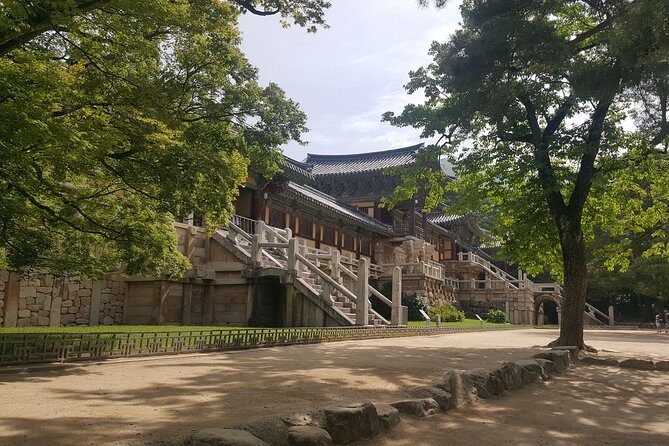
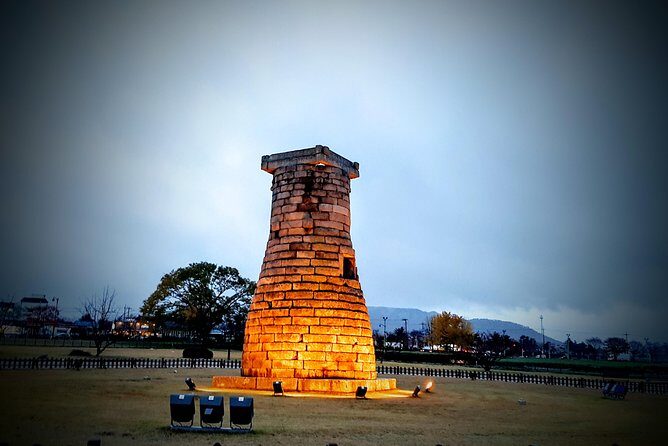
Cheomseongdae is the star gazing tower, built during the reign of Queen Seonduk, and dated to 634. It’s described as the oldest existing observatory in the Far East, which instantly raises the stakes: you’re not just touring a monument, you’re standing in a surviving piece of how people observed the sky.
The tower is built with 27 levels of stones, which is the kind of detail that makes the stop click. It’s small enough to be memorable, but deep enough to reward a guide’s storytelling.
Practical tip: this is typically a walking-and-looking stop. If the weather is windy or rainy, the outdoor sections can feel longer than you expect, so pack accordingly (more on that later).
Donggung Palace and Wolji Pond: Palace walls and a living waterline
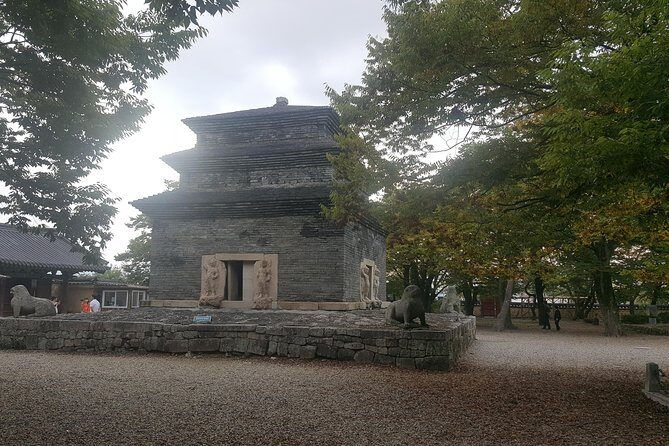
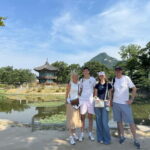
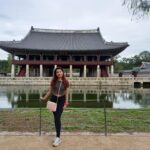
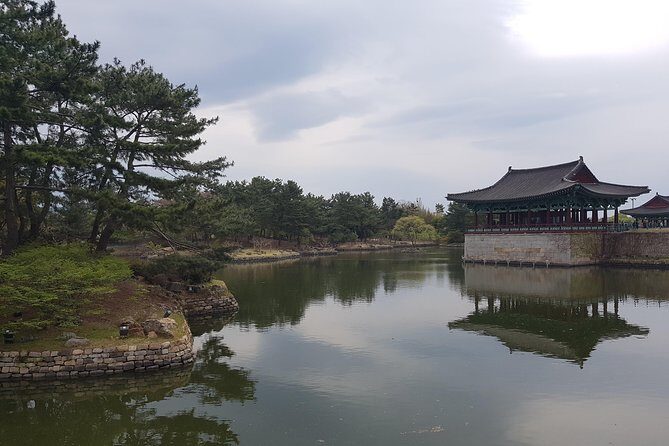
Donggung Palace and Wolji Pond (often referenced as Anapji Pond) is the “palace-luxury” side of Gyeongju. The pond area is said to have been built in 674 after the unification of the Korean Peninsula. That timing matters: it places the site in a moment of consolidation and cultural display.
The description that I find most useful for setting expectations is that the palace walls included small mountains inside, plus brought-in trees, flowers, rare birds, and animals. In other words, you’re looking at a designed environment, not just a pretty pond.
This is also one of the stops most exposed to weather. If rain hits hard, the grounds can become slippery and muddy, and your time outdoors can feel less enjoyable. Still, when the skies cooperate, this is one of those places where the scenery helps you imagine how grand daily life and ceremony once were.


Bulguksa Temple and Seokguram: Silla Buddhism at altitude
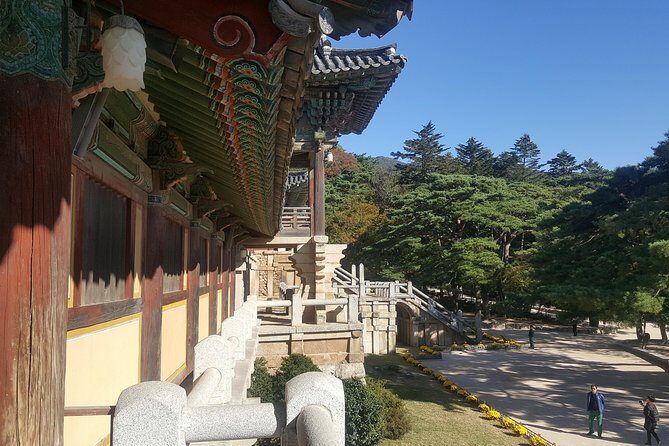
Bulguksa Temple is one of Korea’s best-known Buddhist temples, and this tour focuses on its Silla-era relics. You’ll spend about an hour here, and it’s the kind of stop where a guide helps you understand what you’re looking at instead of just walking past stone work.
The itinerary highlights the two stone pagodas, including Dabotap. Even if you’re not deep into Buddhist art, you can still appreciate why these structures became famous: they’re built with an attention to form and meaning that makes them hard to forget.
Then you move to Seokguram, the hermitage connected to Bulguksa. Seokguram is described as sitting 750 meters above sea level, overlooking the East Sea. This is the part of the day that often feels the most special because you’re combining religious art with strong physical location. The sculptures inside are described as among the best Buddhist sculptures in the world, which is a big claim, but the bigger point is that this site is famous for a reason.
The trade-off is that Seokguram is also a “stand, walk, look” experience in an outdoor setting with elevation. If you’re sensitive to hills or steep paths, pace yourself and plan for breaks.
What’s included vs what you’ll still need to pay
Here’s the spending math that makes this tour easier to evaluate:
Included
- Hotel pick-up in Seoul areas
- Private vehicle transfers during the day
- KTX round trip fare (economic class)
- Local English-speaking guide
- All admission fees to the sites on the route
Not included
- Meals
- Hotel drop-off in Seoul (so you’ll need to handle the return from wherever the tour ends)
That meal gap matters on a day this long. You’ll want to decide in advance how you’ll handle lunch. One of the guides (John) was able to recommend a small lunch spot with a large portion, which is exactly the kind of help you want on a schedule like this. Even if you bring snacks, you’ll probably still want a real meal during the sightseeing rhythm.
English on the ground: Guides and clarity
This tour is built around an English-speaking guide. In practice, the experience can vary a bit by person. People have described guides like Jay, John, and Dylan as strong at storytelling and history, but at least one group found a guide’s accent harder to follow.
Here’s my practical advice: if English clarity is a must for you, go in with a mindset of asking simple questions. When you ask about what you’re looking at, you get better answers, even when accents vary. Also, if you want deeper explanations, tell your guide early in the day—guides can usually adjust pacing when they know what you want.
Weather reality: When rain hits, plan your mindset
This is a history-and-art day with multiple outdoor elements: tombs, palace pond grounds, and viewpoints. When it rains hard, it can turn “beautiful and atmospheric” into “cold and slippery” fast. One downside mentioned by people who went in bad weather is that rain can blunt the experience since many key parts are outdoors.
So bring the basics:
- rain jacket (umbrella can be annoying in crowds)
- grippy shoes
- a small layer for cool morning air
Even with rain, the museum and some temple areas can still work well. The key is managing expectations and dressing for walking.
Value check: Is $470 worth it?
At $470 per person, it’s not a budget day trip. But for what you get, it can be good value if you compare it to doing the same day on your own.
You’re paying for:
- KTX round-trip in economic class (big chunk of cost by itself)
- hotel pick-up and private vehicle transfers
- admissions for multiple major sites
- an English-speaking guide coordinating timing
If you tried to DIY this route, you’d still spend on KTX tickets, local transport, and entry fees. The only major cost you’d still add on your own would be meals. So the decision comes down to this: do you want the stress removed? If you do, the package price makes more sense.
Also, demand seems real. The tour is often booked about 52 days in advance, so if you have a tight travel window, don’t wait until the last week.
Who should book this tour (and who should skip)
This tour fits you if:
- you want a structured day focused on Silla-era sites without logistics headaches
- you like a mix of burial history, palace culture, and Buddhist art
- you’re okay with a long day and early start to maximize time
You might skip it if:
- you’re very weather-sensitive and hate outdoor walking in rain
- you want a slower pace with more free time in one location
- you dislike group pacing, even though it’s private for your party
For first-timers to Gyeongju, this is a strong way to get oriented. For repeat visitors, it’s more of a “great route in limited time” option rather than a deep specialization.
Should you book the Gyeongju UNESCO Sites Tour by KTX?
I’d book it if your goal is a high-effort, high-organization day that teaches you what you’re seeing: tombs first, context in the national museum, then signature science and palace culture, and finally Bulguksa and Seokguram. The included KTX fare, admissions, and guide support are the heart of the value.
I’d think twice if your schedule is fragile or you’re traveling in a rainy stretch. Not because the sights vanish, but because the outdoor sections can make the day feel longer and less comfortable.
If you’re the type who loves history but hates planning, this is one of those rare tours where the structure actually protects your enjoyment.
FAQ
What time does the tour start?
The start time is listed as 7:00 am.
How long is the tour?
The duration is approximately 8 to 9 hours.
Is it a private tour or a group tour?
It is a private tour/activity, meaning only your group participates.
Are admission tickets included?
Yes. All admission fees for the tourist sites are included.
Does the price include KTX train tickets?
Yes. The tour includes roundtrip KTX fare (economic class).
Do you get hotel pick-up in Seoul?
Yes. Hotel pick-up is included for Seoul areas.
Is meals included?
No. Every meal is not included.
Is hotel drop-off included back in Seoul?
No. Hotel drop-off service (Seoul) is not included.
Can I cancel if plans change?
Yes. Free cancellation is available up to 24 hours in advance for a full refund.
If you tell me your travel month and whether you prefer museums over temples, I can suggest how to pace yourself on a rainy day versus a clear one.