REVIEW · SEOUL
Time Travel in Seoul: Gyeongbokgung Palace, Folk Museum & Bukchon
Book on Viator →Operated by Minari Travel · Bookable on Viator
Three Seoul stops, kept calm and personal. You get Gyeongbokgung Palace main sights, a folk museum break, and then the slower, story-filled lanes of Bukchon Hanok Village—without the feeling of being herded from place to place. What makes it work is the pacing and the guide’s context, including how Korea’s past shows up in everyday life today.
I especially like the chance to see Bukchon the way most people miss it: quiet alleys and viewpoints you likely won’t spot on your own. I also like having Mina, a friendly, clear English communicator, who shares both history and practical tips about modern day Korea. One consideration: this is only about 3 hours, so you should be ready for a focused highlights route rather than endless wandering.
In This Review
- Key things I think you’ll care about
- Why this 3-hour Seoul mix makes sense
- Getting oriented at Gyeongbokgung Station
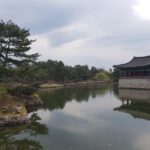
- Gyeongbokgung Palace: seeing the main highlights in a focused way
- National Folk Museum of Korea: a practical cultural reset
- Bukchon Hanok Village: quiet lanes, viewpoints, and that hanok café pause
- Mina’s small-group touch: friendly English and real helpful context
- Price and value: what $57.09 actually buys you
- Logistics that matter: timing, meeting points, and where you’ll finish
- Who should book this tour
- Should you book? My call
- FAQ
- How long is the tour?
- What’s included in the tour price?
- How big is the group?
- Where do I meet the guide?
- Where does the tour end?
- Is free cancellation available?
Key things I think you’ll care about
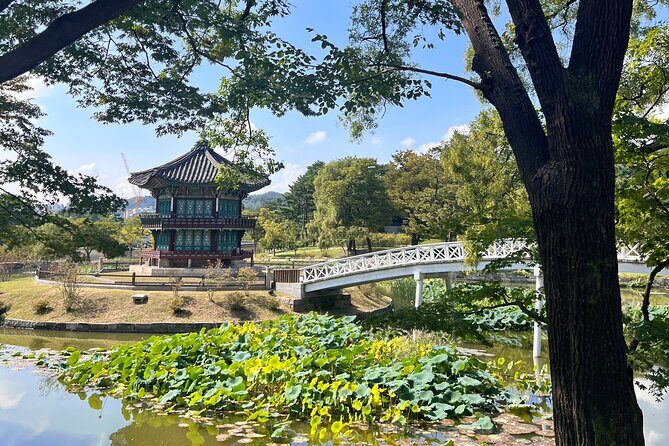
- Small group (max 6): You’ll move at a human pace and can actually ask questions.
- Admissions smartly handled: Palace ticket is included; the National Folk Museum and Bukchon café stop don’t charge you extra.
- Bukchon “finds” with a local guide: Quiet lanes and viewpoints, not just the postcard streets.
- A hanok café drink with rooftop views: A real pause, not a quick photo stop.
- Mina’s communication style: Clear English, lots of context, and the kind of practical guidance that helps you enjoy the rest of your trip.
Why this 3-hour Seoul mix makes sense
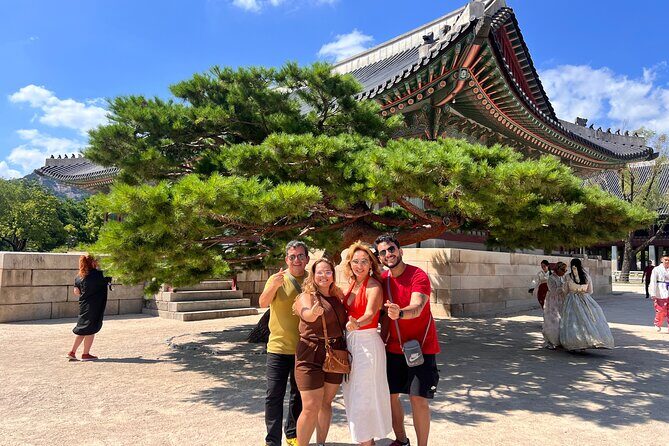
Seoul can feel like a lot fast—neon, crowds, and too many things competing for your attention. This tour is built for the opposite mood: small group, steady timing, and three high-signal stops that connect together.
You’ll spend time with the grand side of Korea first (the palace), then switch gears to daily life and traditions (the National Folk Museum of Korea), and finish in Bukchon, where you can see the “everyday version” of history in a neighborhood of traditional hanok houses. That structure helps your brain stitch it all together instead of treating each place like a separate checkbox.
The other reason I like this format: value. You’re not just paying for walking. You’re getting guided story time, and you’re also getting key costs handled—especially the palace admission and the included drink at the hanok café.
You can also read our reviews of more museum experiences in Seoul

Getting oriented at Gyeongbokgung Station
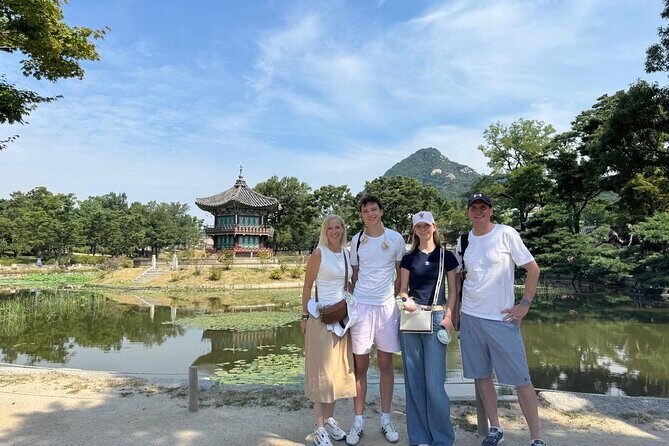
The tour starts at Gyeongbokgung Station (Line 3), Exit 488-8 in Jongno District. That’s a very workable starting point if you’re already using the subway to get around central Seoul.
Before you head out, I’d do two quick things: wear comfortable shoes (you’ll be on your feet), and have your phone ready for the mobile ticket. The tour is listed with confirmation at booking, so you shouldn’t be stuck waiting around, but you still want your ticket accessible on the day.
Also note the tour ends in a different spot than it begins. You’ll finish at Anguk Station (Line 3), Exit 3, which is convenient if you’re planning more walking around central Jongno after.
Gyeongbokgung Palace: seeing the main highlights in a focused way
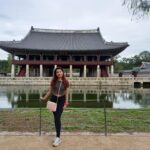
Your first stop is Gyeongbokgung Palace, with about 50 minutes and the palace admission ticket included. This is a good length for a first-time visit because you get the core views and layout without turning it into an all-day mission.
With a guide, you don’t just read signs—you understand what you’re looking at. That matters here. Gyeongbokgung is one of Seoul’s most important royal palaces, and the “main highlights” route is designed so you don’t miss the most significant sights while you’re still fresh and not rushed by a huge crowd.
A small timing heads-up: 50 minutes can feel quick if you stop for a lot of photos. If you’re the type who likes to slow down, pick a few must-do photo angles and let the rest be quick glances. The guide’s job is to point you toward the best viewing spots and keep you from circling the same area twice.
If you want the best experience, show up ready to walk and listen. This part is less about sitting and more about building your sense of place.
National Folk Museum of Korea: a practical cultural reset
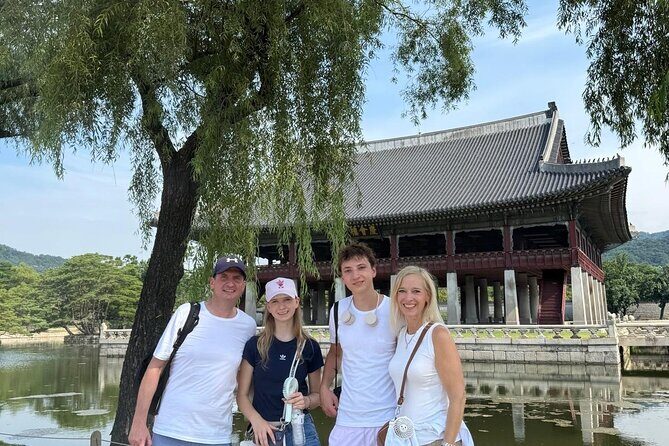
Next you head to the National Folk Museum of Korea for about 30 minutes, and admission here is free. I like this stop because it changes the tempo. After royal-scale architecture, you get a lens on how Korean people lived in the past and how traditions continue today.
Even in a short window, a guided museum visit can do something an audio guide sometimes doesn’t: it can turn random rooms into a story. You’re not just moving from display to display. You’re learning what to notice—everyday life details, cultural continuity, and the way traditions show up beyond history books.
This stop is also a smart palate cleanser. By the time you’re ready to walk through Bukchon, you’re more likely to understand what you’re seeing in the neighborhood: not just pretty old houses, but a living connection to tradition.
One consideration: 30 minutes is tight. Go in with a mindset of scanning with purpose. If you try to read everything, you’ll run out of time. Pick a few sections that interest you most, then let the guide’s explanations help you fill in the rest.
Bukchon Hanok Village: quiet lanes, viewpoints, and that hanok café pause
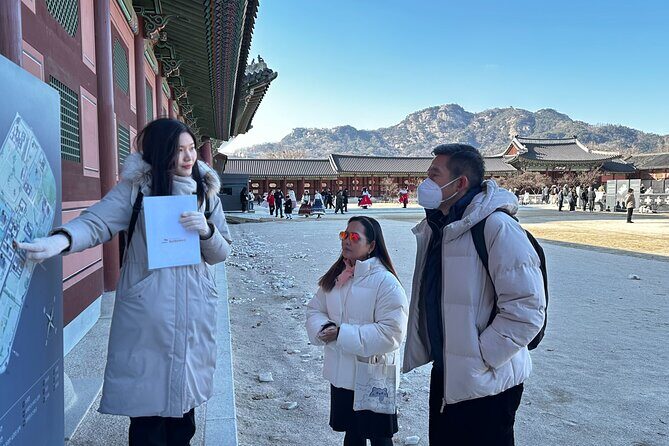
The heart of the tour is Bukchon Hanok Village, where you spend about 1 hour 30 minutes. This is also where the tour’s value gets personal: you’ll uncover hidden spots with your guide that are hard to find on your own.
Bukchon is famous, but “famous” can still mean chaotic—crowds on the main routes. The guide-led approach helps you spend more time where the streets feel calmer. Think: quiet alleys, scenic viewpoints, and small moments you’d likely walk right past without knowing what to look for.
Then comes the best kind of break: a peaceful tea break at a hanok café with a rooftop panoramic view, included in the tour. This is not just a sit-down for the sake of sitting. It gives you a chance to reset your feet, take in the architecture from above, and connect what you learned earlier in the palace and museum to what you’re seeing around you.
If you want to make the café break count, grab your drink, step where you can see rooftops clearly, and take a moment to look at the rooflines and how the neighborhood sits together. That’s where Bukchon starts to feel like more than a photo location.
Practical note: wear shoes with grip. Bukchon’s streets can be uneven, and you’ll be moving steadily for that full 90 minutes.

Mina’s small-group touch: friendly English and real helpful context
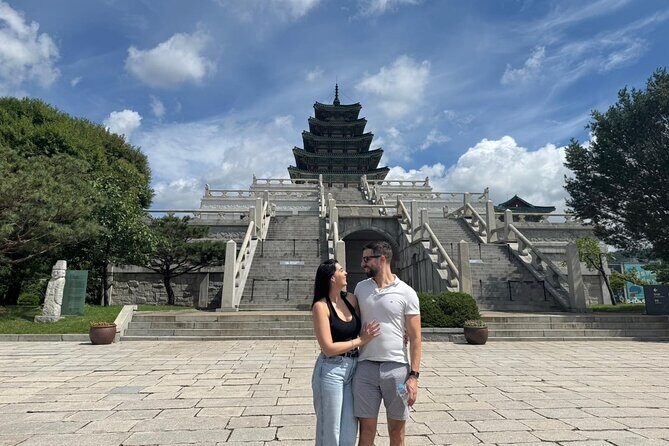
The consistent standout from the experience is the guide—Mina. Multiple people highlight that she’s super friendly and speaks excellent English, and that she’s a strong communicator who keeps things clear without being stiff or overly scripted.
What I think you’ll feel most, day-of, is the balance between storytelling and practicality. Mina doesn’t only explain history. She also shares tips about modern day Korea, which is hugely useful because your questions won’t stay theoretical. You’ll likely wonder about where to go next, how to handle a plan, or what to expect in daily life outside the sites—Mina’s answers can help you shape the rest of your trip.
Another thing worth noting: the tour can be described as fun and customizable. In a group this small, your guide can adjust pace and priorities based on your interests and energy. That’s one reason this tour works better than bigger group bus tours that keep everyone trapped on the same track.
And yes, there’s a memorable example of care from Mina in one of the reviews: she went the extra mile to help someone reach a pharmacy after an ankle was sore. You don’t need to plan for emergencies, but it’s a good signal. This is the kind of guide who pays attention to what’s happening with people in the group.
Price and value: what $57.09 actually buys you
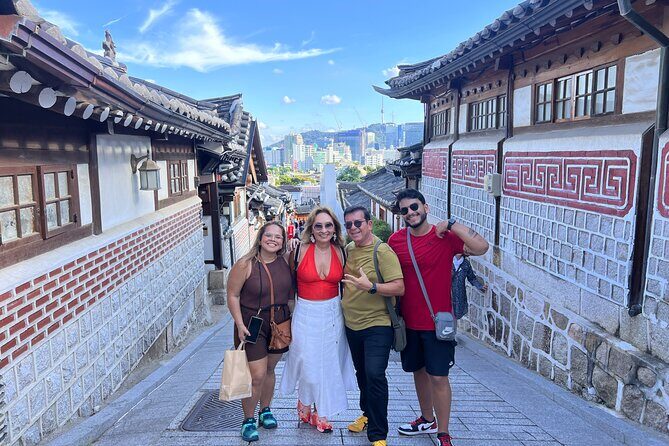
At $57.09 per person, the big question is: is this worth it versus paying for tickets yourself and walking the route?
In my view, it’s strong value if you care about having a guide and avoiding time-sink planning. Here’s why:
- Gyeongbokgung Palace admission is included. That’s a real cost you don’t have to manage separately.
- The National Folk Museum of Korea stop is free, so you’re not spending your budget there.
- The hanok café drink with rooftop views is included, which turns a potential “you can buy your own snack” stop into a true part of the tour.
- The group size is capped at 6 travelers, which makes your money go further in terms of attention.
If you’re someone who enjoys reading a guidebook and wandering, you might find you can do something similar on your own. But if you want to spend 3 hours getting better context than you’d get from signs alone—plus enjoy hidden Bukchon lanes and a planned café view—this price starts to look fair.
Also, booking is described as common about 24 days in advance. If you’re traveling in peak season, booking earlier tends to help with availability, especially with a small group cap.
Logistics that matter: timing, meeting points, and where you’ll finish
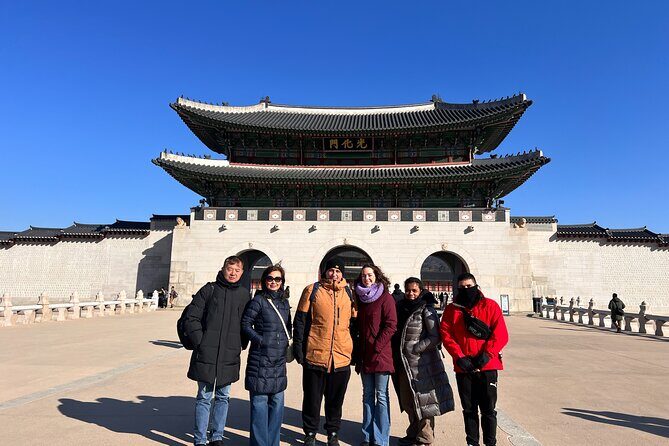
The tour runs about 3 hours total. It starts at Gyeongbokgung Station and ends near Anguk Station, so you won’t need to backtrack later if you’re continuing exploring central Seoul.
Here’s why the meeting/end points matter in real life:
- Central Seoul sight lines can be confusing if you’re trying to navigate mid-day.
- Ending at Anguk is convenient because it keeps you close to more traditional-area walking.
Make it easy on yourself:
- Arrive a few minutes early at the start point so Mina can get the group settled.
- Keep an eye on the pace. This tour is timed, so you’ll want to stay close and avoid long stops that break the flow.
- Use the mobile ticket on your phone to check in smoothly.
Who should book this tour
I’d point you toward this tour if you match at least a couple of these:
- You want a small group experience with real conversation, not a mass tour.
- You’re visiting for the first time and want a guided path through a palace, a museum, and a traditional neighborhood.
- You like getting context that helps you understand what you see, including tips about modern day Korea.
- You care about Bukchon but don’t want only the crowded main routes.
If you want an unstructured, all-day wander where you stop whenever inspiration hits, this one may feel a bit tight. But if you want a well-paced introduction with a guide and a nice break at the hanok café, it’s a smart fit.
Should you book? My call
Book it if you want value, calm pacing, and the kind of guide attention that makes Seoul feel easier. This works especially well because it pairs a major landmark (Gyeongbokgung) with a culture-and-tradition stop (National Folk Museum) and then lands you in Bukchon with hidden lanes and a rooftop café drink.
Skip it only if you strongly prefer self-guided travel and don’t care about guided context, or if you’re looking for something much longer than 3 hours.
If your travel style is “show me the highlights, but help me understand them,” this tour is a good match.
FAQ
How long is the tour?
The tour lasts about 3 hours.
What’s included in the tour price?
Gyeongbokgung Palace admission is included, and you’ll also enjoy a relaxing drink at a hanok café. The National Folk Museum stop is free.
How big is the group?
The maximum group size is 6 travelers.
Where do I meet the guide?
You meet at Gyeongbokgung Station (Line 3), Exit 488-8 in Jongno District.
Where does the tour end?
The tour ends at Anguk Station (Line 3), Exit 3.
Is free cancellation available?
Yes. You can cancel up to 24 hours in advance for a full refund.