REVIEW · SEOUL
Deoksugung & Jeongdong-gil: A Walk in Korea’s Rich Heritage
Book on Viator →Operated by S.A. Tour · Bookable on Viator
Seoul makes history walkable. This 3-hour route connects Deoksugung Palace with Jeongdong-gil’s layered palace and city sights, guided in English with a clear focus on late-19th to early-20th century Korea. I like that the itinerary lists free admission at every stop, so your $48 mostly buys a real guide and your time. One consideration: it depends on good weather, and you’ll be on your feet for long stretches.
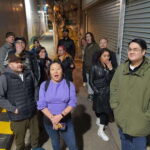
You start at Deoksugung Palace (99 Sejong-daero, Jung-gu) at 9:30am and finish by Cheonggyecheon Stream in Jongno-gu. With a max group size of 15 and a mobile ticket, it’s an easy, low-stress plan if you like a guided pace rather than piecing together palaces on your own.
In This Review
- Key things that make this walk worth your morning
- Getting Your Bearings: Deoksugung start to Cheonggyecheon finish
- Deoksugung Palace: where Joseon royalty meets a Seoul you can still feel
- Gyeonghuigung (Gyeonghui) Palace: a second royal stop without the fatigue
- Appenzeller Noble Memorial Museum: Baekjae Hakdang to Pai Chai University
- Jeongdong Theater stop: a useful break for coffee, drinks, and restrooms
- Jungmyeongjeon Hall: imperial library roots and the Eulsa story
- Gwanghwamun Square: a modern Seoul landmark with real historic weight
- Ending at Cheonggyecheon Stream: turn your tour into a real local moment
- Price and value: why $48 makes sense for this specific route
- Group size, pace, and what it means for your comfort
- Who should book this Jeongdong-gil heritage walk
- Should you book this tour?
- FAQ
- FAQ
- How long is the Deoksugung & Jeongdong-gil tour?
- Where does the tour start and end?
- What time does the tour begin?
- Is admission included for the sites on the itinerary?
- What’s included in the price?
- Is lunch included?
- Will there be a break for coffee or restrooms?
- What’s the group size limit?
- What happens if the weather is bad?
Key things that make this walk worth your morning
- Small group size (up to 15) keeps the pace human and questions possible.
- Free admission at each listed stop means the tour cost goes toward interpretation, not entry fees.
- A tight historical arc from Joseon-era palaces into Korean Empire-era buildings.
- Appenzeller Noble Memorial Museum adds an education-and-missions thread to the story of modernization.
- Jeongdong Theater stop gives you a practical coffee/drinks and restroom break.
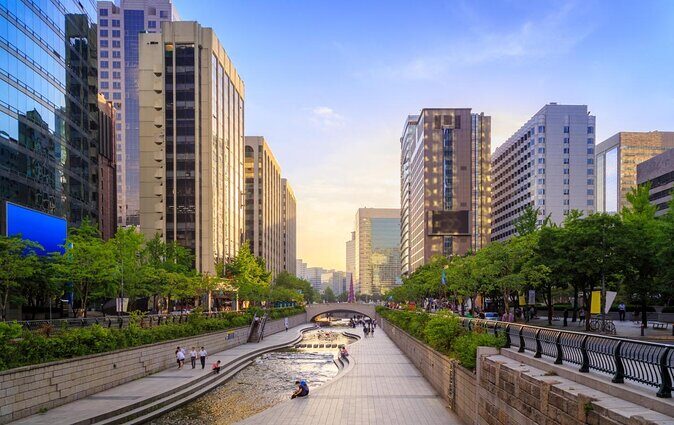
- Finish at Cheonggyecheon lets you roll straight from monuments into Seoul’s everyday city life.
Getting Your Bearings: Deoksugung start to Cheonggyecheon finish
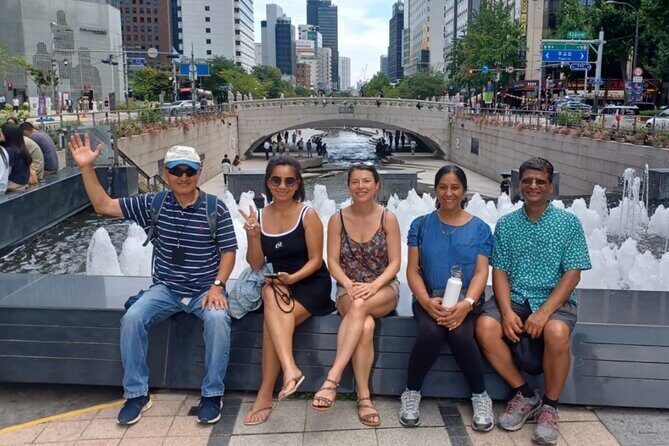
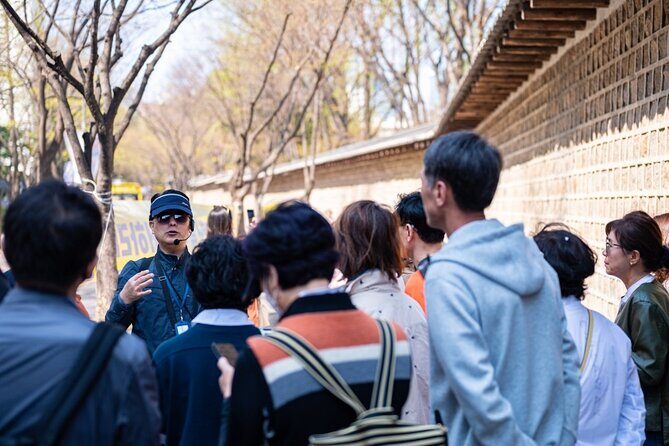
This is designed as a compact Seoul history-and-streetscape walk. You meet at Deoksugung Palace at 9:30am, then move through several major cultural stops before ending near Cheonggyecheon Stream. It’s a smart format for your first or second day, when you still want to understand where things sit in the larger Jongno district.
The duration is about 3 hours, with short on-site moments built in (many stops are around 10–20 minutes). That matters because you’re not expected to do a full, slow museum marathon. Instead, you’ll get an organized story with just enough time to orient yourself in each place.
Practical tip: wear shoes you can walk in for a few hours. Even with brief stops, this is still a walking tour through central Seoul, and there’s no mention of a long rest break beyond the Jeongdong Theater stop.
You can also read our reviews of more walking tours in Seoul
Deoksugung Palace: where Joseon royalty meets a Seoul you can still feel
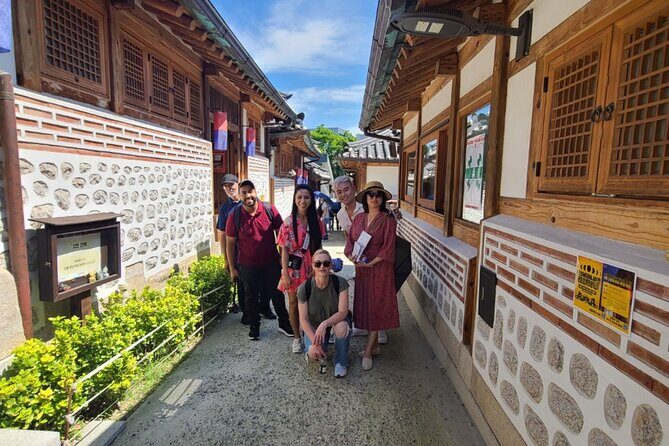
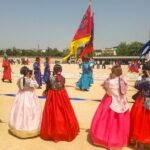
Deoksugung Palace (also called Gyeongun-gung) is a classic Joseon Dynasty palace located right in central Seoul. The main idea here is that this palace anchors the trip in Korea’s older royal timeline—before the story shifts into the modernizing late 1800s and early 1900s.
You’ll spend about 20 minutes at the site, and the itinerary notes free admission for this stop. That’s a gift for your budget, but it also shapes the experience: you’re not going to see every corner, but you will get the key context your guide uses to connect this palace to the later buildings you’ll see.
Why I think Deoksugung is such a good starting point: it sets the contrast. Seoul isn’t only old palaces, and it isn’t only modern city life. This area sits in the middle of that overlap, which makes the next stops feel like part of one continuous story instead of separate sightseeing checkboxes.
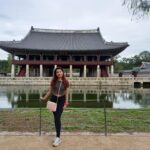
Gyeonghuigung (Gyeonghui) Palace: a second royal stop without the fatigue
Next comes Gyeonghuigung Palace (also known as Gyeonghui Palace), located in Jongno-gu. It was originally built in 1623 during the Joseon Dynasty as the residence of Kin—and that detail matters because it reinforces how these palaces were specific homes for people connected to court power and household life.
You’ll have about 20 minutes here too, again with the itinerary listing free admission. This means you can absorb a second royal setting without turning the tour into a long palace slog.
The payoff: by seeing two Joseon-era palace sites back-to-back, you start noticing patterns—layout choices, the way palace grounds function as “worlds” within the city. Even in a short visit, this helps you read Seoul’s historic spaces with less guesswork later.
Possible drawback: since this is time-limited, you’ll need to keep your pace focused. If you prefer slow wandering and photos from every angle, you might feel a little rushed at the palace moments.
Appenzeller Noble Memorial Museum: Baekjae Hakdang to Pai Chai University
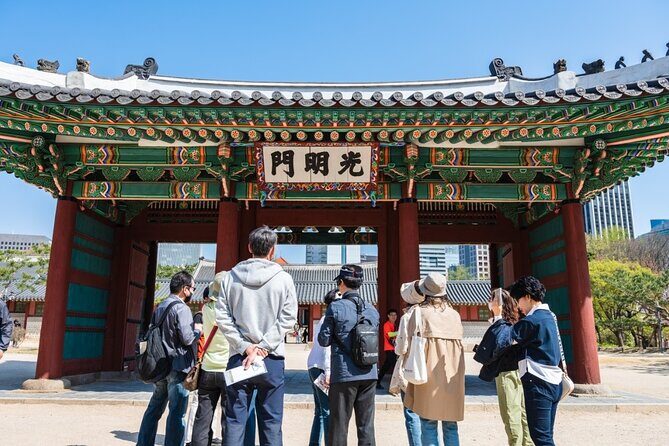
Then you shift from royal spaces to an education and cultural history stop. The Appenzeller Noble Memorial Museum is the former home of Baekjae Hakdang, a missionary school that was later expanded into a university.
The itinerary connects it to Pai Chai University in Daejeon, making this stop more than a quick photo moment. It places learning and institutions into the broader timeline of how Korea changed from the late 19th century onward, when schools and Western-influenced education models were part of the national transformation conversation.
Time-wise, it’s about 10 minutes, with free admission listed. For you, that means: go in ready to skim the highlights and let your guide point out what connects the school story to the late-19th/early-20th century theme of the walk.
This is a stop I like because it adds a different angle. Palaces tell one kind of power story. Schools tell another—how new ways of thinking and training started shaping society during a period of major change.
Jeongdong Theater stop: a useful break for coffee, drinks, and restrooms
After the museum, you pause at Jeongdong Theater. The itinerary specifically says you stop here so guests can get coffee or other drinks and use the restroom. You also get a taste of the venue’s mission: it features concerts, plays, and musicals that incorporate elements of traditional Korean culture.
Expect about 25 minutes at this stop. That’s long enough to reset without derailing the tour’s overall timeline. And for practical sightseeing, it’s a big deal—because restrooms and a beverage break in central Seoul can be the difference between a smooth day and a stressful one.
If you’re traveling with a slower walking pace or you just want a moment to regroup, this stop is the built-in solution. It also gives you a small “modern street” feel between the older sites, which keeps the tour from feeling like a straight line of monuments.
You can also read our reviews of more historical tours in Seoul
Jungmyeongjeon Hall: imperial library roots and the Eulsa story
Next is Jungmyeongjeon Hall, a building with a timeline you’ll actually remember. The itinerary notes it was built in 1899 as the imperial library of the Korean Empire.
Then it adds a key turning point: after Deoksugung Palace caught on fire in 1904, the place became the temporary residence of Emperor Gojong. That kind of detail matters because it turns the building into a witness to crisis and political shift, not just a pretty stop on a map.
The itinerary also mentions it as the site of the infamous Eulsa T…. Even without the full text here, the takeaway you can hold onto is clear: this is a place tied to a serious historical turning point associated with the Eulsa era.
You’ll spend about 15 minutes here, and it’s listed as free admission. That short window is perfect for a “story-first” visit. You’re not expected to become an architecture expert in one quarter of an hour. You’re expected to understand what changed, why it mattered, and how this hall fits into the big political arc of the late empire period.
Gwanghwamun Square: a modern Seoul landmark with real historic weight
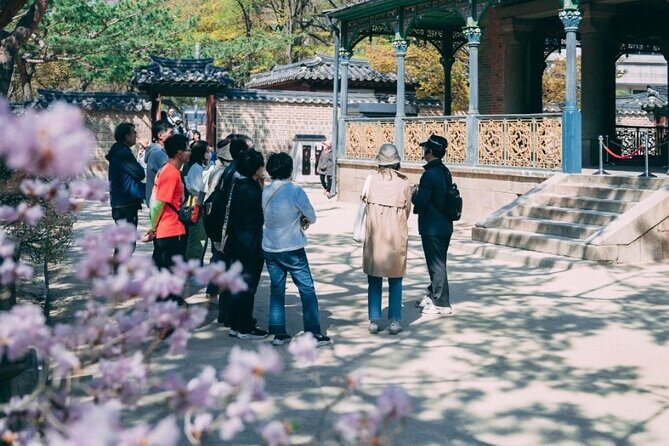
You finish the main sightseeing stretch at Gwanghwamun Square, a large public square in central Seoul built in 2009. This is modern civic space—fountains, crowds when events happen, and a direct visual anchor to national history through a statue of King Sejong the Great.
The itinerary also describes a fountain and multiple statues or features. The core point for you: you’re moving from palace compounds and imperial-era context into a space that’s built for the public—where history is presented in a contemporary, easy-to-read way.
You’ll spend about 20 minutes here. Use it to take a breather and look around. Even if you’re not into statues, the square helps you map the relationship between old and new Seoul, because it’s surrounded by major streets and major institutions.
Ending at Cheonggyecheon Stream: turn your tour into a real local moment
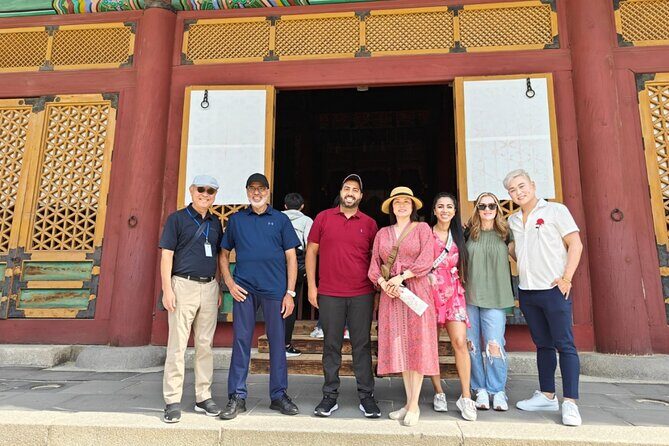
The tour ends near Cheonggyecheon Stream. This finish location is smart because it gives you an immediate “what Seoul feels like now” payoff after the historic stops.
Cheonggyecheon is also an easy place to keep going on your own. After a guided walk ends, you’re not stuck searching for your next plan. You can continue along the stream area at your own pace, grab a snack, and slow down a bit.
The tone of the day shifts naturally here. Before, you were dealing with palace gates, halls, and historical explanations. After, you’re in public space again—exactly the contrast the tour sets out to show.
Price and value: why $48 makes sense for this specific route
At $48 per person for about 3 hours, this is not a “cheap everything” deal. It’s a guided experience priced around interpretation.
Here’s what makes it good value for many people:
- A professional English guide is included, which is where you get the connections between stops.
- Each listed stop shows free admission, so you’re not paying entry fees for multiple sites.
- The route is short and focused, so you’re buying time savings and story structure versus doing it alone.
Where you might question it: if you already know Seoul palace history and you prefer total freedom, the guided interpretation may not feel worth it. And because it’s weather-dependent, you can’t always guarantee the exact plan will happen outdoors on a perfect schedule.
But if you want a guided framework for the Joseon-to-Korean-Empire transition—and you want it in one neat morning—this price-to-time ratio works.
Group size, pace, and what it means for your comfort
The tour caps at 15 travelers, which tends to keep things from feeling chaotic. With a smaller group, your guide can manage timing at stops like Jeongdong Theater (where you’ll need to regroup after coffee) and keep everyone from spreading out too far.
The itinerary also signals a steady pace: several stops are around 10–20 minutes, and then there’s a longer 25-minute break at Jeongdong Theater. That structure helps if you’re the kind of visitor who gets tired when tours run long without pauses.
Comfort tip: bring a small layer. Even in months that feel mild, palace grounds and open squares can feel breezy, and you’ll be walking between them.
Who should book this Jeongdong-gil heritage walk
This tour fits best if you:
- Want an easy introduction to Seoul’s historic core without planning multiple museum days.
- Like guided storytelling about late 19th-early 20th century Korea, not just isolated photo stops.
- Prefer short visits to several major sites, with context provided for each.
- Appreciate a practical pause for coffee and restroom time at Jeongdong Theater.
It might not be your best choice if you want deep, long-form exploration of one palace or museum. The schedule is built for a focused morning walk, not for spending an entire afternoon in one place.
Should you book this tour?
I’d book it if your goal is to connect the dots in Seoul’s central Jongno area: Joseon palaces, an imperial-era hall with heavy historical associations, then a shift into a modern civic space near Gwanghwamun Square and your easy finish at Cheonggyecheon.
I wouldn’t book it only if you hate walking, you’re sensitive to weather, or you already have a strong grasp of this specific historical period and want total independence.
If you’re a first-time visitor or you’re trying to make the most of one limited morning, this one is a smart use of time.
FAQ
FAQ
How long is the Deoksugung & Jeongdong-gil tour?
It’s about 3 hours.
Where does the tour start and end?
It starts at Deoksugung Palace, 99 Sejong-daero, Jung District, Seoul, and ends at Cheonggyecheon Stream in Jongno District.
What time does the tour begin?
The start time is 9:30am.
Is admission included for the sites on the itinerary?
The itinerary lists free admission for the stops it names.
What’s included in the price?
An English professional tour guide is included, and you get a mobile ticket.
Is lunch included?
No, lunch is not included.
Will there be a break for coffee or restrooms?
Yes. The schedule includes a stop at Jeongdong Theater for coffee or drinks and restroom use.
What’s the group size limit?
The maximum group size is 15 travelers.
What happens if the weather is bad?
The experience requires good weather; if it’s canceled due to poor weather, you’ll be offered a different date or a full refund.