DMZ views, minus the border crossing. This 5-hour Seoul trip to Aegibong follows the Jogang River and lines you up with one of the closest looks at North Korea from South Korea, with a stop for a Starbucks that has become a global talking point.
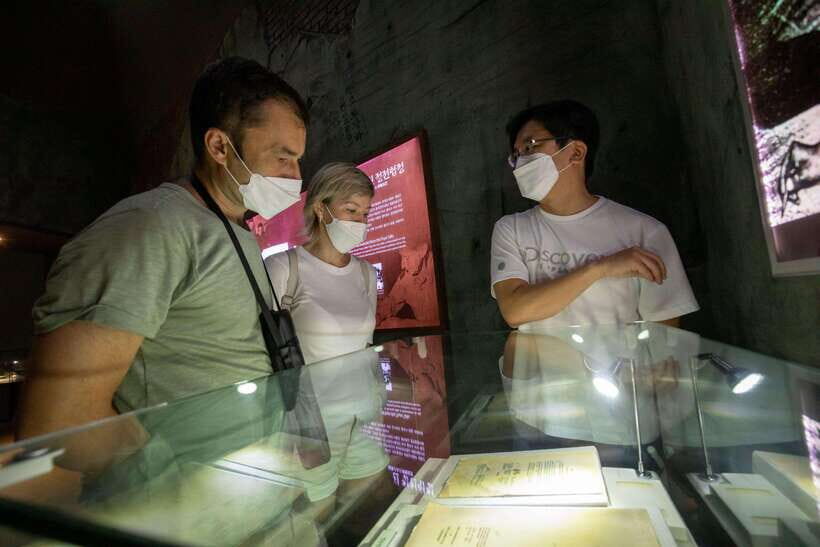
I love the tight schedule and the time you get at the 조강전망대 observatory, where binocular viewing helps you pick out villages about 1.4 km away. I also like how guides such as Gogo and Judy keep the big-picture story of the peninsula clear and practical, while still making room for questions.
The main trade-off is that the tour does not enter the DMZ, and part of your day is spent at the Starbucks stop. If you’re expecting a traditional DMZ-access experience, you’ll need to adjust your expectations.
In This Review
- Key Highlights You’ll Actually Care About
- Why Aegibong Delivers the Best North Korea Views From Seoul
- Getting From Seoul: Pick-Up Points and What 5 Hours Feels Like
- Aegibong Ticket Office: The One Moment Where Planning Pays Off
- Marine Corps Memorial: War History You Can Feel in Your Feet
- Peace Eco Parks and the 150m Bridge: Views Plus Walking Time
- Peace Bell and Altar Stops: What These Moments Are Doing
- Starbucks at Aegibong: The Closest Latte to North Korea
- 조강전망대 Observatory: Your Best Shot at Details
- What to Bring and How to Keep Your Day Smooth
- Who This Tour Is For (and Who Should Skip It)
- Should You Book This North Korea View & Starbucks DMZ Tour?
- FAQ
- FAQ
- How long is the tour?
- How much does the tour cost?
- Does this tour enter the DMZ?
- Where do you get picked up in Seoul?
- What time does the tour start?
- Is a passport required?
- What stops are included?
- Is coffee included at Starbucks?
- What’s included in the price?
- Can I cancel for a full refund?
- How large is the group?
Key Highlights You’ll Actually Care About
- Closest North Korea observatory time (조강전망대) with binocular viewing and clear sight lines
- DMZ-edge setting on the Jogang River at Aegibong, so the border is never far away
- A Starbucks stop right near the action at the world’s closest Starbucks to North Korea
- Peace Eco Park + the 150m bridge for classic “border-shot” viewpoints and walking stretches
- Short, structured stops with included entry fees, which makes the day feel efficient
- Passport required for the Aegibong security area, so bring it from the start
Why Aegibong Delivers the Best North Korea Views From Seoul
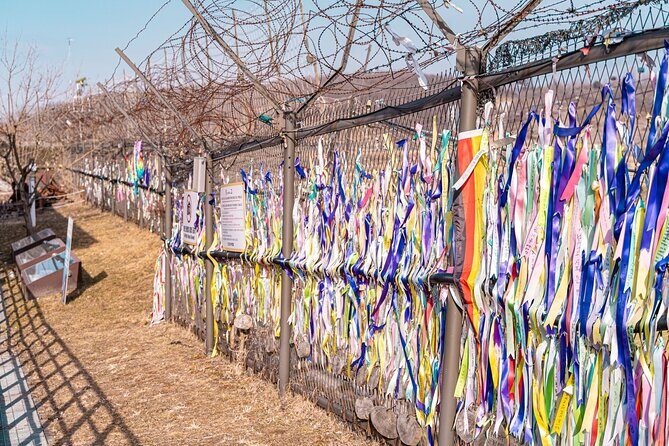
If you want North Korea views without the long, uncertainty-heavy process of crossing into restricted zones, this Aegibong-focused outing is built for you. You stay in South Korea, but the sights feel unusually close because the route hugs the DMZ side of the Jogang River near Aegibong.
The big payoff is how the day is paced. You’re not just dropped at a viewpoint and rushed out. Instead, you move through a chain of stops designed to keep the border in your line of sight, then end with a dedicated observatory segment.
And yes, the Starbucks matters. Not because you came for coffee, but because the Aegibong branch has become part of the story of the Korean divide. It’s a very specific kind of global contrast: latte in hand, border in the frame.
You can also read our reviews of more tours and experiences in Seoul.
Getting From Seoul: Pick-Up Points and What 5 Hours Feels Like
This is a compact day trip at about 5 hours, with round-trip transportation included. You’ll start from Seoul at 9:00 am, using one of the listed pick-up options: Myeongdong Subway Station Exit 9, Seoul City Hall Subway Station Exit 6, or Hongdae Subway Station Exit 3. The tour ends by dropping you back in Hongdae, which is convenient for continuing your day.
The logistics are worth noting because DMZ-adjacent outings can feel chaotic if you plan poorly. Here, the structure helps. You get a guide, a bus, and a set timeline with short checkpoint-type stops followed by longer viewing time.
One more practical point: this tour has a maximum of 100 travelers. It’s not a tiny group, but it’s small enough that you’re unlikely to feel lost inside the crowd.
Aegibong Ticket Office: The One Moment Where Planning Pays Off
Right at the start of the DMZ-edge area, you’ll stop at the Aegibong ticket office. It’s brief—about 10 minutes—but it’s also where the “this is serious territory” reality shows up.
You’ll need to show your passport to pass through the security area. The tour makes this requirement clear, and it’s the one item you do not want to be scrambling for at the last second. If your passport is in a hotel safe or buried in a bag you packed on the train, you’ll burn time you don’t have.
Once you pass that point, the rest of the day starts to feel like a guided route through memorials and viewpoints, rather than a checklist of rules.
Marine Corps Memorial: War History You Can Feel in Your Feet
Next comes the Marine Corps Memorial, about 20 minutes. This stop isn’t just a photo op. It’s a grounding moment that connects the border scenery to the human cost of the Korean War.
The memorial honors Marines and cites a major wartime figure: 15,000 Marines who battled in the war. Whether you already know the peninsula’s history or you’re learning from scratch, it helps you interpret what you’re seeing later. The DMZ is easy to treat like a backdrop; this makes it harder to ignore the stakes.
If you care about context (and you likely do if you’re choosing this tour), this is the stop that makes the later views make more sense.
Peace Eco Parks and the 150m Bridge: Views Plus Walking Time
The tour then shifts into the Aegibong peace-and-view zone with multiple stops inside Aegibong Peace Eco Park and the connected area.
You’ll spend about 1 hour at Aegibong Peace Eco Park. This part is known for trails and war relics, and it’s also where you start getting that direct sense of what it means to live in a world where the border is close enough to matter.
After that, there’s another 30-minute eco-park stop tied to theme gardens and a “Sky Forest” style canopy area. The tour info specifically mentions 80+ rare bird species, which is a nice reminder that this isn’t only war memory—it’s also a living place with ecology and seasonal movement.
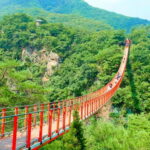
Then you hit the action moment: the 150m bridge (about 30 minutes). The bridge is basically the tour’s signature viewpoint. If you like photographs that feel like you’re standing right at the edge, this is where you’ll stretch your legs and get that “border shot” energy.
One practical note: the bridge is described as a thrill-ride experience. If you don’t love heights or sudden movement, you can still enjoy the moment, but manage expectations for your comfort level.




Peace Bell and Altar Stops: What These Moments Are Doing
Two shorter ritual-like stops follow: 애기봉 평화의종 (Peace Bell) for about 15 minutes, then a later peace altar reflection stop around 10 minutes.
The Peace Bell has a specific meaning in the tour’s description: cast in 2000, it symbolizes hope for reunification. The altar stop is also built around the theme of unity, with a 2018 construction date noted in the information.
You might not think bells and altars belong in a border-view itinerary—but here’s why they work. They give you a counterweight to the militarized framing you might expect. This is the tour’s way of saying: yes, it’s the DMZ-edge, but people also build for peace.
Starbucks at Aegibong: The Closest Latte to North Korea
Now for the part most people talk about: Starbucks near the border at Aegibong. You’ll have about 1 hour here, and it’s specifically presented as the world’s closest Starbucks to North Korea.
Coffee itself isn’t included—you’ll need to buy your latte (the tour lists meals and coffee/tea as not included). But the value isn’t the drink. It’s the setting. You’re sitting in a normal café format while looking at an abnormal political reality across the border.
This is also where the day can feel a bit long, depending on your pace. If you’re the type who hates “waiting for the viewpoint,” plan to treat Starbucks as a slow-down moment. Order something simple, take a few minutes to look out, then stand up and enjoy the border views as they change with light.
Also, don’t rely on perfect visibility. Even the best observatory experience depends on conditions. If it’s hazy, your first clear-glance might be your best one.
조강전망대 Observatory: Your Best Shot at Details
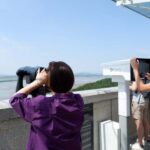
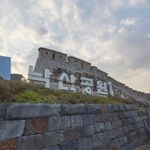
The tour’s final major viewing stop is 조강전망대, about 30 minutes. This is the real centerpiece for most people: the observatory is described as Korea’s closest observatory to the DMZ, and the info notes that binoculars can reveal villages about 1.4 km away.
That 1.4 km detail is the kind of thing that makes the border feel less abstract. You’re not only looking at a country on a map. You’re trying to separate shapes, clusters, and distance—using tools designed for that purpose.
For best results, go to the front of the viewing area and give yourself a minute before taking photos. The view can shift quickly as people move and focus changes. If your guide points out what to look for, follow their cues and avoid hopping around the entire time.
What to Bring and How to Keep Your Day Smooth
This is one of those tours where “small planning” prevents “big stress.”
Bring your passport. You’ll need it at the Aegibong security checkpoint, and you cannot pass without it.
Wear comfortable walking shoes. You’re on your feet across eco-park areas and especially around the bridge stop. Even though the overall day is only about 5 hours, the pace includes short walks plus viewing time.
Bring a light layer if you run cold easily. The tour includes a long observatory and outdoor park time, and weather can change fast near river-edge areas.
If you’re picky about timing, keep your expectations aligned with the structure: many stops are short, and there’s one long food-and-sight stop at Starbucks.
Who This Tour Is For (and Who Should Skip It)
This tour is a great match if you want a fast, structured North Korea viewing day from Seoul, with real viewpoint time and a guide to explain what you’re seeing.
It’s also a smart choice if you want DMZ-edge context without needing DMZ border entry. The route is built around Aegibong’s perspective on the border, so your day is about views and interpretation—not border bureaucracy.
If you specifically want the feeling of entering the DMZ, this is not that experience. The tour explicitly does not technically enter the DMZ, even though it gets right up to the edge.
Should You Book This North Korea View & Starbucks DMZ Tour?
If you’re aiming for the best mix of closeness, time efficiency, and a guided story, I think you’ll like this one. For $49 per person with transportation and entrance fees included, it’s solid value for a half-day format that still gives you a meaningful observatory stop and multiple DMZ-edge viewpoints.
Book it if:
- you want Aegibong + 조강전망대 viewpoint time
- you’re okay with a tour that stays outside the DMZ while still feeling close
- you want a guide (English or Chinese) to connect the scenery to the peninsula’s history
Skip it if:
- you’re only satisfied by an actual DMZ entry experience
- you feel irritated when a tour day includes a longer café stop
FAQ
FAQ
How long is the tour?
It’s approximately 5 hours.
How much does the tour cost?
The price is $49.00 per person.
Does this tour enter the DMZ?
No. The tour does not technically enter the DMZ, but it takes you to the edge along the Jogang river near Aegibong.
Where do you get picked up in Seoul?
You can be picked up at Myeongdong Subway Station Exit 9, Seoul City Hall Subway Station Exit 6, or Hongdae Subway Station Exit 3.
What time does the tour start?
The start time is 9:00 am.
Is a passport required?
Yes. A passport is required for the tour, especially because you must show it at the Aegibong security area.
What stops are included?
The tour includes stops such as Aegibong ticket office, Marine Corps Memorial, Aegibong Peace Eco Park, the 150m bridge, Peace Bell, Starbucks, and 조강전망대 (observatory).
Is coffee included at Starbucks?
No. Coffee and/or Tea is not included, even though Starbucks is part of the tour.
What’s included in the price?
Included are a tour guide (English or Chinese), round trip transportation, and entrance fees.
Can I cancel for a full refund?
Yes. You can cancel up to 24 hours in advance for a full refund. If you cancel less than 24 hours before the start time, the amount paid will not be refunded.
How large is the group?
The tour has a maximum of 100 travelers.