REVIEW · SEOUL
Ultimate Korea DMZ Tour from Seoul (Gondola & Suspension Bridge)
Book on Viator →Operated by VIP TRAVEL Co.Ltd · Bookable on Viator
One day, two Koreas, and a bus full of history. This DMZ tour from Seoul mixes major border sites with practical stops like Freedom Bridge, the Peace Gondola, and the Third Tunnel. I especially love the strong guide-led context and the fact that the day includes more than just big viewpoints, like the Peace Bell and Dokgae Bridge. The main drawback to plan for is walking time, including a tougher uphill climb around the tunnel area and stairs inside a limited-space tunnel.
I also like the way the tour uses timed stops so you get both museum-style moments and real-world border tension, without feeling like you’re stuck at one place for hours. Even better, guides such as Nancy, Diane, and Emily are praised for keeping groups moving and explaining when photos are allowed during government security rules. One more consideration: lunch isn’t included, so you’ll want to budget for a meal break on your own.
In This Review
- Key Highlights You’ll Feel Immediately
- How the 7.5-Hour DMZ Day Trips Logistically Works From Seoul
- Entering the DMZ Experience at the Right Pace (DMZ Signs, Rules, and Quiet)
- What to expect on the ground
- Imjingak Pyeonghwa-Nuri Park: Where Hope Gets Literal
- Bridge of Freedom and Imjin River Stops: Prisoner History You Can Stand On
- The Gondola Across the Peace Zone: Paju Imjingak’s Best Views
- Memorial Stops: Mangbaedan Altar and the Peace Bell’s Weight
- Unification Bridge Checkpoint: Bring Your ID and Don’t Be Cute About It
- Third Tunnel: The Most Physical Part of the Day
- Dora Observatory: The Closest Look North Korea Viewpoints Offer
- Tongilchon-gil and Jangdan Soybeans: A Short Reset Outside the DMZ Line
- Optional Suspension Bridges: Gamaksan Red and Majang Lake If You Want More View Time
- Gamaksan Red Suspension Bridge
- Majang Lake Suspension Bridge
- Walking, Photo Rules, and What to Bring (Based on the Actual Day’s Demands)
- Pack list that will save your day
- Guides Make the Difference: Nancy, Diane, Emily, and More
- Should You Book This DMZ Gondola and Suspension Bridge Tour?
- FAQ
- Where do I meet for this DMZ tour from Seoul?
- How long is the tour?
- Is transportation included?
- Is lunch included?
- Is the DMZ gondola included or optional?
- Do I need a passport or ID?
- Where will I be dropped off at the end?
- What if I cancel last minute?
- Is there a mobile ticket?
Key Highlights You’ll Feel Immediately
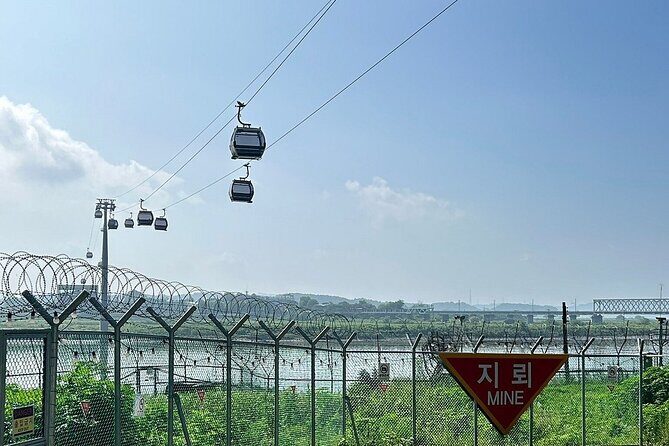
- Paju Imjingak Peace Gondola for a higher, river-crossing look toward the DMZ
- Third Tunnel plus a second, closer border-view day-stopper at Dora Observatory
- Bridge of Freedom and its prisoner-history markers, followed by memorial stops in the Imjingak area
- Unification Bridge checkpoint with ID checks, so you can’t wing it with just a casual wallet
- Optional suspension bridges (Gamaksan Red and Majang Lake) when you want a payoff view without changing tours
How the 7.5-Hour DMZ Day Trips Logistically Works From Seoul
This tour runs about 7 hours 30 minutes, which is long enough to cover multiple border-adjacent sites, but not so long that you feel trapped in a single location. You ride in an air-conditioned vehicle, which matters because parts of the day can involve waiting, walking, and then more walking.
Meet-up points are in central Seoul, making it easy to connect with public transit: Myeongdong Subway Station exit 9, Seoul City Hall Subway Station exit 6, and Hongdae Subway Station exit 3. You’ll also get a mobile ticket, which is helpful if you’re hopping between subway lines and don’t want to hunt for paper.
A practical note: the tour can be tight on timing, and several guides (including Nancy and Alex, who goes by MJ in some groups) are known for keeping the group moving to avoid delays tied to security procedures. If you’re the type who likes to stroll and take your time in every room, plan to go a little faster than your usual pace.
You can also read our reviews of more tours and experiences in Seoul.
Entering the DMZ Experience at the Right Pace (DMZ Signs, Rules, and Quiet)
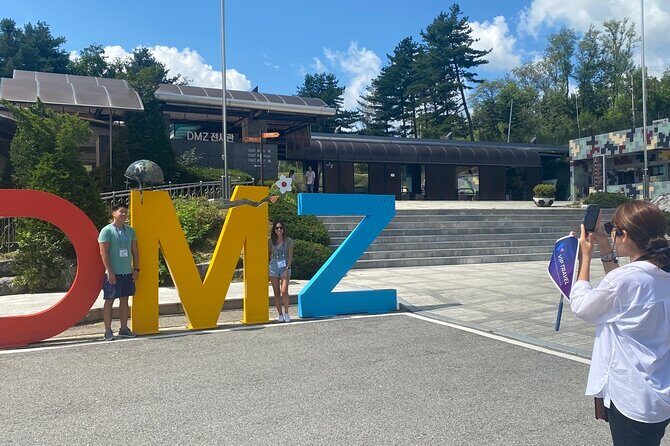
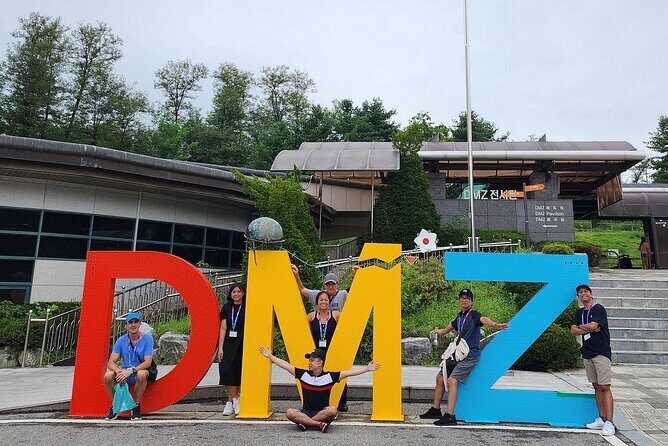
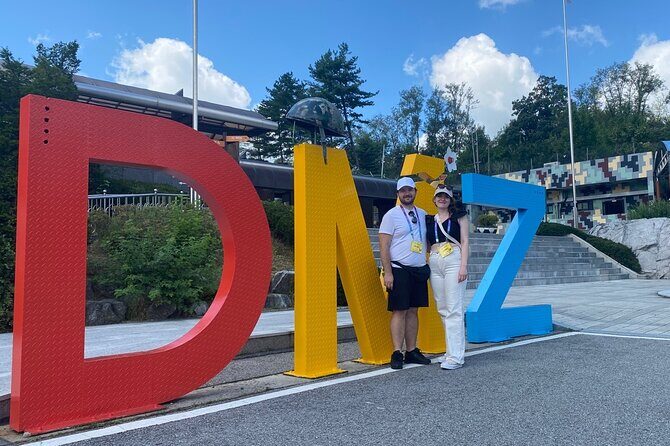
The day’s emotional core starts with the DMZ segment, a strip set up as the dividing line that’s been in place since the Korean Armistice Agreement. Your guide sets the tone with context before you start seeing the physical details—barbed wire imagery, tense Cold War remnants, and that strange quiet you only notice when you’re standing in a place built to be still.
What I like here is that the tour treats the DMZ not as a thrill ride, but as a place with real regulations and real limits. Photo rules can be strict in border areas, and guides are typically explicit about when you can shoot and where you can’t. That matters because DMZ security doesn’t care how motivated you are.
What to expect on the ground
You should expect short walking moments combined with larger “look and absorb” windows. Some parts feel intentionally slow—crunching gravel, scanning barriers, and listening to explanations that turn what looks like ordinary scenery into something loaded with meaning.
Bring comfort first. Shoes should handle outdoor surfaces and occasional stairs, because you’re not just sightseeing on flat streets.
Imjingak Pyeonghwa-Nuri Park: Where Hope Gets Literal
After the DMZ orientation, the tour heads to Imjingak Pyeonghwa-Nuri Park, a reunification-focused area known for memorials, symbolic objects, and photo-friendly cultural touches. The vibe is peaceful rather than dramatic. You’ll see things like pinwheels whirring and be surrounded by pine-smelling air, plus the “Iron Horse” train relic that links to the Korean War story.
This is one of my favorite parts of the day because it adds a human scale. Instead of only showing weapons or fortifications, you’re walking through reminders of families, separation, and the ongoing wish for reunification.
Bridge of Freedom and Imjin River Stops: Prisoner History You Can Stand On
Next comes the Bridge of Freedom, a temporary wooden span built in 1953 after the armistice. It replaced a destroyed railroad bridge over the Imjin River and carried 12,773 prisoners to the South—one of those details that makes the place feel heavier the longer you stand there. The tour keeps this grounded with clear narration so you understand what you’re seeing.
Then your route continues through Imjingak and nearby border-adjacent landmarks, including Dokgae Bridge. This bridge, built in 1950 and damaged during the war, once connected North and South across the Imjin River. The effect is simple: you look at a weathered structure and realize it used to be part of daily movement.
Between the bridges and river stops, you’ll also get brief wildlife and bird-watching moments when the group pauses. Even if you’re not a bird person, it’s a good reminder that this area has life thriving undisturbed in a place built for separation.


The Gondola Across the Peace Zone: Paju Imjingak’s Best Views
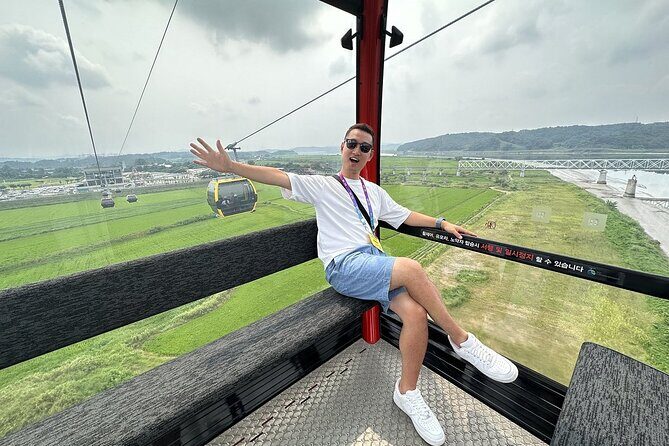
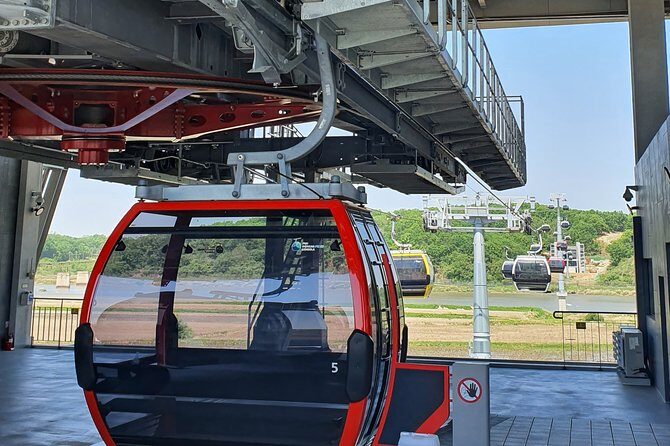
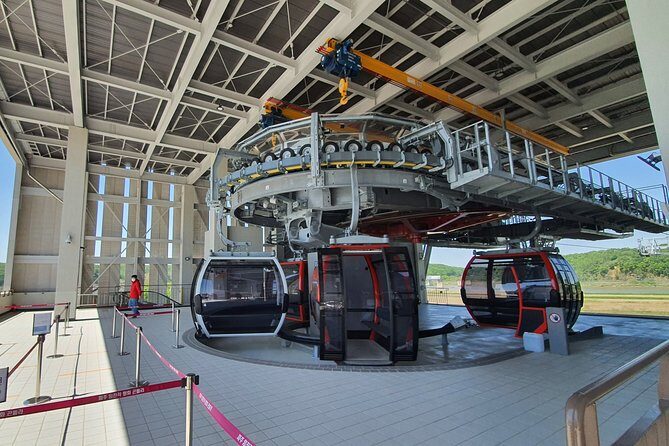
One of the headline experiences is the Paju Imjingak Peace Gondola. It opened in 2020 and gives you a birds-eye view of the DMZ region while crossing the Imjin River.
Two things make this worth your attention. First, it changes your perspective from ground-level barriers to a higher, wider view. Second, it’s one of the few times in the day when you can look around and feel how close the border is—without standing on a single “point.”
Important practical tip: there’s a “framed view” feeling to the DMZ. The gondola helps because you can scan farther, but it also doesn’t magically remove restrictions. The staff and your guide still follow security rules, so treat the experience as a viewing ride inside a controlled environment.
Memorial Stops: Mangbaedan Altar and the Peace Bell’s Weight
In between larger border viewpoints, the tour includes memorial moments that don’t ask you to be brave—they just ask you to pay attention. Mangbaedan Memorial Altar, built in 1987, is dedicated to families honoring loved ones in North Korea, especially during holidays. It’s a short stop, but the shortness is the point. You’re not rushed into or out of emotion; you’re given time to stand quietly.
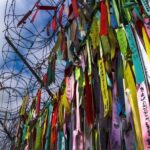
Then you’ll likely stop at Pyeonghwauijong (The Peace Bell), a 21-ton bronze symbol of reunification cast in 2002. People often touch the bell and listen for its deep chime while prayer flags flutter nearby. Even if you’re not religious, it’s one of the most physical “symbols” of the day—something you can see, feel, and hear.
Unification Bridge Checkpoint: Bring Your ID and Don’t Be Cute About It
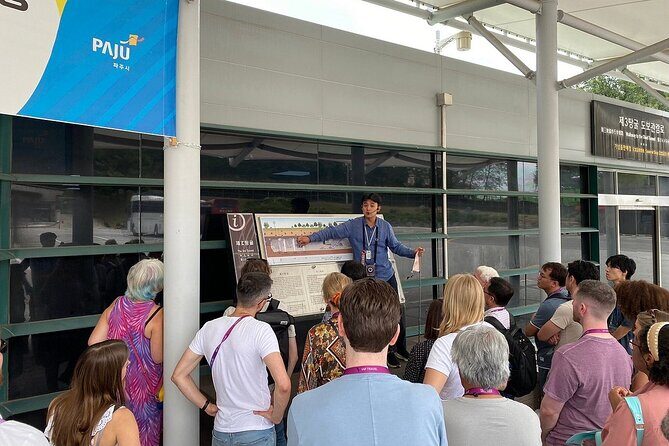
One of the most “real life” segments is the Unification Bridge military checkpoint. Soldiers inspect the bus and perform ID verification. Your best move is to follow the instructions precisely and keep your documents ready.
The tour data specifies you should have your passport, Military ID Card, or a South Korea-issued ARC (Alien Registration Card). If you’re missing the right document, you’re the one who pays the stress cost, not the tour operator.
This is also where your guide’s role gets critical. Guides like Kelly and Crystal have been praised for managing the group around military rules and advising when photos are appropriate. That kind of coaching saves time and keeps everyone calm.
Third Tunnel: The Most Physical Part of the Day
The Third Tunnel (also called the 3rd Infiltration Tunnel) is a major stop and one people talk about because it’s tangible. It’s about 12 kilometers from Munsan and around 52 kilometers from Seoul.
Here’s the balancing truth: tunnels can be fascinating, but they can also be physically demanding. Expect walking through a limited space and a limited viewing setup. Some people find it intense because you walk in, see framed views, and then have to walk back out.
If you have mobility concerns, take this seriously. The reviews tied to this tour reflect that the climb back up can feel hard, and there can be limited support if you need alternatives. In plain terms: you’ll want comfortable shoes, a steady pace, and a mindset that this is a short but physical experience.
Dora Observatory: The Closest Look North Korea Viewpoints Offer
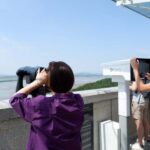
After the tunnel segment, the tour shifts to Dora Observatory on Dorasan. This observatory is one of South Korea’s closest viewing points toward North Korea, built to offer a direct look across the border.
Two details matter for planning your expectations. Dora Observatory was rebuilt in 2018, and it’s been in operation since 1986. Also, conditions can affect what you can see. Even on a rainy day, the tour still runs this stop; you’ll simply need to rely on staff instructions and your guide’s pointing.
This part of the day is your big visual payoff. It’s where the morning’s memorial language turns into a staring contest with reality.
Tongilchon-gil and Jangdan Soybeans: A Short Reset Outside the DMZ Line
Between major border-facing stops, you get a breather at Tongilchon-gil, connected with Tongilchon Jangdankong Maeul. This area sits just beyond the Civilian Control Line, and it’s tied to local agriculture—especially Jangdan soybeans.
It’s not an amusement stop. It’s more like a “small window into how life could feel” beyond the barriers. If you’re with family, this is a nice change of pace compared with tunnel concrete and checkpoint lines.
Optional Suspension Bridges: Gamaksan Red and Majang Lake If You Want More View Time
This tour includes optional add-on stops built around the suspension-bridge experience near the DMZ region.
Gamaksan Red Suspension Bridge
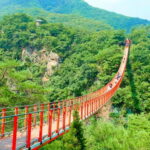
The Gamaksan Red Suspension Bridge is 150 meters long and about 1.5 meters wide, built in 2018 to honor Korean War heroes. It can hold up to 900 adults. Because it’s narrow, it feels more exposed than typical bridges.
Majang Lake Suspension Bridge
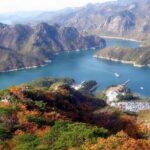
You may also cross the Majang Lake bridge, about 220 meters long. It spans a reservoir that’s turned into a water-and-walk scenic area, and the bridge is known for that slightly bouncy feeling when you step on it.
If you’re wondering which to choose: the gondola and Dora Observatory are the “must-see border-view” anchors. The suspension bridges are the “reward your legs with a view” moments, especially if you don’t mind a bit of walking and standing in outdoor weather.
Walking, Photo Rules, and What to Bring (Based on the Actual Day’s Demands)
This tour is doable for most people, but it’s not a sit-on-a-bus-only day. You should be ready for outdoor walking, hills, and at least one physical segment in the tunnel area. Some groups note there are longer uphill walks, and the tunnel walk can feel tough on the return climb.
Pack list that will save your day
- Comfortable walking shoes with grip for outdoor paths and tunnel-entry floors
- A light layer for temperature swings (DMZ-adjacent air can feel different from Seoul)
- A small bag for documents, since you’ll face an ID checkpoint
Photo-wise, don’t count on always capturing clean North Korea images. Security rules can restrict cameras in certain border areas. The good news: strong guides tend to coach you on when photos are allowed, and that can prevent frustration mid-moment.
Guides Make the Difference: Nancy, Diane, Emily, and More
A big reason this tour scores so high is how guides shape the day. Multiple guides have been highlighted in feedback—Nancy, Diane, Emily, Crystal, Gogo, Hana, Moon, Ray, Kelly, and Alex (MJ)—and a repeated theme is that they keep people on time while explaining what you’re seeing in plain language.
What I’d watch for when you’re booking: guides who actively manage timing and security coaching. It’s one thing to point at a bridge; it’s another to explain why you’re there and what you can and can’t do with photos.
If you’re traveling with kids or family, choose the tour specifically for that guide-led pacing. The day moves quickly because there are many stops, so having someone explain in short, clear story beats helps younger travelers stay engaged.
Should You Book This DMZ Gondola and Suspension Bridge Tour?
If your goal is a one-day DMZ overview from Seoul that includes big border viewpoints plus “you can’t miss” stops like the Third Tunnel and Dora Observatory, this is a strong option for the value. At $35 per person, you’re paying for a packed day with air-conditioned transportation, included admission fees for stops, and guide-led context that helps you understand what you’re looking at without needing a history degree.
Book it if:
- You want DMZ gondola views and at least one major border-view observatory in the same day
- You’re okay with walking and can handle a tougher tunnel segment
- You appreciate memorial-focused context, not just photos
Skip it (or pick another format) if:
- You have limited mobility and can’t handle uphill walking or confined tunnel spaces
- You’re sensitive to time pressure and want long, unhurried stays
Bottom line: this tour is best when you treat it like a full-day assignment with rewards at the end—gondola views, a tunnel you can physically stand near, and Dora Observatory where the border becomes real.
FAQ
Where do I meet for this DMZ tour from Seoul?
You can meet at Myeongdong Subway Station (Exit 9), Seoul City Hall Subway Station (Exit 6), or Hongdae Subway Station (Exit 3).
How long is the tour?
The duration is about 7 hours 30 minutes.
Is transportation included?
Yes. You ride in an air-conditioned vehicle, with round-trip transportation from Seoul included.
Is lunch included?
No. Lunch is not included.
Is the DMZ gondola included or optional?
The Paju Imjingak Peace Gondola is listed as optional in the route, with admission included when you choose it.
Do I need a passport or ID?
Yes for the Unification Bridge checkpoint. The tour notes you should bring a passport, Military ID Card, or a South Korea-issued ARC.
Where will I be dropped off at the end?
You can be dropped off in Hongdae, Seoul City Hall, or Myeongdong.
What if I cancel last minute?
The policy says you can cancel for a full refund up to 24 hours before the experience starts. If you cancel less than 24 hours before, the amount is not refunded.
Is there a mobile ticket?
Yes. The tour includes a mobile ticket.