REVIEW · SEOUL
Seoul History Tour: Dark Past & Market Street Flavors
Book on Viator →Operated by TRIPPER KOREA · Bookable on Viator
Seoul gets real in four hours. This tour links Korea’s fight for freedom with day-to-day flavors, starting at a former Japanese colonial prison and finishing in the market where locals snack and shop.
I especially love the Seodaemun Prison focus and the way the Namdaemun Market food break feels practical, not like an afterthought.
One consideration: it’s a lot of walking and outdoor time, and the topics are heavy, so pace yourself and dress for the weather.
In This Review
- Key highlights to look for
- A Dark-to-Delicious Afternoon Route in Seoul
- Seodaemun Prison History Hall: where resistance lessons hit hardest
- Dilkusha and Albert W. Taylor: the independence story with an international link
- Deoksugung Palace: royal space meets modernization pressure
- Sungnyemun Gate and Seoul City Hall: a quick look at transformation
- Namdaemun Market: Kalguksu Alley and everyday Seoul
- Guide quality, walking pace, and why the timing feels right
- Price and value: is $65 worth your afternoon?
- Who should book this tour (and who should consider another option)
- Should you book this Seoul Dark Past & Market Street Flavors tour?
- FAQ
- How long is the tour, and what time does it start?
- Where do I meet the group, and where does it end?
- What’s included in the price?
- Do I need to buy tickets for the attractions?
- Is the tour food-focused, or is it mostly history?
- What should I know about weather?
- Do I need WhatsApp for the day-before information?
- Can I cancel and get a full refund?
Key highlights to look for
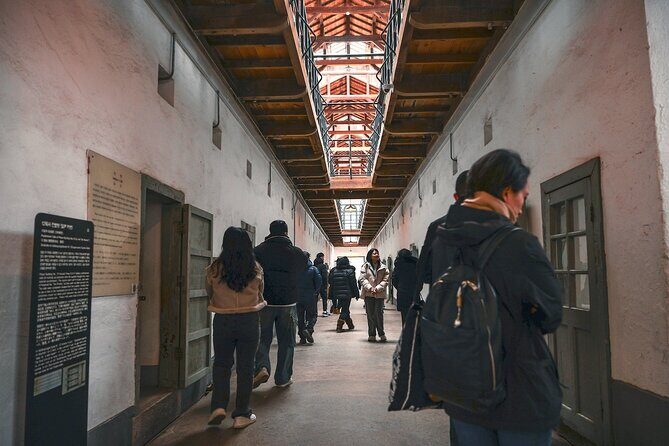
- Seodaemun Prison History Hall as the emotional center, with stories tied to Korean independence fighters
- Dilkusha (Albert W. Taylor House) for a rare angle on international support
- Deoksugung Palace for the contrast of Korean and Western architectural styles in one royal setting
- Sungnyemun Gate and Seoul City Hall for how the city’s identity shifts from colonial past to democracy
- Namdaemun Market tastings and Kalguksu Alley for real comfort food in Korea’s largest traditional market
A Dark-to-Delicious Afternoon Route in Seoul
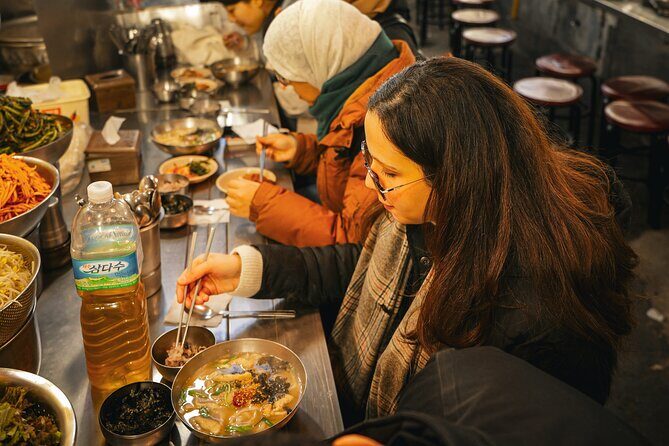
This is not the usual Seoul “palace-and-photos” plan. You’re trading skyline shots for context. The order matters, too. You start with resistance and hardship, then you move into palace history and modern transformation, and finally you end with the kind of simple street food that keeps a city moving.
The tour lasts about 4 hours, starts at 2:30 pm, and uses a mix of indoor sites (museums and palace spaces) and outdoor walking between stops. That structure helps. You get emotional grounding early, then your brain can shift gears before the market.
You’ll also be part of a small-to-medium group experience. The operator lists a maximum of 99 travelers, and that can change the feel depending on the day. Either way, the tour runs with a scheduled flow, and that’s useful when you’re short on time.
You can also read our reviews of more historical tours in Seoul
Seodaemun Prison History Hall: where resistance lessons hit hardest
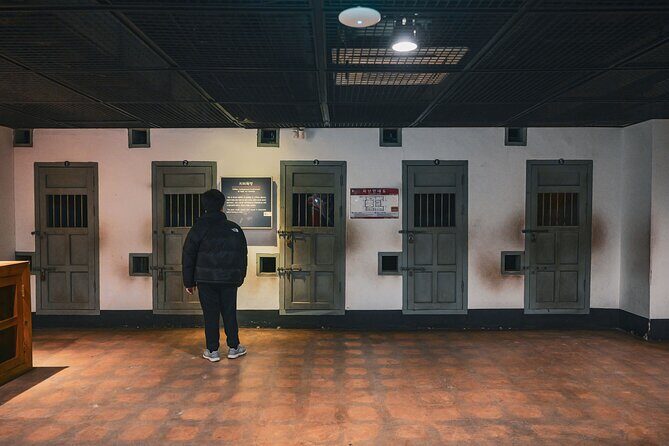
You begin at the Seodaemun Museum of Natural History area, then focus on the Seodaemun Prison History Hall. Even from the basics, this stop signals its purpose: it’s built for memory, not entertainment.
What I like about this segment is how it stays grounded in real events. You’ll move through somber halls tied to the Japanese colonial prison system, and the story isn’t just dates. It’s centered on Korean independence fighters and what they endured for freedom. The guide’s job here is big: you’re being asked to hold complicated history while standing in spaces designed to reflect suffering.
There’s also an important promise built into the tour theme: the guide provides insights related to independence movements and even notes about ancient Korean defense systems. In practice, that means the story shouldn’t feel like one isolated chapter. You should come away seeing how resistance and survival thinking shaped more than one era.
Possible drawback: this is an emotionally heavy place. If you’re sensitive to difficult history, plan to take breaks and avoid rushing. Also, if you’re expecting “light sightseeing,” this stop will feel like the opposite.
Dilkusha and Albert W. Taylor: the independence story with an international link
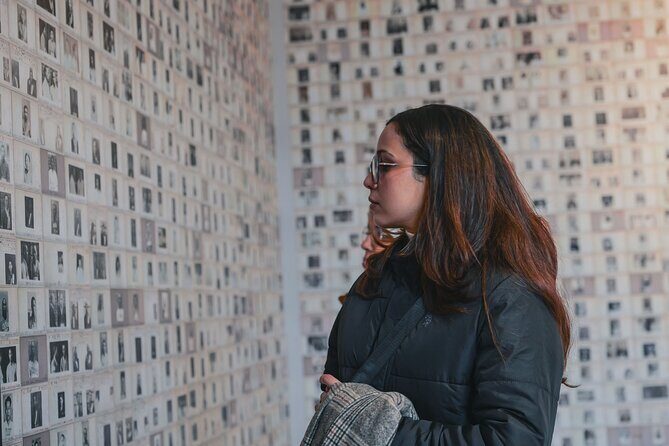
After the prison, you switch tone with Dilkusha (Albert W. Taylor House). This is a historic house connected to Albert W. Taylor, an American journalist who supported Korea’s independence. The tour explains the meaning behind the name too: Dilkusha means Heart’s Delight, and that label is framed as resilience plus global alliances.
This stop works because it changes the lens. Colonial-era history can get stuck in one-country perspective, and Dilkusha adds another layer: the idea that solidarity wasn’t only local. Even if you already know the big events, this kind of personal, place-based story helps history feel less like a textbook and more like human connections.
Timing here is also reasonable. You spend about 30 minutes, and that’s long enough to grasp the symbolism without turning it into a lecture marathon. Admission is listed as free, which is a nice bonus inside a tour that already includes paid entrances elsewhere.
Practical tip: keep an eye on footwear. Houses and museum spaces can mean more indoor surfaces and short stairs, and you’re still in a walking route overall.
Deoksugung Palace: royal space meets modernization pressure
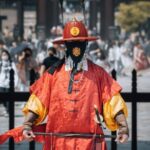
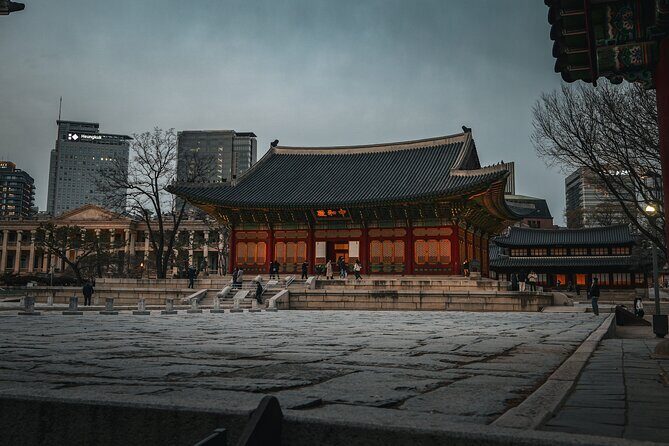
Next up is Deoksugung Palace, with a key theme you’ll actually be able to see: the site reflects a blend of traditional Korean and Western architectural styles. The guide connects that design mix to what was happening politically and socially, when Korea had to adapt while under turbulence.
This stop is a good breather after Seodaemun. You’re still in history, but the mood shifts toward architecture, choices, and survival through change. You’re looking at how power and identity can be rewritten in built form—something you can’t get from reading dates alone.
You’ll have about 40 minutes here, with admission included. That’s enough time to appreciate the contrasts without feeling like you’re spending your entire Seoul afternoon stuck in slow-moving palace crowds.
A small reality check: palace sites in Seoul can feel more physical than they look on a map. Even within a guided time window, plan for walking, uneven surfaces, and waiting for your group to regroup.
Sungnyemun Gate and Seoul City Hall: a quick look at transformation
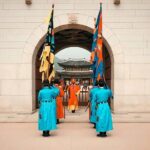
You then pass by Seoul City Hall and focus on Sungnyemun (Namdaemun) Gate. This portion is shorter—around 20 minutes—but it’s designed to connect dots.
The tour frames Seoul City Hall as a symbol of Korea’s transformation from a colonial past to a functioning democracy. Then you get the visible anchor: Sungnyemun, one of the city’s historic gates associated with Namdaemun.
What I like here is the way the route keeps moving forward. You’re not stuck only with the past. You’re seeing how the city’s identity was rebuilt, and how historic structures remain part of daily life.
Consideration: since this stop is shorter, it’s not the time to wander off for extra photos. Stick with the group, listen for the guide’s points, and save your slower gate exploration for later if you want more time.
You can also read our reviews of more shopping tours in Seoul

Namdaemun Market: Kalguksu Alley and everyday Seoul
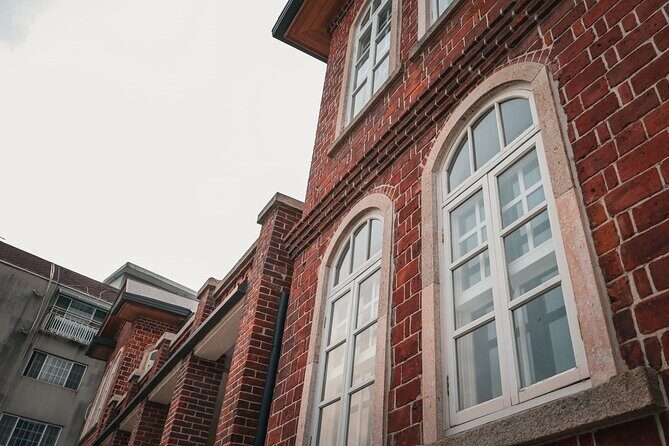
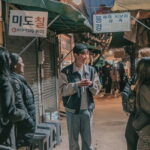
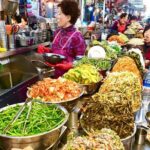
The ending is where the tour becomes easy to remember. You reach Namdaemun Market, described as Korea’s largest and oldest traditional market—vendors have been selling goods for over 600 years.
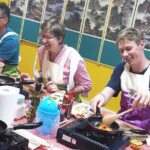
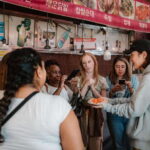
You get about 1 hour at the market, and the tour includes food tastings. That’s important. “Market time” can mean shopping chaos. Here, it’s structured around eating, with a specific highlight: Kalguksu Alley, known for that noodle comfort food.
Why this works: after heavy history and formal palace spaces, a market gives you something hands-on and low-stress. You’re not just learning. You’re practicing how locals actually live—snack, walk, compare, and keep moving.
Also, Namdaemun is an easy market to navigate because it’s large and familiar to visitors. You’re likely to find your way even if you come back later—but during the tour, the guide helps you focus on good options and avoid wasting time.
Practical advice: eat earlier lightly. A full meal at the end can be perfect, but a heavy lunch right before can make tastings feel like work instead of fun. Bring water if you’re the type who gets thirsty while walking.
Guide quality, walking pace, and why the timing feels right
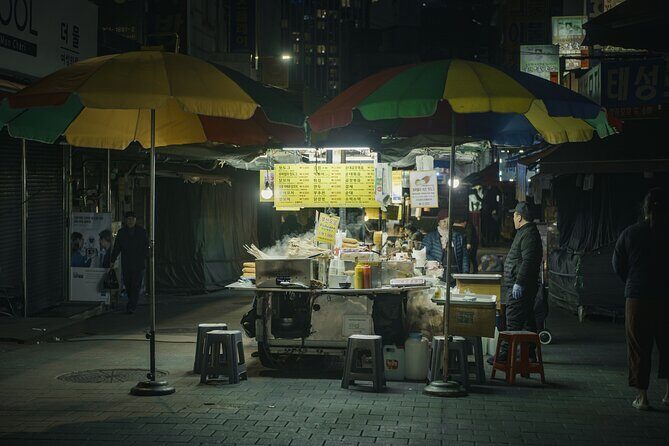
The tour is led by an English-speaking professional guide. The operator also emphasizes certified expertise in Korean history, and the results in real-world terms seem to be what you’d hope for: clear explanations, steady pacing, and the ability to answer questions without getting lost in a wall of facts.
You’ll also find a helpful pattern in the feedback: guides are described as engaging and responsive. In one example, the guide name Kim is mentioned as going above and beyond to help guests with what they needed. That kind of attention matters on tours where you’re moving between very different environments—prison halls, palace spaces, and a busy market.
Timing-wise, starting at 2:30 pm is smart for most people. Deoksugung and Namdaemun both tend to feel nicer in late afternoon light than in the harshest midday heat. And the 4-hour structure keeps you from turning the day into one long grind.
About walking: it’s rated for travelers with moderate physical fitness. That doesn’t mean “athlete level,” but it does mean you should wear comfortable shoes and be ready for changes in pace when the group needs to regroup.
Price and value: is $65 worth your afternoon?
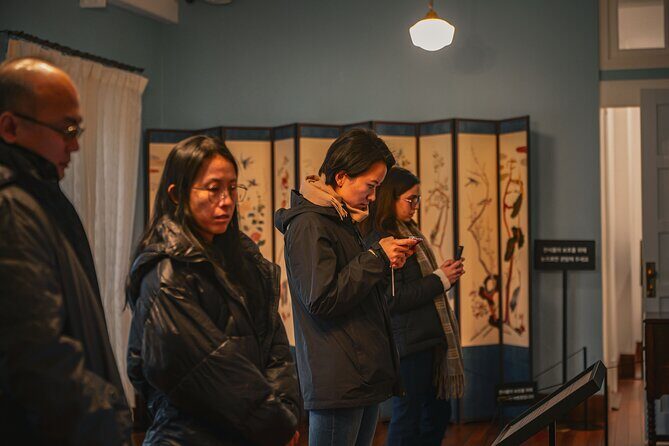
At $65 per person, you’re paying for more than a simple city walk. Here’s what’s actually included:
- English-speaking professional guide
- Transportation cost
- All entrance fees
- Food tastings at Namdaemun Market
When you add up entrance fees plus guided interpretation, the price starts to make sense. The prison history stop and palace admission aren’t free in general, and you’re also getting guided context that turns a collection of places into a connected story—especially the way the route ties independence struggle, modernization pressures, and everyday Seoul together.
You’re also not paying separately for a late-day meal in the market, since tastings are built in. If you end up eating more than the included amount, you’ll still spend extra—but at least the tour gives you a planned food break rather than leaving you to guess what’s worth it.
In short: this looks like good value if you want a guided overview without spending your time ticket-hunting and deciding what to see first.
Who should book this tour (and who should consider another option)
This tour is a strong fit if you want:
- a focused introduction to Korea’s independence struggle and its colonial-era context
- a guided route that connects history with modern Seoul spaces
- a market finale that includes tastings rather than only sightseeing
It may be less ideal if:
- you prefer purely light, scenic stops and would rather skip prison-related content
- you dislike walking with a group timetable
- you want a long, unstructured market wandering session (this includes about 1 hour)
If you’re a first-time visitor, you’ll probably appreciate the structure. If you’ve been in Seoul a while, you may still like it because the prison and Dilkusha angle are the kind of stops that many visitor itineraries miss.
Should you book this Seoul Dark Past & Market Street Flavors tour?
I’d book it if you want a Seoul afternoon that teaches you something real, then feeds you something real. The mix of Seodaemun Prison History Hall, Deoksugung Palace, and Namdaemun Market turns a single time block into three different kinds of learning: hardship, adaptation, and everyday life.
But do it with the right mindset. This is not background noise history. It’s serious. If that’s okay with you, and you’re up for moderate walking and a market snack finish, this tour looks like a high-value way to see a side of Seoul most people don’t plan around.
FAQ
How long is the tour, and what time does it start?
It runs for about 4 hours and starts at 2:30 pm.
Where do I meet the group, and where does it end?
You meet at 95-10 Hyeonjeo-dong, Seodaemun-gu, Seoul, and the tour ends at Namdaemun Market, 21 Namdaemunsijang 4-gil, Jung District.
What’s included in the price?
The tour includes an English-speaking professional guide, transportation cost, all entrance fees, and food tastings at Namdaemun Market. Tips are not included.
Do I need to buy tickets for the attractions?
Entrance fees are included, so you should not need to pay separately for the listed sites.
Is the tour food-focused, or is it mostly history?
It’s mostly history and architecture, but you do get a market finish with tastings at Namdaemun Market and time near Kalguksu Alley for food.
What should I know about weather?
The tour operates as scheduled even in rain or snow. If weather makes it completely impossible to proceed, the operator will contact you separately.
Do I need WhatsApp for the day-before information?
WhatsApp is recommended because the guide’s contact is sent via WhatsApp one day before the tour. If you don’t use WhatsApp, the information is sent by email, so check your inbox.
Can I cancel and get a full refund?
Yes. You can cancel up to 24 hours in advance for a full refund. Canceling less than 24 hours before the start time is not refunded.
![The Seoul Pub Crawl [official] - The 4-Hour Night Route: Four Shot Stops and a Real Party Pace](https://7.seoulescapes.com/wp-content/uploads/the-seoul-pub-crawl-official-400x267.jpg)
![[ Half Day ] Sightseeing, Top 3 spots of Seoul !! - Price and logistics: where the value really shows](https://7.seoulescapes.com/wp-content/uploads/half-day-sightseeing-top-3-spots-of-seoul.jpg)