REVIEW · SEOUL
Flavors of Seoul: Grandma’s Handmade Noodles to Night Market Tour
Book on Viator →Operated by Goodmate Travel · Bookable on Viator
Noodles, royalty, and night eats in one day. This Flavors of Seoul tour strings together three things that most first-timers want most: hands-on Korean cooking with a grandma, a guided palace stop at Changdeokgung, and local-led street-food time that turns into your best kind of souvenir—your stomach. I especially liked the hand-pulled noodle session and the way the night-market food portion felt like you were tagging along with friends who know where to go. The only real catch is the day runs long (about 9 hours), so you’ll want comfortable shoes and patience for walking.
I also liked that the group is small, capped at 10 travelers, and the pace is built around short, focused stops instead of one endless march through Seoul. You start at 11:00 am and end near Gwangjang Market, which is convenient because it’s a major food area, but it’s not a straight return to where you began.
One more thing to consider: if you’re very strict about dietary needs, don’t wait until you arrive. The tour asks you to let them know about allergies and restrictions in advance, which is the right move when you’re eating Korean dishes in markets.
In This Review
- Key Highlights You’ll Actually Feel
- A Long 11:00–About 9 Hours Day That Stays Fun
- Cooking With a Korean Grandma: The Noodle Lesson Is the Star
- Changdeokgung Palace and Royal Cuisine: More Than Pretty Gates
- Euljiro-dong Food Walk: Where Old Eateries and New Trend Mix
- Gwangjang Market to Night Market Eats: Your Stomach Becomes the Guide
- Price and Value: Why $280 Can Make Sense
- What the Best Reviews Point To (and What You Can Do)
- Who This Tour Suits Best (and Who Should Skip)
- Should You Book Flavors of Seoul?
- FAQ
- How long is the tour?
- What time does the tour start, and where does it end?
- How much does it cost per person?
- What group size should I expect?
- Are any admissions included?
- Is the tour suitable for people with food allergies or dietary restrictions?
- What is the cancellation policy?
Key Highlights You’ll Actually Feel
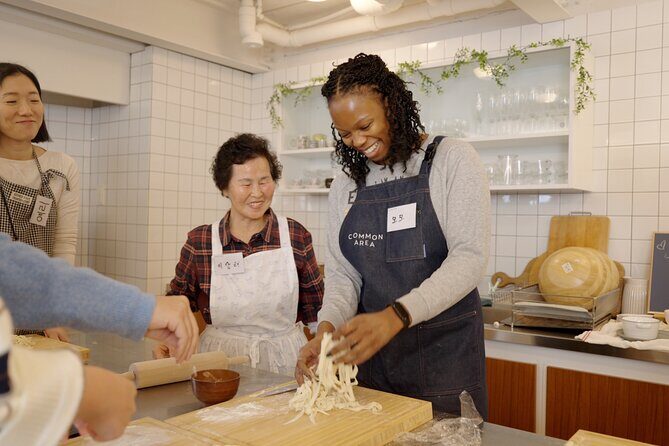
- Hand-pulled noodles with a Korean grandma: stories plus technique, not just watching someone cook.
- Changdeokgung Palace with royal cuisine context: you’ll understand how court food shaped what Koreans eat today.
- Euljiro-dong food walk: a mix of long-running eateries and trendier spots in the same neighborhood.
- Gwangjang Market with trusted vendors: vendors who’ve worked with the tour provider for years.
- Night market food tour with local guidance: you’ll know what to order and how to do it like a local.
- Max 10 travelers: small-group feel with fewer awkward pauses.
A Long 11:00–About 9 Hours Day That Stays Fun
This is a full-day Seoul experience that starts at 11:00 am and runs about 9 hours. That time window matters because you’re moving through both daytime cultural stops and evening food. In plain terms: you should eat like you mean it, then be ready for more eating, because the itinerary is structured that way.
The route is also designed to keep transit simple. The starting point is in Mapo-gu (near 53-9 Tojeong-ro), and you finish at Gwangjang Market (near 88 Changgyeonggung-ro in Jongno). Since the tour is described as near public transportation, I’d treat it as easy to get to, even if you’re staying in a different part of Seoul.
Group size is capped at 10 travelers, which is a real quality-of-life upgrade. Smaller groups tend to mean quicker decision-making at food stops and fewer situations where you feel lost or rushed. It also makes it easier for your guide to check in as you’re moving between palace, neighborhoods, and markets.
You can also read our reviews of more shopping tours in Seoul
Cooking With a Korean Grandma: The Noodle Lesson Is the Star
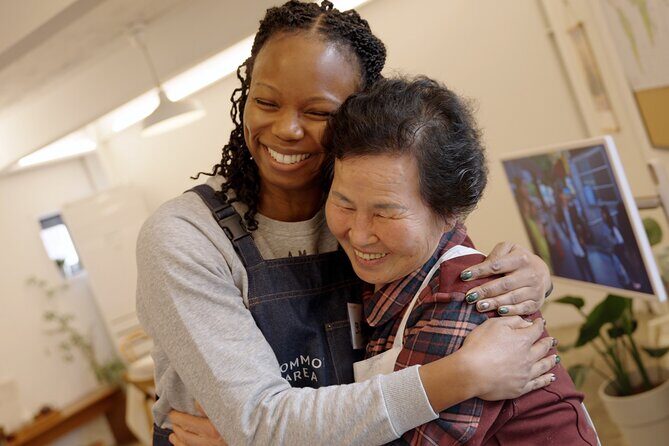
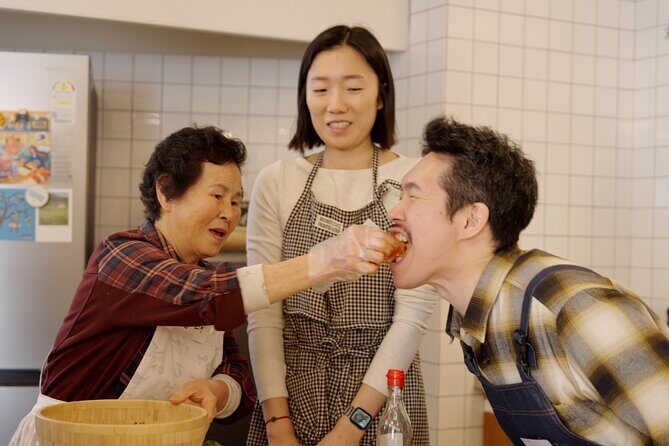
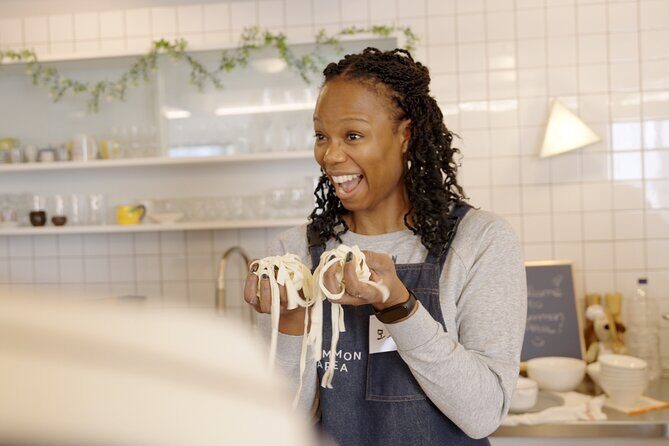
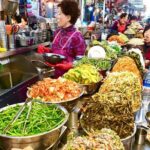
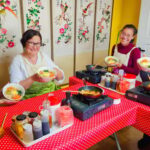
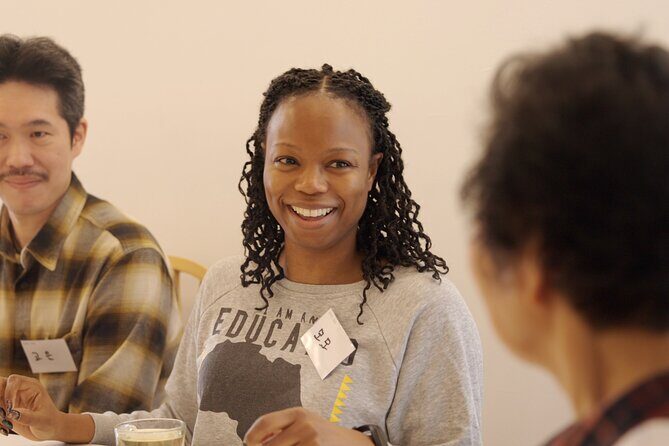
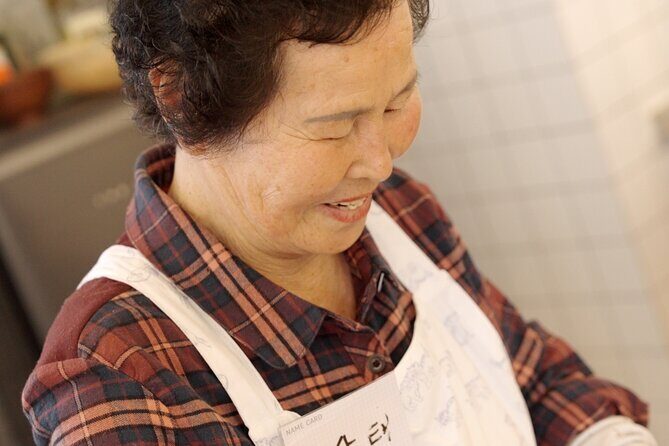
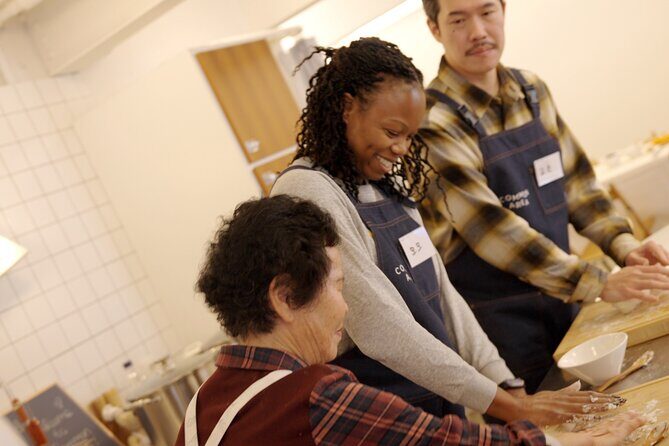
Stop one is a cooking class led by a retired local grandma. Expect warmth first—then technique. You’ll knead dough and learn how to hand-pull noodles, with the grandma sharing personal stories along the way. This is the part of the day that feels least like a scripted tour and most like a genuine cultural exchange.
Why this matters: hand-pulled noodles aren’t just a food novelty. The act of stretching and shaping dough changes the noodle texture, and that’s the kind of detail you only get when someone teaches you in real time. Even if you don’t become a noodle-making wizard by the end, you’ll leave understanding what makes Korean noodles feel different in the bowl.
Another quiet benefit: the cooking class gives you a mental anchor for the rest of the trip. After you’ve worked with dough and heard the stories behind it, the later food stops make more sense. You’re not just collecting dishes; you’re learning how food traditions move through daily life.
This stop lists admission as free for the class ticket, which helps with value. Also, the tour specifically notes you should tell them about food allergies or dietary restrictions in advance—smart, because cooking class menus can still involve shared ingredients.
Changdeokgung Palace and Royal Cuisine: More Than Pretty Gates
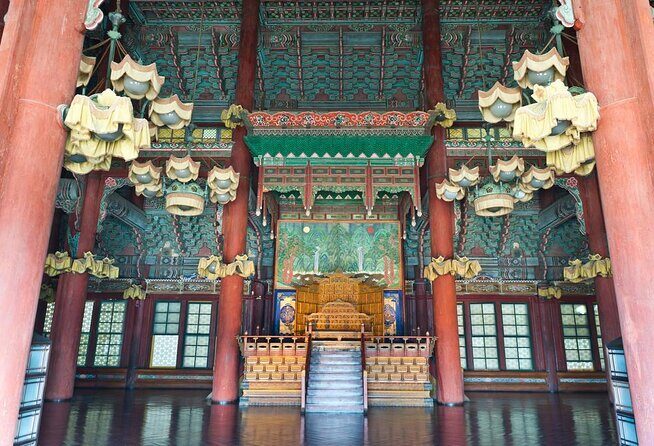
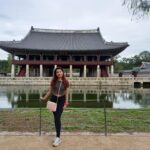
After the noodle lesson, you head to Changdeokgung Palace, a UNESCO World Heritage site. This isn’t positioned as a long lecture about walls and dates. Instead, it focuses on royal culinary history—how court food traditions shaped Korean food culture.
The guided walking portion here is 1 hour 30 minutes, with palace entry included. That inclusion is useful because palace tickets add up when you’re doing multiple sights, and it reduces friction on the day. You also get context before you wander—so when you’re looking at palace spaces, you have a reason for what you’re seeing beyond photos.
Practical tip: palace grounds can involve walking on uneven surfaces. Bring shoes you can move in comfortably. And since this is sandwiched between the cooking class and later markets, it can help to keep water on your mind even if you don’t feel thirsty yet.
The bigger value is the “why.” When the guide connects the palace setting to royal cuisine traditions, you end up with a story you can carry into your meal choices later. That’s the difference between seeing Changdeokgung as a landmark versus understanding it as part of Korea’s food identity.
Euljiro-dong Food Walk: Where Old Eateries and New Trend Mix
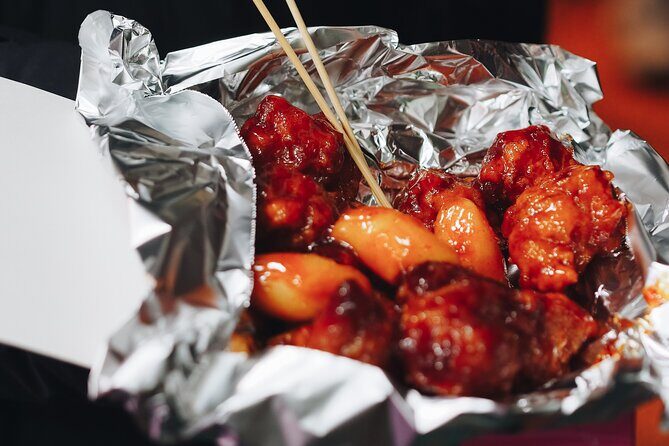
Next comes Euljiro-dong, a neighborhood that blends tradition and current trends. This stop is set up as a culinary adventure: you’ll explore areas with beloved eateries over 50 years old while also passing modern pubs and restaurant culture.
The timing here is about 2 hours, and the stop lists admission as free. That means the cost of this segment is mostly your guide’s expertise and the route design, which is exactly where a good food walk earns its keep. A local guide helps you spot places you’d skip on your own—either because you wouldn’t notice them from the street or because you’d be unsure what’s worth ordering.
What you should look for during this portion is contrast. You’re trying to see how Korean eating culture changes when it meets modern taste and lifestyle. That’s why this stop works well for both food nerds and casual eaters. You can enjoy it even if you don’t know the names of every dish, because the guide’s job is to translate choices into something approachable.
If you’re a picky eater, take a deep breath. This isn’t a tasting-menu tour where you’re forced to swallow something you don’t like. Still, it is food-focused, so you should go with curiosity and a willingness to try a couple of bites before deciding what you’ll commit to later.
Gwangjang Market to Night Market Eats: Your Stomach Becomes the Guide
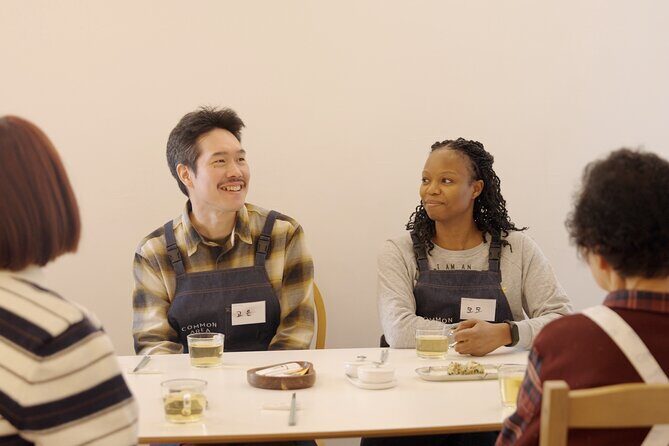
The next major food chapter is Gwangjang Market, where you’ll visit trusted vendors. The tour notes these vendors have collaborated with the group for years, which is a nice detail. It suggests you’re not gambling on random street stalls; you’re eating with some reliability built in.
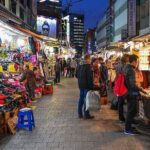
This market stop lasts about 2 hours, and admission is included. Markets are where Seoul feels most everyday—people buying snacks, cooking smells drifting through alleys, and locals treating the market like an extension of their neighborhood. In other words: it’s not “museum Seoul.” It’s the real stuff.
Then the day keeps going into night-market food time. The overview frames it as a night market tour guided by locals who treat you like old friends. Since the night-market segment is part of the overall 9-hour day, plan to keep energy up. You’ll want to eat enough to enjoy things, but not so much that you feel like you’re dragging yourself through alleys.
One of the best practical advantages here: you’re not left to interpret menus alone at the hardest moment. In Seoul, that’s where a guide can save you from decision fatigue. It’s also where you can get recommendations that match what’s fresh and available now, not what’s just popular in general.
The tour ends at Gwangjang Market, which is convenient. If you want to continue eating, shopping, or just wander after your guided portion ends, you’ll already be in the right place.
You can also read our reviews of more tours and experiences in Seoul

Price and Value: Why $280 Can Make Sense
At $280 per person, this isn’t a budget tour. So the right question isn’t Is it expensive? It’s Does it replace several separate bookings with something better?
Here’s what you’re effectively paying for:
- A grandma-led cooking class with a hands-on noodle session
- Guided walking time through Changdeokgung Palace (with admission included)
- A neighborhood food walk in Euljiro-dong
- A market stop at Gwangjang Market (with admission included)
- Guided night-market food time
That’s a lot of guided hours. It’s also a lot of “stuff” you’d otherwise have to plan yourself: finding a cooking class, booking palace entry, arranging a food walk, and then figuring out night-market logistics. Even if you could DIY some of it, the tour offers structure and a local voice at every step.
Small-group size (max 10) also changes the value equation. In crowded tours, you spend half your time waiting your turn. In a smaller group, you’re more likely to keep moving and actually enjoy each stop.
Finally, there’s a group-discount element mentioned in the tour info. That doesn’t guarantee lower cost for every departure, but it’s a signal the provider designed this for shared experiences rather than one-person ticket maximization.
What the Best Reviews Point To (and What You Can Do)
The strongest feedback centers on the overall food experience and the guide’s communication. One review highlighted Kevin for explaining the food and culture, and that made the whole day more fun and easier to follow.
So here’s what you can do to get the same payoff: ask questions while you’re eating. Don’t wait until the end of a stop. If something tastes unfamiliar, ask what it is and how Koreans typically eat it. If you don’t understand a dish name, ask what to look for next bite—sweet, salty, chewy, spicy. You’ll get more out of the tour fast that way.
You’ll also enjoy it more if you approach the cooking class as learning, not performance. The noodle session is hands-on, so expect a little mess and a little laughter. That’s part of why this works better than a “watch and take photos” class.
Who This Tour Suits Best (and Who Should Skip)
This tour fits best if you want a Seoul day that’s practical and food-centered, with culture woven in. It’s especially good for:
- First-timers who want major sights plus real eating in one day
- People who like guided explanations while they eat
- Anyone interested in Korean cooking traditions, especially noodles
- Small groups who want a more personal experience with a guide
Consider a different plan if you:
- Hate long walking days (it’s about 9 hours)
- Want lots of free time to roam without structure
- Have very complex allergy needs and want a highly controlled menu (the tour asks you to inform them, but details on exact substitutions aren’t provided here)
If you’re somewhere in the middle, bring flexibility. This is a “follow the food” style tour. The payoff comes from moving with the guide instead of trying to out-plan them.
Should You Book Flavors of Seoul?
I’d book it if you want the best kind of Seoul combo day: handmade noodles, a meaningful palace stop tied to royal cuisine, and guided street food that runs from markets into night time. The price isn’t low, but you’re buying multiple guided segments, included admissions for the palace and market, and a small-group experience that keeps things friendly.
Skip it if you’re hoping for a short, low-effort sightseeing day or if you need super-custom meals without any uncertainty. In that case, you may prefer a tour that clearly lists every dish and offers guaranteed substitutions.
If you do book, do one simple thing: tell the operator about allergies or dietary restrictions ahead of time, and come ready to taste. This tour rewards curiosity.
FAQ
How long is the tour?
The tour lasts approximately 9 hours.
What time does the tour start, and where does it end?
It starts at 11:00 am and ends at Gwangjang Market (88 Changgyeonggung-ro, Jongno District).
How much does it cost per person?
The price is $280.00 per person.
What group size should I expect?
The tour has a maximum of 10 travelers.
Are any admissions included?
Yes. Changdeokgung Palace admission is included, and Gwangjang Market admission is included. The cooking class admission is listed as free.
Is the tour suitable for people with food allergies or dietary restrictions?
You should let the tour know in advance if you have any food allergies or dietary restrictions.
What is the cancellation policy?
You can cancel for a full refund up to 24 hours before the experience’s start time.