REVIEW · SEOUL
Korean Folk Village Afternoon Half day Tour
Book on Viator →Operated by Cosmojin Agency · Bookable on Viator
One stop can teach you more than a whole afternoon of scrolling. This Korean Folk Village tour pairs Seoul hotel pickup with admission included, so you spend less time figuring out transport and more time looking closely at Joseon-era life. I especially like how the village gives you a guided tour feel with cultural performances and different kinds of homes, not just a photo stop. One thing to plan for: the schedule is short, and bad timing can eat into your time inside the village.
You’ll start in the early afternoon (pickup starts around 1:00 pm) and head out about 40 minutes via expressway to a recreated historic village. I like the practical setup: mobile ticket, professional English guide, and round-trip transportation included. The main drawback to keep in mind is that the traditional performance may get canceled in rain or snow, and lunch isn’t included.
In This Review
- Key points to know before you go
- Price and Logistics: What you’re really paying for
- Korean Folk Village: Why a recreated village can still feel meaningful
- Getting there from Seoul: a 40-minute ride that sets expectations
- The village route: 99 rooms, ordinary homes, and a traditional market
- Performances: cultural and farm music, but watch the weather
- Korean drama spotting: a bonus for fans of filming locations
- Guide style and group size: how this tour feels day-to-day
- Timing reality check: how to make the most of a short afternoon
- What’s included vs. what isn’t (and why it affects your day)
- Who this tour suits best
- Should you book this Korean Folk Village afternoon tour?
- FAQ
- What is the duration of the Korean Folk Village Afternoon Half day Tour?
- What time does the tour start?
- Is hotel pickup included?
- Are admission fees included?
- Does the tour include lunch?
- What is the meeting time window or confirmation timing like?
- What happens to the traditional performance in bad weather?
- Is there a limit on group size?
- Can the tour be canceled or changed after booking?
- Will heavy traffic on national holidays affect the tour?
Key points to know before you go
- Admission is included, so you won’t have to hunt for tickets on arrival
- Hotel pickup and drop-off in Seoul removes most of the stress of getting there
- You’ll see multiple building types, including a 99-room old Korean house
- The village can double as a Korean drama filming spot, if filming is happening that day
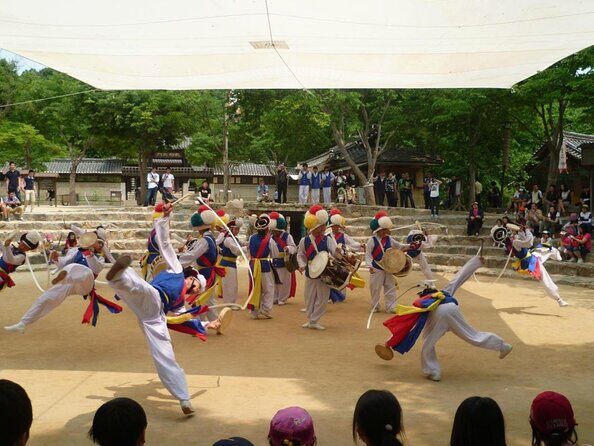
- There are cultural and farm music-style performances, but weather can affect timing
Price and Logistics: What you’re really paying for
At $80 per person for a roughly 4-hour half-day outing, this tour isn’t trying to be a bargain bus ride. You’re paying for three things that are hard to DIY without extra effort: transportation, a professional English guide, and admission included.
That last part matters. Korean historic sites can nickel-and-dime you once you arrive. Here, the ticket is bundled in, which makes the experience feel smoother and easier to justify. You also get pickup and drop-off within Seoul, which is a big deal if you don’t want to waste your limited afternoon on subway transfers.
There’s no lunch included, so think of this as a “see, learn, snack later” kind of outing. If you’re the type who needs a sit-down meal on your schedule, you’ll want to plan for it afterward.
You can also read our reviews of more tours and experiences in Seoul.

Korean Folk Village: Why a recreated village can still feel meaningful
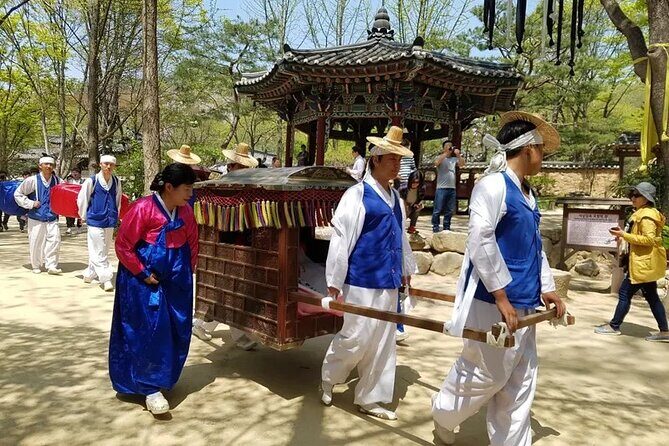
The Korean Folk Village is basically an entire neighborhood that lets you walk through how people lived long ago. Even though it’s a staged environment, the value comes from the details: the shape of homes, how ordinary life is represented, and how culture is explained in a way that feels human—not museum-only.
This tour is built for that kind of learning. A guide helps you connect what you’re seeing to the wider story of Korea’s past. In practice, that makes your time more efficient. Instead of wandering and guessing, you get explanations that help you understand what each area is showing.
One reason I’m a fan of experiences like this: they’re visual and structured. You don’t have to be an expert to get something out of it. You can just follow the guide’s route, pause at the spots that catch your eye, and ask questions when something doesn’t make sense.
Getting there from Seoul: a 40-minute ride that sets expectations
From Seoul, you’re looking at about 40 minutes by expressway to reach the village. That’s long enough to feel like a real “go somewhere” moment, but short enough that the afternoon still stays flexible.
This tour includes transportation, and the driver and guide coordination is part of the deal. In the experience’s best moments, the drive isn’t wasted time. People mention guides sharing context and even Korean words on the way—small touches that make the village visit click faster once you arrive.
The only caution: timing. A short half-day means every delay matters. If pickup runs late, your time inside the village shrinks fast. And once you’re there, you’re moving through multiple areas in a limited window.
The village route: 99 rooms, ordinary homes, and a traditional market
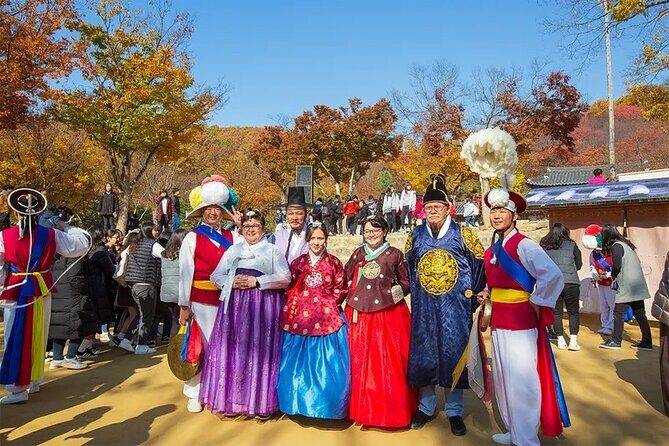
Inside the Korean Folk Village, you’re not stuck with one exhibit. You’ll cover several key areas that each show a different side of everyday life.
A highlight is the old Korean house with 99 rooms. That sounds like a gimmick until you see how the scale helps you understand social structure and household complexity. Large homes like this weren’t just bigger versions of a normal house—they reflected how status and family life were organized. Walking through something like that (even if it’s recreated) gives you a stronger mental picture than reading descriptions later.
You’ll also see houses of ordinary people. That’s where the village stops feeling like a history lecture and starts feeling like lived-in culture. Ordinary homes can help you notice practical design choices: space use, workflow, and how rooms supported daily routines.
Then there’s the traditional market area. Markets are where food, craft, and social life overlap. Even if you’re not shopping, the atmosphere helps you understand how communities functioned—where people met, traded, and kept the rhythm of the day going.
If you want photos, prioritize exterior viewpoints early, before your group becomes a moving line. If you want deeper understanding, slow down at the buildings that the guide points out, because explanations tend to be most valuable right at the moment you’re looking at the structure.
Performances: cultural and farm music, but watch the weather
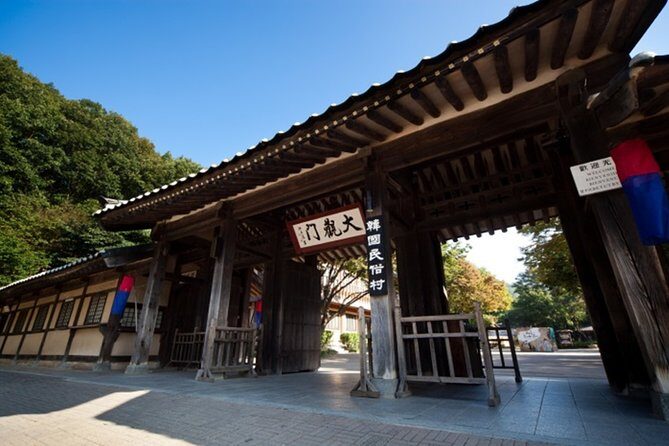
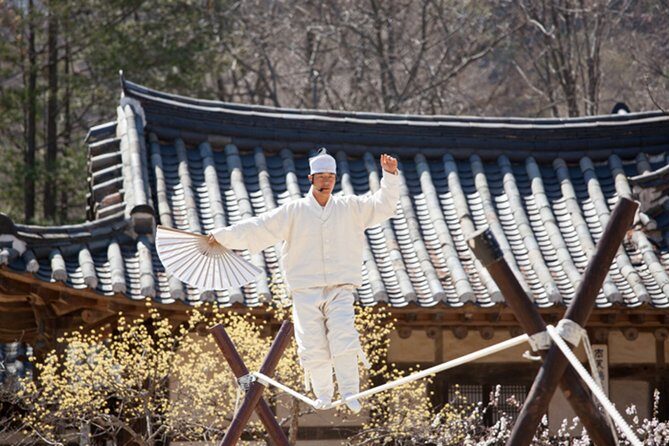
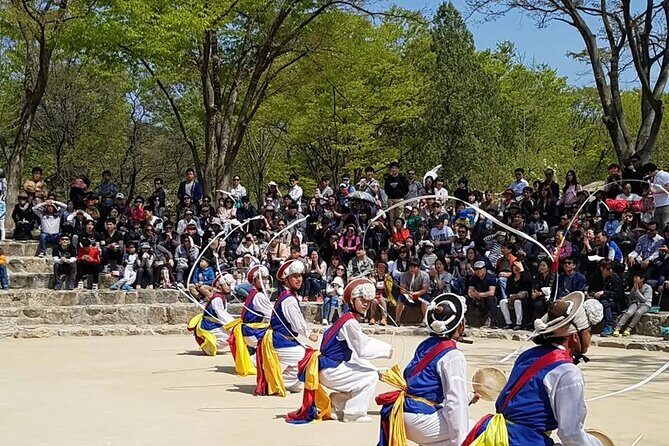
One of the most enjoyable aspects of this tour is the chance to catch cultural music performances and related rural-style presentations—often framed around everyday life and seasonal culture.
In a perfect scenario, you’re walking through homes, then stepping into a performance moment that puts the history you just saw into sound and rhythm. That shift from visual to audio helps learning stick.
But here’s the practical snag: the Korean Traditional Performance can be canceled in rain or snow. That means you might get less show time than you hoped for, even if everything else runs.
If you’re going during a season with mixed weather, build a Plan B mindset. You’re still going to get the buildings and market experience, but the show portion may shrink.



Korean drama spotting: a bonus for fans of filming locations
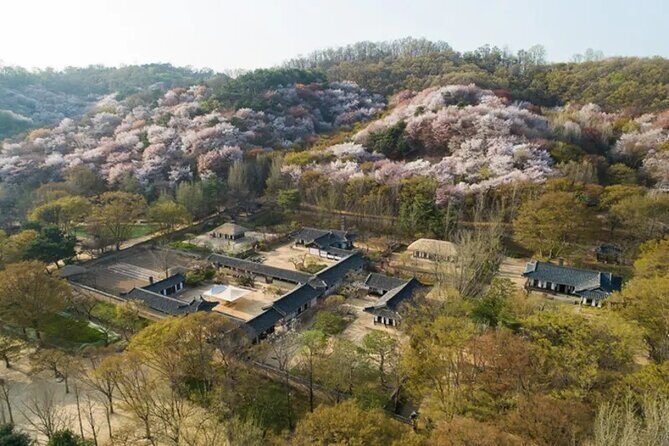
The village is also known as a Korean drama shooting spot. That can add a fun layer to your visit. Even if nothing is filming, the setting still feels like it was built for cinematic storytelling: the streets, the building styles, and the overall “period” look.
If you’re a drama watcher, keep your eyes up for production cues. Just don’t assume filming is guaranteed. Treat it as a lucky bonus, not a promise.
This matters because some people go in hoping for a specific filming moment. If you’re choosing the tour for cultural learning first and filming as a secondary perk, you’re less likely to feel disappointed.
Guide style and group size: how this tour feels day-to-day
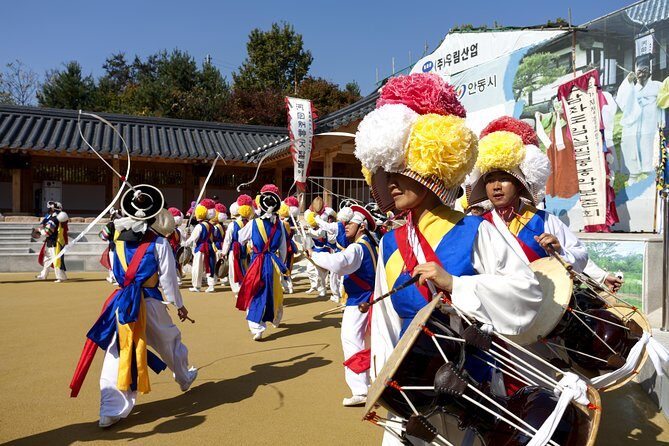
This is led by a professional English guide, and the group size has a maximum of 44 travelers. That’s not tiny, but it’s not chaotic either—usually enough structure for a guided experience, while still letting you pause and look around.
Group size influences how much time you personally get. In a smaller group, you can ask more questions without waiting. In a larger group, you might have to let the group flow and ask questions during the natural stops.
The guide experience can be a make-or-break factor. One review specifically praised a guide named Molly and highlighted how much history she helped them understand. Even if your guide isn’t Molly, the point is clear: the best versions of this tour are the ones where the guide can explain what you’re seeing in a way that feels clear and relevant.
Timing reality check: how to make the most of a short afternoon
This tour is about 4 hours total, and the village visit is the centerpiece. That makes it easy to plan, but it also means there’s less cushion.
One thing I’d stress: keep your expectations aligned with a half-day. You’ll see multiple areas—great—but you won’t have time to linger in every corner like you could on a full-day trip. If your goal is deep, slow browsing, you may feel rushed.
Also, there’s been a complaint about time loss due to pickup delays. Another concern mentioned limited time on-site and missing some activities like souvenir browsing and hands-on craft demonstrations. I can’t promise how your day will run, but the takeaway is simple: show up with flexibility, and don’t plan a long snack-and-shop session at the end unless you’re okay with it being quick.
Practical strategy: arrive ready to walk. Bring water, wear comfortable shoes, and decide in advance what matters most—buildings, market browsing, performances, or photos. You can’t maximize all of them in one afternoon.
What’s included vs. what isn’t (and why it affects your day)
Included:
- Professional English guide
- Transportation plus pick-up & drop-off in Seoul
- Admission fees to the village
- Mobile ticket
Not included:
- Lunch
That last item changes how you should plan the rest of your day. Since you’ll be leaving the village afterward, either eat before the tour or plan a meal afterward near where you’ll be dropped off.
If you’re the type who likes to buy snacks while you travel, you’ll want cash or a card ready for quick purchases. The tour doesn’t position itself as a food tour, but the market setting can tempt you into grabbing a bite on-site.
Who this tour suits best
This Korean Folk Village Afternoon Half day Tour is a strong match if you:
- want easy access from Seoul without figuring out transport
- prefer a guided route over self-exploring at a historic site
- like cultural learning that’s visual and walkable
- want a drama-location bonus without making it the whole plan
- can handle a short time window and move at a steady pace
You might want a different format if you:
- need a flexible schedule to browse shops and demonstrations slowly
- hate the idea of performances potentially being canceled in weather
- are traveling with kids who need longer breaks (nothing in the data says kid-specific adjustments)
Should you book this Korean Folk Village afternoon tour?
If you want a guided, admission-included introduction to Korean culture from the Joseon era, this is a pretty logical choice. The best value comes from the combination: pickup, transport, guide, and admission fees bundled. That’s a lot of friction removed for an afternoon.
I’d book it if you’re excited to walk through the 99-room house, see different types of homes and a traditional market, and catch a performance if the weather behaves. I’d hesitate only if your priority is lots of shopping time or if being cut short would genuinely ruin the experience.
If you go in with a “learn first, photo second, shop third” mindset, you’ll likely come away feeling like you actually understood something—not just collected pictures.
FAQ
What is the duration of the Korean Folk Village Afternoon Half day Tour?
The tour runs for approximately 4 hours.
What time does the tour start?
The start time is listed as 1:00 pm.
Is hotel pickup included?
Yes. Pick-up and drop-off service in Seoul is included.
Are admission fees included?
Yes. Admission fees are included on the tour.
Does the tour include lunch?
No. Lunch is not included.
What is the meeting time window or confirmation timing like?
Confirmation is received at booking unless you book within 1 day of travel, in which case confirmation is received as soon as possible subject to availability.
What happens to the traditional performance in bad weather?
The Korean Traditional Performance will be canceled in case of rain or snow.
Is there a limit on group size?
Yes. The tour has a maximum of 44 travelers.
Can the tour be canceled or changed after booking?
This experience is non-refundable and cannot be changed for any reason.
Will heavy traffic on national holidays affect the tour?
Yes. In case of heavy traffic during national holidays, the tour may be canceled.