REVIEW · SEOUL
Cook 3 Authentic Korean Dishes with Local Market Tour
Book on Viator →Operated by cookorean · Bookable on Viator
Cooking begins at a real market.
In Seoul, this hands-on class takes you from Mangwon Market to a clean, organized studio kitchen with a maximum group of four. I love the small group setup, because it keeps the teaching personal and you get real help while you chop, stir, and cook. You also learn Korean food culture and history while you’re doing the work, not watching it from a chair.
I also like the two-part rhythm: first a local market walk with Jomin (plus street food tasting), then a guided cooking session where you each have your own station. One consideration: the class can be rescheduled or canceled if it doesn’t meet the minimum of four guests, so it’s worth planning with a little flexibility.
In This Review
- Key Highlights at a Glance
- Mangwon Market Start: where ingredients teach the lesson
- Your Private Studio Kitchen: hands-on, not a demo
- The 3-Dish Menu: Korean classics with a teaching purpose
- Lunch vs Dinner: picking the best time for your Seoul day
- Small Group Size: why max four people matters
- Vegetarian and Vegan Options: good to know before you book
- Cookbook Take-Home: turning a lesson into a repeatable meal
- How to make the most of the market walk
- Price and value: does $79 make sense?
- Who should book this Korean cooking class in Seoul?
- Should You Book It?
- FAQ
- Where does the class meet?
- How long is the experience?
- How many people are in the class?
- What dishes will I cook?
- Is it a demo or hands-on cooking?
- Can I choose lunch or dinner?
- Are vegetarian or vegan options available?
- What do I take home?
Key Highlights at a Glance
- Mangwon Market meet-up at Line 6, Entrance 2: easy to find and very local.
- Hands-on cooking with max four people: you cook at your own table and burner.
- Jomin’s market guidance plus food explanations: you understand ingredients before they hit the pan.
- A 3-course Korean menu: dishes may include sundubu jjigae, bibimbap, bulgogi, kimchi stew, japchae.
- Take-home cookbook + leftovers: you get the how-to and enough to keep the meal going later.
Mangwon Market Start: where ingredients teach the lesson
The experience kicks off at Mangwon Station (Seoul Metro Line 6), at Entrance 2. That matters more than it sounds. The meeting point is clear, and you’ll avoid the usual start-of-tour chaos where everyone is guessing which street the guide means.
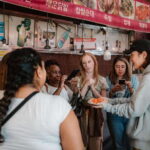
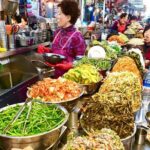
From there, you head toward the market with Jomin. This is not a quick photo stop. It’s a guided walk where she points out ingredients tied to the dishes you’ll cook later. You also get chances to taste street foods along the way. That tasting piece is a big deal for beginners, because it turns flavors into something you can recognize when you see them in the studio—gochujang-style heat, fermented tang, sesame notes, the whole Korean flavor logic.
One practical plus: you’re in a local food community context. You’ll see how people shop, how stalls operate, and what’s “normal” in Korean everyday eating. It makes the class feel less like a gimmick and more like a cultural day with a mission: learn the food by seeing it first.
You can also read our reviews of more shopping tours in Seoul
Your Private Studio Kitchen: hands-on, not a demo
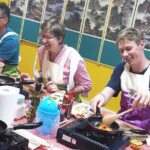
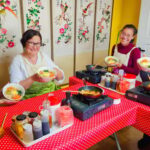
After the market, you return to the cooking studio. The setup is designed for real participation. You get a personal cooking station, plus cookers so you’re not sharing a hot plate with strangers.
This is a key difference from the typical “watch the chef” classes. Here, you cook. The training is step-by-step, and you also get personal assistance. That’s what makes the class work even if you’re not a confident cook. One recurring theme from the experience style is that Jomin teaches with clarity and patience—so the process feels doable rather than intimidating.
The studio itself is described as very clean and organized. That might not sound thrilling, but it changes everything when you’re handling Korean staples—kimchi, tofu, noodles, marinated meats. You want surfaces that are easy to work on and stations that keep your ingredients from turning into a chaotic science experiment.
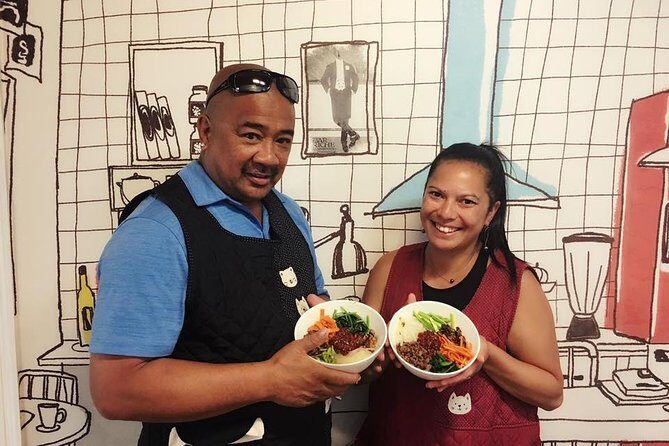
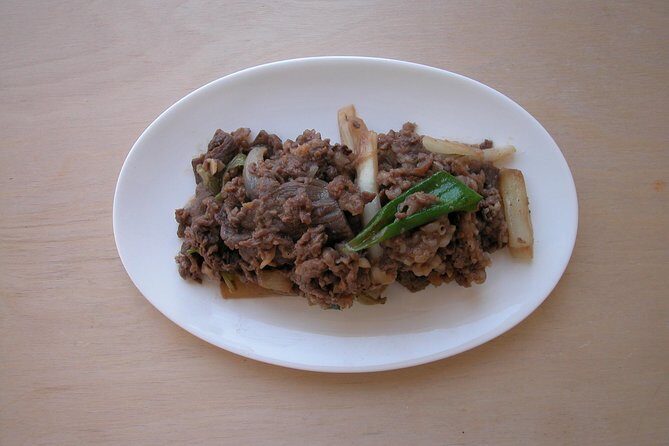
And then there’s the payoff: after you cook, you eat what you made. You’re not just collecting recipes. You get to taste your own bulgogi, your own bibimbap, your own stew. That feedback loop helps you learn what’s right and what you’d adjust next time.
The 3-Dish Menu: Korean classics with a teaching purpose
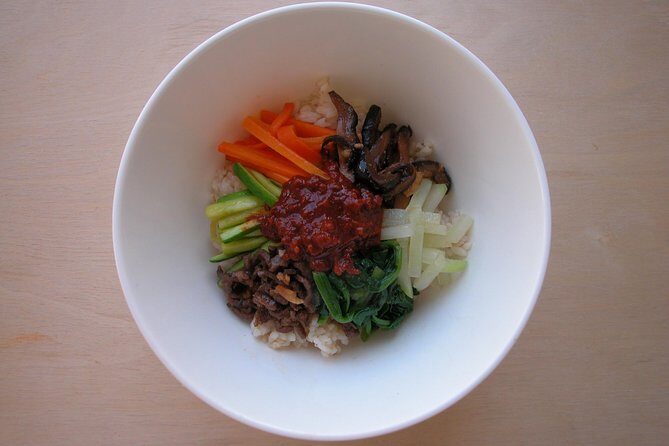
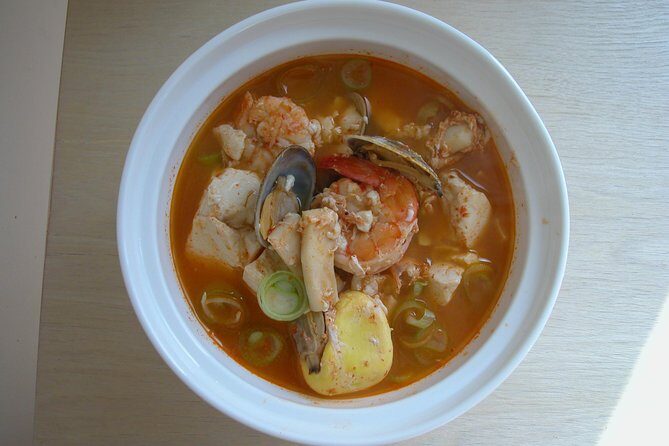
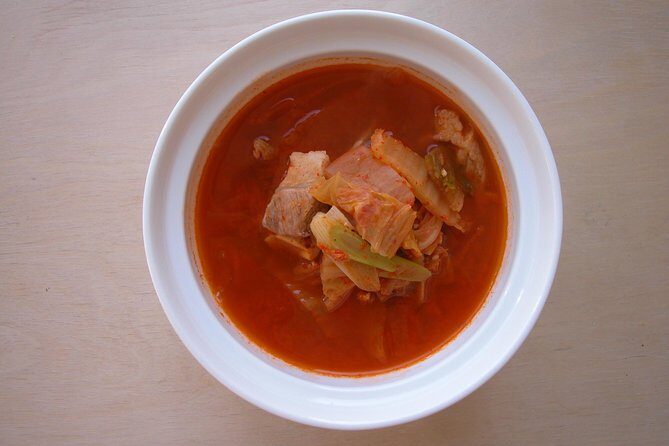
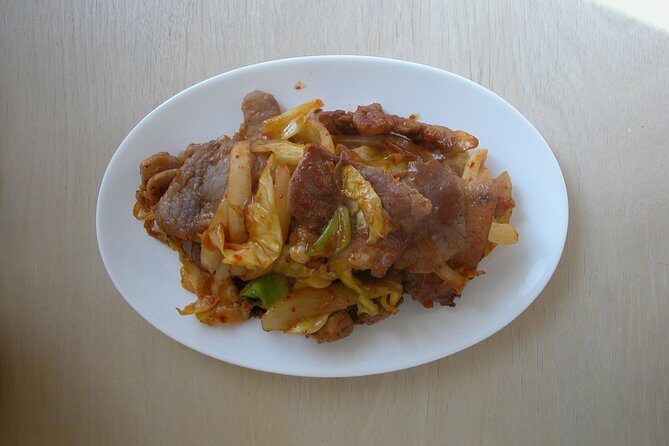
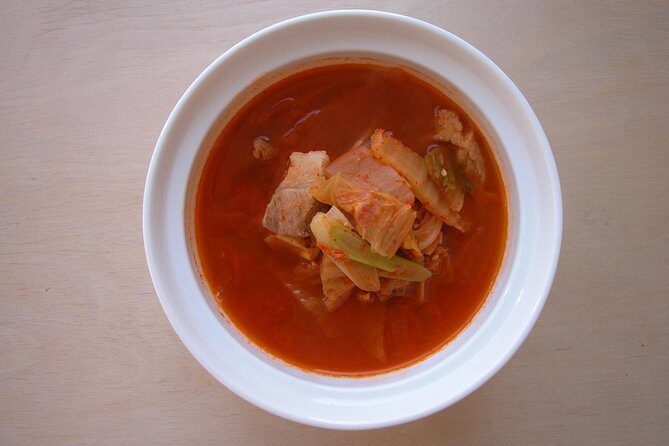
The menu is a 3-course Korean meal, and the exact dishes can vary. Expect options such as soft tofu stew (sundubu jjigae), bibimbap, bulgogi, kimchi stew, japchae, and even stir-fried pork. If you’re choosing lunch or dinner, the dishes may still shift depending on the day, but the goal stays the same: you come away with a practical set of recipes for common home-style Korean cooking.
Here’s why this specific “mix of classics” works so well:
- Stew (often soft tofu stew or kimchi stew) teaches you how Korean soups balance heat, salt, and fermented flavor. Soft tofu also shows you how quickly you can overcook delicate ingredients, so you learn timing.
- Bibimbap or noodle dishes (like japchae) teaches texture. Korean cooking isn’t just about taste; it’s about how things feel—crisp, tender, springy, saucy.
- Marinated meat (often bulgogi) teaches the flavor engine. Bulgogi isn’t just soy sauce plus sugar. You learn how marinades cling, how sweetness and savory interact, and how to control doneness.
What you’ll do in the studio depends on your menu that day, but you should expect hands-on prep: cutting vegetables, mixing components, and cooking on your own burner. In at least some sessions, Jomin guides you through key steps like building a marinade and then cooking each dish in the right order.
Also, you’ll take home leftovers in a take-home container. That’s a sneaky value booster. One meal today often turns into another meal tomorrow.
Lunch vs Dinner: picking the best time for your Seoul day
You can choose a lunch or dinner class. The practical difference isn’t just the clock—it’s how your day in Seoul will feel.
Lunch classes tend to slot nicely into a morning of sightseeing and an afternoon where you’re free. You’ll get a full meal before the city’s later energy ramps up, which can be a relief if you don’t want to start the evening hungry.
Dinner classes can be better if you’ve spent the day walking and want something warm and satisfying after. Korean dishes like stew and bibimbap-style plates are especially comforting at night.
In both cases, the total duration is about 3 hours 30 minutes. So you’re not losing an entire half-day to cooking. You’re getting a real food experience that fits into normal travel pacing.
Small Group Size: why max four people matters
Maximum group size is four, which is rare for a market-and-cooking format. It changes the entire vibe.
With a small group, you’re more likely to get direct help when a step goes off-script—too much heat, sauce too thick, vegetables cut too chunky, or just confusion about a seasoning. Jomin’s teaching style seems built for that one-on-one attention.
It also changes the social feel. You can talk with people, ask questions, and learn the “why” behind the technique. Several parts of the experience are designed for interaction: market conversations, ingredient explanations, and hands-on cooking at your own station.
So if you’re the kind of traveler who hates being “part of a crowd,” this one is for you.
You can also read our reviews of more tours and experiences in Seoul




Vegetarian and Vegan Options: good to know before you book
Vegetarian and vegan options are available. That’s the big headline, but what you should do is consider how confident you want the class to feel about substitutions.
Because the course is built around a specific set of Korean dishes, you’ll want to confirm what your version includes when you book. The good sign here is that dietary needs are handled within the class structure, not treated as an afterthought.
If you’re vegetarian or vegan, you can still expect to learn the flavor approach of Korean cooking—spice, fermented notes (where applicable), sesame, and balancing salty-sweet elements.
Cookbook Take-Home: turning a lesson into a repeatable meal
You take home a professionally designed cookbook. That’s valuable because the class teaches you technique and workflow, but you can’t always remember every ratio and timing detail later.
A cookbook matters most for the “I’ll cook this at home” fantasy. Korean cooking includes ingredients that may be unfamiliar—things like specific fermented components, sesame oils, and noodle choices—so having a written guide helps you replicate the experience without guesswork.
You’ll also get a clearer sense of what makes each dish itself. That’s the difference between “I made something Korean-ish” and “I made this dish.”
How to make the most of the market walk
Even if you’re a confident eater, this part can still surprise you because the market isn’t just for ingredients. It’s a crash course in everyday Korean food choices.
A smart move: treat the tasting as a training tool. If you taste something during the walk, connect it to the cooking later. When you see the ingredient in the studio, you’ll recognize the flavor and texture instead of wondering what it’s supposed to taste like.
Also, if you have questions about food culture—what something is used for, why an ingredient shows up in certain dishes—this is the best time to ask. Once you’re in the studio, the focus is cooking steps. The market is where the big picture comes together.
Price and value: does $79 make sense?
At $79 per person for a 3-hour 30-minute small-group market tour plus hands-on cooking, the value is strong if you want both learning and a meal.
Here’s why it feels fair for what you get:
- You’re paying for an instructor (Jomin) who guides both the market and the cooking.
- You’re also paying for the studio setup: your own cooking station and cookers, plus the meal you make and eat.
- You get a take-home cookbook and enough food for leftovers, which reduces the “we paid for class-only” problem.
If you were only getting a demo, $79 would be harder to justify. But this is designed so you actually cook. That’s the core value engine.
Who should book this Korean cooking class in Seoul?
This is a great fit if you want:
- A hands-on Korean cooking experience (not a show).
- A guided market intro that helps you understand ingredients before you cook them.
- A small-group format with real attention from Jomin.
- A takeaway you’ll use: cookbook plus repeat-friendly recipes.
It may not be the best match if you hate any chance of schedule uncertainty. The class can be rescheduled or canceled if it doesn’t meet the minimum of four guests.
Should You Book It?
Yes—if your goal is to learn Korean cooking in a way you can reproduce later. The strongest reasons are simple: you shop at Mangwon Market, you cook in a clean studio with your own station, and you leave with a cookbook plus leftovers. That mix makes the class feel like more than an activity. It becomes a skill you can use.
If you’re choosing dates, pick one where you can tolerate a possible reschedule. And if you’re vegetarian or vegan, book with your dietary needs noted so you get the version that fits your meal preferences.
FAQ
Where does the class meet?
You meet at Mangwon Station in Seoul (Metro Line 6), at Entrance 2.
How long is the experience?
It lasts about 3 hours 30 minutes (approx.).
How many people are in the class?
The class is small, with a maximum of four people. The overall activity lists a maximum of 11 travelers.
What dishes will I cook?
The 3-course menu may include soft tofu stew (sundubu jjigae), bibimbap, bulgogi, kimchi stew, japchae, or stir-fried pork.
Is it a demo or hands-on cooking?
It’s hands-on. You’ll have your own cooking station and cookers, with instructions and personal assistance.
Can I choose lunch or dinner?
Yes, you can choose either a lunch or dinner class.
Are vegetarian or vegan options available?
Yes. Vegetarian and Vegan options are available.
What do I take home?
You take home a professionally designed cookbook, plus yummy leftovers from the meal you cook.