REVIEW · SEOUL
(Closed) Korea’s White House Walking Tour Blue House
Book on Viator →Operated by Epic Korea Days · Bookable on Viator
A former presidential fortress, explained on foot.
This is your shot at seeing the Blue House (Cheong Wa Dae) up close before public access ends in June, in a tour format that keeps it intimate: a maximum of 9 people and reserved entrance. You’ll connect the buildings and gardens to the real story of modern Korea, not just point-and-shoot sightseeing.
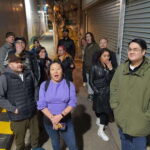
What I like most is the human scale and the way the site is interpreted. The licensed English guide—often highlighted for clear instruction and storytelling, including guides like Jungho—turns architecture and political space into something you can actually understand. My one caution: there’s no hotel pickup, so you need to be able to reach Gyeongbokgung Station and keep up with a steady walking pace for about 2.5 hours.
In This Review
- Key things that make this tour worth your time
- Why the Blue House walking tour is time-sensitive before June
- Price and what $199 buys you in real value
- Getting to Gyeongbokgung Station and pacing through 2.5 hours
- Stop-by-stop: Yeongbingwan, main buildings, residence, and the press area
- Yeongbingwan: where important foreign guests were welcomed
- The Blue House main building: the office where decisions were made
- The former office area: what existed before the current main building
- The president’s residence: privacy and quiet inside the grounds
- Chimnyugak House: a traditional pavilion for a calm break
- Sangchunjae: special-guest buildings and quiet meetings
- Chunchugwan: where announcements were delivered to reporters
- Why the guide matters: Jungho-style storytelling and clear instructions
- How to plan the rest of your Seoul day after the tour
- Who this Blue House walking tour is best for
- Final call: should you book this Korea’s White House tour?
- FAQ
- How long is the Blue House walking tour?
- Where do I meet, and what time does it start?
- Is hotel pickup included?
- What’s included in the price?
- Is the group size small?
- Is there a cancellation refund if plans change?
Key things that make this tour worth your time
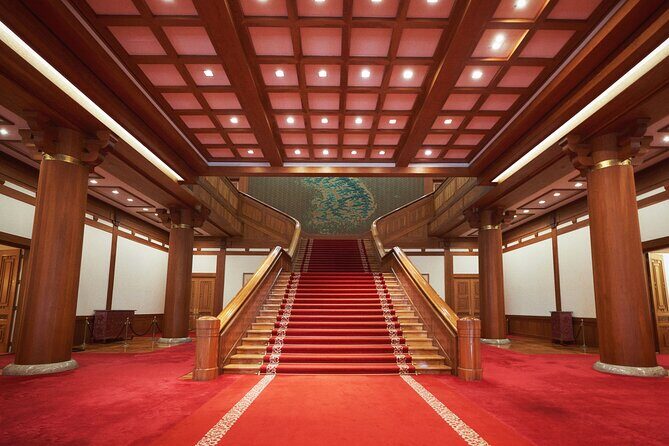
- Small group (max 9) means more Q&A and less staring at the back of someone’s camera
- Reserved entrance to Cheong Wa Dae so you’re not guessing how access works
- Stop-by-stop coverage of office, residence, press center, and guest areas—not just the main roof
- English guided interpretation focused on history, politics, and culture in clear storytelling
- A Jungho-style experience stands out: clear meeting points and energetic explanations
Why the Blue House walking tour is time-sensitive before June
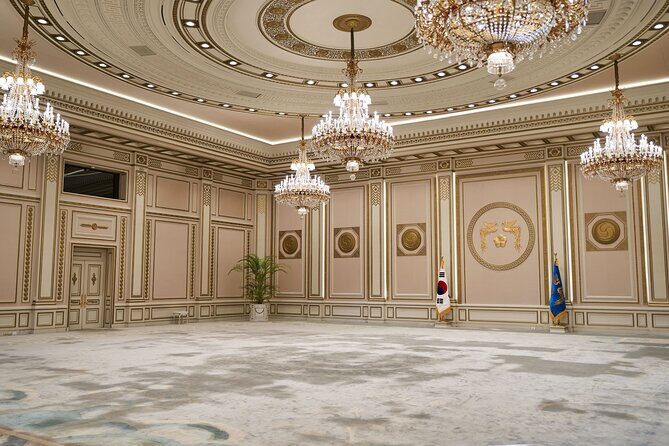
The Blue House is Korea’s version of the White House, and for decades it was tightly off-limits. In recent political changes, the gates opened for visitors—but access isn’t meant to last forever. That timing matters, because the easiest way to see it is the “now” window, not a future maybe.
This tour is built around that reality: limited access, small group size, and a guided structure that helps you make sense of what you’re seeing. The point isn’t only to visit famous grounds. It’s to understand why these buildings were placed where they were, who used them, and how the space worked for meetings, privacy, and announcements.
If you care about how politics lives in physical space—rooms for decisions, areas for press, and quiet zones for family—this is the kind of tour that gives you the context that most self-guided stops miss.
You can also read our reviews of more walking tours in Seoul
Price and what $199 buys you in real value
At $199 per person, this isn’t a budget snack. The value comes from three things you can’t easily DIY: reserved entrance, an English-speaking licensed guide, and a format that keeps the group small.
Also, notice how the planning window works: tours are booked about 38 days in advance on average. That’s a hint that this isn’t one of those activities you can casually decide on last minute and hope for a slot.
One more value signal: admission tickets for the stops listed are listed as free in the itinerary details, while the tour itself includes reserved entrance. In other words, your money goes mainly to access and interpretation, not paying repeatedly for individual entry fees. You’re paying for the right to be guided through a restricted, high-interest place in a controlled group.
The trade-off is simple: you’re paying for access and a guide, so you’ll want to show up ready to listen. If you only want short photo stops and don’t care about explanations, you may feel like the cost is heavier than it needs to be.
Getting to Gyeongbokgung Station and pacing through 2.5 hours
This tour starts at 10:00 am at Gyeongbokgung Station, and it ends back at the same meeting point. There’s no hotel pickup, so your day plan should include an easy route to that station.
The good news: the start point is noted as near public transportation, and the tour is set up so most people can participate. The pace still matters, though. With multiple grounds stops and time for the guide’s stories, you’ll want comfortable shoes and a willingness to walk on-site at a calm but steady rhythm.
Plan your arrival a bit early. Even if instructions are clear (and they often are, including feedback about very clear meeting directions), arriving early helps you get oriented fast and settle in before the tour begins.
Stop-by-stop: Yeongbingwan, main buildings, residence, and the press area
You’re not just seeing the most famous roof. The itinerary is designed to move through the different functions of the Blue House grounds, so the buildings make sense as a system.
Yeongbingwan: where important foreign guests were welcomed
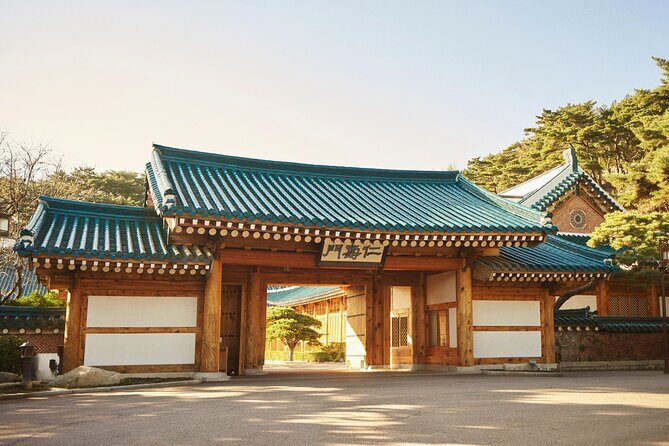
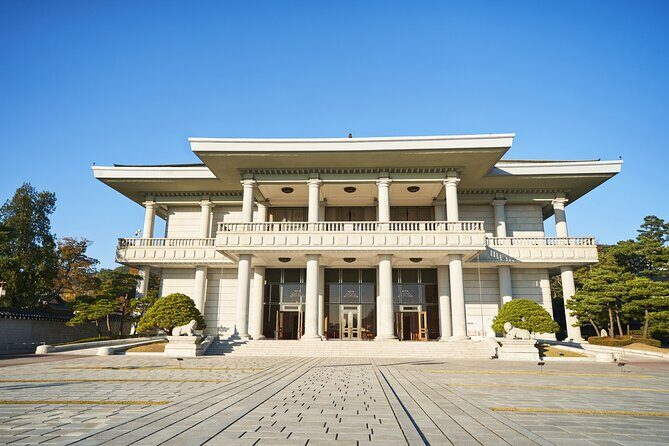
Stop 1 is Cheong Wa Dae Yeongbingwan, used historically to welcome important guests from other countries. The site hosted meetings between presidents and foreign leaders, and it also served as a venue for events like dinners and meetings.
This stop is a great warm-up because it frames the Blue House not as a single monument, but as an international hosting space. When you understand guest culture and hosting protocol, the rest of the complex clicks into place.
A practical note: because this is part of a larger grounds tour, your time here is brief, so pay attention to the guide’s explanation rather than trying to read every detail yourself.


The Blue House main building: the office where decisions were made
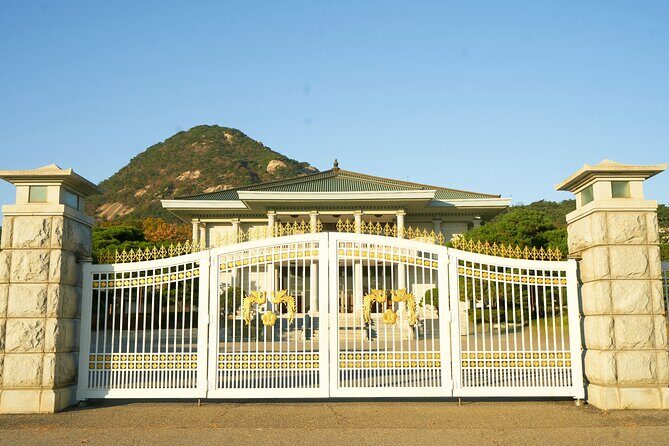
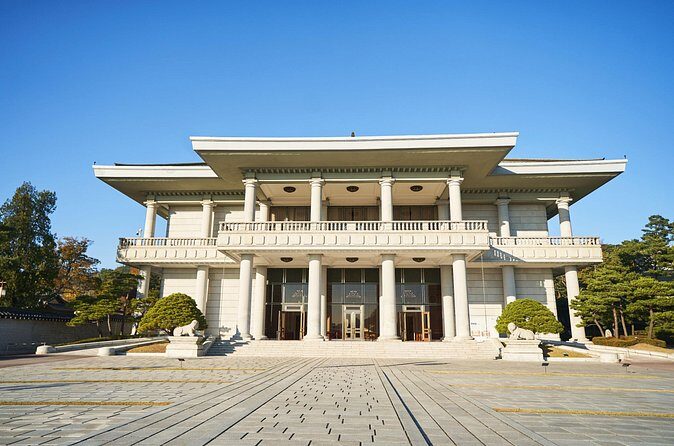
Stop 2 focuses on the Blue House (Cheong Wa Dae) main building, where the president worked and where important meetings took place. The iconic blue roof is presented as a symbol of the Korean government, which helps you see the building’s role beyond aesthetics.
Here’s the key idea to keep in mind: this space represents authority and decision-making. Even if you already know modern headlines, the guided context makes you think about how government functions day-to-day, not only during dramatic moments.
The former office area: what existed before the current main building
Stop 3 takes you to the older main office area—the place where the presidential office stood before the current main building was constructed. Korean presidents worked here and held important meetings in the earlier era.
This stop is valuable because it adds timeline thinking. The Blue House isn’t frozen in one period; it evolved. If you like tracing how Korea’s modern institutions changed over time, this is where your understanding starts to feel sharper.
The president’s residence: privacy and quiet inside the grounds
Stop 4 is the residential area, separate from the office to give the president and family privacy. It’s described as quiet and surrounded by trees, and the inside included spaces such as bedrooms and other domestic rooms (as listed in the tour description).
I like this stop because it balances the politics with the personal life side. Government space can feel cold in photos. Here, the guide’s explanations help you see how the complex was designed to keep public work and private life distinct.
Chimnyugak House: a traditional pavilion for a calm break
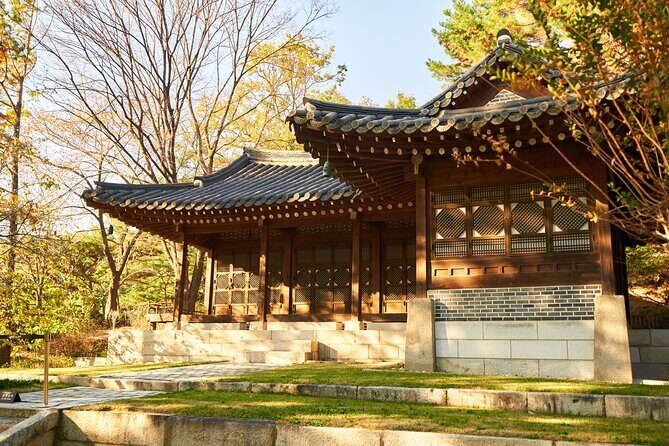
Stop 5 is Chimnyugak House, a small traditional pavilion surrounded by trees. The pacing description calls it a quiet break, with your guide explaining the architecture and history of the space.
This is the moment where you reset mentally. It also teaches you how traditional design language sits inside the modern presidential grounds. In a tour like this, one peaceful stop does a lot of work for your attention span.
Sangchunjae: special-guest buildings and quiet meetings
Stop 6 is Sangchunjae, highlighted as one of the most beautiful traditional buildings on the grounds. It’s tied to use for special guests and quiet meetings, and you’ll walk around and see the wooden structure as part of the guided interpretation.
Don’t rush this part. This is the stop where you can get a stronger feel for traditional design choices—wood, structure, and the purpose of the space—because the tour is explicitly about meaning, not just location.
If you’re someone who likes architecture, this is likely to be one of your favorite moments.
Chunchugwan: where announcements were delivered to reporters
Stop 7 brings you to Chunchugwan, described as the former press center where official announcements were made. This is where reporters from Korea and around the world came to hear the president speak.
This stop lands especially well if you care about media and politics. It turns press conferences from a generic concept into a physical place with context. Instead of thinking about announcements as a screen or a headline, you’re thinking about the room, the flow of information, and why announcements needed a specific location.
Your final minutes here are short, so listen closely. The guide’s story helps you understand what you’re seeing without needing you to guess.
Why the guide matters: Jungho-style storytelling and clear instructions
In tours like this, the site is already powerful. The difference is how the guide explains it. The feedback you have on this tour consistently points to the guide as the key ingredient, especially Jungho.
What stands out in the reviews: clear English, strong storytelling, and instructions that remove uncertainty. One review notes very clear directions on where to meet, and another highlights how the guide even walked someone back to the metro station. Those are small things, but they reduce stress when you’re navigating a restricted, high-interest area.
Jungho is also repeatedly praised for turning architecture and historical significance into a conversation. That matters because Cheong Wa Dae is easy to misread if you only look at buildings as photos. With the right guide, you start understanding how different spaces worked: guest reception, office function, private residence, traditional pavilion calm, and press announcements.
A good sign you’ll enjoy this tour: people mention learning a lot about Korean history and finding the experience meaningful, not just a checklist stop.
How to plan the rest of your Seoul day after the tour
Because this tour ends back where it started, you don’t need to re-engineer your day at the finish. You’ll likely want to pair it with nearby historic Seoul stops, especially since the start area is close to major palace zones.
One practical pairing that shows up in the tour discussion is going to the hanok village after the tour. Even if you plan it differently, the timing works well for a “today I understand the country” kind of day: formal government space in the morning, traditional neighborhood vibes later.
Also, since the tour is only about 2.5 hours, you can still keep your afternoon open for markets, coffee, or a slower cultural walk. This isn’t a full-day commitment that hijacks everything else.
Who this Blue House walking tour is best for
This tour fits best if you want more meaning than pictures.
You’ll likely enjoy it most if you:
- Care about Korean history and modern politics, and want the place explained in context
- Enjoy architecture and how buildings reflect function (office vs residence vs press)
- Prefer small groups where you can ask questions without feeling lost
It may be less satisfying if you:
- Only want a quick exterior photo loop
- Dislike listening to history and political context for the majority of the tour time
- Are hoping for hotel pickup or a fully hands-off experience
Final call: should you book this Korea’s White House tour?
If the Blue House is on your Seoul must-do list, I think this tour is a smart way to do it—especially with the limited window before public access ends in June. The combination of reserved entrance, max 9-person group, and a guide who clearly knows how to explain the meaning behind the spaces is the reason this isn’t just another city walk.
Book it if you want to leave with a stronger mental map of Korean governance and culture, and if you’re comfortable meeting at Gyeongbokgung Station at 10:00 am without hotel pickup.
Skip it if you’re mainly chasing quick photos or you’re not interested in politics/history talk. In that case, you’d probably feel the cost more than the payoff.
If you do book, go in curious. Ask questions when they come up. And don’t treat the Blue House as a museum stop—it’s a place with layers.
FAQ
How long is the Blue House walking tour?
The duration is listed as approximately 2 hours 30 minutes.
Where do I meet, and what time does it start?
You meet at Gyeongbokgung Station, Seoul, and the tour starts at 10:00 am. The tour ends back at the meeting point.
Is hotel pickup included?
No. The tour does not include hotel pick-up and drop-off.
What’s included in the price?
The price includes reserved entrance to Korea’s White House (Cheong Wa Dae) and an English-speaking licensed tour guide.
Is the group size small?
Yes. The maximum group size is 9 travelers.
Is there a cancellation refund if plans change?
Yes. You can get a 100% refund if you cancel up to 24 hours before the experience start time. If you cancel less than 24 hours before, the amount paid is not refunded.