REVIEW · SEOUL
Traditional Korean Bookbinding Experience in Seoul, Hongdae
Book on Viator →Operated by Danchoodan · Bookable on Viator
Paper, silk, and knots. That’s your souvenir in 2 hours.
This traditional Korean bookbinding class is one of the only true Hanji-focused workshops in Seoul, with you choosing silk patterns and ending with a decorative Norigae knot you can tie yourself. I love that the materials feel authentic and purposeful, not craft-store copies. I also love the Hanji story tied to the Joseon era and its UNESCO-recognized significance. One possible drawback: you’re creating something delicate, so if you want a zero-fuss activity, this takes a little patience and careful handling.
You’ll meet at danchoodan in Mapo-gu (Daeheung-ro, 100, 3rd floor) at 10:30 am, and the class runs about 2 hours. It’s limited to a small group (max 12), and your entry is tied to your reservation size—so go with your booked party. If you like making things with your hands and taking home something that looks and feels special, this is a great fit.
In This Review
- Key highlights you’ll remember
- Hanji and silk: why this notebook feels different
- Getting started at danchoodan (Hongdae area) without stress
- The 6-step flow: what you’ll do during the 2 hours
- 1) Choose your silk cover (from 22 options)
- 2) Select your Norigae ornament and thread color
- 3) Learn why Hanji paper is special
- 4) Make the Korean notebook using traditional binding
- 5) Decorate with the Norigae knot
- 6) Pack your creation in gift-ready packaging
- What’s included (and what you should plan around)
- Who this class is perfect for (and who should think twice)
- How to get the most out of it on the day
- Pricing and value: why $49 feels fair here
- Should you book this Korean bookbinding class?
- FAQ
- How long is the traditional Korean bookbinding experience?
- What does the experience cost?
- Where do I meet for the class?
- What time does it start?
- Is transportation included?
- Are materials and tools provided?
- How big are the groups?
- Is there an age requirement?
- Is a mobile ticket used?
- What is the cancellation policy?
Key highlights you’ll remember
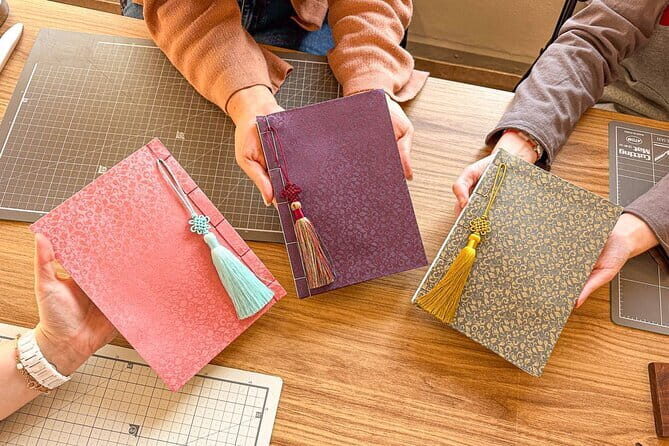
- UNESCO-Linked Hanji: Hanji paper connects to the Annals of the Joseon Dynasty (listed as UNESCO Memory of the World)
- Choose from 22 silk covers: Korean traditional patterns to set the look of your notebook
- Pick your Norigae + thread colors: You customize the ornament and the finishing details
- Learn traditional binding techniques: Silk and Hanji are bound together using Korean methods
- Tie a Norigae knot as the final touch: The signature flourish you take home
- Gift-ready packaging: Your notebook is packed so it’s ready to share or keep
Hanji and silk: why this notebook feels different
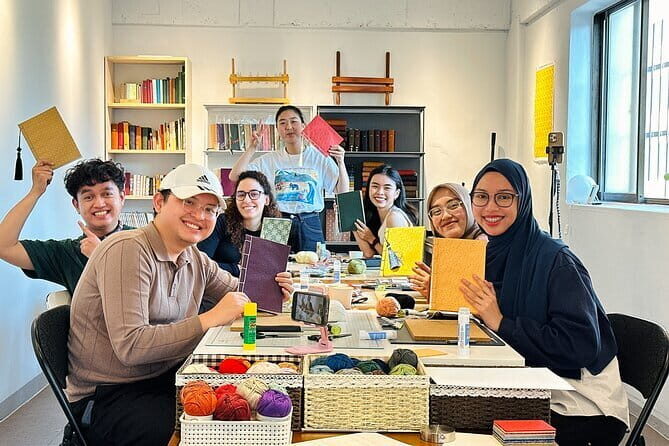
Korean bookbinding here isn’t just making a cute journal. The class is built around Hanji, the traditional Korean paper used for serious writing in the Joseon era—diaries, notes, and scholarly records. Hanji is also connected to the Annals of the Joseon Dynasty, which are recognized on the UNESCO Memory of the World list. That matters because you’re not working with generic paper. You’re working with a material that has a reputation for durability and cultural importance.
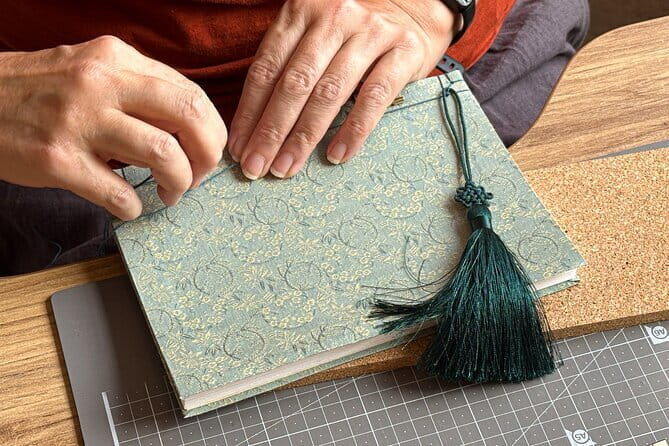
Then there’s the silk. Your notebook cover uses silk with Korean traditional patterns. You’ll be able to select among multiple silk designs, which is half the fun because you can steer the notebook’s personality early, before you even start binding.
The class also leans into the material life span idea: silk lasts about 500 years, while Hanji can last around 1,000 years. Whether you take the exact timeline literally or as a cultural shorthand, the message is practical: you’re making a souvenir meant to endure.
What I think you’ll like: it’s a craft where the storytelling and the making go together. You learn what the materials are, then you use them.
What to keep in mind: because you’re working with paper and knot-style decoration, you’ll want to slow down and focus. This isn’t a fast “souvenir assembly” activity.
You can also read our reviews of more tours and experiences in Seoul.


Getting started at danchoodan (Hongdae area) without stress
The meeting point is danchoodan, at Seoul’s Mapo-gu area (Daeheung-dong), Daeheung-ro 100, 3rd floor. The start time is 10:30 am, and the workshop ends back at the same place.
A few practical notes that will save you time:
- It’s near public transportation, so you shouldn’t need a car.
- Only the number of people who reserved can enter the studio. If you arrive with extra friends who didn’t book, they likely won’t be able to join last minute.
- The session is capped at 12 people, which is part of why the class tends to feel hands-on rather than rushed.
You’ll also use a mobile ticket for this activity. Make sure your ticket is accessible offline in case your signal is weak once you’re inside.
If you’re coming from central Seoul or near Hongdae, plan to arrive a bit early. Not because you’ll be waiting for long, but because you’ll want a calm moment to settle before you start handling Hanji and silk.
The 6-step flow: what you’ll do during the 2 hours

This workshop is paced like a real process, not a “grab supplies and go” class. Expect you to work through a clear set of stages, from choosing materials to finishing and packaging.
1) Choose your silk cover (from 22 options)
You start by picking the silk you want for your cover. The class offers 22 silk covers with Korean traditional patterns. This is your first design decision, and it affects everything visually, since the cover is the first thing people notice.
2) Select your Norigae ornament and thread color
Next you’ll choose your Norigae (traditional Korean ornament) and the color of the thread. There are dozens of colorful threads available, so you can match your notebook’s vibe—subtle, bold, traditional, or playful.
This step is smart because it turns a single notebook into your personal variation. Two people can take the same class and still end up with noticeably different results.






3) Learn why Hanji paper is special
You’ll get an explanation of Hanji: what makes it different, why it was used for important Joseon-era writing, and why it’s valued. The class connects it to the durability idea and to the cultural use of writing materials.
This isn’t a long lecture. It’s tied to what you’re holding, so you understand the “why” as you move into the making.
4) Make the Korean notebook using traditional binding
Now comes the hands-on part. You’ll bind the silk and Hanji together using Korean traditional binding methods. You’ll have the right tools and materials provided, plus a licensed guide to help you do the steps correctly.
This is the stage that turns your choices into an actual notebook form. If you worry you’re not “crafty,” don’t. The process is guided, and the group size is small enough that you can get help when you need it.
5) Decorate with the Norigae knot
As a final touch, you add a No-ri-gae (Norigae) knot to your notebook. You’ll learn how it ties, then you add it to the finished piece.
This step matters because it’s both decorative and symbolic. It also gives your notebook that unmistakably Korean finish that you can’t fake with modern craft techniques.
6) Pack your creation in gift-ready packaging
At the end, you’ll package your notebook in a gift-ready setup. The workshop includes materials and tools and gives you a clean “ready to bring home” result, so you’re not stuck figuring out how to transport a handmade paper item.
What’s included (and what you should plan around)

The class includes:
- Binding tools and materials
- A licensed guide
Not included:
- An air-conditioned vehicle (so you’ll rely on your own transit)
That “included” list is actually a big part of the value. You’re paying for the full making experience, not just a lecture or a demonstration. You’ll leave with a notebook you designed from the silk to the knot details.
The price is $49.00 per person, which makes sense for a small-group workshop where you use provided tools, specialty materials (Hanji and silk), and guide support. If you’ve ever tried to buy Hanji paper and DIY binding at home, you’ll quickly realize the hard part isn’t the supplies. It’s the technique. Here, you get both.
Who this class is perfect for (and who should think twice)
You’ll likely have a great time if:
- You enjoy crafts and want a hands-on souvenir
- You like traditional Korean culture that’s more practical than museum-only
- You want something that looks different from the usual keychains and shopping bags
- You’re the type who likes learning a process, not just taking photos
It may be less ideal if:
- You’re looking for a fast, no-focus activity
- You get impatient with careful steps (paper + knot work needs calm hands)
- You’re traveling with people who might not book separately—because entry is limited to the reserved party size
Also note the workshop requires participants to be 17 years old or older. Service animals are allowed, and most travelers can participate.
How to get the most out of it on the day

A workshop like this rewards preparation in small ways. Here’s how to make it smoother:
- Wear comfortable clothes. You’ll be working at a table for about 2 hours.
- Keep your phone on silent and within reach. You’ll likely want a quick shot of your selections (silk pattern choice, thread color) and final result.
- Treat the Hanji and silk choices like part of your travel story. Pick something that reminds you of what you like about Korea—traditional patterns, a certain color mood, or a specific ornament style.
If you’re visiting Seoul in a short window, this kind of class also gives you an “offline” memory. It’s not another line in the itinerary. It’s something you physically make and carry.
And because the workshop ends where it starts, it’s easy to slot into your schedule on your Seoul craft day, with no complicated backtracking.
Pricing and value: why $49 feels fair here
At $49 per person for about 2 hours, the price becomes more reasonable when you look at what you’re actually getting:
- Specialty materials are included (Hanji paper, silk covers, threads, and Norigae components)
- Tools are included, so you’re not paying extra for supplies
- You have licensed guide support, which matters for correct binding technique
- You take home a finished notebook with gift-ready packaging
A lot of workshops charge similar prices but only provide partial materials or minimal instruction. Here, the structure is clear: you choose, learn, bind, knot, and pack. That’s the difference between paying for an activity and paying for a result you’ll actually use.
Should you book this Korean bookbinding class?
I’d say yes if you want a handmade souvenir with real cultural grounding and a finished product that feels personal. This is the kind of activity that gives you a story you can tell later: how you picked your silk pattern, how you chose your Norigae and thread, and how the binding comes together into an actual notebook.
Book it especially if you enjoy small group classes and you want something more meaningful than a typical shopping stop. The combination of Hanji + silk + Norigae knot is distinctive, and the fact that everything needed is included makes it low-risk and high-reward.
If you’re strictly budget-crafting and hate anything “fiddly,” you might find it too detailed. But if you’re open to careful hands-on work, this is a very solid use of a morning in Seoul.
FAQ
How long is the traditional Korean bookbinding experience?
It lasts about 2 hours.
What does the experience cost?
The price is $49.00 per person.
Where do I meet for the class?
You meet at danchoodan in Mapo-gu, Daeheung-dong (Daeheung-ro, 100, 3rd floor). The activity ends back at the meeting point.
What time does it start?
The start time is 10:30 am.
Is transportation included?
No. An air-conditioned vehicle is not included.
Are materials and tools provided?
Yes. Binding tools and materials are included, along with a licensed guide.
How big are the groups?
The workshop has a maximum of 12 travelers.
Is there an age requirement?
Yes, reservation is possible only if you are 17 years old or older.
Is a mobile ticket used?
Yes, it uses a mobile ticket.
What is the cancellation policy?
You can cancel for free up to 24 hours in advance for a full refund. If you cancel less than 24 hours before the start time, the amount paid isn’t refunded.