REVIEW · SEOUL
Traditional Korean Mother-of-Pearl Craft Workshop
Book on Viator →Operated by 휘호크래프트 · Bookable on Viator
A thin slice of seashell can look like magic. This mother-of-pearl inlay workshop lets you learn the traditional steps of Najeon Chilgi and then make something practical you’ll actually use. You’ll get clear instructor guidance, a hands-on design moment, and a finished piece that catches the light in a way no photo can fully capture.
I especially like the hands-on instruction and pacing—slow enough to follow, fast enough to feel productive. I also like that your design can be personal: you can choose item shapes and patterns, and you can add Hangeul or English letters for your own initials.
One thing to plan for: the studio is on the 4th floor and there’s no elevator, so expect stairs.
In This Review
- Key Highlights You’ll Care About
- Mother-of-Pearl Craft in Seoul: Why This One Feels Worth It
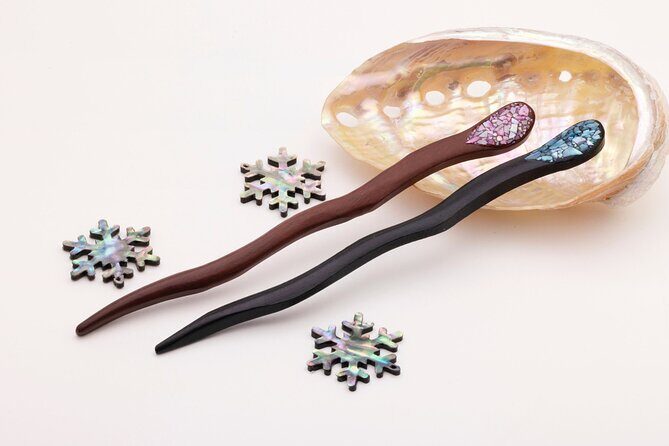
- What You’ll Make: Mirrors, Keychains, Hair Accessories, and More
- The Workshop Flow: From Picking Pieces to Admiring the Shine
- Finding the Studio in Mapo-gu and Getting Up to Floor Four
- Small Group Size Means You Get Real Attention
- Price and Value: What $30 Gets You (and Why It Can Be a Good Deal)
- Who This Workshop Suits (and Who Might Not Love It)
- A Few Smart Tips Before You Go
- FAQ
- How long is the Traditional Korean Mother-of-Pearl Craft workshop?
- Where does the workshop start, and how do you end?
- What kinds of items can I make?
- Is the workshop suitable for beginners?
- Can children participate?
- What is the cancellation window?
- Should You Book This Mother-of-Pearl Craft Workshop?
Key Highlights You’ll Care About
- Najeon Chilgi basics: learn how mother-of-pearl is used in traditional inlay work
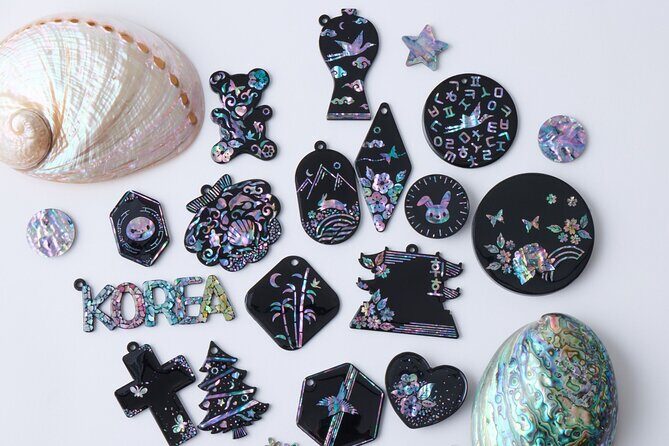
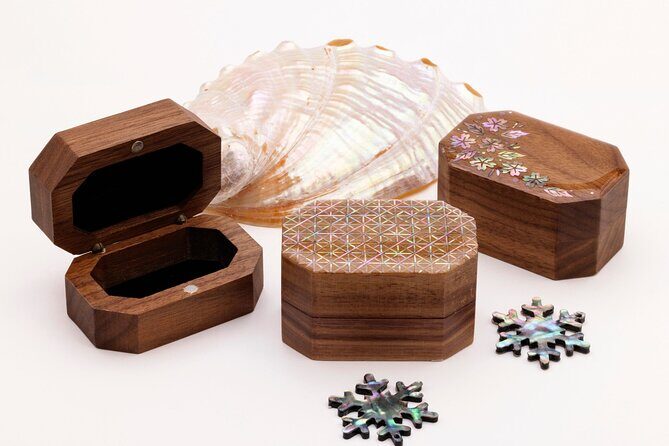
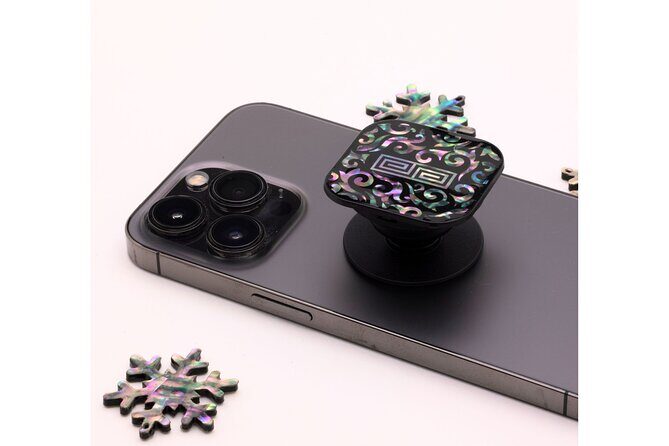
- Pick your keepsake: keychains, hair accessories, compact mirrors, and accessory boxes
- Personalize with letters: Hangeul or English characters (plus patterns and shapes)
- Small group: capped at 9 travelers, so you get real attention
- Take-home result: you leave with a bright, shiny finished item
- Studio details: entrance is by the side of the coffee shop downstairs, with a pink studio sign
Mother-of-Pearl Craft in Seoul: Why This One Feels Worth It
Korean mother-of-pearl craft has a quiet kind of wow factor. The material is made from thinly processed seashells, so you get natural color shifts and a glow that feels more complex than plastic or paint. In a city full of shopping, this is the opposite of passive. You’re making something by hand, with a traditional technique.
This workshop also connects you to a specific craft name: Najeon Chilgi, the Korean tradition of mother-of-pearl inlay. That matters because it keeps the experience from feeling like a generic souvenir class. You’re not just sticking decorative bits onto a base. You’re learning the process behind a technique that’s been used for years.
And it’s not only about the final look. Watching how the instructor explains the steps—and then seeing your own piece come together—makes the finished product feel earned. You leave with a keepsake, but you also leave with a better sense of why mother-of-pearl catches light the way it does.
You can also read our reviews of more tours and experiences in Seoul


What You’ll Make: Mirrors, Keychains, Hair Accessories, and More
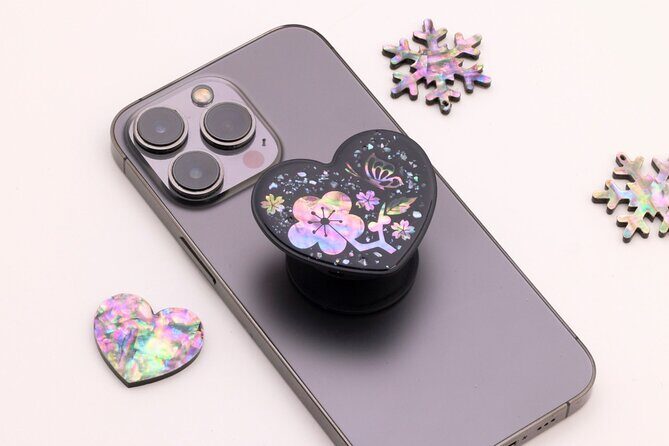
You get to choose what you’re creating, and that choice is one of the best parts. The workshop offers multiple item types, including keychains, hair accessories, compact mirrors, and accessory boxes. Picking an item you’ll actually use is the easiest way to make this class feel like a smart purchase, not just a craft project.
Design options are equally flexible:
- You can choose from different patterns and shapes
- You can go with traditional Korean patterns
- You can add personal touches using Hangeul or English letters
- You can also create with a mix of mother-of-pearl pieces to match your design plan
If you like souvenirs that feel personal, the letter option is the difference-maker. An initial or small message turns the piece into something you’ll keep using and showing. A mirror, especially, becomes a daily reminder. A keychain becomes a small conversation starter when you’re on the go.
The Workshop Flow: From Picking Pieces to Admiring the Shine
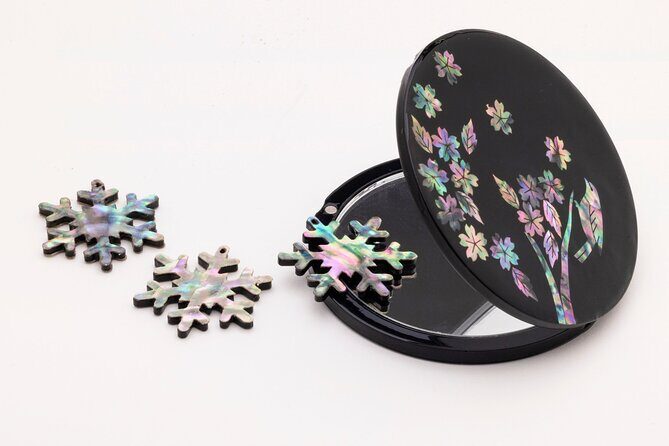
Plan on about one hour to about one and a half hours for the full experience. The pace is structured, and you’ll always know what comes next.
Here’s how it typically unfolds:
- Start with the instructor explanation
You learn about Najeon Chilgi and the basic approach to working with mother-of-pearl inlay. This is where you get the context: the craft isn’t just decoration; it’s a careful material-and-technique process.
- Choose your item and design plan
You’ll select the piece you want to make—like a compact mirror or keychain—and then decide on your pattern and layout. This is your creative window, so take a few minutes to think about spacing and placement.
- Build your design using shapes and mother-of-pearl pieces
The class is hands-on. You work with mother-of-pearl parts to create your chosen pattern. Because this is inlay craft, your design depends on how the pieces fit together and how the final surface reads under light.
- Finish phase: the instructor wraps things up
Once your piece is assembled, the instructor helps finalize and tidy things up. That support is helpful, especially if you want the finished result to look clean and well-aligned.
- Watch a video about the traditional process
You’ll then watch a video showing the process of making traditional Korean Najeon Chilgi. It gives you a bigger picture and helps your brain connect what you did in the chair with the craft steps behind the scenes.
- Admire your completed, shiny creation
This is the payoff moment. Mother-of-pearl has a special way of reflecting light. Even in a small studio, your finished piece should look lively and show distinct color tones.
What I like about this flow is that it mixes doing + learning. You’re not stuck listening for too long, and you’re not left entirely on your own during the craft portion.
Finding the Studio in Mapo-gu and Getting Up to Floor Four
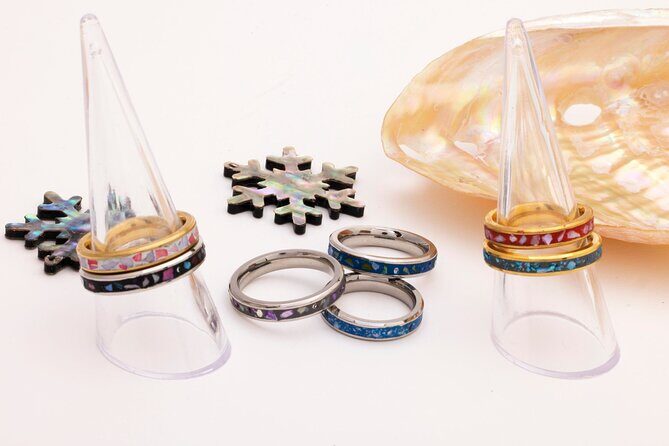
The meeting point is listed at 5 Dongmak-ro 2-gil, Mapo-gu, Seoul, South Korea, and the activity ends back there. The studio is near public transportation, which is a big deal in Seoul—quick transit saves time when your schedule is packed.
Two practical notes from real-world experience with this kind of location:
- The workshop is on the 4th floor, and there is no elevator. Wear shoes you’re fine walking in on stairs.
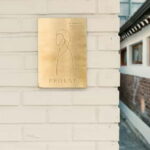
- The entrance is around the side of the coffee shop downstairs, and there’s a pink studio sign to help you spot the right place.
Also, you’ll use a mobile ticket. Have it ready on your phone before you climb the stairs.
If you want to avoid stress, arrive a few minutes early. Craft workshops run best when you’re not rushing right into the first instructions.
Small Group Size Means You Get Real Attention
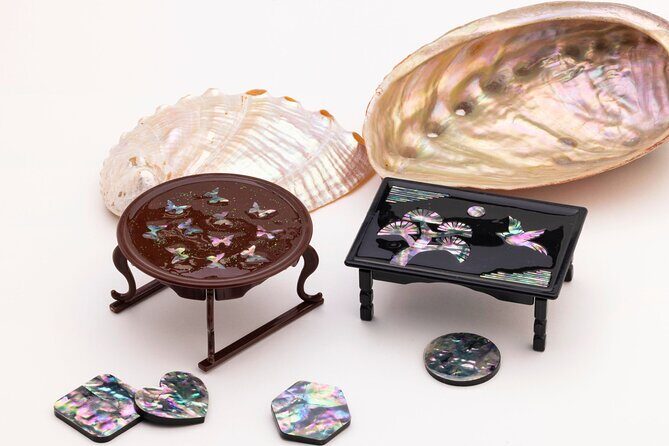
This workshop caps at 9 travelers. That’s small enough to feel personal without being awkward. You can ask questions, and the instructor can correct details while you’re working.
That matters because mother-of-pearl inlay isn’t just about creativity. It’s also about alignment, fit, and getting a clean final look. A smaller class helps you get guidance before tiny placement choices become big visual issues later.
You also get a social-friendly setup: you’ll be focused on your own piece, but you’re not separated in a way that makes the experience feel like a factory line. Even if you’re traveling solo, it tends to feel relaxed.



Price and Value: What $30 Gets You (and Why It Can Be a Good Deal)
The price is $30.00 per person, and it’s been popular enough that it’s typically booked about 24 days in advance. That “booked ahead” detail is a hint that this isn’t a random drop-in craft—people plan their Seoul days around it.
So is $30 worth it? In my view, it can be, because you’re not paying for a generic souvenir. You’re paying for:
- instruction on a specific traditional technique (Najeon Chilgi)
- guided time to create a custom piece
- a finished item you can keep and use (keychain, mirror, hair accessory, or accessory box)
- the chance to add Hangeul or English letters, which turns the piece into a personal keepsake
One extra detail to plan for: all participants are required to purchase at least one experience item. That requirement means you should go in ready to choose an item and commit to the craft. If you hate making decisions under time pressure, you’ll want to think beforehand about which item you’d actually want to carry or use.
If you’re the type who likes handmade gifts and you’d rather spend money on an experience with a tangible result, this is the kind of class that tends to land well.
Who This Workshop Suits (and Who Might Not Love It)
This is a good fit for:
- people who like hands-on activities and don’t mind a focused hour
- travelers who want a souvenir that’s personal, not mass-produced
- anyone curious about Korean craft technique beyond just watching from the outside
- small-group travelers who appreciate attention from an instructor
It may be less ideal if:
- you can’t do stairs easily (the studio is on the 4th floor with no elevator)
- you’re looking for a broad tour of sights. This is a workshop, not a sightseeing loop
- you’re short on time and can’t manage the “arrive, choose, build, and finish” pace
For families, there’s a clear rule: children must be accompanied by a guardian, and both the child and the guardian must purchase a product and participate in the class. Guardians can’t attend just as observers. If you’re traveling with kids, this is worth factoring into both cost and scheduling.
Service animals are allowed, and the workshop notes that most travelers can participate, which is a reassuring baseline.
A Few Smart Tips Before You Go
Here are practical things that help you get a smoother experience:
- Decide which item you want first. A compact mirror or keychain usually feels easiest to use immediately after the class.
- If you plan to add letters, think about the layout before you start assembling. Letter placement can affect how your design reads.
- Wear or bring comfortable clothing for a seated craft session.
- If you’re visiting in a packed day, keep buffer time for climbing stairs and finding the entrance by the coffee shop side.
And if you want a preview of style, the workshop has an Instagram presence at @hiwocraft. It can help you get design ideas before you arrive.
FAQ
How long is the Traditional Korean Mother-of-Pearl Craft workshop?
The experience is about 1 hour to about 1.5 hours.
Where does the workshop start, and how do you end?
It starts at 5 Dongmak-ro 2-gil, Mapo-gu, Seoul, South Korea, and ends back at the same meeting point.
What kinds of items can I make?
You can make items such as keychains, hair accessories, compact mirrors, and accessory boxes.
Is the workshop suitable for beginners?
The workshop states that most travelers can participate, and the instructor explains the process as you work.
Can children participate?
Yes, but children must be accompanied by a guardian, and both must purchase and participate. Guardians cannot attend as observers only.
What is the cancellation window?
You can cancel for a full refund if you cancel at least 24 hours before the experience start time.
Should You Book This Mother-of-Pearl Craft Workshop?
If you want a Seoul activity that ends with something you truly made—something that reflects light, shows color, and can be personalized—book this. The combination of Najeon Chilgi instruction plus the ability to create your own design (including letters) is the main reason it’s a standout. The small group size also helps you get proper attention.
I’d hold off only if stairs are a deal-breaker for you or if you don’t want a focused workshop day. Otherwise, this is a smart, hands-on use of a small slice of your time in Seoul—and you’ll leave holding proof of the craft, not just a story.

![[Small Group] Aegibong and DMZ Closest Views of North Korea - The ID check and Unification Bridge step: why it changes the mood](https://7.seoulescapes.com/wp-content/uploads/small-group-aegibong-and-dmz-closest-views-of-north-korea.jpg)