REVIEW · SEOUL
[Small Group] Aegibong and DMZ Closest Views of North Korea
Book on Viator →Operated by Sunny Seoul Korea Tour · Bookable on Viator
Eight hours from Seoul to two Koreas. This DMZ-focused tour is interesting because it mixes solemn memorials with up-close sightlines—and it’s run in a small group that usually keeps you ahead of the big-bus timing. You’ll get rare viewpoints from places like Dora Observatory and Aegibong Peace Ecopark, where you’re looking toward North Korea’s side of the border.
What I like most is the structure: you learn first, then you look, then you walk through one of North Korea’s infiltration tunnels. The main consideration is practical, not political: the schedule is long (about 8 to 9 hours) and the tour lists a need for moderate physical fitness, so plan for a day that asks you to stay on your feet and move between stops.
In This Review
- Key highlights worth planning for
- The value of this DMZ route: learn first, then look
- Imjingak Pyeonghwa-Nuri Park: the DMZ story before the restricted zone
- The ID check and Unification Bridge step: why it changes the mood
- DMZ Theater & Exhibition Hall: the background that makes the tunnel meaningful
- The Third Tunnel: a Cold War passage you can’t unsee
- Dora Observatory: the closest feeling of distance to Panmunjeom
- Aegibong Peace Ecopark: closest views of North Korea without the frantic vibe
- Starbucks Aegibong Peace Ecopark and the Jogang Observatory moment
- Pickup, drop-off, and the 8–9 hour reality check
- Price and value: what $120 buys you on a day like this
- Who this tour fits best (and who should be careful)
- Should you book Aegibong and DMZ Closest Views of North Korea?
- FAQ
- Do I need my passport for this DMZ tour?
- How long is the tour?
- What’s included in the tour price?
- Is lunch included?
- Where do you meet and where do you get dropped off?
- What if the weather is bad?
Key highlights worth planning for
![[Small Group] Aegibong and DMZ Closest Views of North Korea - Key highlights worth planning for](https://7.seoulescapes.com/wp-content/uploads/small-group-aegibong-and-dmz-closest-views-of-north-korea-1.jpg)
- Imjingak Peace Zone at the start: monuments and memorials that set the story before you reach the restricted areas
- 3rd Infiltration Tunnel visit: discovered in 1978 and noted as the tunnel closest to Seoul
- Dora Observatory sightlines: one of the closest observatories to Panmunjeom, with views toward Daeseong-dong
- Aegibong Peace Ecopark views: the closest point for looking toward North Korean villages and farmland
- English guiding that connects the dots: guides like Jung, Sophia, Eunice, and Mimi are praised for clear, human explanations
The value of this DMZ route: learn first, then look
![[Small Group] Aegibong and DMZ Closest Views of North Korea - The value of this DMZ route: learn first, then look](https://7.seoulescapes.com/wp-content/uploads/small-group-aegibong-and-dmz-closest-views-of-north-korea-2.jpg)
The DMZ can feel abstract until you’re standing in the places where decisions, wars, and armistice politics show up in the physical world. This tour starts with education-heavy stops and then funnels you toward viewpoint locations where the geography does the talking. That order matters, because once you understand what you’re seeing—tunnels, observatories, and memorials—you can make sense of why the peninsula still feels split.
The other big value is pacing. With a max group size of up to 40 and a plan that aims to avoid heavy crowd timing, you’re more likely to experience the day without feeling like you’re crammed into a conveyor belt. Many small-group tours promise the same thing, but here the route is built around how long each stop takes and how the group flows between sites.
You can also read our reviews of more tours and experiences in Seoul.
Imjingak Pyeonghwa-Nuri Park: the DMZ story before the restricted zone
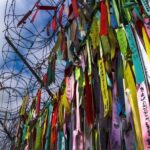
You begin at Imjingak Pyeonghwa Nuri Park, a unification and security complex made up of several parts—Imjingak Pavilion, the North Korea Center, Unification Park, plus monuments and memorial sites. The tone here is reflective, and it works as a warm-up for the rest of the day. You’re not just being dropped at a viewpoint; you’re given context for why this boundary line matters.
Plan to spend around 2 hours here, and treat that time as more than “waiting time.” If you want to understand the Korean War and the long road to armistice and peace-building efforts, this is where you build the mental framework that makes later stops click. And since an admission ticket is included, this isn’t a “pay extra to enter the real part” kind of situation.
A quick but important note: at some point you’ll also go through an ID check and cross into a restricted area via the Unification Bridge. That means your passport needs to be ready, not buried under receipts in your bag.
The ID check and Unification Bridge step: why it changes the mood
![[Small Group] Aegibong and DMZ Closest Views of North Korea - The ID check and Unification Bridge step: why it changes the mood](https://7.seoulescapes.com/wp-content/uploads/small-group-aegibong-and-dmz-closest-views-of-north-korea.jpg)
The ID check isn’t a formality you can ignore. It marks the moment the day turns from public memorial space to restricted, controlled viewing zones. You’ll want to move quickly through instructions and have your documents in hand, because the day is built to keep groups moving.
Crossing the Unification Bridge after the check is one of those moments that feels oddly real. The DMZ is often described with big-picture words, but the process of entering restricted areas adds a layer of gravity that you can’t really get from photos or documentaries.
If you’re the kind of person who likes rules and order (me too), this part is reassuring: there’s a clear sequence, and the guide is there to keep everything organized.
DMZ Theater & Exhibition Hall: the background that makes the tunnel meaningful
![[Small Group] Aegibong and DMZ Closest Views of North Korea - DMZ Theater & Exhibition Hall: the background that makes the tunnel meaningful](https://7.seoulescapes.com/wp-content/uploads/small-group-aegibong-and-dmz-closest-views-of-north-korea-4.jpg)
This tour includes time at the DMZ Theater & Exhibition Hall, which focuses on the Korean War, armistice agreements, and peace-building efforts. I like this kind of stop because it prevents you from treating the DMZ as only a “scenery” experience.
Once you watch and learn the basics—especially the armistice timeline—you’re better equipped to understand why infiltration attempts, border security, and these long-lasting negotiations are not random historical trivia. They’re the reason the peninsula still looks the way it does from the human scale of villages, farms, and observatories.
The Third Tunnel: a Cold War passage you can’t unsee
![[Small Group] Aegibong and DMZ Closest Views of North Korea - The Third Tunnel: a Cold War passage you can’t unsee](https://7.seoulescapes.com/wp-content/uploads/small-group-aegibong-and-dmz-closest-views-of-north-korea-5.jpg)
Next comes the 3rd Infiltration Tunnel, built by North Korea with the purpose of invading South Korea. It was discovered in 1978, and it’s described as the closest of the known tunnels to Seoul—about 52 km. That “closest” detail matters because it helps you picture how near these strategies were to the capital region.
This stop typically takes around 1 hour 30 minutes, and it’s included with admission fees. Because the tunnel is a physical structure and you’ll be moving through it, this is also where your moderate fitness level becomes more relevant. If you get uneasy in enclosed or demanding spaces, take that seriously and pace yourself as you go.
What I find valuable here is that the tunnel doesn’t just show engineering. It reframes the DMZ as a lived threat during the Cold War era—not just a line on a map. Even if you know the headlines, walking through a tunnel stop changes the way you feel the distance between South Korea and North Korea.
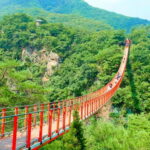
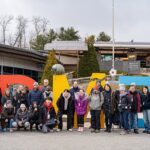


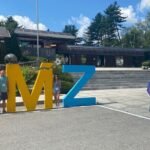
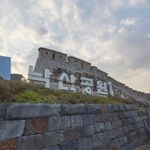
Dora Observatory: the closest feeling of distance to Panmunjeom
![[Small Group] Aegibong and DMZ Closest Views of North Korea - Dora Observatory: the closest feeling of distance to Panmunjeom](https://7.seoulescapes.com/wp-content/uploads/small-group-aegibong-and-dmz-closest-views-of-north-korea-6.jpg)
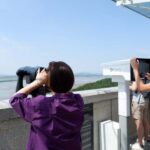
From Dora Observatory—described as the closest DMZ observatory to Panmunjeom—you get one of the most compelling sightlines on the itinerary. The view isn’t only about Panmunjeom itself. From Dora, you can also see the village of Daeseong-dong within the DMZ, plus surrounding mountains and farmlands.
This stop lasts about 1 hour, and admission is included. I like that the time is long enough to let your eyes adjust and to give the guide room to explain what different features mean. When you’re looking through a viewpoint, it’s easy to feel like you’re just scanning for something. With the right context, you start recognizing what you’re actually searching for.
Also, this is where weather can matter. The tour notes that it requires good weather. If skies are clear, your day is much more rewarding because the views are the main event.
Aegibong Peace Ecopark: closest views of North Korea without the frantic vibe
![[Small Group] Aegibong and DMZ Closest Views of North Korea - Aegibong Peace Ecopark: closest views of North Korea without the frantic vibe](https://7.seoulescapes.com/wp-content/uploads/small-group-aegibong-and-dmz-closest-views-of-north-korea-7.jpg)
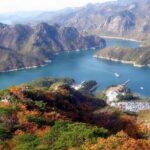
After the observatory work, the itinerary shifts to Aegibong Peace Ecopark in Gimpo. This park is specifically highlighted as the closest point to North Korea, and it’s where you’re meant to enjoy clear, unobstructed views of North Korean villages and farmland—things that represent day-to-day life on the other side.
You’ll spend about 1 hour here. That doesn’t sound long, but the point of Aegibong is simple: you come for the looking, and the park gives you both scenery and exhibits tied to the region’s significance on the Korean peninsula. If you’re curious about why this spot is famous, the exhibits help you connect what you’re seeing to what the border means in practice.
This is also a calmer stop than the tunnel. So if your mind is overloaded from the more intense memorial and security sites, Aegibong gives you a moment to slow down and just absorb.
Starbucks Aegibong Peace Ecopark and the Jogang Observatory moment
![[Small Group] Aegibong and DMZ Closest Views of North Korea - Starbucks Aegibong Peace Ecopark and the Jogang Observatory moment](https://7.seoulescapes.com/wp-content/uploads/small-group-aegibong-and-dmz-closest-views-of-north-korea-8.jpg)
The tour includes a dedicated stop at Starbucks Aegibong Peace Ecopark. Coffee and tea aren’t included, so treat this as your chance to buy a drink if you want one, not a free extra.
Right around this area is the Jogang Observatory, described as offering a unique close-up view that lets you observe North Korea’s villages and farmlands. In other words, you’re not just getting a café stop—you’re using the time to pair comfort with one more viewing angle.
This is a smart way to handle a long day. You get an emotionally heavy sequence, then a place to regroup, and then one last meaningful look at the border landscape.
Pickup, drop-off, and the 8–9 hour reality check
The tour includes pickup and uses an air-conditioned vehicle. Your meeting point is Imjingak Pyeonghwa Nuri Park at 148-40 Imjingak-ro, Munsan-eup, Paju-si, Gyeonggi-do. At the end, you’ll be dropped off in Myeong-dong, Seoul.
The tour ends at Aegibong Peace Ecopark around 15:00, with an estimated arrival back in Myeong-dong around 16:00. That return time is useful for planning your evening: you can usually still do dinner in central Seoul without feeling like you’re stuck traveling all night.
The tour also uses a mobile ticket, and it’s listed as near public transportation. So if your day in Seoul changes due to weather or schedule, you have some flexibility.
Price and value: what $120 buys you on a day like this
At $120 per person, this isn’t a budget half-day. But it also isn’t just “transport to a border fence.” Your ticket price includes air-conditioned vehicle transport, admission fees for the stops listed, private transportation, and an English guide. For a day trip where access is controlled and where the major sites have their own entry requirements, bundling those costs into one price can be a real time-saver.
The best way to judge value here is by the day structure. You’re paying for an organized route through multiple high-impact DMZ stops—Imjingak for context, the 3rd Tunnel for physical Cold War reality, Dora Observatory for Panmunjeom sightlines, and Aegibong/Jogang for the closest North Korea views. If you tried to piece this together yourself, you’d likely spend more time coordinating than you’d save money.
Big note for your personal budget: lunch and coffee/tea aren’t included. Build in money for food, and don’t count on this day to magically feed you between major stops.
Who this tour fits best (and who should be careful)
This experience makes sense if you want a full DMZ day with a clear learning sequence and multiple viewing opportunities, not just one photo stop. It’s also a good match if you like small-group energy—max 40 is big enough to feel organized, small enough that guides can still keep an eye on how everyone is doing.
It may be less comfortable if you have limited mobility or if the idea of a tunnel stop doesn’t sit well with you. The tour specifically calls for moderate physical fitness, and that’s a signal to take the day’s physical demands seriously.
If you’re traveling with a group of friends and you want a guide who can explain both the war context and what you’re seeing at the observatories, you’ll likely appreciate the way this route is taught. Guides like Jung and Sophia are praised for insightful explanations and timing that keeps the small group moving well. Eunice and Mimi are also noted for warmth, clarity, and making the day feel memorable without turning it into a lecture.
Should you book Aegibong and DMZ Closest Views of North Korea?
I’d book this tour if you want your DMZ day to feel structured, educational, and built around real viewpoints—Imjingak for context, tunnel for physical perspective, Dora for Panmunjeom sightlines, and Aegibong/Jogang for the closest look toward North Korea. At $120 with admissions and an English guide included, the value is strongest for people who want one organized day instead of piecing together logistics.
Skip it or think twice if you want a relaxed, short outing. This is an all-day plan, and it includes a tunnel stop plus a clear requirement for moderate physical fitness. Also, because it requires good weather, keep an eye on conditions so your viewing time isn’t wasted by a gray sky.
FAQ
Do I need my passport for this DMZ tour?
Yes. The tour includes an ID check, and you’re specifically asked to bring your passport.
How long is the tour?
It runs about 8 to 9 hours.
What’s included in the tour price?
You get an air-conditioned vehicle, admission fees for the listed stops, private transportation, and an English guide.
Is lunch included?
No. Lunch isn’t included, so you’ll need to plan for a meal on your own during the day.
Where do you meet and where do you get dropped off?
You start at Imjingak Pyeonghwa Nuri Park and end with a drop-off in Myeong-dong, Seoul.
What if the weather is bad?
The tour requires good weather. If it’s canceled due to poor weather, you’ll be offered a different date or a full refund.

![[DMZ Adventure] DMZ and optional Boat Voyage in River - Pickup in Myeongdong or Hongdae: Small Choice, Big Relief](https://7.seoulescapes.com/wp-content/uploads/dmz-adventure-dmz-and-optional-boat-voyage-in-river.jpg)