REVIEW · SEOUL
K-Pop Making Class with a Producer!
Book on Viator →Operated by KING STUDIO · Bookable on Viator
Want to make a K-pop track fast? This hands-on session at KING STUDIO in Seoul turns a music fantasy into a real workflow, with you trying the roles of producer, singer, and sound engineer. I love how the staff keeps the process practical, not just a demo.
My other big plus: you get lyrics and accompaniment with Korean plus romanized text, so you can actually follow along without scrambling. One thing to weigh is the time crunch—about 2 hours—so you’ll leave with a finished session track, not a full-length production.
In This Review
- Key highlights to look forward to
- Why this K-pop class feels like a real studio session
- Finding KING STUDIO near Seolleung Station and COEX
- Your 3 roles: producer, singer, and sound engineer
- Producer: music understanding and studio communication
- Singer: recording with pre-selected songs and provided lyrics
- Sound engineer: recording, editing, and mixing your own track
- What the 2-hour session is really like
- The studio details that make a difference: lyrics, interpretation, and “packs”
- COEX area pairing: why this timing and location work for tourists
- Price and value: does $109 make sense?
- Who this class is best for
- Should you book the K-Pop Making Class with a Producer at KING STUDIO?
- FAQ
- How long is the K-Pop Making Class with a Producer?
- Where does the class take place?
- What’s the meeting instructions from Seolleung Station?
- What roles will I practice during the class?
- Do I get lyrics and accompaniment?
- Is there English help during the session?
- Is it a private experience?
- What should I know about timing?
- Is this experience dependent on weather?
Key highlights to look forward to
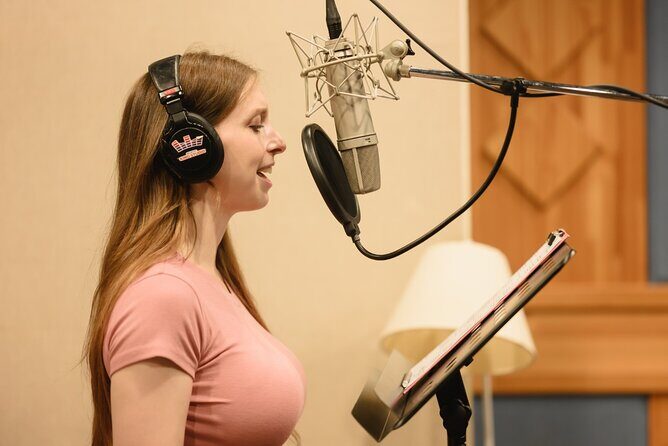
- A real recording studio setting in Gangnam, with hands-on work that feels like the studio side of K-pop
- Three roles in one class: producer, singer, and sound engineer, all practiced by you
- Lyrics in Korean and romanized text so you can sing along without guessing
- English professional interpretation while you learn the process and make your recordings
- Private group experience so your session stays focused on your team
Why this K-pop class feels like a real studio session
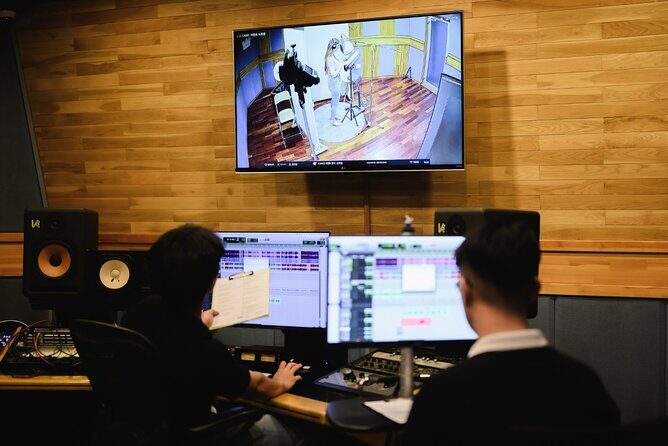
If you’ve ever watched K-pop performances and wondered what happens before the stage lights, this is the answer—minus the mystery. You’re not just learning how music is made in theory. You’re stepping into the studio tasks that producers and engineers do: setting up recording, working with sound, and shaping the final mix.
What makes this class especially fun is that it’s role-based. You’re given a structure for the work, then you cycle through it. That keeps it from turning into a generic karaoke moment. You’ll still be singing, but you’ll also be learning what producers mean when they talk about sound and communication with the team behind the glass.
The tone here is also very human. The studio is described as warm and welcoming, and the staff guidance comes with a translator presence to help you stay on track. That matters in a format like this, where the clock moves quickly and you’ll want clear instructions at every step.
You can also read our reviews of more tours and experiences in Seoul



Finding KING STUDIO near Seolleung Station and COEX
Logistics are part of the experience, because you’ll want to walk in ready to work. The meeting approach is straightforward: start at Exit 1 of Seolleung Station (Seolleung Station is on Seoul Subway Line 2, and it’s about 2 stops from Gangnam Station). Then you head right at Dunkin Donuts and go upstairs to reach the basement studio area.
The most useful detail is the visual landmark: you’re looking for the basement studio in front of a 7-Eleven. Once you see that, you’ve basically found the right spot.
COEX Center shows up as a stop, and honestly, COEX is a handy reference point in this part of Seoul. Even if you aren’t staying near there, it’s one of those “I’ll find it” anchors for transit and directions. You start with that clarity, and then you focus on the class instead of hunting for the studio door.
One small practical note: you have to enter at the appointed time. This is studio work, so being late isn’t just a scheduling inconvenience—it can throw off the recording timeline.
Your 3 roles: producer, singer, and sound engineer
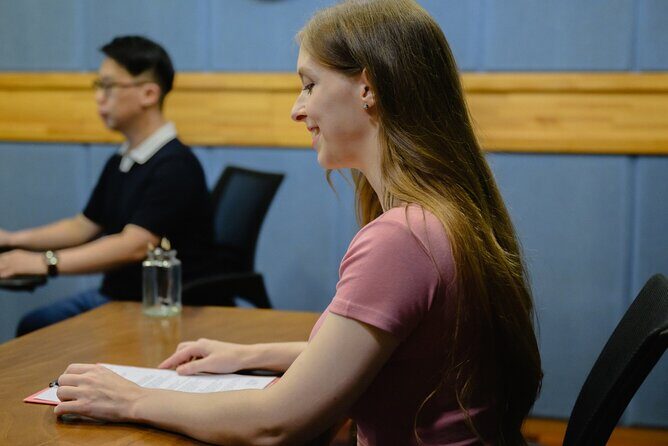
This class is built around three positions that make up the core of K-pop music production. The idea is simple: you learn the purpose of each role, then you perform the tasks. That’s why the experience feels more like a real workflow than a sightseeing activity.
Producer: music understanding and studio communication
As the producer, you focus on understanding music and how to communicate with sound engineers. In a real production environment, that’s where the direction comes from—what you want to sound like, how you want the track to move, and what you’re aiming for in the final output.
In this class, the producer side gives you context so you can make better choices while recording and editing. Even if you’re not a musician, you’ll start to connect the dots between decisions in the studio and what they change in the sound.
Singer: recording with pre-selected songs and provided lyrics
As the singer, you record using songs that have been pre-selected in advance. That’s a smart move for a two-hour class. It removes the blank-page stress and lets you spend the time on performance and recording quality.
And for anyone worried about language, this is a big deal: the class provides lyrics in Korean plus romanized text. That gives you the meaning cues and the pronunciation support at the same time. A translator and professional guidance also help you stay synchronized with what you’re singing.






Sound engineer: recording, editing, and mixing your own track
As the sound engineer, you do the tasks that transform raw recording into a polished track. The class includes recording, editing, and mixing practice, and you’ll work with your own song output rather than watching it happen to someone else.
The editing and mixing portion is where the experience starts to feel like magic, but in a grounded way. You see how adjustments change how the voice sits in the track, how the song structure lands, and how the final mix comes together.
What the 2-hour session is really like
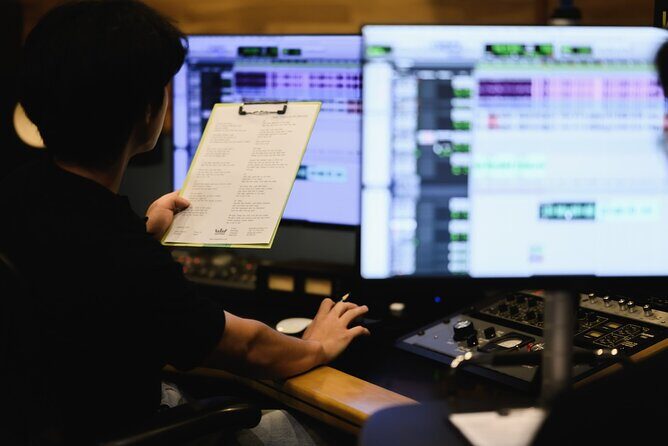
Two hours sounds short until you realize the structure is built to fit the clock. This isn’t a full production bootcamp. It’s a focused studio sprint where you learn by doing.
You’ll work through the process in a sequence that matches how studio time is used. First, you get set up and start recording as the singer. Then, the producer side helps you understand what to aim for as you refine the output. Finally, the sound engineer portion pushes you into the editing and mixing steps so the recording becomes a complete session track.
The most practical benefit of the time limit is momentum. You won’t get lost in too many options. You won’t spend the whole session planning. You’ll learn, act, and adjust in real time.
And that’s why it’s such a strong birthday or group activity. One of the reviews calls it the best birthday ever, and that makes sense: you leave with something you helped create, not just a photo memory.
The studio details that make a difference: lyrics, interpretation, and “packs”
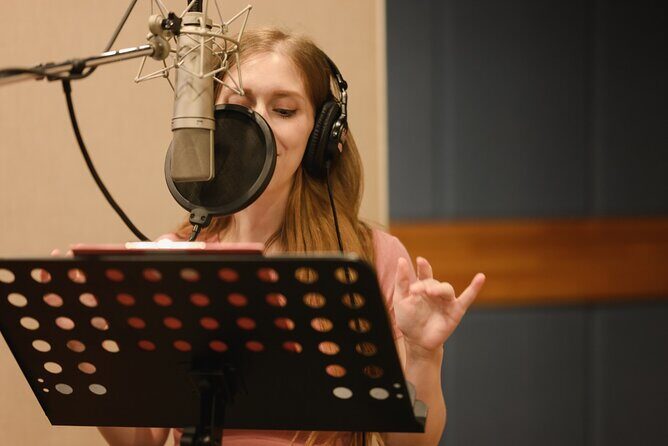
In studio work, tiny support details matter. Here, the class includes lyrics and accompaniment, and they’re provided in both Korean and romanized form. That means you can actually follow the words during recording, instead of waiting for cues or relying on pure memory.
You also get professional interpretation in English. That keeps the producer and sound engineer explanations from becoming background noise. It’s also the difference between learning the concept and actually applying it while you’re recording.
Another thing I appreciate is the mention that there are several packs depending on what you want to do. Even without exact pack names, that tells you the experience isn’t one-size-fits-all. If you care more about singing than mixing, or you want the full workflow, you can choose the option that matches your goal.
COEX area pairing: why this timing and location work for tourists

This activity lands in central Seoul where you can combine it with your other plans. Starting near Seolleung Station (and referencing COEX Center) makes it easier to slot into a day in Gangnam without turning your whole schedule into a transit puzzle.
You also get the best of both worlds: you’re in a tourist-friendly part of the city, but you’re doing something very specific and local. It’s not just seeing Seoul. It’s getting a behind-the-scenes experience tied to modern Korean pop culture production.
Also, since the format is a private tour/activity where only your group participates, you’re less likely to feel like you’re sharing studio attention with strangers. That usually means fewer delays and more direct help.
Price and value: does $109 make sense?
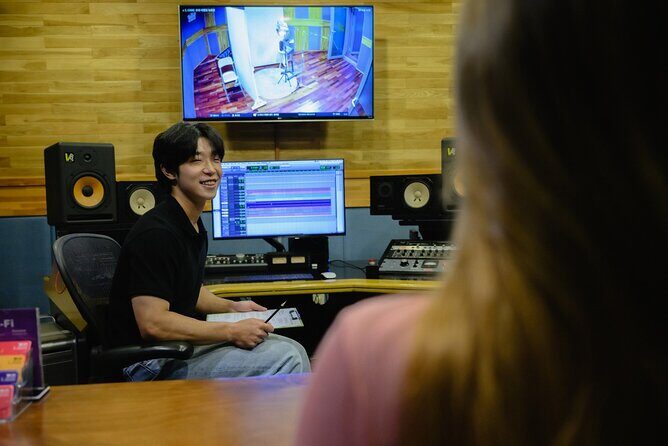
At $109 per person for about 2 hours, the price isn’t cheap, but it also isn’t random. You’re paying for access to a professional K-pop recording studio setting plus guided help through the full workflow: recording, editing, and mixing.
The value calculation comes down to what you want to take home. If you’re looking for a quick photo-op, this won’t match that expectation. If you want a real activity—singing while recording, then shaping sound and mix—then the cost starts to feel fair.
Two things tilt the value in your favor. First, you’re not just being shown how. You’re doing the tasks. Second, English interpretation and romanized lyrics reduce friction, so you can participate even if your Korean is basic.
One practical consideration is pacing: because it’s short, the studio will steer you. If you’re the type who wants deep technical control for hours, you might wish for a longer session. But if you want a complete, guided “producer experience” in a single outing, this format hits the sweet spot.
Who this class is best for
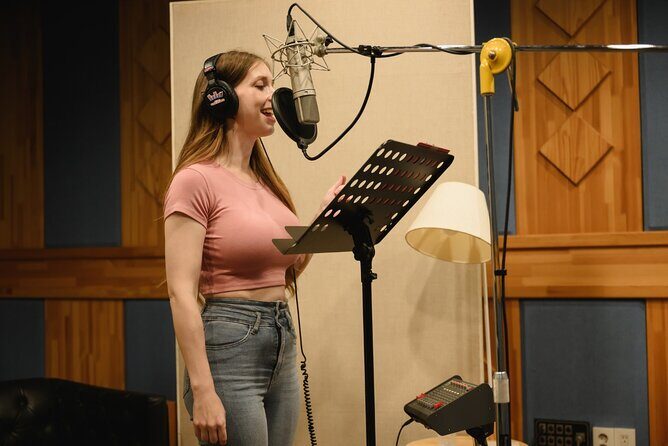
I’d point this one at people who:
- Love K-pop and want to understand how songs are produced, not just performed
- Want a structured, fun group activity in Seoul that isn’t a typical tour stop
- Are comfortable trying something new with guidance, including English support
- Like interactive experiences where you actively create something
It’s also a solid pick for couples and friends. Since it’s private for your group, you’ll likely get more attention while you record and mix.
If you’re the type who gets stressed by fast instructions, go in with the mindset of learning quickly. The class expects punctual entry and studio workflow. It will reward you if you’re ready to follow steps.
Should you book the K-Pop Making Class with a Producer at KING STUDIO?
Book it if you want a real, hands-on studio experience in Seoul where you practice the producer, singer, and sound engineer roles—not just watch it happen. The biggest reasons are the studio-based workflow, the Korean plus romanized lyrics, and the English interpretation that keeps you participating.
Skip it or reconsider if you’re mainly after a casual, low-pressure activity. This is a focused session where you’ll be doing work on a tight schedule. If you’d rather browse Seoul at your own pace, you might feel rushed.
If you’re excited about the idea of making a track and learning how it gets edited and mixed, you’ll likely find the experience both fun and surprisingly informative.
FAQ
How long is the K-Pop Making Class with a Producer?
It lasts about 2 hours.
Where does the class take place?
It’s at KING STUDIO in Seoul’s Gangnam District, near Seolleung Station.
What’s the meeting instructions from Seolleung Station?
Start at Exit 1 of Seolleung Station, go right at Dunkin Donuts, then go upstairs to the basement studio area in front of a 7-Eleven.
What roles will I practice during the class?
You’ll experience being a producer, a singer, and a sound engineer.
Do I get lyrics and accompaniment?
Yes. The class includes accompaniment and lyrics, provided in Korean and romanized text.
Is there English help during the session?
Yes. You get professional interpretation in English.
Is it a private experience?
Yes. Only your group participates.
What should I know about timing?
You must enter at the appointed time, so punctuality matters.
Is this experience dependent on weather?
The operator notes it requires good weather. If it’s canceled due to poor weather, you’ll be offered a different date or a full refund.