REVIEW · SEOUL
Bukhansan National Park: The Summit Course
Book on Viator →Operated by Sam LEE · Bookable on Viator
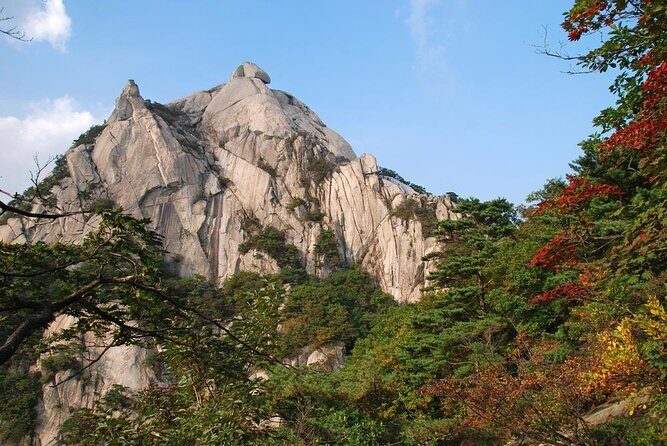
A summit in Seoul, with real rope work. This Bukhansan National Park hike takes you to Seoul’s highest peak (836 m / 2,743 ft) and makes the seasonal changes feel right in your legs. The route is planned around a summit-first goal, using research to cut the trek to about 4 hours instead of the usual 6, while still getting you to Baek-un-dae safely.
I love two things most. First, I like the clear focus on safety and pacing with a small group and rope-assisted guidance where it matters. Second, I really appreciate the practical effort to save time without turning the day into a rushed stampede.
One consideration: this isn’t for everyone. It’s not recommended if you have knee issues, and the steepest 20–30 minute section includes rope help and an incline that can feel exposed if you’re afraid of heights.
In This Review
- Key highlights you’ll actually care about
- Why this Bukhansan summit hike feels worth the early start
- The “faster than normal” 4-hour route (and why it’s valuable)
- What the steep ascent really means: 600 m gain in 2.1 km
- Baek-un-dae peak: rope-assisted steep climbing (what to expect)
- Safety and small-group guidance with Koa and Sam
- Lunch after the hike: tofu-focused fuel that won’t leave you hungry
- Meeting point, timing, and how to plan your day around it
- Price and value: when $64.89 makes sense
- What to bring so the climb feels controlled
- Who should book the Bukhansan Summit Course (and who should skip it)
- FAQ
- FAQ
- How long is the hike?
- What time and where do we start?
- How many people are in the group?
- Is lunch included, and is it vegetarian or vegan friendly?
- Are hiking poles included?
- What happens if the weather is bad?
- Should you book this Summit Course?
Key highlights you’ll actually care about
- A planned 4-hour ascent style versus the more typical 6 hours on longer routes
- Big altitude gain early: 600 meters up within 2.1 km
- Rope-assisted steep climb on Baek-un-dae (about 25–45 degrees)
- Small group size (max 20) and active safety focus from Koa and Sam
- Lunch option after the hike at a tofu-focused spot that’s vegan/vegetarian friendly
- Hiking poles rental only with advance notice (helpful mainly if your knees complain)
Why this Bukhansan summit hike feels worth the early start
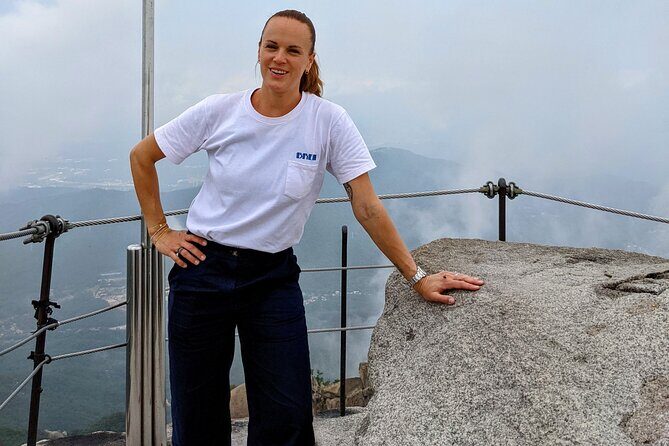
Bukhansan National Park sits right on Seoul’s edge, which means you’re not leaving civilization behind—you’re swapping city noise for wind, stone, and forest air in a way that still feels close to home. You start at 8:00 am, so you beat the worst of the crowds and heat, and the mountain tends to feel more honest before the day gets busy.
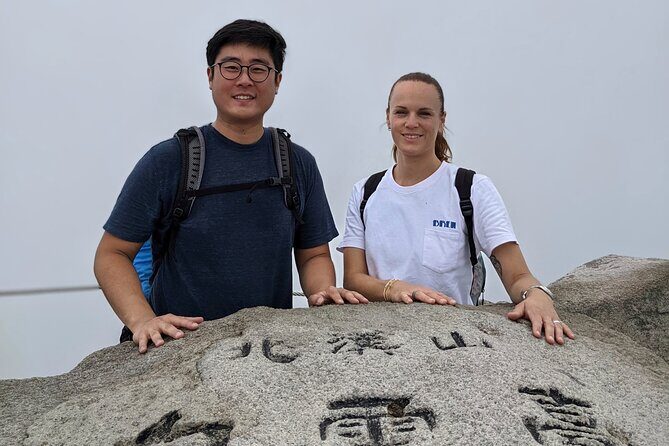
The main promise is simple: hike to Seoul’s highest peak (836 m). That height doesn’t sound huge until you remember this is a steep climb, not a lazy stroll. The seasonal shift shows up fast too—weather on the ridge changes the feel of your pace and footing, and you’ll notice how quickly the mountain can go from comfortable to demanding depending on the conditions.
And there’s a safety reality check. Even though it’s the most visited mountain in Seoul, hundreds of rescues happen every year. That’s why this experience is built around a safe, straightforward approach to the summit, rather than a “figure it out” mindset.
You can also read our reviews of more tours and experiences in Seoul.
The “faster than normal” 4-hour route (and why it’s valuable)
The biggest practical selling point here is time. The standard summit hikes often run closer to 6 hours, but this course aims for about 4 hours to reach the peak, based on route research. That matters for two reasons.
First, you get more hiking day and less wandering. When your plan is clear, you spend energy moving uphill instead of guessing your way through trail junctions, bottlenecks, or slower segments.
Second, a shorter day can be safer. Fatigue is what turns a manageable hike into a messy one. Compressing the climb into a tighter window helps keep your legs fresher for the steeper, more technical part near the top.
This route also matches your fitness expectations. The ascent portion includes an elevation change of about 600 meters in 2.1 km. That’s a lot of vertical gain packed into a small horizontal distance. You’re climbing fast enough that you’ll feel it, but the guide structure helps you keep control.
Tip: if you’ve been sitting in transit and eating convenience food, this is the day to get your body moving early. The mountain climbs whether you’re ready or not.
What the steep ascent really means: 600 m gain in 2.1 km
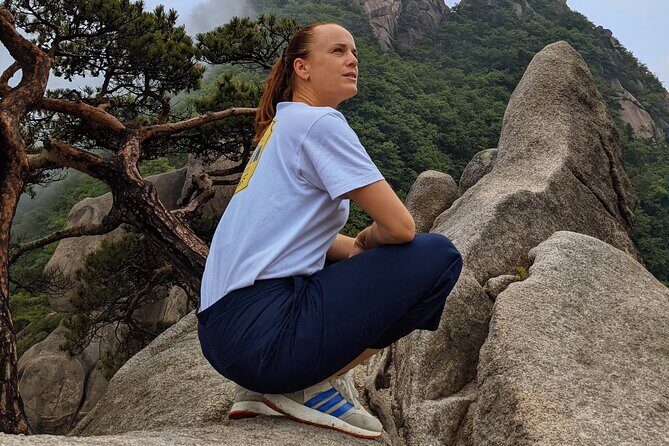
Here’s the part that separates casual walkers from hikers. You’ll climb around 600 meters (2,000 ft) within roughly 2.1 km (1.3 miles). On a typical timeline, that section takes about 100–120 minutes, which translates into steady uphill work.
A simple mental image: it’s like climbing up and down something like 200 floors of stairs over the course of the experience. If you can do a staircase workout without your breathing turning into a panic rhythm, you’ll be in the right zone.
You don’t need to be an athlete. The key is moderate fitness. That means you should be comfortable with sustained effort and short pauses, not just one-off bursts.
Also, consider your knees. The hike isn’t labeled for knee friendliness, and the tour specifically says it’s not recommended if you have knee issues. That’s important. Even if you can climb up, the descent can be harder on joints than the ascent.
Baek-un-dae peak: rope-assisted steep climbing (what to expect)
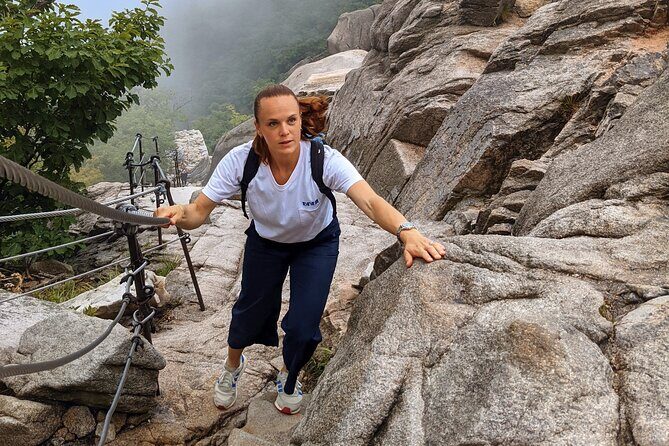
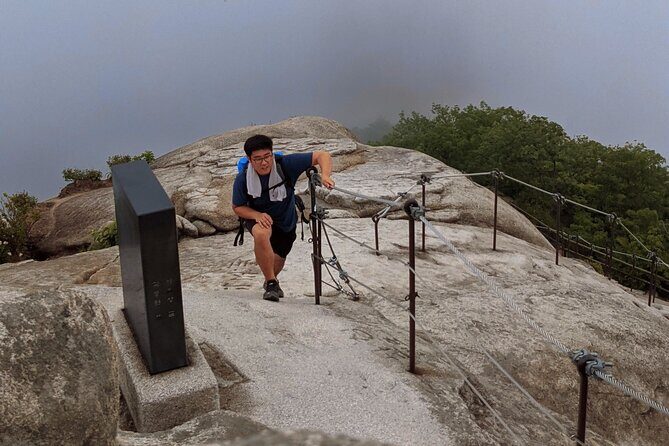
The highlight is Baek-un-dae peak, and it has a “this is real hiking” section. Expect climbing on an incline roughly 25–45 degrees, with assistance from ropes. That rope work usually takes around 20–30 minutes.
This is also the part where your comfort with exposure matters. If you have a fear of heights, the course notes that this segment can be avoided by taking a break. You’ll want to treat that seriously. Don’t push past fear just to prove something to yourself. You’ll enjoy the summit more if you stay calm during the technical part.
What I like about this setup is that it’s not vague. You know up front there’s a rope-assisted section. That helps you mentally prepare, which can do as much for your safety as good shoes.
And yes, you’ll likely arrive at the viewpoint feeling that payoff. The steepness is what makes the “I got here” feeling believable.
Safety and small-group guidance with Koa and Sam
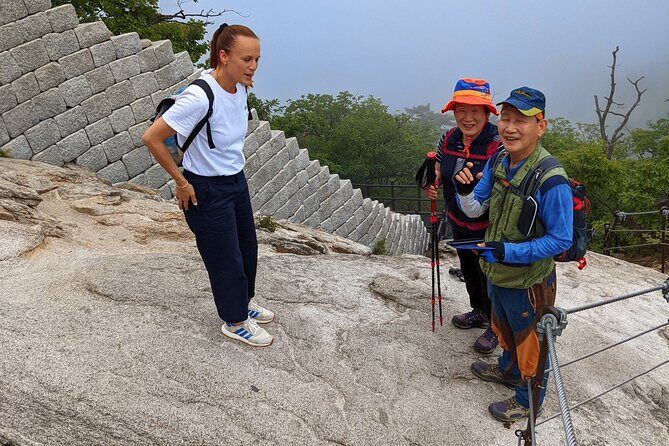
This is not a huge group shuffle. The experience caps at 20 travelers, and that smaller scale changes the vibe. You don’t feel like a numbered ticket in a long line. You feel like you’re hiking with people who are watching footing, keeping spacing, and moving with intention.
The guides—Koa and Sam (Sam Lee)—run the course with a strong safety-first approach. In practice, that means you’re not just told to follow along. You’re guided through tricky parts in a way that keeps the group together and reduces the usual “someone fell behind” chaos.
If you care about organization, you’ll appreciate the structure. People consistently rate the experience at 5 stars, and the common theme is that the guides keep everyone safe while making the hike enjoyable, not merely instructional. That’s exactly what you want on a mountain where rescues happen every year.
One more detail worth noting: hiking poles can be rented, but only if you inform in advance. Poles aren’t required for everyone. They’re mainly useful if your knees get cranky or you want extra stability on steep sections.


Lunch after the hike: tofu-focused fuel that won’t leave you hungry
Once you’re done with the summit effort, you can add lunch as an option. It’s not included, and it runs around 9,000–15,000 KRW, paid individually.
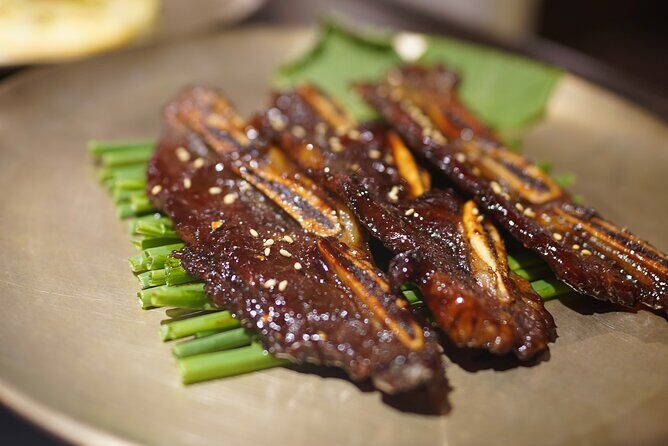
The meal is at a place specializing in tofu dishes. The good part: they make everything from scratch. And it’s not tofu-only in the boring way. They also have meat options. If you’re vegan or vegetarian, there’s a clear match here too.
Why this lunch matters: after a vertical climb, you’ll crave something warm, filling, and comforting. A tofu-based meal tends to hit that balance without feeling heavy like some meat-and-sauce combos can. It’s also a nice cultural “reset” after time outdoors.
If you skip lunch, you’ll still probably be hungry. Plan on feeding yourself soon after you get back.
Meeting point, timing, and how to plan your day around it
You meet at Bukhansan UiSeoul, South Korea, and the hike ends back at the meeting point. Start time is 8:00 am, so this is a morning outing.
The timing is smart. On a steep hike, the earlier you start, the less you fight tiredness and the better conditions you often get. Even if the forecast looks okay, mountain weather can change fast, and starting early gives you margin.
Also keep the “mobile ticket” in mind. You’ll want your phone charged enough to show it without hunting for a connection on the spot.
Budget-wise, the tour costs $64.89 per person for about 4 hours 30 minutes (approx.). That price isn’t just for walking. You’re paying for route planning, guided safety on a steep/rope-assisted section, and a small-group experience designed to reduce wasted time. Add lunch and poles and your total can rise, but you’re in control of those add-ons.
Price and value: when $64.89 makes sense
At $64.89, this is not a bargain hike. But it also isn’t a luxury experience. It’s priced like what it actually is: a guided, time-efficient summit attempt on a mountain where conditions and steep terrain matter.
Here’s where the value comes from:
- You’re targeting about 4 hours to the summit rather than letting the day stretch out.
- You have active safety management on the rope-assisted climb.
- You’re in a small group (max 20) rather than a huge crowd.
Where it may not feel like value:
- If you already have strong hiking skills and know the trails well, you might feel you’re paying to avoid extra navigation work.
- If you need to rent poles, you must request it in advance, and that adds cost (even if it’s not required).
But for most visitors, especially those who want a safer, simpler plan, the “less guessing, more summit” approach is exactly what you’re buying.
What to bring so the climb feels controlled
The tour info doesn’t list a full packing list, so I’ll keep this practical and generic—based on what this climb demands.
Wear hiking shoes with solid grip. The rope-assisted incline means you want stable footing, not slippery soles. Bring a layer that fits changing mountain temps, especially because the whole point is sensing the seasonal changes.
If you’re renting poles, request it in advance. If not, at least consider whether you’ve got knee support needs. The tour warns it’s not recommended for knee issues, so take that as a guide.
Hydration matters. Even a “shorter” 4-hour summit attempt still burns energy fast with that steep gain. Bring water and drink steadily rather than waiting until you feel depleted.
And keep a small mental plan for pacing. With 600 m up early, you’ll want to slow down enough to breathe calmly. Going too fast at the beginning is how you pay later.
Who should book the Bukhansan Summit Course (and who should skip it)
This course fits you if:
- You’re up for a moderately fit hike with sustained uphill effort
- You want a guide to handle safe routing to the summit
- You don’t mind an early start and steep work
- You like the idea of a rope-assisted section with support
You should think twice if:
- You have knee issues (explicitly not recommended)
- You’re very anxious about heights, even though the rope section can be skipped by taking a break
- You’re expecting an easy walk with big viewpoints at the end
It also fits families or friend groups better than a solo “wander and hope” style, mainly because the group stays together and the guide manages the more technical parts.
If you want a nature break outside the city without spending your entire day hiking, this is a strong choice.
FAQ
FAQ
How long is the hike?
It lasts about 4 hours 30 minutes (approx.).
What time and where do we start?
The meeting point is Bukhansan UiSeoul, and the start time is 8:00 am.
How many people are in the group?
The maximum group size is 20 travelers.
Is lunch included, and is it vegetarian or vegan friendly?
Lunch is optional and paid separately (9,000–15,000 KRW). It’s from a tofu-specialty place and is vegan/vegetarian friendly, with meat options as well.
Are hiking poles included?
Hiking poles can be rented, but only if you inform in advance. They aren’t truly necessary unless you have issues like bad knees.
What happens if the weather is bad?
The experience requires good weather. If it’s canceled due to poor weather, you’ll be offered a different date or a full refund.
Should you book this Summit Course?
Book it if you want a safe, time-efficient way to reach Seoul’s highest peak without guessing. The strongest reason is the combination of a faster planned route and guide support on the rope-assisted Baek-un-dae section. Skip it if your knees are a problem or if you expect a fully gentle hike—this one earns its views the steep way.