REVIEW · SEOUL
(Small Group) Palace & Seoul Old Town Highlights
Book on Viator →Operated by Honey Trail · Bookable on Viator
Three hours, five Seoul icons, zero guesswork. This small-group Palace & Seoul Old Town route hits the big Joseon-era sights and then shows you where modern Seoul hangs out—so your day feels both historic and usable for planning after. It runs on a mobile ticket and keeps the group to a maximum of 10 people.
I especially like the balance: Joseon palace context at the right moments, plus up-to-date Korea context as you move through neighborhoods. I also like that the guide, Lee, doesn’t just talk at you—she asks, checks in, and even uses little mini quizzes and traditional games to keep the history sinking in.
One consideration: this is a walking tour with a long main-stops focus, so you’ll want comfortable shoes and patience for outdoor time—especially since it needs good weather to run smoothly.
In This Review
- Key things to know before you go
- Why this Seoul old-town highlights route works in 3 hours
- Starting at Anguk Station (Exit 6 outside) and setting your bearings fast
- Insadong: traditional goods, tea houses, and an easy first warm-up walk
- Jogyesa Temple: calm, central, and free entry
- Gwanghwamun Square in front of Gyeongbokgung
- Gyeongbokgung Palace: the included ticket moment that matters most
- Bukchon Hanok Village: short time, strong payoff for photos and atmosphere
- The guide factor: Lee’s history-to-today balance (and the games)
- Price and value: $60.27 for a focused tour day
- Practical walking notes you’ll thank yourself for
- Who should book this tour (and who might want a different pace)
- Should you book the Palace & Seoul Old Town Highlights tour?
- FAQ
- How long is the Palace & Seoul Old Town Highlights tour?
- What is the group size limit?
- Where do we meet and where does the tour end?
- Is the Gyeongbokgung Palace ticket included?
- Does the tour use a mobile ticket?
- What happens if the weather is poor or the minimum number of travelers isn’t met?
Key things to know before you go
- Maximum 10 people means you get time to ask questions, not just follow a crowd
- Gyeongbokgung Palace ticket included, while several other stops are free to enter
- Tight 3-hour route that still covers big names: Insadong, Jogyesa, Gwanghwamun Square, Gyeongbokgung, and Bukchon Hanok Village
- Lee’s teaching style uses history plus everyday culture, with mini quizzes and Korean traditional games
- Start and end at Anguk Station (Exit 6 outside), so you’re not hunting for the meeting point twice
Why this Seoul old-town highlights route works in 3 hours
If you’re short on time in Seoul, this tour is built for results. In about 3 hours, you get a fast mental map of the city’s Joseon-era center and the surrounding neighborhoods you’ll want to explore later.
What makes it practical is the flow. You start in a traditional shopping-and-tea area, then shift to a Buddhist temple sanctuary, then head right into the palace core. By the time you reach Bukchon Hanok Village, you’re no longer just seeing sights—you’re understanding how the city’s old and new patterns fit together.
And yes, the group size really matters here. With up to 10 people, it’s easier to keep up, and you can actually ask your guide follow-up questions instead of shouting over foot traffic.
You can also read our reviews of more tours and experiences in Seoul.
Starting at Anguk Station (Exit 6 outside) and setting your bearings fast
The tour meets at Anguk Station, Exit 6 (outside) and ends back at the meeting point. That makes a difference on a day when Seoul already feels like a maze—especially if it’s your first visit.
From there, the route immediately puts you in the right zone for orientation. You’re not just dumped near a landmark. You walk from a neighborhood that shows you how locals shop and snack, then you pivot into quiet, sacred space, and then back into the civic-palace heart of the city.
Even if you come back later on your own, this route helps you connect the dots. You’ll know where to go for traditional streets, where to go for major palace views, and where to look for the kind of old-house lanes that people photograph all the time.
Insadong: traditional goods, tea houses, and an easy first warm-up walk
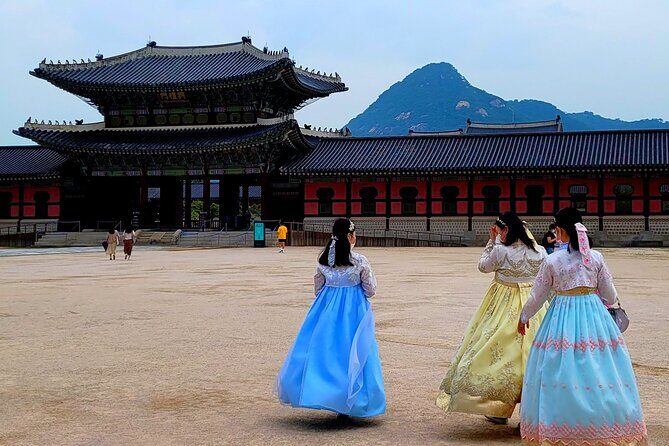
Stop one is Insadong, and it’s timed at about 10 minutes. It’s known for traditional goods, restaurants, and tea houses—so it’s a low-stress way to start your Seoul day.
This kind of opening stop is smart if you’re jet-lagged or still adjusting. You don’t need to make decisions for an hour. You just get your bearings, see the atmosphere, and learn what the area is “for,” which helps you shop or wander with confidence later.
Because the stop is short, manage your expectations. If you want deep browsing, you’ll use Insadong again after the tour.
Jogyesa Temple: calm, central, and free entry
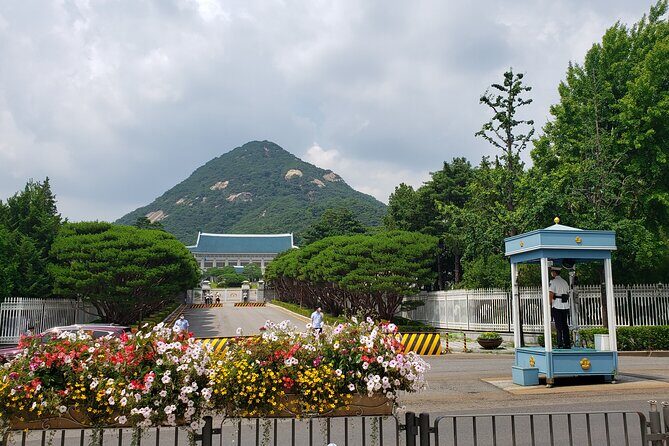
Next up is Jogyesa Temple, roughly 30 minutes, with free admission. It’s the head temple of the Jogye Order of Korean Buddhism, founded in 1910, and it’s described as a peaceful sanctuary in the heart of Seoul.
This stop is a nice reset from city movement. Even when you’re walking fast between highlights, you get a moment where the mood changes—quiet enough that you can actually absorb what you’re seeing instead of just passing by.
It’s also free, which makes it a high-value stop. You can spend your money on the palace ticket and still feel like you got real spiritual and architectural time.
Gwanghwamun Square in front of Gyeongbokgung
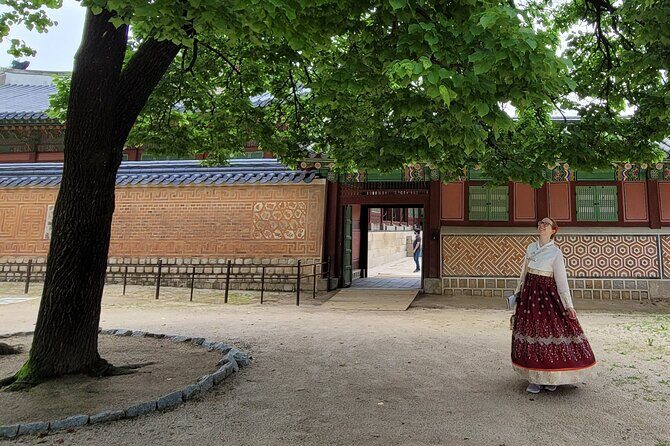
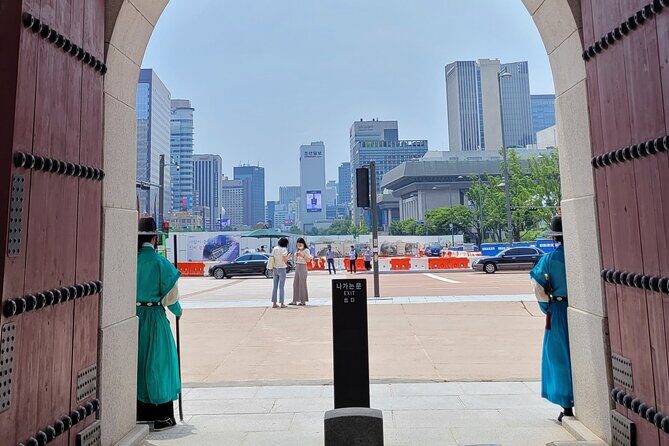
After that, you reach Gwanghwamun Square for about 20 minutes. It’s a central public plaza in front of Gyeongbokgung Palace, and it features statues of King Sejong the Great and Admiral Yi Sun-sin.
This stop helps you understand the palace complex as a public, civic center—not just a fenced-off museum. You’re also getting a quick lesson in why these figures are tied to national identity, which makes what comes next at Gyeongbokgung feel more grounded.
If you’re sensitive to crowds, keep an eye on the timing of when you’re there. It’s a public square, so it’s likely to have people moving around—but the tour keeps it short enough that it doesn’t drag.



Gyeongbokgung Palace: the included ticket moment that matters most
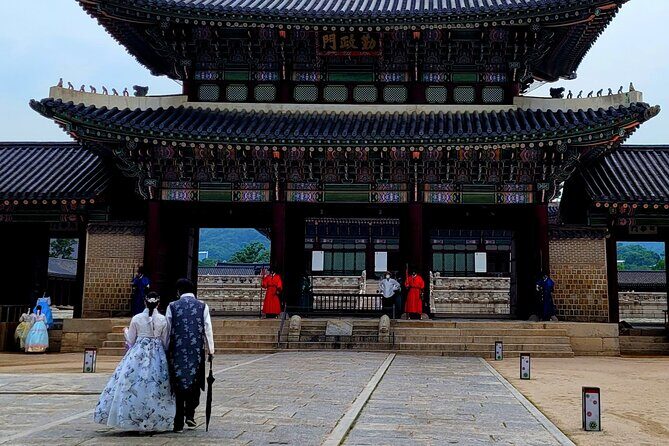
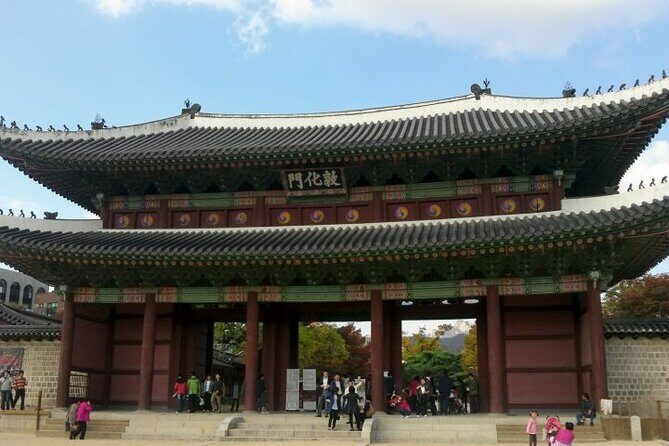
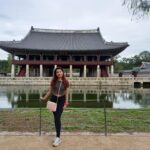
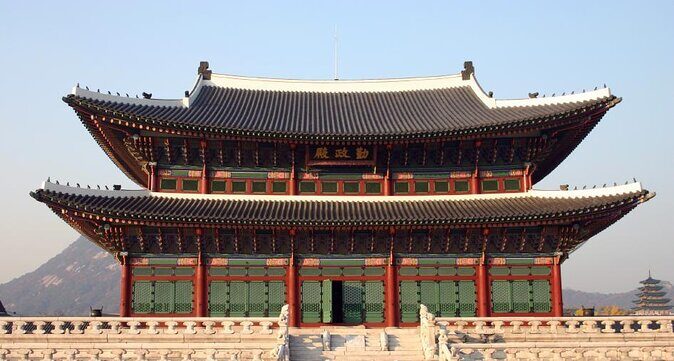
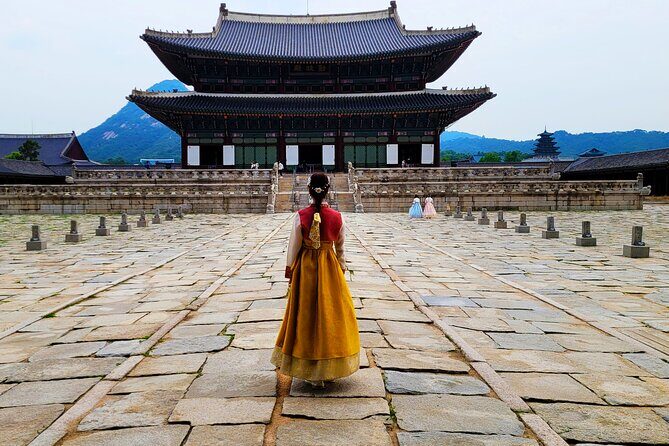
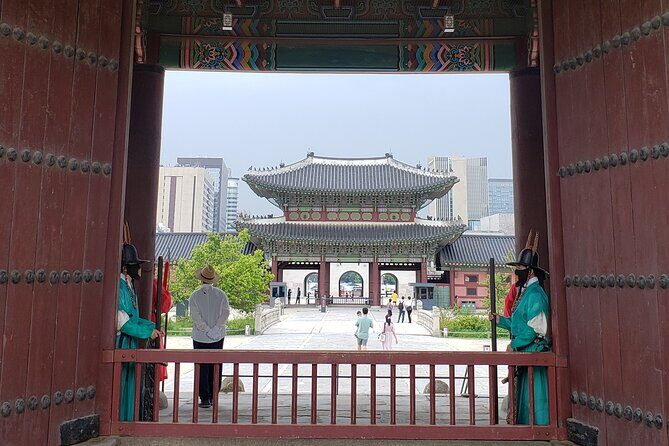
The anchor stop is Gyeongbokgung Palace, where you’ll spend about 1 hour 30 minutes. Admission is included in the tour price, and the palace is the main royal palace of the Joseon Dynasty, built in 1395.
This is where the tour’s value shows up. A palace visit can eat up time, and it can be confusing if you don’t know what to look for. With a guide, you’re not just walking through big gates and courtyards—you’re learning what you’re looking at and why it mattered.
It’s also where you’ll notice the tour’s pace. One hour 30 minutes is long enough to feel like you actually experienced the place, not just glanced at it. It’s also long enough for your guide to explain key context in a way that sticks.
Practical note: palace grounds can mean lots of outdoor time. Wear shoes you can walk in all day, and bring something for sun or light rain if the forecast looks questionable.
Bukchon Hanok Village: short time, strong payoff for photos and atmosphere
The last stop is Bukchon Hanok Village for about 30 minutes, with free admission. It’s a historic neighborhood between two royal palaces and is known for traditional Korean houses called hanok, with winding alleys and rooftops that reflect how people once lived during the Joseon Dynasty.
This is a great “wrap your head around daily life” stop. Gyeongbokgung is about royal power and formal space. Bukchon is about the residential feel—narrow lanes, traditional rooftops, and a sense of what everyday architecture looked like.
The time is short, so don’t try to conquer every street. Instead, aim for a few lanes with good views and let the space sink in. You’ll get enough to know what this area feels like, and you can always return later for longer wandering.
The guide factor: Lee’s history-to-today balance (and the games)
The name you’ll care about here is Lee. In the feedback I see patterns that matter for you as a first-time visitor: she’s patient, she’s informative across the Joseon timeline, and she connects it to present-day Korea so you don’t feel like you’re studying history with no real-world relevance.
A standout detail is how she keeps the session interactive. Some tours stop at storytelling; this one includes mini quizzes and Korean traditional games during break times. That’s not just cute—it changes the way you remember facts. It also gives you a reason to pay attention even when you’re taking short breaks on a walking schedule.
Lee is also described as actively helpful with questions about Seoul and Korea. So if you’re the type who asks How does this work? or What should I do next after the tour? you’ll likely get useful answers, not generic ones.
And if your group stays small—sometimes it can feel very personal—you’ll benefit even more. With fewer people, you’re more likely to get time for your specific interests, whether that’s palace details, neighborhood vibe, or what to do later that day.
Price and value: $60.27 for a focused tour day
At $60.27 per person, you’re paying for three things at once: a guided walk, curated time at major sites, and the biggest ticket cost handled for you.
The best value part is simple: Gyeongbokgung Palace ticket is included. Since Gyeongbokgung is the main paid admission piece on this route, it reduces the risk of a “tour price that forgets the real costs” feeling.
The other value is time planning. This isn’t an all-day march. It’s 3 hours with set stop durations, so you can pair it with other plans without losing your whole day.
You do give up some “someday, maybe” flexibility. If you want a super slow pace with endless inside-the-palace exploring, this time-boxed structure may feel tight.
Practical walking notes you’ll thank yourself for
A few things help you have a smoother day.
First, expect a walking tour. The itinerary covers multiple areas, with set durations at each stop, and the tour keeps moving between landmark zones. Comfortable shoes are non-negotiable.
Second, the tour uses a mobile ticket, which is handy if you don’t want to carry paper. You’ll have a straightforward start once you find the meeting point at Anguk Station Exit 6 outside.
Third, many stops are free to enter. Insadong, Jogyesa, Gwanghwamun Square, and Bukchon Hanok Village are all listed as free, while Gyeongbokgung is included. That means your budget stays predictable.
Finally, good weather matters. The experience is described as requiring good weather, so if the day looks rough, you may need flexibility in your schedule.
Who should book this tour (and who might want a different pace)
This is a strong fit if:
- You want a high-impact introduction to Seoul’s Joseon-era center without spending an entire day in transit or indecision
- You like guided context that makes landmarks easier to revisit later
- You appreciate interaction, not just lectures—Lee’s quizzes and games can be a fun change of pace
- You’re traveling with a small group or solo and want a manageable group size
You might want a different option if:
- You hate walking and prefer slow museum-style pacing
- You want to spend lots of time deep inside palace buildings with zero time pressure
- You’re visiting on a day when rain is very likely and you don’t have spare flexibility
Should you book the Palace & Seoul Old Town Highlights tour?
Yes, I’d book it if you want a tight, guided orientation that combines palace scale with real neighborhood feel. The included Gyeongbokgung ticket, the small group size, and Lee’s approach (history plus everyday culture, with interactive moments) make this a useful first-stop tour for a short Seoul visit.
It’s also a good choice for families or mixed-age groups who can handle walking but still want structure. If you’re the type who learns faster when things are explained in human terms—plus a few games to keep you awake—this tour has that covered.
If your trip has lots of time and you prefer total freedom, you could skip a structured walk and visit these sites independently. But if your time is limited, this route gives you a smart shortcut to understanding where everything fits.
FAQ
How long is the Palace & Seoul Old Town Highlights tour?
It’s about 3 hours.
What is the group size limit?
The tour has a maximum of 10 travelers.
Where do we meet and where does the tour end?
You meet at Anguk Station, Exit 6 (outside), and the tour ends back at the meeting point.
Is the Gyeongbokgung Palace ticket included?
Yes. The Gyeongbokgung Palace ticket is included. Other listed stops like Insadong, Jogyesa Temple, Gwanghwamun Square, and Bukchon Hanok Village are marked as free.
Does the tour use a mobile ticket?
Yes, the tour features a mobile ticket.
What happens if the weather is poor or the minimum number of travelers isn’t met?
The experience requires good weather. If it’s canceled due to poor weather, you’ll be offered a different date or a full refund. It also requires a minimum number of travelers; if that minimum isn’t met, you’ll be offered a different experience/date or a full refund.