REVIEW · SEOUL
Seoul One Day Sightseeing Tour with N Tower and Lunch
Book on Viator →Operated by Tournet Hawaii, Inc. · Bookable on Viator
One day, lots of Seoul. This tour strings together classic sights and modern city energy, with hotel pickup (in Seoul city) plus a real hanbok photoshoot moment early on.
I love how the schedule is built for first-timers: you get guided time at the big “yes, you came to Seoul” stops without spending the whole day figuring out routes. I also like the photo-forward start near Gwanghwamun, because dressing in hanbok and having a photographer involved turns those palace-adjacent streets into something you’ll actually remember later.
One possible drawback: it’s a packed day. Even with air-conditioned transit, you’ll have limited time at each main stop, and if you want the full N Seoul Tower observatory experience, you’ll pay extra for that ticket.
In This Review
- Key points before you go
- How the 9–10 hour Seoul flow stays manageable
- Hanbok at Gwanghwamun: the photo moment that sets the tone
- Gyeongbokgung Palace + the Folk Museum on palace grounds
- Lunch in Seoul: included, but the location can vary
- Bukchon Hanok Village: old-house lanes in the middle of the city
- Samcheong-dong and K-drama filming-area vibes
- Blue House area, Jogyesa Temple, Gwanghwamun Plaza, and Cheonggyecheon
- N Seoul Tower: optional observatory ticket and city-scale views
- Myeongdong shopping street: the practical end-of-day hit
- Price and value: what $168 includes (and what costs extra)
- Should you book this Seoul one-day tour?
- FAQ
- How long is the Seoul one-day sightseeing tour?
- Is hotel pickup included?
- What time does the tour start and where does it end?
- Is lunch included, and what type of food is it?
- Do I need to buy tickets for N Seoul Tower?
- Is Gyeongbokgung Palace always open on the tour day?
- What’s included in the hanbok experience?
Key points before you go
- Hanbok outfit + pro photo shoot near Gwanghwamun to kick off the day with style
- Gyeongbokgung Palace and its National Folk Museum on the same palace grounds
- Bukchon Hanok Village + Samcheong-dong for classic lanes and K-drama filming-area vibes
- Cheonggyecheon Stream walk-by sights in the middle of downtown
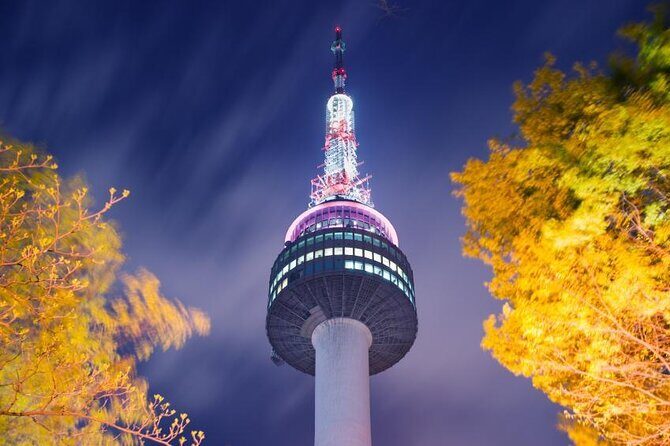
- Optional N Seoul Tower with free entrance area downstairs and paid observatory access up top
- Myeongdong stop that’s built as a quick hit, not a long shopping crawl
How the 9–10 hour Seoul flow stays manageable
This is a long day (about 9 to 10 hours), but the logistics are handled for you. You start at 9:00 am at DongHwa Dutyfree, 149 Sejong-daero, Jongno District, and the tour ends back at the same meeting point. If your hotel is within Seoul city, you can add hotel pickup, which helps a lot when you’re still learning the city.
The group stays small, capped at 18 travelers, and you ride in an air-conditioned 12-passenger van or a 25-passenger mini bus. That matters because several of these stops are spread out enough that self-guided travel could turn into a lot of time lost to transfers and waiting.
You’ll also get an English-speaking guide, plus bottled water and snacks included. Those little extras matter more than you’d think on a day that includes multiple photo stops and walking stretches.
You can also read our reviews of more tours and experiences in Seoul
Hanbok at Gwanghwamun: the photo moment that sets the tone
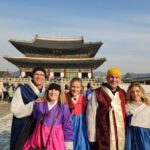
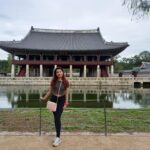
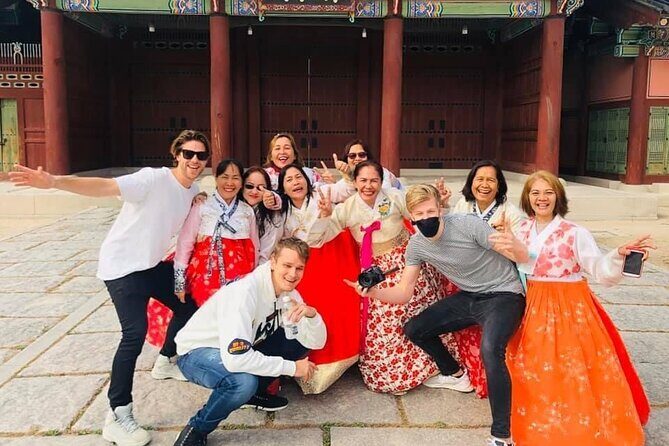
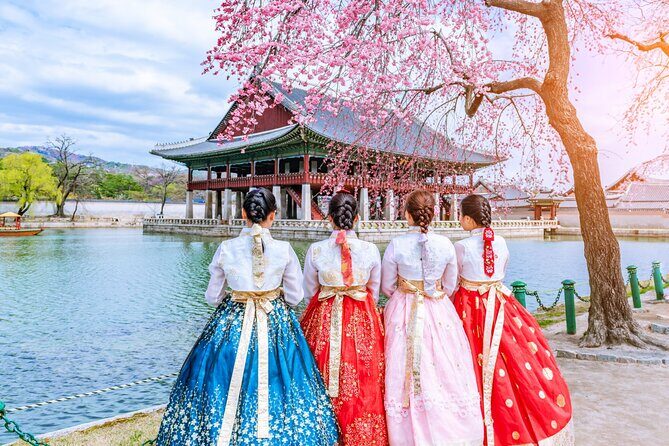
The day kicks off in the Jongno/Gwanghwamun area with a Hanbok Experience. You get to select your own hanbok, wear it for the walking/palace-area portion, and there’s a professional photographer photo shoot included. This is one of the most memorable parts of the tour because it’s not just costume rental—it’s set up specifically for photos.
Timing is tight here (about 20 minutes), so you’ll want to move quickly and follow the guide’s instructions for the best shots. If you’re hoping for a lot of variations (different poses, angles, etc.), the time window is the limiter. Still, the payoff is real: hanbok photos around royal-era Seoul look instantly different from normal street shots.
Practical tip: wear shoes you can walk in comfortably. Hanbok changes how you move, and the tour does include multiple sightseeing legs after.
Gyeongbokgung Palace + the Folk Museum on palace grounds
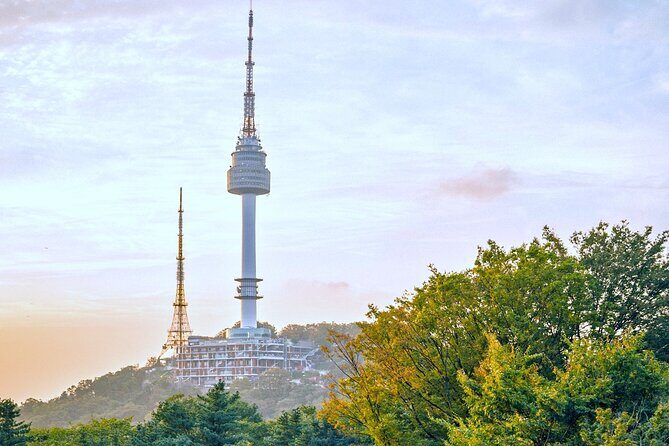
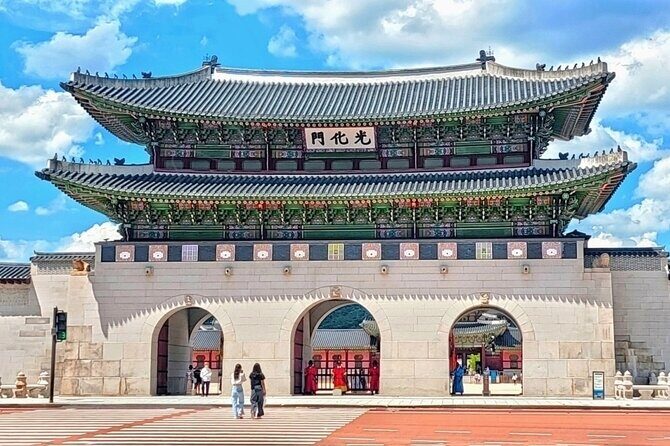
Next up is Gyeongbokgung Palace. This is one of the big names for a reason. It’s described as the first palace built during the Joseon Dynasty, when King Taejo founded the dynasty and moved the capital to Hanyang (Seoul). You’ll spend about 50 minutes here, admiring the palace structures and extensive grounds with guided context.
A key note: Gyeongbokgung is closed every Tuesday and the tour swaps in Changdeokgung Palace instead. If your visit falls on a Tuesday, this is the reason your experience may feel slightly different, even though the tour keeps the palace-and-context theme.
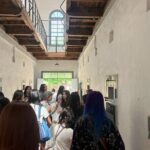
Inside the palace area, you also visit the National Folk Museum of Korea, included for about 20 minutes. This museum is focused on everyday life—cultural beliefs and how people lived, worked, and farmed in earlier times. Even if you don’t read every display detail, the museum setting helps you connect the palace visuals to real human history, not just architecture.
You’ll also have a brief moment after this stop to return the hanbok before the rest of your day.
Lunch in Seoul: included, but the location can vary
Lunch is included (about 1 hour). The tour specifies that the lunch location varies depending on traffic and timing, and the meal is described as a Korean dish.
That flexibility is practical. Seoul traffic can shift, and tour operators usually adjust so the later sights don’t get shoved out of schedule. The downside is you can’t pick a specific restaurant in advance from the description you get at booking.
What you can do: if you have dietary needs, say something early to your guide. Lunch time is part of the flow, so last-minute changes can be hard.
Between lunch, bottled water, and snacks, you’re covered enough to stay comfortable even if you skip an extra meal later—especially useful on a day that also includes shopping time.
Bukchon Hanok Village: old-house lanes in the middle of the city
After lunch, you head to Bukchon Hanok Village for about 1 hour. This is the area of traditional houses (hanok) made with wood and natural materials. The village is framed as an eco-friendly style of traditional Korean home, and the alleys are kept in a way that’s easy for tourism.
You’ll get a guided walk through a neighborhood that’s described as holding about 600 years of Korean history and tradition. The contrast is fun: these traditional lanes sit inside modern Seoul, so you feel the “old meets new” contrast without having to travel far out of the city.
The main drawback here is also the typical one for places like this: it’s a compact area, and you’re not there long. If you love photography, you’ll want to keep your pace up and be ready to move when the group moves, because time evaporates quickly on narrow streets.
You can also read our reviews of more tours and experiences in Seoul
Samcheong-dong and K-drama filming-area vibes
Right after Bukchon, you go to Samcheong-dong for about 1 hour. This stop is built around pop-culture geography. The tour description points out that K-dramas are popular globally, and that Bukchon and Samcheong-dong are among the most famous filming locations.
You’ll see areas connected to well-known series and films, including Goblin, The Liar and His Lover, and While You Were Sleeping (titles listed in the tour info). Even if you’re not a superfan, the practical value is that the guide gives you a storyline—so the street corners feel purposeful, not random.
If you do care about the filming spots, bring your photo habits: check angles quickly, shoot early, and keep moving. The tour time is fixed, and the group doesn’t wait forever while someone tries to recreate one perfect screen grab.
Blue House area, Jogyesa Temple, Gwanghwamun Plaza, and Cheonggyecheon
The tour also includes several major central-city sights, which together help you understand Seoul as more than palaces and shopping.
- The Blue House (Cheongwadae): described as the presidential residence, near Gyeongbokgung and surrounded by Bugaksan mountain. This is more about the civic centerpiece and nearby views than deep access.
- Jogyesa Temple: a major Buddhist temple in central Seoul. The tour description notes that along with Confucianism, Christianity, and Taoism, Buddhism is a major religion in Korea, and it estimates about 25% of South Koreans practice Buddhism. Even if you’re not religious, it’s a calm counterpoint to the louder streets.
- Gwanghwamun area: the tour calls out Gwanghwamun as the main gate south of Gyeongbokgung, plus Gwanghwamun Plaza, where you’ll see national landmark features including the statue of King Sejong and Admiral Yi Sun-sin.
- Cheonggyecheon Stream: an 11 km (6.8 miles) man-made waterway in downtown Seoul from an urban renewal project. This is one of those places where you get a break from traffic and still feel like you’re in the heart of the city.
These stops work best as “context stops.” You don’t come away with one single museum ticket memory. Instead, you get a map in your head of how government, culture, religion, and everyday city life connect.
N Seoul Tower: optional observatory ticket and city-scale views
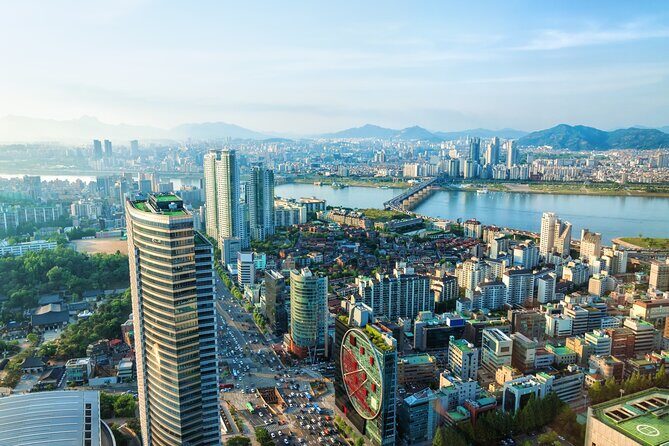
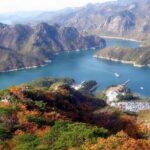
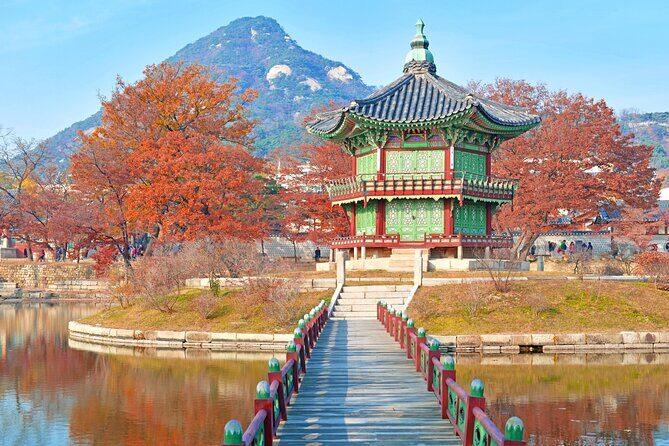
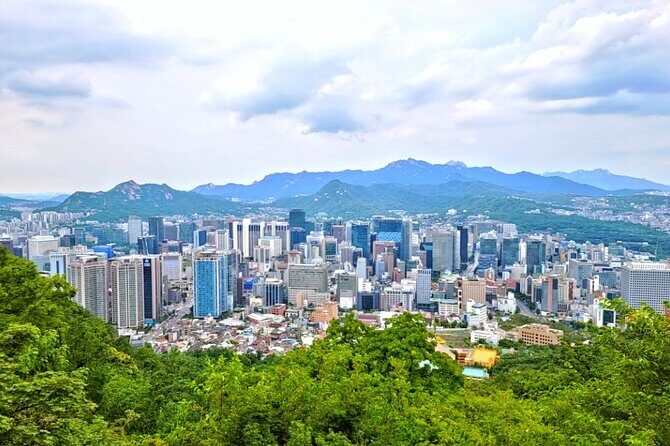
N Seoul Tower (also called Namsan Tower) is the skyline moment many first-time visitors want. The tower sits on top of Namsan Mountain at 237 m and 480 m above sea level, and the tour frames it as a highly visible Seoul landmark.
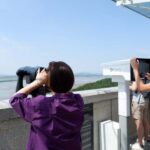
Here’s the important money-and-time detail: the entrance area to the observatory is free, and you can enjoy the area and the popular love locks display. To go up to the full top observatory, you’ll pay separately with your own optional ticket.
The tour info lists typical prices as about $14 for adults and $9 for children. Because it’s optional, you can decide based on your budget and how much you want the panoramic views.
If you do take the observatory ticket, plan to treat it as a true payoff stop. By this point in the day, you’ve seen historic structures and neighborhoods. The tower gives you a big-picture view so everything you walked through earlier makes more sense spatially.
Myeongdong shopping street: the practical end-of-day hit
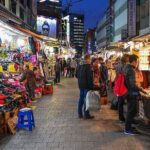
The tour wraps with Myeongdong Shopping Street for about 20 minutes. This is described as Seoul’s most famous shopping district, with hundreds of shops and department stores, plus lots of cosmetics and souvenirs. It’s not just retail, either—there are also food and local cultural sights in the area.
The realistic catch: this is a quick stop, not a free-for-all. If you want to stay longer at Myeongdong, the tour notes that it ends there, and your return is on your own expense. That means you should decide in advance whether you want the tour to carry you the whole way back.
If you’re shopping, 20 minutes can still work if you’re focused: pick a store area first, then move. If you try to browse everything, time disappears fast.
Price and value: what $168 includes (and what costs extra)
At $168 per person, you’re paying for a lot of built-in structure. The tour includes:
- Air-conditioned vehicle
- Hotel pickup (for hotels in Seoul city)
- English-speaking guide
- Lunch (Korean dish) plus bottled water and snacks
- Fusion hanbok rental & wearing
- Hanbok photoshoot with a professional photographer
- Admission coverage listed for Gyeongbokgung Palace and the National Folk Museum of Korea
- Gratuities
Then there’s the main extra: N Seoul Tower observatory ticket is optional and not included. The entrance area is free, but the full tower experience costs extra if you want the top view.
So is it a good deal? For your first day in Seoul, it often is, because you’re buying time savings and translation help, not just sightseeing. Admissions, lunch, and the hanbok photo session are heavy hitters in the value equation. If you know you’ll likely pay for the tower ticket anyway, this price feels more balanced.
If you’re extremely price-sensitive, the add-on could matter. You’ll also want to remember the schedule is tight—so you’re paying for a “best-of” snapshot more than a slow, deep experience.
Should you book this Seoul one-day tour?
Book it if:
- It’s your first time in Seoul and you want a guided “overview day” that covers palaces, traditional neighborhoods, and a skyline moment.
- You want hanbok photos that are set up for pictures, not just outfit rental.
- You like the idea of getting travel planning and timing handled by an English-speaking guide.
Skip it (or rethink the plan) if:
- You prefer spending long hours at one place, not moving every segment of the day.
- You’re trying to keep every cost under control, since N Seoul Tower observatory access is an extra ticket.
- You dislike walking and photo-stop pacing. This tour is built around multiple short blocks of time, so comfortable shoes are a must.
If the weather is poor, the tour notes it may be rescheduled or you’ll receive a refund, since it requires good weather. For most people, that’s a fair trade for a schedule this full.
FAQ
How long is the Seoul one-day sightseeing tour?
It runs about 9 to 10 hours.
Is hotel pickup included?
Hotel pickup is included for hotels in Seoul city only.
What time does the tour start and where does it end?
It starts at 9:00 am and ends back at the meeting point.
Is lunch included, and what type of food is it?
Lunch is included. The lunch location varies depending on traffic and timing, and it’s described as a Korean dish.
Do I need to buy tickets for N Seoul Tower?
The N Seoul Tower observatory ticket is optional and not included. The entrance area is free, and the observatory ticket costs about $14 for adults and $9 for children.
Is Gyeongbokgung Palace always open on the tour day?
Gyeongbokgung Palace is closed every Tuesday, and the tour replaces it with Changdeokgung Palace.
What’s included in the hanbok experience?
You get fusion hanbok rental and wearing, plus a hanbok photoshoot by a professional photographer.