REVIEW · SEOUL
Seoul: Gyeongbokgung Palace Half day Tour
Book on Viator →Operated by koreaguidetour · Bookable on Viator
This palace tells its story fast. In just 2 hours, you walk through Gyeongbokgung Palace with an English guide who explains what you’re looking at—its Joseon-era purpose, the architecture, and even the little details like animal statues placed around the grounds. Built in 1394 and later heavily damaged during the Japanese Colonial Period, the palace has been preserved through ongoing restoration, so you’re seeing a living, working piece of history, not just old stones.
I especially like how the guide focuses on the big rooms and the logic behind them, instead of treating it like a quick photo stop. You’ll also get plenty of chances to ask questions, and you’ll hear the stories tied to the palace’s royal spaces and animal sculptures—small notes that make the place click. The one drawback to plan for: it’s only a half-day, so you’ll cover major highlights rather than every inch of the palace.
In This Review
- Key things to know before you go
- Gyeongbokgung in Two Hours: Why This Half-Day Works
- What the English Guide Adds (and What You’ll Actually Hear)
- Gwanghwamun Gate: The Palace’s Big Front Door
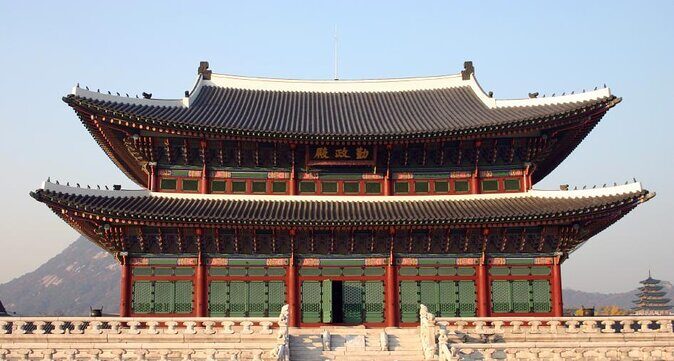
- Geunjungjeon Throne Hall: Where the Joseon Story Becomes Real
- Sajeongjeon: The King’s Office, Not Just Another Building
- Gangnyeongjeon King’s Bed-Chamber: Power Has a Private Side
- Gyotaejeon Queen’s Bed-Chamber: A Different Perspective on the Same Court
- Gyehoiru Pavilion: Event Hall and the Palace’s Social Function
- Animals, Statues, and the Details You’d Miss Alone
- Logistics That Matter: Where to Meet and How to Plan Your Timing
- Price and Value: Is $35 Worth It for Gyeongbokgung?
- Who This Tour Suits Best
- Should You Book This Gyeongbokgung Palace Half-Day Tour?
- FAQ
- Do I need to buy admission separately?
- How long is the tour?
- How much does the tour cost?
- What language is the tour explained in?
- Where do I meet the group?
- Where does the tour end?
- Is there a mobile ticket?
- Can I record or film during the tour?
- Are pets allowed on this tour?
- Is Gyeongbok Palace open on Tuesdays?
Key things to know before you go
- English explanations in detail while you’re walking between major palace locations
- Admission included in the 2-hour format, so you don’t have to line up for tickets
- Royal layout focus: throne hall, king’s office, and bed-chambers explained in context
- Animal statues get called out, so you know what you’re seeing (and why it’s there)
- Small-group feel with a maximum of 20 travelers (and a minimum of 4 to run)
- No filming/recording during the tour, so plan to enjoy with your eyes, not your phone
Gyeongbokgung in Two Hours: Why This Half-Day Works
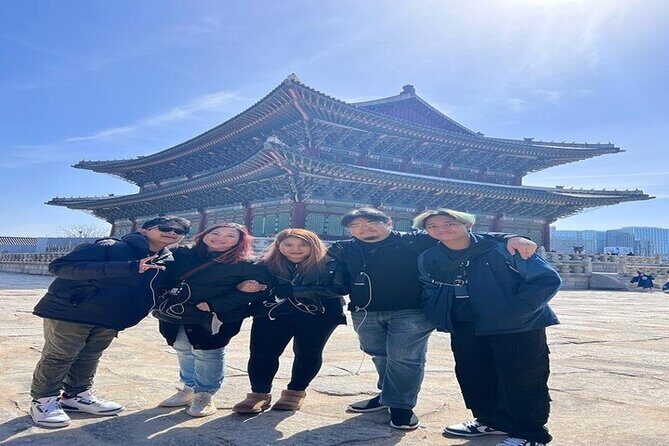
If you only have a short window in Seoul, Gyeongbokgung is the move. It’s the best starting point for understanding the Joseon dynasty palace mindset: power concentrated in specific halls, rituals built into daily space, and architecture that wasn’t chosen by accident.
This tour’s length matters. Two hours is enough time to get oriented fast—where the important buildings sit and how they connect—without turning your day into a marathon. And because you’re guided, you’re not stuck translating on the fly or guessing what each gate or hall meant in palace life.
There’s also a practical advantage: the tour includes admission and uses a mobile ticket. That reduces hassle, especially if you’re pairing palace time with other plans in Jongno.
You can also read our reviews of more tours and experiences in Seoul.
What the English Guide Adds (and What You’ll Actually Hear)
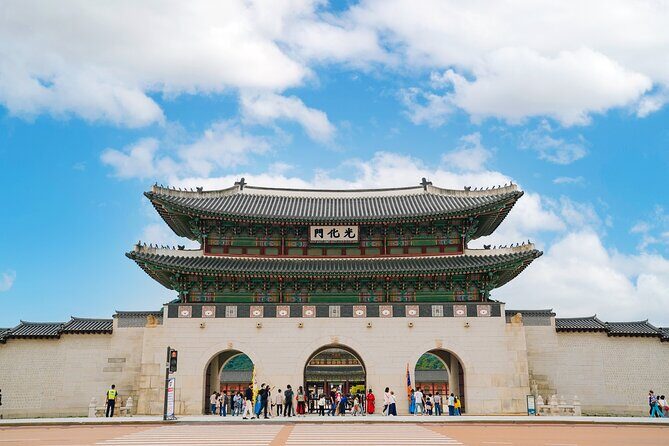
A palace can be breathtaking and still feel confusing. You stand there looking at walls, roofs, and courtyards, but unless someone explains the order of rooms and what they were for, your brain fills in the gaps with guesses.
This tour is built around detailed English explanations, including:
- why Gyeongbokgung was built the way it was in Joseon times
- what major buildings were used for (not just their names)
- stories tied to specific royals and palace functions
- the animal statues scattered throughout the site
I’m a fan of tours where the guide doesn’t just list facts. The best part here is that you can ask questions to the guide during the walk. If something doesn’t make sense—placement of buildings, meaning behind certain areas, or how the palace functioned—you’ll have a real chance to get an answer instead of moving on with confusion.
And yes, you’ll see that the guide approach can be very hands-on. One English guide name that shows up in feedback is Gabriela—described as kind and helpful, including support when someone needed help finding the right meeting spot. That’s the kind of service that keeps the experience smooth.
Gwanghwamun Gate: The Palace’s Big Front Door
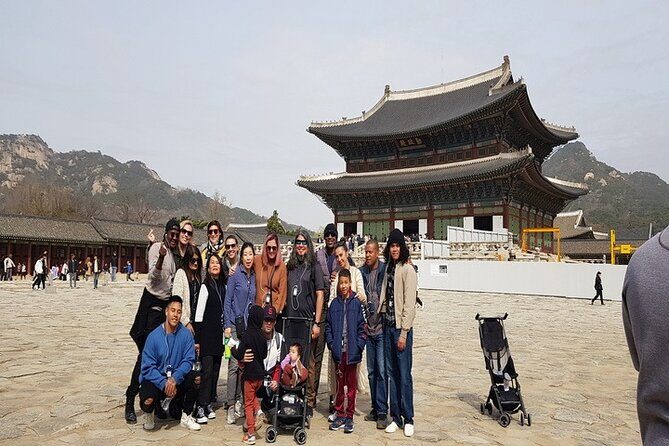
Your walk starts at the Gwanghwamun Gate, the south gate of Gyeongbokgung. Even if you’ve seen gates in other places, this one has a specific role: it’s the formal entry point into the palace’s main world.
Here’s the value of starting at a gate: it sets the palace scale. You get a sense of the ceremonial “front,” and the guide can help you understand how movement into the palace wasn’t casual—it was ordered and meaningful.
Practical tip: plan to slow down here and let the explanation land. Gates are easy to rush past, but they’re also where you pick up the rules of the whole complex.
Geunjungjeon Throne Hall: Where the Joseon Story Becomes Real
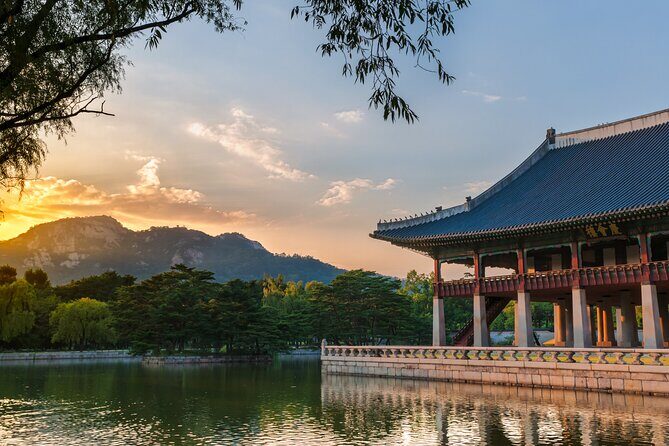
Next comes Geunjungjeon, the main throne hall. This is the centerpiece that makes Gyeongbokgung feel like more than a museum courtyard.
What I like about focusing on the throne hall early is that it gives you a mental anchor. Once you understand what this hall represented, the other buildings make more sense as parts of a system—public authority, administration, and daily royal life.
In many palace visits, people take photos and leave with the sense that they saw a famous hall. This tour aims for something more useful: you learn the function and story attached to the space, so you understand why it matters.
One consideration: throne halls often mean crowds and a bit of jostling for angle. Keep your expectations flexible; the goal is understanding, not getting the perfect shot with zero people in frame.
Sajeongjeon: The King’s Office, Not Just Another Building
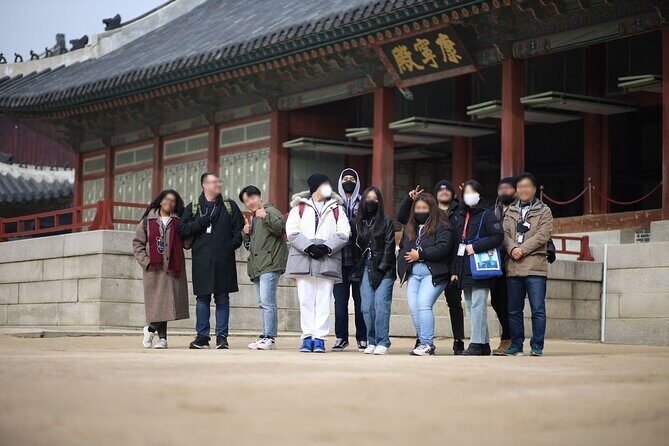
From the throne hall, you shift to Sajeongjeon, the king’s office space. This stop is a strong reminder that palace life wasn’t only ceremonies and pageantry—it was also administration, decision-making, and governance.
This is where a guided explanation pays off in a very practical way. If you only recognize buildings by appearance, you might miss what makes this area different from the throne hall. The guide’s job is to help you see the logic: where the king performed key work versus where the king represented authority.
If you like history that feels structured—how power flowed through rooms—this is one of the best moments of the tour.




Gangnyeongjeon King’s Bed-Chamber: Power Has a Private Side
Then it’s Gangnyeongjeon, the king’s bed-chamber. Yes, it can feel like a sudden shift—from official space to something more personal.
That’s exactly why it’s worth including. The palace isn’t only a public stage. It’s also the setting for private royal life, and learning how different buildings relate helps you avoid a one-dimensional view of the Joseon court.
If you enjoy details that connect architecture to daily rhythms, this stop is a good match. You’ll get stories connected to royal spaces rather than just a surface description of a room.
Gyotaejeon Queen’s Bed-Chamber: A Different Perspective on the Same Court
After the king’s private room, you move to Gyotaejeon, the queen’s bed-chamber. This stop rounds out the palace story by balancing the king’s spaces with the queen’s.
I like tours that make you look at the whole court structure instead of focusing only on kings as the main character. Even in a short time window, seeing the queen’s space explained helps you understand that the palace had multiple centers of influence and daily life.
A tip for your mindset: don’t treat this like a separate attraction. Treat it as part of the same palace map, so the relationships between rooms start to click.
Gyehoiru Pavilion: Event Hall and the Palace’s Social Function
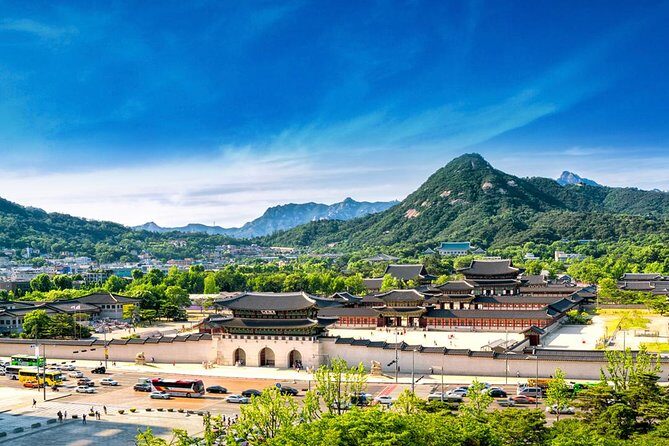
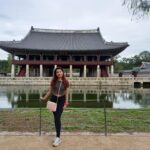
Finally, you’ll reach the Gyeonghoiru pavilion, an event hall. This stop is often a turning point in palace tours because it reminds you that palaces weren’t only for rule and routine. They also hosted events—public moments where status and culture were on display.
What makes this pavilion meaningful in this tour format is the contrast. You’ve gone from gate to throne hall to office to private chambers, and then you land at a space built for occasions. By the time you get here, you’re not just seeing a building—you’re understanding how the palace shifted roles depending on the moment.
If you’re the type who likes to imagine how a day would unfold in another era, this is where that imagination finally gets “instructions.”
Animals, Statues, and the Details You’d Miss Alone
One of the standout themes here is the guide’s attention to the animal statues placed throughout Gyeongbokgung. This is one of those things you can walk right past if you’re relying on your own reading.
The guide ties those animal details to the palace environment, so you’re not just looking at decorations—you’re learning how symbols show up in real space. Even if you don’t know every term, you’ll understand that the palace is designed as a whole system, not a random collection of buildings.
If you’re a “spot the details” traveler, this is where you’ll feel extra glad you booked the tour.
Logistics That Matter: Where to Meet and How to Plan Your Timing
The meeting point is the National Palace Museum of Korea, 12 Hyoja-ro, Jongno District, Seoul. Your tour ends at 7-25 Tongui-dong, Jongno District, Seoul.
Here’s what I’d plan for:
- You’re looking at about 2 hours total, so treat it as a focused block you build around.
- This tour uses a mobile ticket, which is handy if you like keeping things simple on your phone.
- You’ll want to avoid the urge to start filming or recording, since recording/filming isn’t allowed during the tour.
- On Tuesdays, Gyeongbok Palace is closed, and you can book a Deoksugung night tour instead.
- The tour requires good weather. If conditions are poor, you’ll be offered a different date or a full refund.
Also note the group size rules: the tour has a maximum of 20 travelers. If fewer than 4 people book, the tour may be canceled and you’ll get a notice via WhatsApp.
That minimum isn’t a downside—it just means you should check your plans if you’re traveling on a tight schedule.
Price and Value: Is $35 Worth It for Gyeongbokgung?
At $35 per person for an approx. 2-hour tour with admission included, the value comes from the guidance, not just the ticket.
A palace visit is usually two things: reading (or guessing) and walking. If you do it on your own, you often end up spending time deciphering what you’re seeing. Paying for a guided tour compresses that learning into the time you’re already spending there.
You’re also paying for:
- English explanations in detail
- the ability to ask questions
- a route that hits key buildings you’d likely prioritize anyway
So yes, the price is reasonable for a short, guided palace visit—especially if you want context without turning the day into a research project.
If you’re the type who enjoys learning from signs only, you may decide the tour feels optional. But if you’d rather ask questions and get meaning right away, this format is a strong match.
Who This Tour Suits Best
This is a great fit if:
- you want a high-impact palace experience in a short time
- you care about Joseon history and how palace spaces worked
- you like architecture and symbols, not just sweeping views
- you prefer guided context so you don’t waste time figuring things out alone
It may be less ideal if:
- you want to wander completely independently for hours
- you need to film and record your visit
- you’re visiting on a Tuesday and you specifically want Gyeongbokgung (closure applies, with an alternative suggested)
Should You Book This Gyeongbokgung Palace Half-Day Tour?
I’d book it if your goal is to leave with real understanding, not just photos. The combination of English explanations, a tight route through major halls, and the guide’s emphasis on palace functions and animal statue details makes the time feel efficient.
One final check before you decide: this tour runs for about 2 hours, so if you’re hoping for a slow, no-rush walkthrough of the entire site, you might want more flexible self-guided time instead. But if you want to get your bearings fast and learn the palace story in the right order, this is a solid, practical way to experience Gyeongbokgung.
FAQ
Do I need to buy admission separately?
No. Admission is included in the tour.
How long is the tour?
It’s about 2 hours.
How much does the tour cost?
The price is $35.00 per person.
What language is the tour explained in?
The tour offers explanatory information in English.
Where do I meet the group?
The meeting point is the National Palace Museum of Korea at 12 Hyoja-ro, Jongno District, Seoul.
Where does the tour end?
The tour ends at 7-25 Tongui-dong, Jongno District, Seoul.
Is there a mobile ticket?
Yes, the tour includes a mobile ticket.
Can I record or film during the tour?
No. Recording or filming the tour is not allowed.
Are pets allowed on this tour?
No. Pets are not allowed.
Is Gyeongbok Palace open on Tuesdays?
No. On Tuesdays, Gyeongbok Palace is closed, and you can book a Deoksugung night tour instead.