REVIEW · SEOUL
Seoul: Bukchon Village, Gyeongbokgung, Gwangjang Market
Book on GetYourGuide →Operated by VIP Travel · Bookable on GetYourGuide
Seoul’s past hits fast. I like how this tour stitches together classic Seoul scenes, starting with Bukchon Hanok Village and its photo-worthy hanok alleys. It’s the kind of route that helps you understand where everything fits before you spend the rest of your trip wandering on your own.
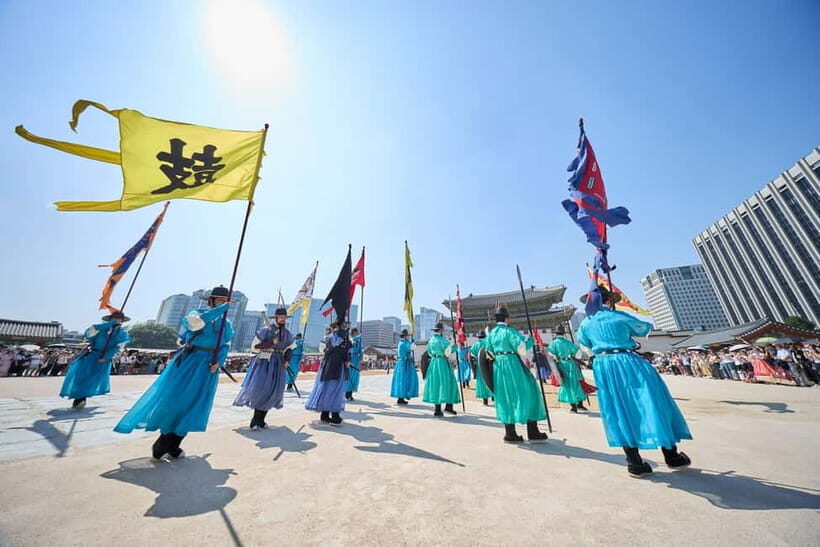
My second favorite part is the Royal Guard Changing Ceremony at Gyeongbokgung Palace. Seeing the guard ritual up close, with the guide explaining the Joseon-era context, makes the palace feel more than just architecture on a hill. It turns one of Seoul’s most famous moments into something you actually understand.
One thing to plan around: Tuesdays. Gyeongbokgung and the guard ceremony are closed, so you’ll swap in Changdeokgung Palace and Insadong instead. If the ceremony is your top priority, choose your day carefully.
In This Review
- Key takeaways
- Starting at Myeongdong: fast, simple, and central
- Bukchon Hanok Village: the photo stops you’ll actually use later
- What I think you’ll get out of Bukchon
- Gyeongbokgung Palace and the Royal Guard Changing Ceremony
- The guard ceremony: why it lands
- The palace walk: don’t skip the guide
- The ceremony and palace have a Tuesday catch
- Blue House (Cheong Wa Dae): the quick pass that gives perspective
- Cheongha Korean Ginseng Museum: your herbal tea break, with no sales pressure
- Gwangjang Market: where your taste buds do the sightseeing
- How to eat well in a short time
- Market souvenirs without overpaying
- Tuesday swap: Changdeokgung Palace and Insadong take over
- Price and logistics: why ~$30 feels fair for a half-day plan
- Who should book this tour, and who might pass
- Should you book this Seoul Bukchon and Markets tour?
- FAQ
- What is the meeting point for the tour?
- How long is the tour?
- What does the tour include?
- What happens if I’m in Seoul on a Tuesday?
- Where does the tour end?
- Is hotel pickup available?
- Do I need cash?
- What should I bring?
- Are the tours in English?
- Is free cancellation available?
Key takeaways
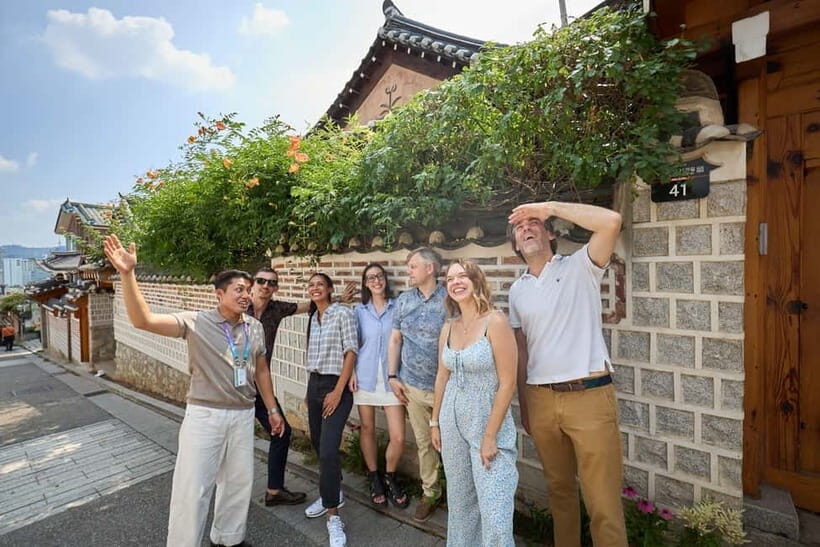
- Bukchon Hanok Village for narrow lanes, tiled rooftops, and easy photo stops
- Royal Guard Changing Ceremony at Gyeongbokgung for a vivid look at Joseon-era rituals
- Tuesday swap to Changdeokgung and Insadong when Gyeongbokgung is closed
- Cheongha Ginseng Museum tea break that teaches and lets you browse without pressure
- Gwangjang Market food tastings like bindaetteok, mayak gimbap, and tteokbokki
- English guides with strong history explanations and help with photos at key stops
Starting at Myeongdong: fast, simple, and central
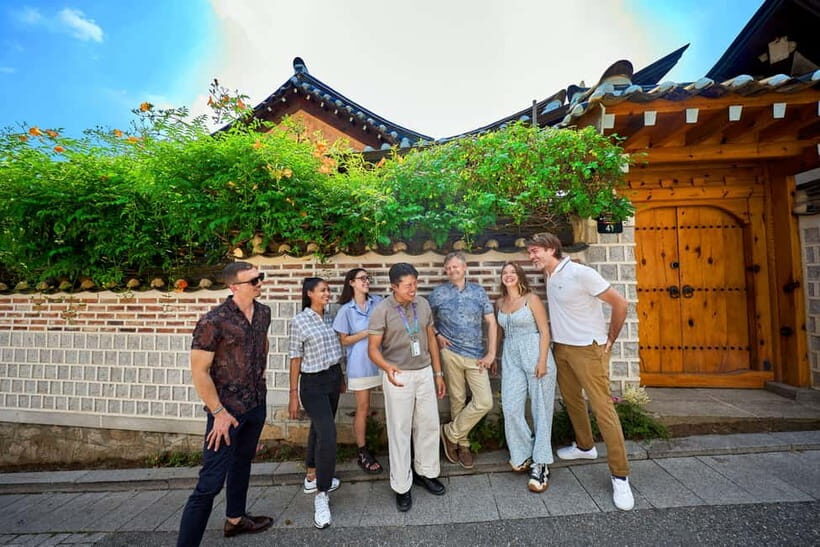
This tour starts at Myeongdong Subway Station Exit 8 and wraps back up at Myeongdong Station. That’s a big deal in Seoul, where “getting back” can otherwise eat into your day. With a total time of 210 minutes (about 3.5 hours), you’re getting a lot done without feeling like you’re signing up for an all-day ordeal.
One practical tip: wear comfortable shoes. You’ll be walking through Bukchon and again through Gwangjang Market, plus you’ll move around the palace grounds. A camera helps too, since the tour includes multiple photo stops, and you’ll want to capture Bukchon rooftops and the ceremony staging.
You can also read our reviews of more shopping tours in Seoul
Bukchon Hanok Village: the photo stops you’ll actually use later
Your first major stop is Bukchon Hanok Village, the traditional neighborhood between two palace areas. I like it because it gives you immediate Seoul context. You’re not just looking at a “historic site.” You’re seeing how ordinary people lived around royal power—then you watch modern Seoul rise behind the rooftops.
Expect narrow lanes, tiled roofs, and that classic mix of quiet streets and dramatic views. The walking pace is manageable, and the route includes guided time plus time to look around and take photos. If you’re the type who hates rushing, Bukchon works well because you can stop whenever you see a good angle.
A downside to know: the alleys can feel tight, and you’ll likely share them with other visitors. Come ready to move slowly when you need to and accept that the “perfect” shot may take a couple tries. Also, keep an eye on your footing if the sidewalks look slick.
What I think you’ll get out of Bukchon
- A mental map for where palaces, neighborhoods, and major sights sit relative to each other
- Photos that make sense later, when you connect them to the palace stories you’ll hear next
Gyeongbokgung Palace and the Royal Guard Changing Ceremony
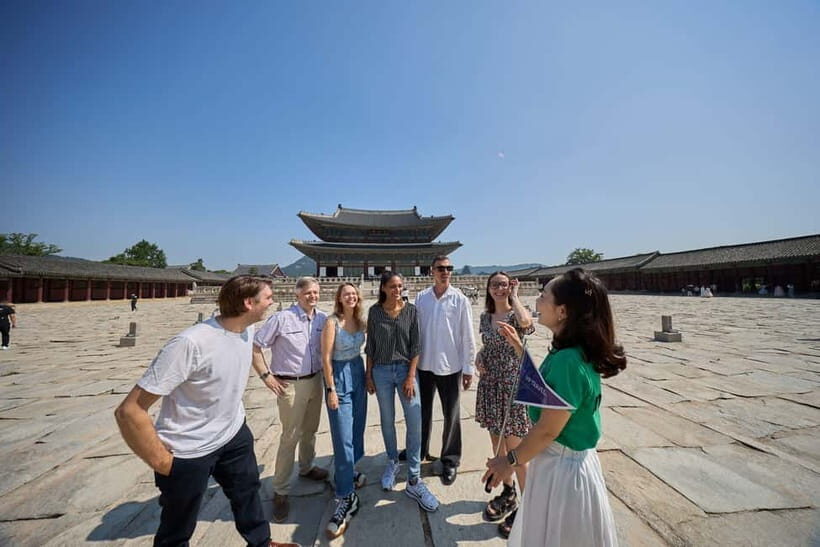
After Bukchon, the tour heads to Gyeongbokgung Palace, where you’ll see two things that people talk about for a reason: the Royal Guard Changing Ceremony and a guided palace visit.
The guard ceremony: why it lands
This ceremony reenacts Joseon Dynasty guard-changing rituals. The important part isn’t just the outfits, though the uniforms are eye-catching. It’s the precision and timing. The whole performance works like live history, and the guide’s explanations help you connect what you’re seeing to the purpose behind it.
If you care about getting good views, be ready to stand where the guide directs. Some guides have been praised for helping people get good photo positions and taking pictures for you at key moments, which is a nice quality-of-life boost.
You can also read our reviews of more tours and experiences in Seoul

The palace walk: don’t skip the guide
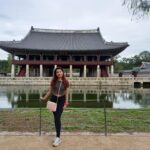
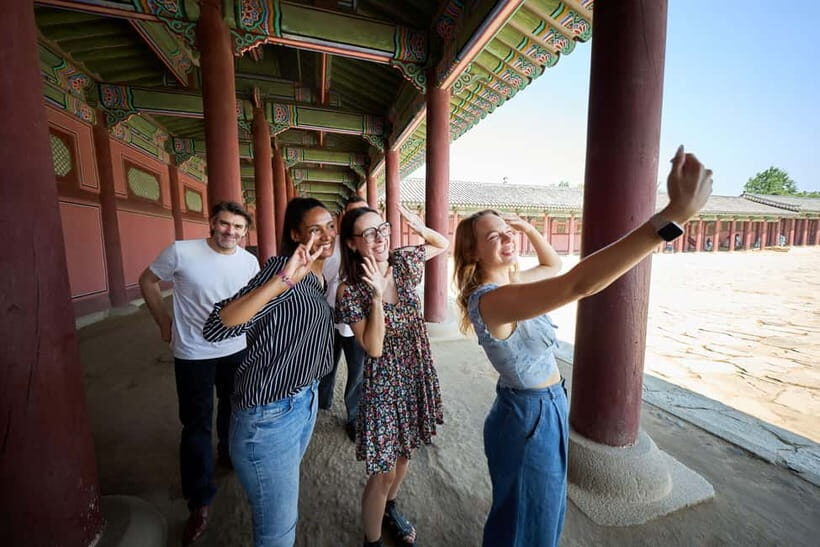
You’ll also get a guided look around Gyeongbokgung, which is the largest and most iconic of Seoul’s grand palaces. It was originally built in 1395, and the tour focuses on major areas like gates, courtyards, and calm spots such as the lotus ponds.
This is where a guide pays off. Without context, a palace can feel like “pretty buildings.” With context, you notice axes, courtyards, and how movement through space was designed. You also get help interpreting what you’re looking at, instead of guessing.
The ceremony and palace have a Tuesday catch
On Tuesdays, both the palace and the guard ceremony are closed. The tour swaps in Changdeokgung and Insadong. More on that below, but if you’re booking specifically for Gyeongbokgung, check your calendar.
Blue House (Cheong Wa Dae): the quick pass that gives perspective
Between the palace area and the ginseng stop, you’ll drive past the Blue House (Cheong Wa Dae), the former presidential residence and executive office. This is a pass-by moment, not a walk-through.
So what’s the value? It helps tie modern political Seoul to the same geography where royal power used to operate. Even a brief roadside view can make the area feel more layered, especially right after you’ve been walking palace grounds.
Cheongha Korean Ginseng Museum: your herbal tea break, with no sales pressure
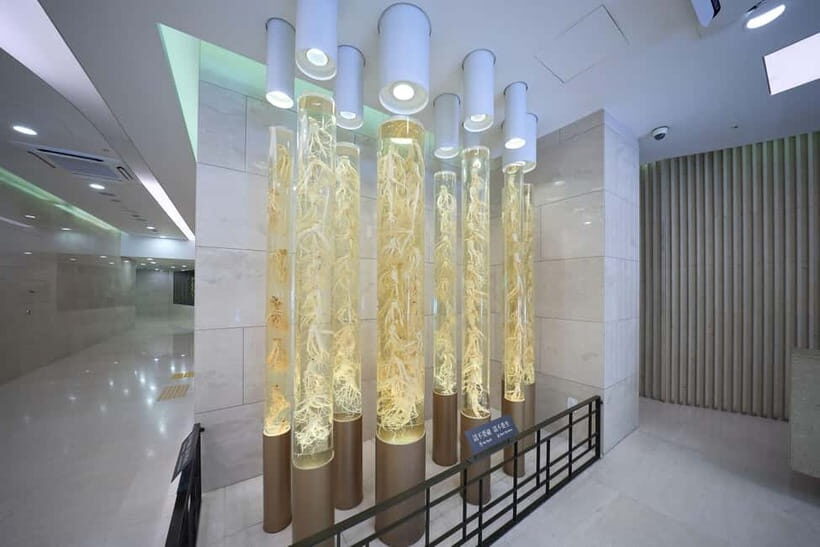
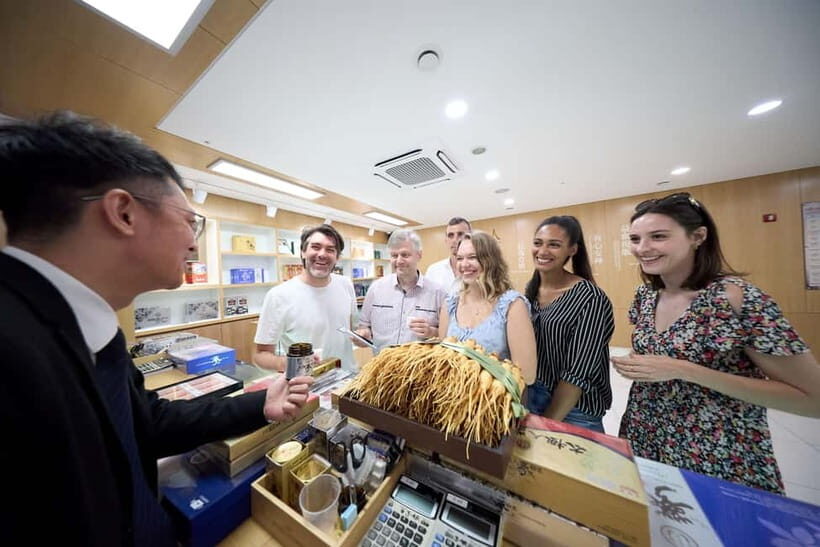
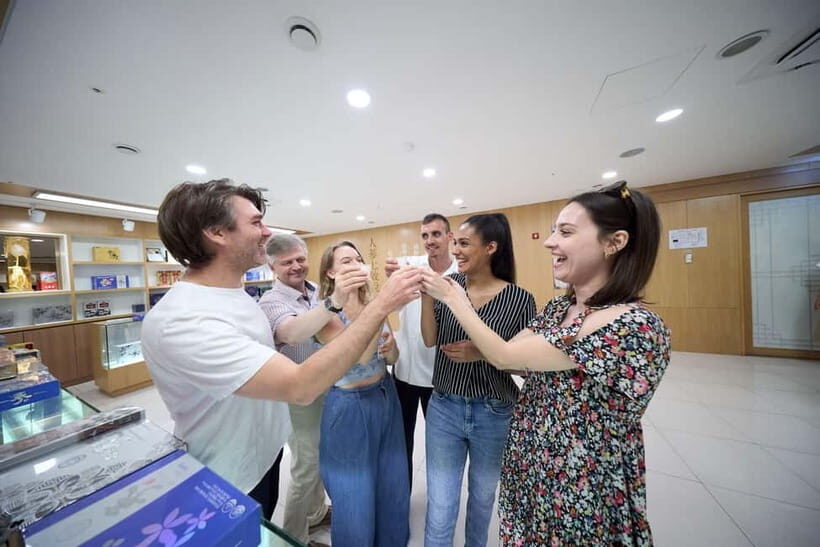
Next up is the Cheongha Korean Ginseng Museum. You get a break time plus a guided visit and the chance to try a cup of traditional Korean herbal tea. The tour also includes a talk about the health benefits and cultural importance of Korean ginseng, with exhibits that explain its role in Korean wellness traditions.
What I appreciate here is the balance: you’re informed, but you’re not forced into shopping. The tour explicitly notes there’s absolutely no obligation to buy. Some people can get a little nervous about museum-style stops, but the key is how the guide frames it: history and context first, purchases optional.
If you’re doing this tour early in your trip, this stop is also useful because ginseng becomes a recurring theme across Korean culture, from products to souvenir conversations. Even if you buy nothing, you’ll have vocabulary and context.
Quick practical note: bring cash if you want to browse or buy small items. The tour doesn’t call it out as required, but it helps in situations like this.
Gwangjang Market: where your taste buds do the sightseeing
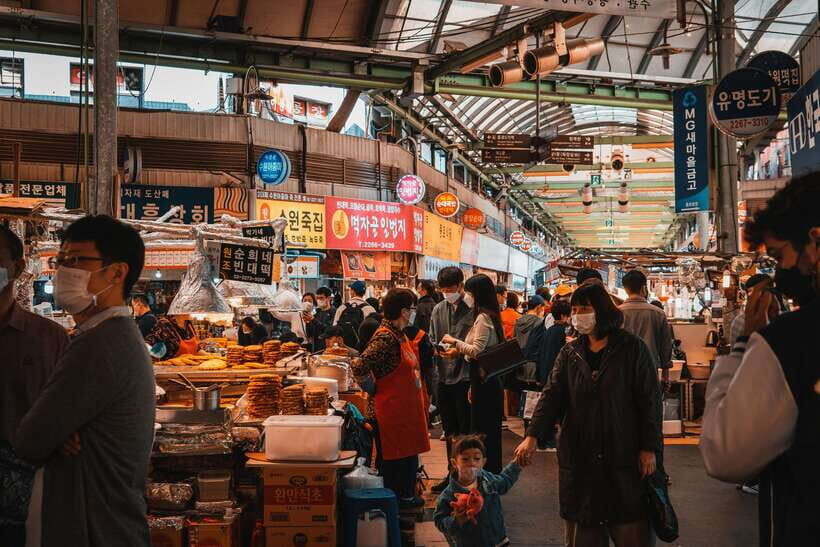
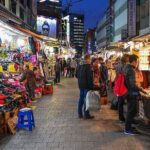
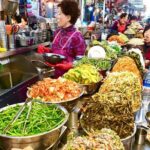
The last big anchor is Gwangjang Market, one of Seoul’s oldest and most popular traditional markets. This is where the tour goes from “history” to “everyday life.”
You’ll get:
- A guided visit (so you understand what you’re looking at)
- A chance to walk freely and shop
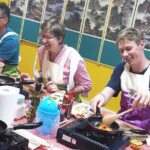
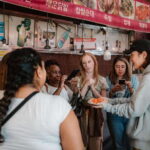
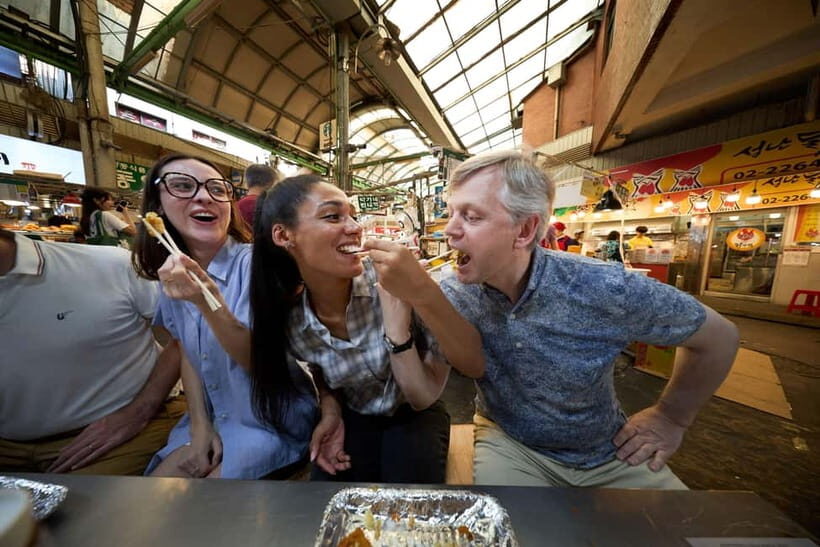
- Food tasting time, with local favorites highlighted like bindaetteok (mung bean pancake), mayak gimbap (bite-size seaweed rice rolls), and tteokbokki (spicy rice cakes)
How to eat well in a short time
Because your market time is limited (about an hour on the schedule), I’d treat it like a sampler mission. Try the signature items first, then decide if you want seconds. Gwangjang can be crowded, and lines move differently depending on the stall, so going for the tastings while you’re guided is usually the most efficient move.
Also, keep a mental note: you may smell like you’ve spent the afternoon next to a favorite street-food station. That’s not a problem. That’s Seoul.
Market souvenirs without overpaying
The tour gives you time to shop, and Insadong is part of the Tuesday swap (also great for crafts). If you’re a souvenir hunter, you’ll likely find better “small and personal” items at markets than big tourist shops, but stick to your instincts. The guide’s job is to point you at good options, not to push you into anything.
Tuesday swap: Changdeokgung Palace and Insadong take over
If your visit falls on a Tuesday, you won’t see Gyeongbokgung Palace or the Royal Guard Changing Ceremony. Instead, the tour visits Changdeokgung Palace, a UNESCO World Heritage site known for its harmonious architecture and its Secret Garden area.
Many people rate Changdeokgung highly because it feels calmer and more nature-friendly than some other palace spaces. Even if you’re not a garden person, the point is mood and layout. The palace experience can shift from “grand ceremony” to “peaceful strolling with history in every corner.”
On Tuesdays, the tour also includes Insadong, a cultural district known for tea houses, antique shops, art galleries, and craft stores. This matters because it gives you something that pairs naturally with the palaces: culture you can touch. You can look for unique souvenirs, admire artwork, and grab tea in the same neighborhood style you saw in Bukchon.
So if you’re planning your Seoul week: treat Tuesday as a “quiet palace + craft streets” day rather than a “big ceremony” day.
Price and logistics: why ~$30 feels fair for a half-day plan
At around $30 per person for 3.5 hours, this tour is priced like a practical introduction to Seoul, not a deep, day-long expedition. You’re paying for a guided flow through multiple high-demand sights: Bukchon, a palace visit, the guard ceremony when available, a ginseng tea stop with a museum talk, and Gwangjang Market tastings.
Here’s why it feels like value:
- You get a guide to interpret what you’re seeing, especially at palaces
- Transportation is included to connect sites efficiently
- You get multiple “headline” stops plus a clear ending back at Myeongdong
Who tends to get the most from this?
- First-time Seoul visitors who want a smart hit list without overplanning
- People on a tight schedule who still want history and food in one run
- Travelers who like a plan but still want free time at the market
Who should book this tour, and who might pass
I’d recommend this tour if you want the best mix of classic Seoul sights and local food, with a guide that explains the why behind the where. It’s also a good choice if you’re staying around Myeongdong, because the start and end make your day easier.
You might choose something else if:
- You specifically want Gyeongbokgung and the guard ceremony and you’re visiting on a Tuesday
- You hate walking on uneven sidewalks and crowded market lanes
- You want a slower, deeper palace experience with lots of time to sit and absorb details
Should you book this Seoul Bukchon and Markets tour?
Yes, if you’re aiming to get your bearings fast and you care about seeing both royal Seoul and street-level Seoul in one afternoon. Bukchon gives you the visual identity of traditional Korea, the palace stop (and guard ceremony when open) gives you the storyline, and Gwangjang Market lets you end with something delicious and real.
If you’re booking for a Tuesday, go in with the right expectation: you’ll miss Gyeongbokgung and the ceremony, but you’ll gain Changdeokgung Palace and Insadong, which can be just as satisfying in a different way.
FAQ
What is the meeting point for the tour?
The tour meets at Myeongdong Subway Station Exit 8.
How long is the tour?
The duration is 210 minutes (about 3.5 hours).
What does the tour include?
It includes visits to Bukchon Hanok Village, the Royal Guard Changing Ceremony (when available), a guided visit to Gyeongbokgung Palace (or Changdeokgung on Tuesdays), a pass by the Blue House, a visit to the Cheongha Korean Ginseng Museum with time for herbal tea, and Gwangjang Market with food tasting.
What happens if I’m in Seoul on a Tuesday?
On Tuesdays, Gyeongbokgung Palace and the Royal Guard Changing Ceremony are closed. The tour instead goes to Changdeokgung Palace and Insadong.
Where does the tour end?
The tour ends at Myeongdong Station for all participants.
Is hotel pickup available?
If your group has 5 or more people, hotel pickup within Seoul city is available upon request when booking.
Do I need cash?
The tour suggests bringing cash, especially if you want to shop at the ginseng center or markets.
What should I bring?
Bring comfortable shoes, a camera, and cash.
Are the tours in English?
Yes. The tour includes a live English guide.
Is free cancellation available?
Yes. You can cancel up to 24 hours in advance for a full refund, and there is also a reserve now & pay later option.