REVIEW · SEOUL
From Seoul: Aegibong Starbucks Observatory & DMZ View
Book on GetYourGuide →Operated by VIP Travel · Bookable on GetYourGuide
Coffee by the border sounds surreal. It’s real here, at Aegibong Peace Park, where you can sip at a Starbucks with North Korea views over the Jogang River. One of the biggest reasons I like this outing is the setting: you get a DMZ-adjacent perspective without the long, full-day grind.
My other favorite part is the mix of meaning and movement. You’ll walk through an exhibition space with large viewing windows and videos, then head to the Jogang Observatory for a closer look toward Gaepung-gun—with telescopes available. I also like how the tour’s built around explanations from English-speaking guides such as Eva, Hana, Crystal, Eva-family-style guides, and others.
One possible consideration: food and drinks aren’t included in the price. Since Starbucks is part of the experience, you’ll likely buy your own coffee or snack on-site, so budget a little extra if you want more than just photos.
In This Review
- Key highlights that make this trip worth your time
- Starbucks, suspension bridge, and a border view—how it all connects
- Aegibong Peace Eco Park: Hill 154, old legends, and a 112-meter walk
- Exhibition Hall windows: where the Jogang River story starts
- Jogang Observatory and the Gaepung-gun view: what you’re really seeing
- A Starbucks stop that actually serves the view (not the other way around)
- Seoul-to-Gimpo timing: a 5-hour trip that fits real schedules
- Guides: English explanations that keep the mood respectful and clear
- Price value check: $45 for access, context, and transport
- Practical tips that matter before you go
- Should you book the Aegibong Starbucks Observatory & DMZ View?
- FAQ
- How long is the tour from Seoul to Aegibong?
- What is included in the price?
- Do I need to bring a passport?
- Is food or drinks included?
- Is there an observatory and is there a view of North Korea?
- Where does the tour start and end?
Key highlights that make this trip worth your time
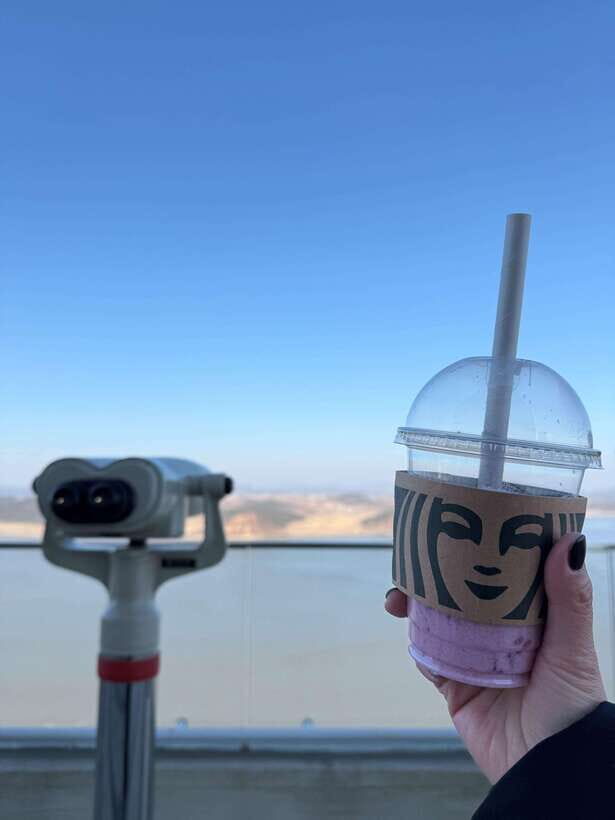
- Aegibong’s Starbucks Observatory is the closest Starbucks-style stop you can make for a North Korea-facing view
- The 112-meter suspension bridge adds a real “wow” walk between themed gardens
- Jogang Observatory aims at Gaepung-gun about 1.4 km away for an intense day-trip perspective
- Exhibition Hall windows + videos help you understand what you’re seeing before you look out
- 5 hours with round-trip transport and entrance fees keeps it doable in a Seoul schedule
Starbucks, suspension bridge, and a border view—how it all connects
This trip is built around a simple idea: see the dividing line from a place that still feels peaceful enough to breathe. Aegibong Peace Park sits in Gyeonggi Province on the border area of Gimpo-si, with Hill 154 as the core. From there, the experience flows in a way that makes sense: first context, then walking, then the view.
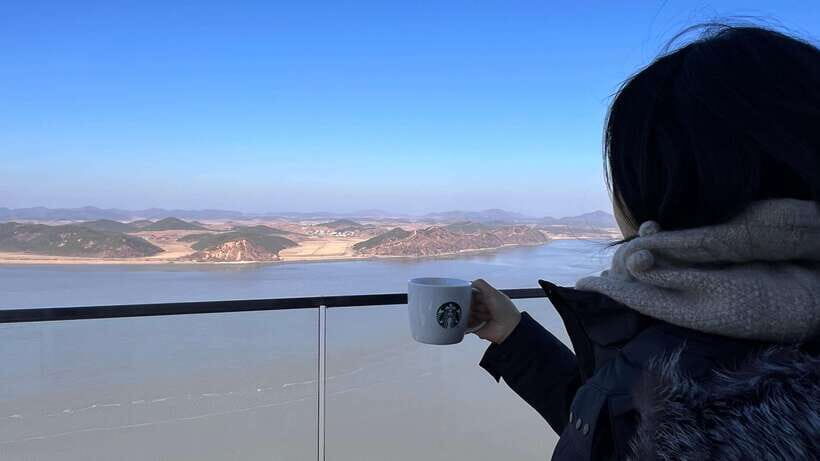
The Starbucks matters here because it’s not just a coffee stop. The café sits on the top floor of the Aegibong Peace Park complex, so you’re not hunting for a good angle while your hands are full. You’re already positioned for a wide, front-facing look at the Jogang River and onward toward North Korea.
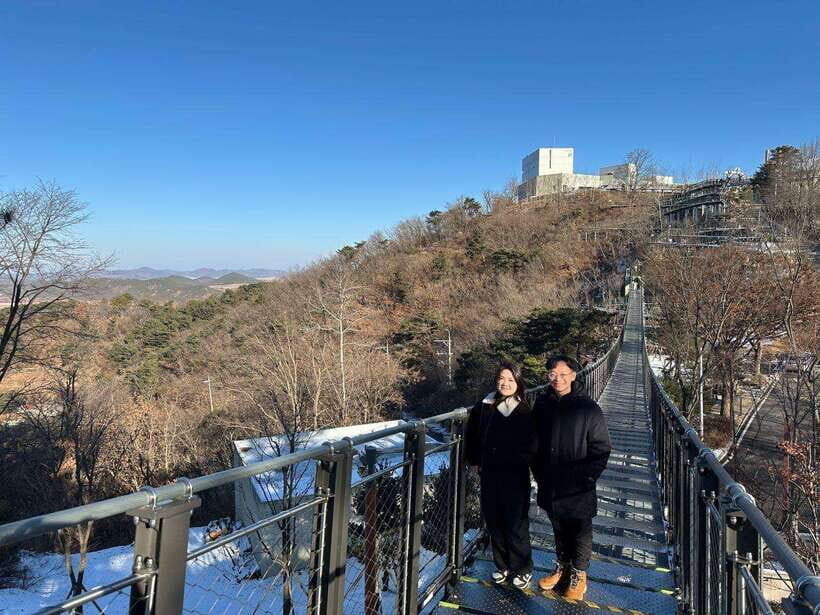
And then, right next to the cultural and historical spaces, you get a 112-meter suspension bridge connecting the Themed Gardens to the Sky Forest Garden. It’s an actual physical contrast: calm exhibits indoors, then a quick hit of motion and open air.
You can also read our reviews of more tours and experiences in Seoul.
Aegibong Peace Eco Park: Hill 154, old legends, and a 112-meter walk
Aegibong Peace Park isn’t generic “views only.” It carries layered context tied to place and history. The hill’s original name was Ssukgatmeori Mountain, reportedly because of a daisy-crown-like resemblance. The site also holds a heartwrenching myth about the Governor of Pyeongan Province and Aegi during the Qing invasion of Joseon—passed down for generations. On top of that, it has strategic military significance, with fierce fighting during the Korean War.
If you care about more than scenery, this is where the tour earns its keep. The park doesn’t feel like a theme park. It feels like a carefully staged way to point your eyes toward what matters.
Then you move outside to the bridge. The 112-meter span links two garden areas—Themed Gardens to Sky Forest Garden—and the experience is described as exhilaration in peaceful surroundings. That’s a useful mindset for your visit. You’re not meant to rush; you’re meant to walk, look, and reset your brain before you reach the observatory areas.
Practical note: bridges and observatories can be windy and exposed. Bring a light layer even in mild seasons, and wear shoes with grip.
Exhibition Hall windows: where the Jogang River story starts

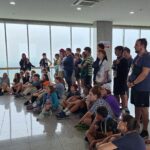
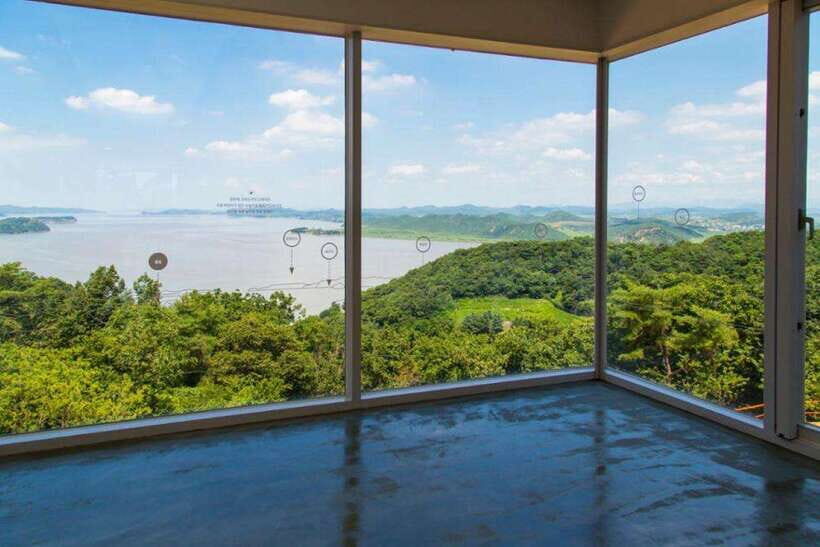
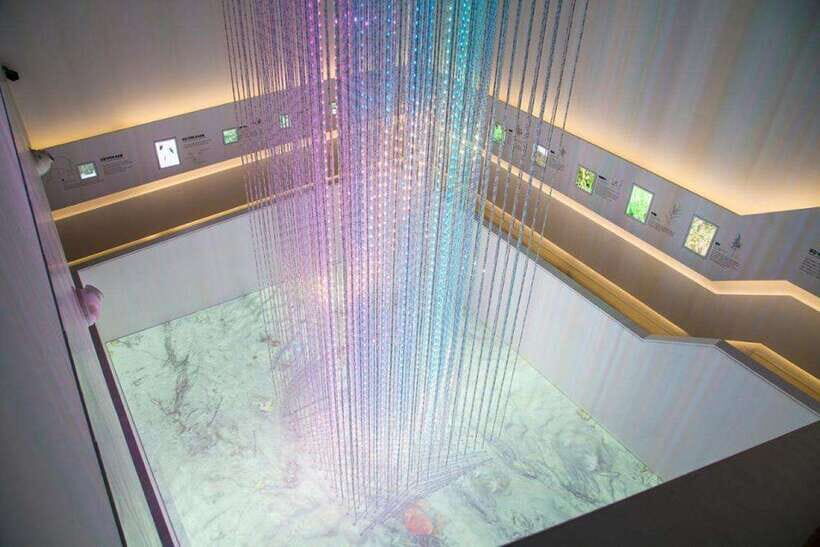
Before you aim your camera toward the horizon, you get the setup in the Exhibition Hall. It’s located on the second floor, and the large front windows frame the Jogang River area for viewing.
There’s also video content related to the Jogang River inside the hall. That matters because the Jogang River is the true “stage” for the border view. Without the explanation, you can easily treat the view as just another photo moment. With the explanation, the river becomes a story of displacement, ecology, and what changed after the Korean War.
Here’s what you should keep in mind when you stand at those windows: the Jogang River is downstream of the Hangang River system. It sits downstream where the Imjingang, Hangang, and Yeseonggang rivers meet and flow into the West Sea. The name Jogang is often interpreted as a “large river” or “grandfather river,” because it once felt as vast as the ocean.
Before the Korean War, this area included a sizeable village—around 100 households. After the 1953 ceasefire agreement designated the region as Neutral Waters at the Hangang River Estuary, those residents lost their homes and scattered. Over the decades, the basin stopped being visited in the same way, and it became a refuge for a diverse ecosystem, including endangered and protected species.
That’s the kind of context that turns your viewpoint from “border sightseeing” into something harder to forget.
Jogang Observatory and the Gaepung-gun view: what you’re really seeing
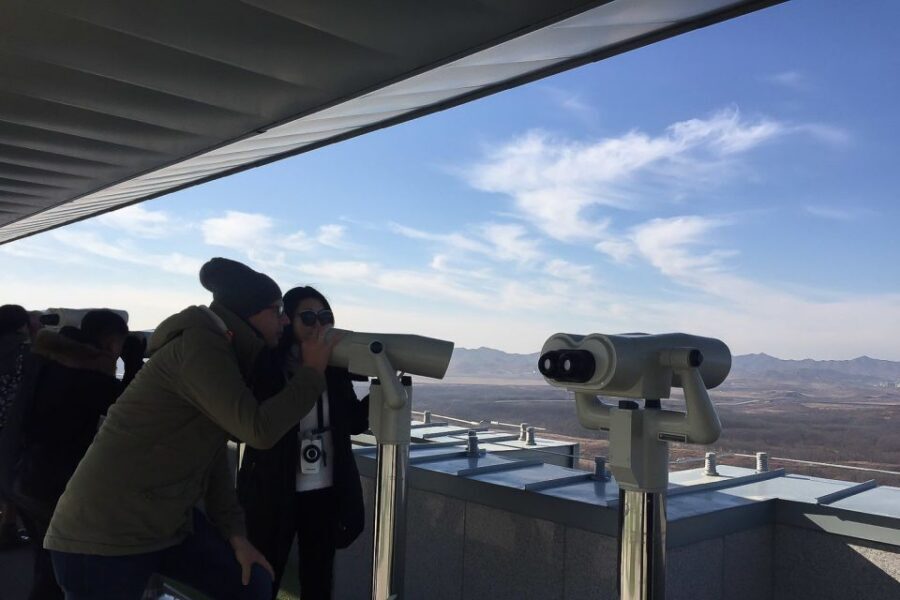
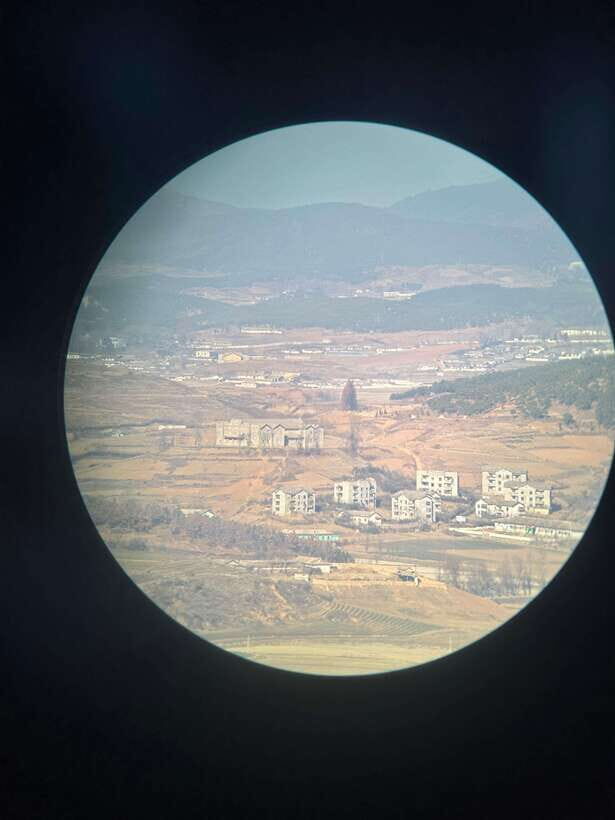
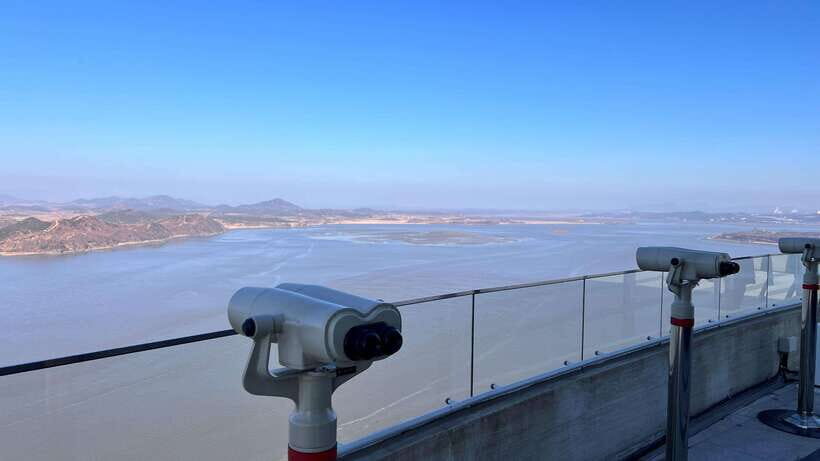
The highlight for many people is the outdoor Jogang Observatory. It’s described as the closest observatory for viewing the heartrending beauty of Gaepung-gun in North Korea from a distance of just 1.4 kilometers.
In plain terms: the distance is short enough that the experience doesn’t feel abstract. It also means your focus is sharper. You’re not just staring at a vague line. You’re looking at a specific place and a specific direction, under guidance that helps you interpret what you’re seeing.
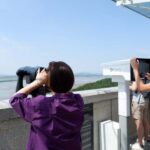
Telescopes are available, which is a big deal for comfort and clarity. You don’t need to rely purely on eyesight. Even if you don’t use the telescope, the presence of them usually keeps the visit grounded: you’ll know where to stand and what to look for.
If the sky is cloudy or foggy, the view may be softer. Still, it’s often described as worth it even in less-than-ideal weather. For your planning, that means you should treat good visibility as a bonus, not the only goal.
A Starbucks stop that actually serves the view (not the other way around)
The Starbucks at Aegibong Peace Park is located on the top floor, and it’s positioned so you can enjoy a panoramic look toward the Jogang River and North Korea.
This is the kind of detail that makes the whole tour feel more “thought through.” You’re not doing a sprint between checkpoints. You can slow down with coffee while the setting does the work.
Also, this is where the photo opportunity becomes useful. A wide view from inside helps you avoid squinting against wind or bright glare. It’s also a nice reset after the walking segments—especially if you’ve got parents, kids, or anyone with limited patience for outdoors.
Just remember the food-and-drinks limitation. The coffee is part of the experience, but the tour price doesn’t include your order. Plan on buying something if you want the full Starbucks angle.

Seoul-to-Gimpo timing: a 5-hour trip that fits real schedules
This is a short day trip by DMZ standards. It runs about 5 hours, with round-trip transportation from Seoul and a live English guide. Pickup points can vary by option, but examples include Myeong-dong, Hongik Univ. Station Exit 3, and The Plaza, Autograph Collection.
You’ll also end at Hongik University Station Exit 4, so you’re not stranded far from Seoul transit.
What this duration buys you is flexibility. You can do it without wrecking your whole day. It’s a strong pick when you want North Korea context and a DMZ-adjacent view, but you don’t want to commit to an all-day tour.
In terms of comfort, transport is highly praised—many people rate the vehicle experience very well. Expect a smooth ride, and if you’re sensitive to long bus trips, this shorter timeline helps.
Guides: English explanations that keep the mood respectful and clear
The tour’s strongest asset is the human one: a live English-speaking guide. Names you may encounter include Eva, Hana, Crystal, Gogo, Alex, Lina, and Yuna, among others.
What’s consistent in the guide experiences is the way they explain history without turning it into a lecture wall. People highlight engaging delivery, clear English, and the ability to answer questions. Some guides also share practical advice beyond history, like where to eat afterward or what to do next in Korea.
If your main goal is understanding the Korean War and the current situation, this is a meaningful structure. The view is intense, but the explanations help you interpret it responsibly. The guide essentially turns the scenery into lessons you can carry home.
Price value check: $45 for access, context, and transport
At $45 per person, you’re paying for more than admission. The price includes round-trip transportation, a tour guide, and all entrance fees.
That’s the value equation. A North Korea-view day trip is rarely cheap once you add vehicle time, guides, and entry costs. Here, the package reduces your coordination stress. You don’t have to navigate transit to the park, handle multiple tickets, or find a guide who can explain what you’re seeing.
What you still control is spending at cafés and for meals. Food and drinks are not included, so any Starbucks order is extra. If you’re strict with budget, you can still enjoy the views and bring your own snacks—just note that the provided info only says food and drinks aren’t included, not that you can bring everything on-site.
For most people, the price feels fair because it’s a focused 5-hour experience with real context rather than a long, wander-and-hope outing.
Practical tips that matter before you go
- Bring your passport. It’s explicitly required, so don’t assume you can travel with just a phone or ID.
- Dress for outdoor contrast: indoor exhibition space and outdoor observatory viewing can feel very different in temperature and wind.
- If you wear contacts or want photos, bring something for haze/glare. Cloudy days can still be worth it, but clarity improves with preparation.
- Plan to buy coffee or a snack if you want the Starbucks part to feel complete. Food and drinks aren’t included.
Should you book the Aegibong Starbucks Observatory & DMZ View?
Book it if you want a shorter, more efficient way to get a North Korea-facing view from South Korea, with explanations you can actually use. This works especially well if you’ve got limited time in Seoul, you want a guided history lesson tied directly to what you’re looking at, and you like the idea of mixing calm indoor context with outdoor viewpoints.
Skip it—or consider other DMZ options—if you’re mainly chasing the lowest stress day with no extra spending beyond the ticket. Because food and drinks aren’t included, you should expect additional costs if you plan to order at Starbucks.
Bottom line: this is one of the most “doable” ways to experience the DMZ area’s emotional weight—coffee in hand, eyes on the river, and a guide translating what you’re seeing into something that makes sense.
FAQ
How long is the tour from Seoul to Aegibong?
The duration is 5 hours.
What is included in the price?
The tour includes round-trip transportation, an English live tour guide, and all entrance fees.
Do I need to bring a passport?
Yes, you need a passport.
Is food or drinks included?
No. Food and drinks are not included.
Is there an observatory and is there a view of North Korea?
Yes. There’s a Jogang Observatory and you can enjoy views toward North Korea from the Aegibong Peace Park area, including from large windows and the outdoor observatory.
Where does the tour start and end?
Pickup depends on the option you choose. The trip finishes at Hongik University Station Exit 4.