REVIEW · SEOUL
Closest Observatory to DMZ & Suspension Bridge Tour from Seoul
Book on Viator →Operated by I Love Seoul Tour · Bookable on Viator
A short ride can feel like a front-row seat to Korea. This tour pairs Aegibong Peace Eco Park (Hill 154’s story, plus the observatory-area Starbucks) with Jogang Observatory in the civilian control zone, where you can look toward North Korea from just 1.4 km away. Two things I really like: the peace-and-history setting is meaningful, and the observatory viewpoint gives you a rare sense of scale. One drawback to plan around: you must bring your passport, and the experience depends on good weather.
I also appreciate that it’s timed for a half-day (about 4 hours 45 minutes) and capped at up to 120 people, so it doesn’t feel like a cattle-car sprint. The meeting point is central—Myeong-dong—and the tour ends back near Myeongdong Station. Still, there’s no hotel pickup, so you’ll need to get yourself to the start point.
In This Review
- Key highlights you shouldn’t skip
- Aegibong and Jogang: why this is the DMZ-area tour people talk about
- Price and value: what $48 really buys you
- Aegibong Peace Eco Park: Hill 154 turned into a memory garden
- Jogang Observatory: seeing North Korea from 1.4 km away
- Timing and logistics from Myeong-dong (where your day either flows or bumps)
- The paperwork checklist: passports and physical requirements
- Guide impact: explanations that connect the park to the border
- What to do if you’re also planning a DMZ day
- Who this tour fits best (and who may feel it’s too narrow)
- Should you book this closest observatory tour?
- FAQ
- Do I need my passport for this tour?
- How long is the tour?
- What does the $48 price include?
- Is coffee at the Starbucks included?
- Where do I meet, and where does the tour end?
- Is hotel pickup available?
- What happens if the weather is bad?
Key highlights you shouldn’t skip
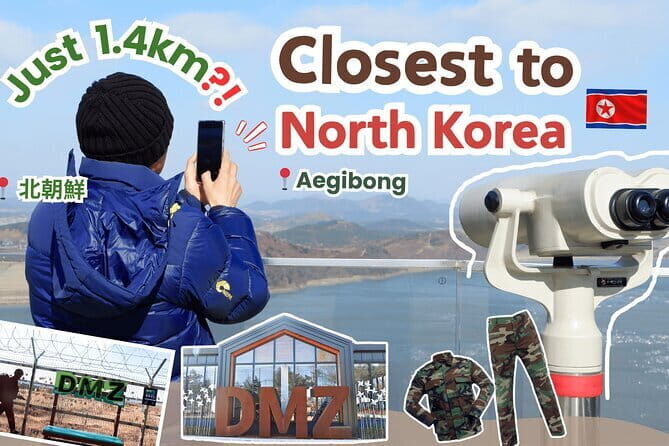
- Closest observatory-area view from Seoul, with North Korea visible from 1.4 km
- Aegibong Peace Eco Park story tied to Hill 154 and post-war displaced families
- That Starbucks at the observatory area, right on-theme (just note coffee isn’t included)
- Civilian Control Zone experience at Jogang Observatory, renewed under that name
- Christmas tree history, including why it changed and the tree-shaped bridge design
- Small practical details: mobile ticket, passport check, and a tour guide option
Aegibong and Jogang: why this is the DMZ-area tour people talk about
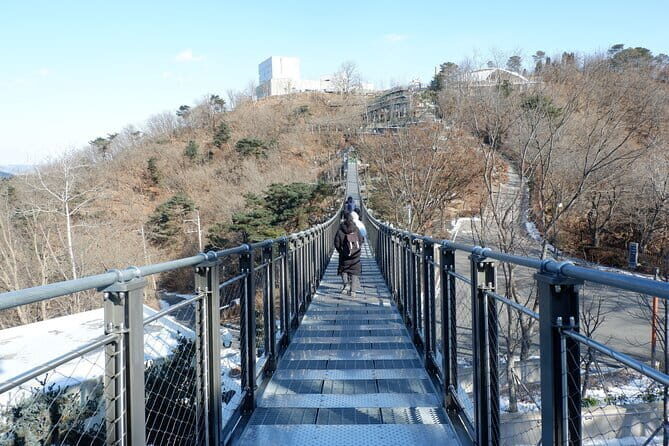
If you want DMZ-area context without jumping through the biggest hoops, this is one of the most efficient options from Seoul. You’re not doing a full JSA-style visit. Instead, you’re going to two specific stops linked to the Korean War’s geography and today’s uneasy reality—then you’re given a viewpoint that makes the distance feel real.
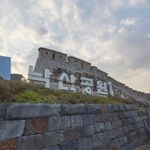
At Aegibong, the setting is peace-focused, but it comes from a wartime place. Aegibong used to be Hill 154, where the two Koreas fought fiercely. This hill sits near the mouth of the Hangang River along with the Jogang River. When you stand there, you’re not just seeing a park. You’re standing on a site designed to remember.
Then you move to Jogang Observatory, the named renewal of an older observatory established in 1978 (later demolished). The idea is simple: you get the closest observatory perspective in this area, and you can see toward North Korea from 1.4 km away.
You can also read our reviews of more tours and experiences in Seoul.
Price and value: what $48 really buys you
At $48 per person, the value isn’t just the “DMZ angle.” It’s the combo of (1) timed transport, (2) included admission ticket for the eco park, and (3) the fact you’ll be in the right area with the correct paperwork.
A lot of tours advertise dramatic locations. This one is more practical than flashy. You’re paying for access to a specific observatory setup and a carefully themed park stop, not for a long, unpredictable day. Also, the tour uses a mobile ticket, which tends to make check-in smoother.
Two small details that matter for value:
- Passports are mandatory, so you’re not paying for a plan that will collapse on day-of documents.
- There’s a minimum of 2 participants to run the tour. That keeps things organized, but it also means you might be rescheduled if the group doesn’t meet that minimum.
Aegibong Peace Eco Park: Hill 154 turned into a memory garden
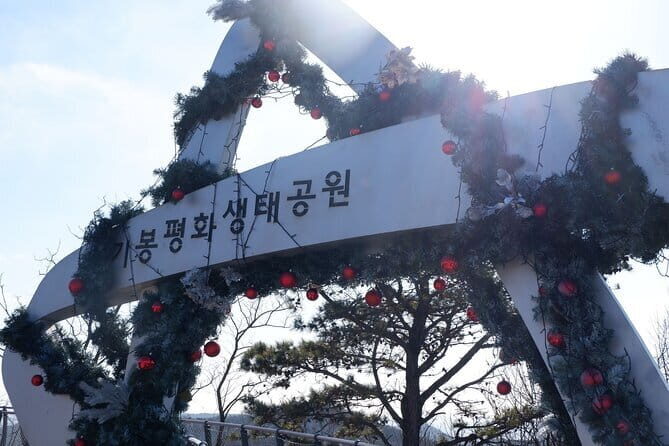
Aegibong Peace Eco Park is one of those places where the visuals are calm, but the story isn’t. The park’s identity comes from its past as Hill 154. After the war, displaced people often came here to see their hometowns again. That detail is important, because it shifts the emotional tone from sightseeing to remembrance.
There’s also a clever continuity built into the site. The old observatory was established back in 1978, but it was demolished and later renewed under the name Jogang Observatory. In other words, the area keeps reusing its role—first as a watch-point, then as a peace-oriented space with a modern viewpoint.
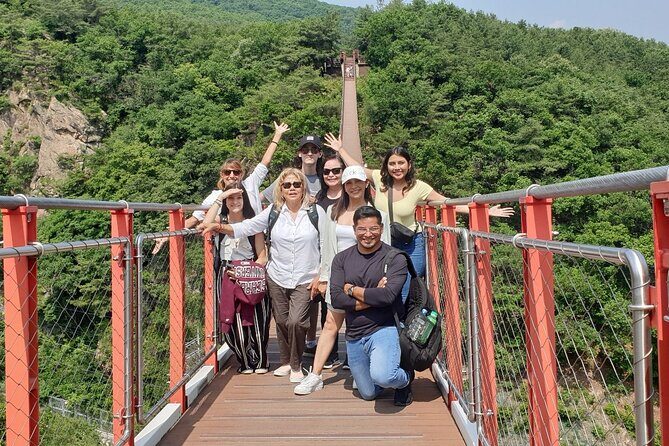
One of the most interesting things you’ll encounter is the park’s Christmas history. Aegibong used to be known for a huge Christmas tree. The lights were removed after they were judged too bright toward North Korea and caused conflict because North Korea had limited electricity capacity. After that, the workers built bridges in the shape of the Christmas tree instead.
That change says a lot about how even decorations get weighed against real-world conditions. You’re seeing a place where decisions are shaped by power, technology, and tension—not just aesthetics.
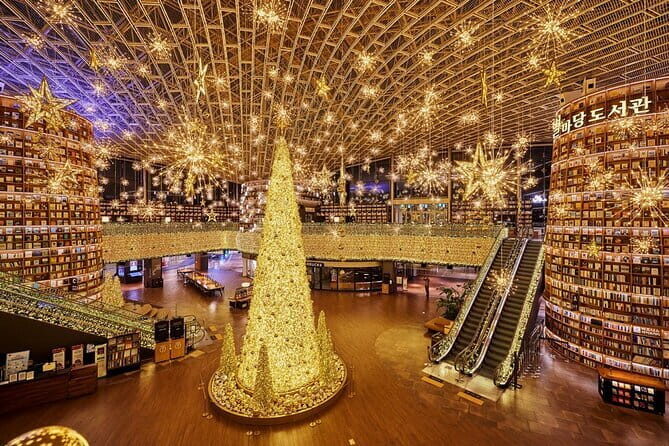
And yes, the park connects to the observatory area’s famous Starbucks. The fact that the cafe sits there is part of the modern cultural layer of the site. Just be practical: coffee isn’t included, so expect to pay if you want a drink.
Jogang Observatory: seeing North Korea from 1.4 km away

Jogang Observatory is the headline stop. The tour describes it as the observatory closest to the DMZ/Suspension Bridge area, with a direct view toward North Korea from about 1.4 km. That distance is close enough to change how you process the border line. It stops being abstract.
What you’ll take in there is mostly about perspective. You’re not promised a cinematic movie shot; you’re getting a real geographic relationship—south to north, and the thinness of what your eyes can cover versus what politics can’t.
It also helps that the observatory is described as renewed by that name, replacing the older structure established in 1978. That gives the spot a clearer identity than a random viewpoint. You’re looking out from a place with an official, ongoing function.
If you care about understanding the ongoing division, this is the kind of stop that makes the explanation portion click. The setting practically forces the conversation into scale: how close people are, how far they are kept apart, and why observatories exist in the first place.
Timing and logistics from Myeong-dong (where your day either flows or bumps)
This is a half-day experience at about 4 hours 45 minutes. The Aegibong stop runs about 1 hour 30 minutes. The rest of the time is the drive and the observatory portion (plus the usual group management that comes with border-adjacent areas).
The tour starts in Myeong-dong, Jung District, and ends at Myeong-dong Station. There’s no hotel pickup or drop-off, so you’ll want to plan an easy route to the meeting point and back afterward.
Group size is set by the operator at a maximum of 120 travelers. In practice, that usually means you’ll have a mix of guided moments and time where you’re looking around in a larger group. It also means listening carefully during explanations pays off—you’re likely to have less freedom to ask lots of detailed questions in the moment.
One more practical note: the tour requires mobile tickets, and confirmation is received at booking time. If you’re the type who likes a plan with fewer moving parts, this setup should feel straightforward.



The paperwork checklist: passports and physical requirements
Here’s the big non-negotiable: passports are mandatory. Bring your physical passport. Don’t rely on a phone photo.
The tour also notes moderate physical fitness is needed. That doesn’t mean it’s a hard hike, but border-area sites often involve walking in crowds, moving between viewpoints, and dealing with weather. Wear shoes that won’t punish you after a few hours.
Also, keep in mind that the experience requires good weather. If weather is poor, you’ll be offered a different date or a full refund. That’s not a vague promise. It’s a real operational factor for observatory viewing.
Guide impact: explanations that connect the park to the border
One of the most praised parts of this tour is the guide. People consistently highlight how guides explain the South–North conflict in a clear, engaging way, and how they connect history to what you’re seeing in front of you.
In particular, guides with names like Sunny, Thomas, and Shin come up in strong reviews for being friendly and organized. The consistent theme is communication—making sure you understand what you’re looking at and why it matters.
Even if you’ve read about the DMZ before, I’d still treat the guide as part of the main attraction. Aegibong’s Hill 154 story and the observatory’s 1.4 km perspective become much more meaningful when you know what each view is meant to represent today.
If you select an option with a professional tour guide, you’ll likely get that stronger narrative thread. In other words: you won’t just stand somewhere and stare. You’ll understand what you’re staring at.
What to do if you’re also planning a DMZ day
Since you’re looking at a “closest observatory” experience, you may also be comparing it to bigger DMZ tours. Here’s how to think about it:
- Choose this when you want a tight half-day and a clear observatory viewpoint.
- Choose a bigger, more controlled program when you want a broader itinerary—but be ready for more constraints and longer time.
This one is especially appealing if you want a meaningful mix: park reflection at Aegibong, then a direct look from Jogang Observatory. It gives you both the emotional context and the geographic reality.
Also, if you care about having a cafe moment for the photo without breaking the theme, the Starbucks at the observatory area is a real part of the experience. Just remember: coffee isn’t included, and the drink is optional.
Who this tour fits best (and who may feel it’s too narrow)
This tour is a strong match if you:
- Want the closest observatory perspective you can book from Seoul without committing to a full-day mission
- Appreciate places where the theme is peace and remembrance, not just military viewing
- Like history explained in a way you can connect to what you’re seeing
It may feel narrow if you:
- Want lots of stops and long wandering time
- Hate weather-dependent plans (since the experience can be changed or refunded)
- Expect hotel pickup (you’ll need to handle getting to Myeong-dong yourself)
Should you book this closest observatory tour?
If your goal is to see a close DMZ-area view from Seoul and you’re willing to bring your passport and work with the weather, I’d say this is a good booking. The value is solid: you’re paying for transport, timed access to Aegibong, a core observatory stop, and a guide experience that helps you make sense of the setting.
Book it if you want that rare feeling of scale—Aegibong’s Hill 154 story on one side, Jogang’s 1.4 km view toward North Korea on the other. Skip it if you’re trying to avoid any weather uncertainty or if you strongly prefer tours with hotel pickup and many extra stops.
FAQ
Do I need my passport for this tour?
Yes. Passports are mandatory for the experience.
How long is the tour?
It runs about 4 hours 45 minutes, with the Aegibong Peace Eco Park stop listed as 1 hour 30 minutes.
What does the $48 price include?
The tour includes an air-conditioned vehicle, a ticket for Aegibong Peace Eco Park, and passport requirements. A professional guide is included if you select that option.
Is coffee at the Starbucks included?
No. Coffee and tea at the Starbucks are not included.
Where do I meet, and where does the tour end?
The tour starts in Myeong-dong, Jung District, Seoul, and ends at Myeong-dong Station.
Is hotel pickup available?
No. Hotel pick-up and drop-off are not included.
What happens if the weather is bad?
The experience requires good weather. If it’s canceled due to poor weather, you’ll be offered a different date or a full refund.