REVIEW · SEOUL
Small Group DMZ Tour from Seoul Korea with North Korean Defector
Book on Viator →Operated by Sunny Seoul Korea Tour · Bookable on Viator
A DMZ tour that actually talks back. This is a small-group day built around real North-South context, using a North Korean perspective and guided stops like the 3rd Infiltration Tunnel and Dora Observatory. It’s long, it’s early, and it’s the kind of trip where questions matter.
I like two things a lot: first, the pace feels calmer than the big-bus style, so you get time to ask your guide stuff; second, the history framing comes through a former North Korean elite perspective (and an optional North Korean defector meeting), which changes how you interpret what you see. One possible drawback to plan for: if you pick the defector option, language and coordination can affect how smoothly the experience works day-of, and not every guest has reported the same level of organization.
In This Review
- Key highlights
- A 6:40 am DMZ day: why the early start matters
- Small-group pace with a North-South perspective
- Stop 1: Imjingak Pyeonghwa Nuri Park for first context
- North Korea Experience Hall: seeing division as daily reality
- DMZ stop: the Military Demarcation Line and what it means
- The Third Tunnel: a hidden passage with a purpose
- Dora Observatory: the view to North Korea, with rare glimpse expectations
- Bridges and the adrenaline option: Red Suspension Bridge and Gamaksan
- What you gain from admissions included and a licensed guide
- Price and value: is $65 a good deal for the DMZ?
- How to get the most from this tour (without burning out)
- Should you book this DMZ tour with defector meeting?
- FAQ
- FAQ
- How long is the DMZ tour from Seoul?
- What time does the tour start?
- Do they pick you up from Seoul hotels?
- How many people are in the group?
- Is lunch included?
- Do I need a passport?
- What’s included in the price?
- Is meeting a North Korean defector included?
- Are the bridges included?
- What sites are part of the itinerary?
- What is the cancellation policy?
Key highlights
- 6:40 am departure from Seoul keeps you ahead of crowds and gives you enough time for all the major DMZ sites
- Former North Korean insider perspective plus optional defector meeting adds context beyond photos
- Admissions included for each major stop, so the day stays simple and predictable
- 3rd Tunnel and Dora Observatory are the two history-heavy anchors of the itinerary
- Optional bridges (Red Suspension Bridge and Gamaksan Suspension Bridge) let you add a fun physical break
- Max 45 travelers helps keep the group feel more manageable than you might expect
A 6:40 am DMZ day: why the early start matters
This tour starts at 6:40 am, and that’s not just an inconvenience—it’s part of how you get the whole schedule to work smoothly. You’re covering several separate sites, including at least one major “must-see” stop in the DMZ area, and the day is listed as about 7 to 8 hours total.
You also get pickup offered, plus air-conditioned transportation. In practical terms, that means you’re not hopping from train to train before you’ve even had coffee. If you’re sensitive to heat or cold, being in a vehicle with climate control helps you arrive with your energy intact.
One more thing: the tour asks for moderate physical fitness. That doesn’t mean you need to be a marathoner. It does mean you should be comfortable with walking, standing, and moving between stops on a long day.
You can also read our reviews of more tours and experiences in Seoul.

Small-group pace with a North-South perspective
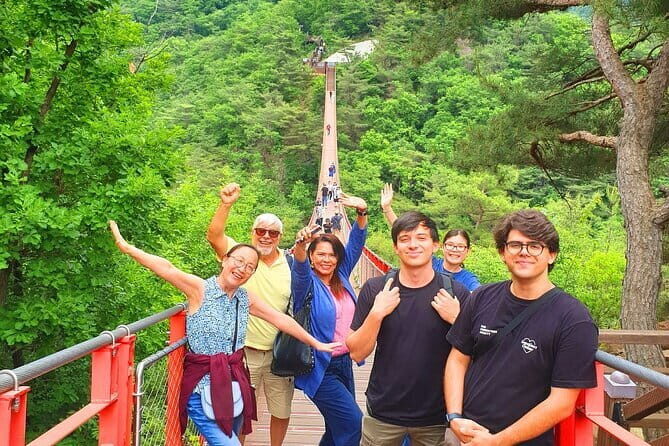
What makes this experience different from a basic DMZ checklist is how it’s framed. The tour is built around North-South history told through a former North Korean elite guide perspective, and there’s also an option to meet a North Korean defector.
That matters because the DMZ is not just a place to look at. It’s a place that forces interpretation. When someone with firsthand perspective explains how people understood the situation on their side, the stops become more meaningful than static exhibits.
Now, the catch: translation can be a limiting factor. One positive review specifically noted that the defector’s English wasn’t fluent, but the translator did a good job. Still, if communication is important to you, treat the defector option as something that may be more reliant on translation than on direct conversation.
Also keep in mind that this tour uses a licensed English-speaking professional guide, and photo opportunities are included. In a setting like the DMZ, good guidance is what turns a long day into something you’ll actually remember.
Stop 1: Imjingak Pyeonghwa Nuri Park for first context
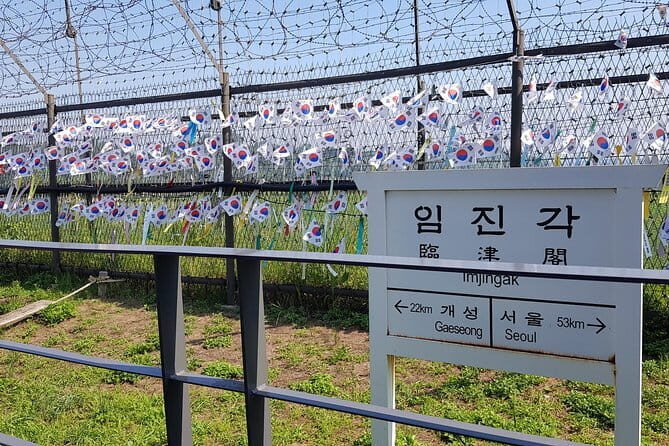
The first stop is Imjingak Pyeonghwa Nuri Park, and it’s scheduled for about 1 hour with admission included. This is a cultural and historical site in Paju, aimed at helping visitors understand the human side of division—especially the long shadow it has cast over families and communities.
For me, the value of placing this stop first is simple: it gives you emotional context before you start moving into the more intense, hard-information sites. It’s also a good place to get your bearings in Korean history terms, so later stops don’t feel like disconnected exhibits.
Practical note: you’ll likely have some time for photos here. Use it. The earlier the day goes, the easier it is to stand, look, and absorb without the fatigue kicking in.
North Korea Experience Hall: seeing division as daily reality
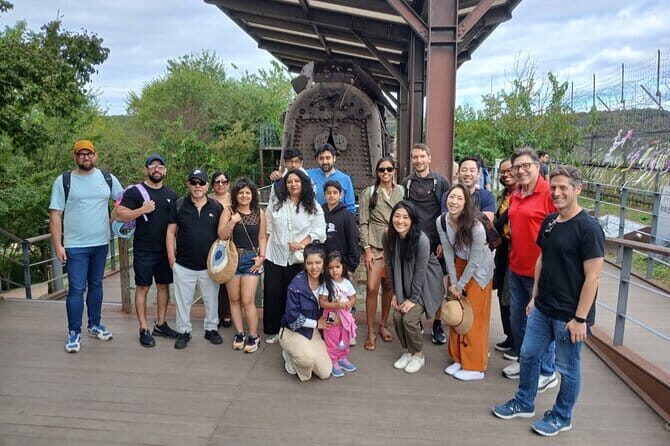
Next up is the North Korea Experience Hall, again set for about 1 hour, with admission included. This is described as an exhibition and experiential space designed to help visitors understand the reality of Korea’s division and daily life in North Korea.
What I like about this stop is that it’s not limited to politics and borders. The theme is daily reality—how division shows up in ordinary routines and life expectations. It sets you up to understand why the later DMZ sites feel so charged: you’re not just seeing strategic points, you’re seeing consequences.
The drawback you should plan for is time. One hour can be enough to see the highlights, but not enough to read everything slowly. If you’re a thorough museum reader, use your hour strategically—scan first, then return to what grabs you most.
DMZ stop: the Military Demarcation Line and what it means
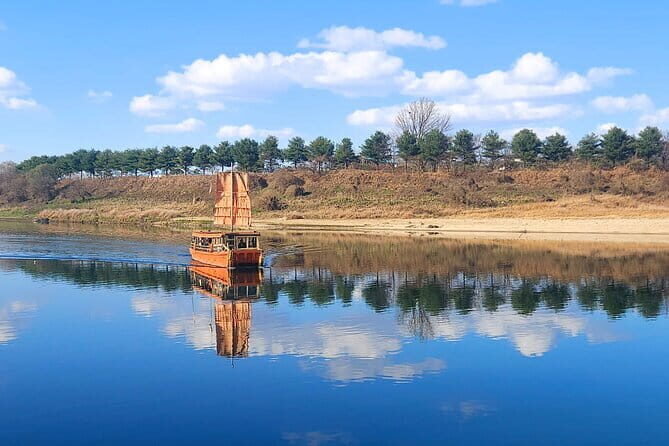
The itinerary includes a DMZ stop (about 1 hour), with admission included. This section is framed around the truce talks that began after the Korean War in 1951, leading to the Military Demarcation Line (MDL)—the boundary that became the core symbol of the division.
Even though the time block here is not huge, the tour’s structure matters. You go from parks and exhibits into the DMZ itself, so the MDL isn’t just a map fact. It becomes the physical line that embodies the story you heard earlier.
What to consider: your time at each site is fixed. That means you should prioritize listening and asking questions over trying to squeeze in every possible photo angle. If you’re the type who always wants one perfect shot, set that intention early—then don’t get stuck chasing it when the group moves.



The Third Tunnel: a hidden passage with a purpose
The tour then goes to the Third Tunnel, scheduled for about 1 hour with admission included. This is one of the most direct “how and why” stops on the itinerary.
The tunnel is described as an infiltration passageway dug by North Korea with the intention of launching a surprise attack on South Korea. It was discovered in 1978, which adds a key historical anchor: this isn’t only a Cold War concept, it’s tied to an actual discovery and what it implied.
The main value for you here is the shift from abstract history to engineering and strategy. It helps explain why people on both sides talk about threat, preparedness, and deterrence when they discuss the DMZ.
A practical consideration: a tunnel stop can be mentally draining, even if it’s physically manageable. Don’t plan to rush through it while half-distracted. Take a moment to slow down and let the guide connect the tunnel to the broader North-South confrontation story.
Dora Observatory: the view to North Korea, with rare glimpse expectations
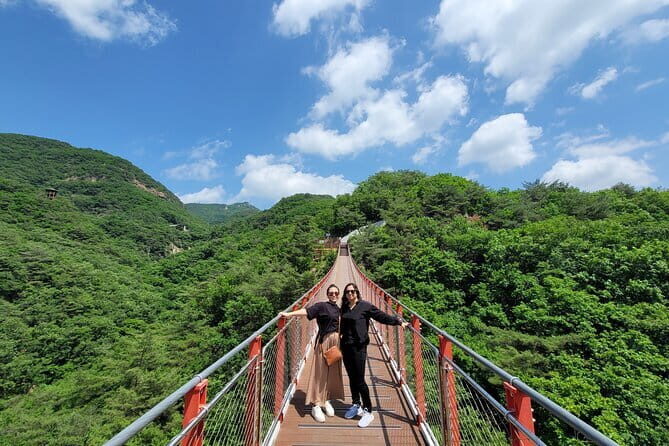
Next is Dora Observatory, allocated about 2 hours with admission included. This stop is presented as your window to North Korea, with the promise of a rare glimpse, depending on viewing conditions.
Dora Observatory is emotionally heavy because it turns “the other side” from a concept into something you’re trying to see through distance. Even when visibility is limited, the point of the stop is that it reframes your understanding of separation. You’re watching a boundary-era mindset made visible.
Use your extra time here. Two hours gives you room for the viewing period plus listening time and photos. Still, keep your expectations realistic: this kind of stop is weather-dependent and schedule-dependent. Your best move is to stay patient and follow the guide’s timing rather than trying to outguess the conditions.
Bridges and the adrenaline option: Red Suspension Bridge and Gamaksan
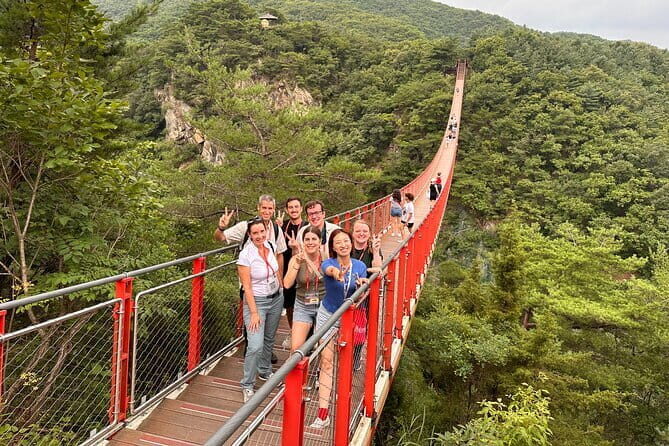
The itinerary includes two bridge experiences, and both are optional depending on what you selected.
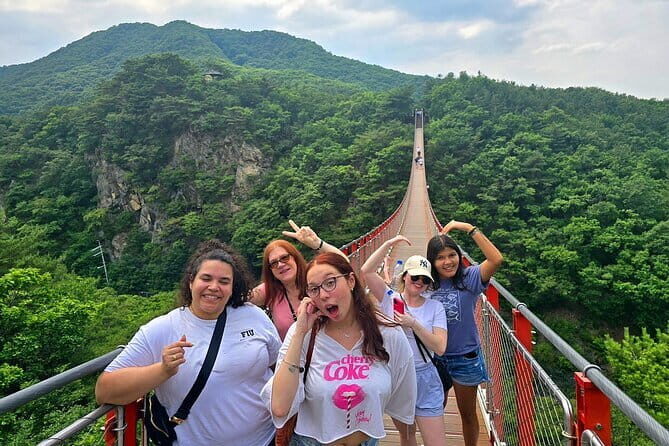
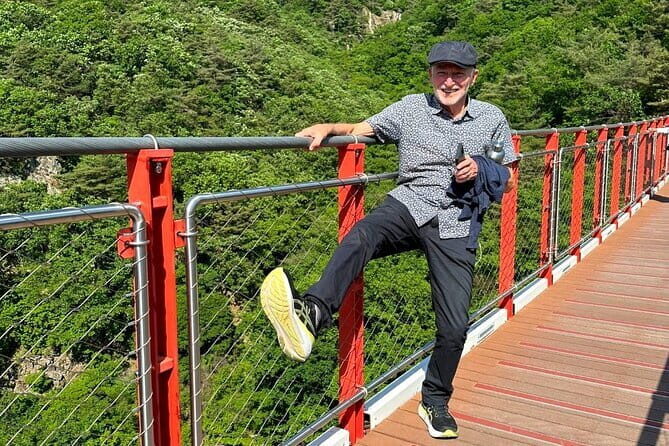
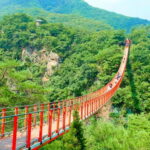
If you choose it, you’ll cross the Red Suspension Bridge—listed as a thrilling highlight with photo opportunities. Then there’s another optional stop: the Gamaksan Chulleong Bridge (Gamaksan Suspension Bridge), described as once Korea’s longest suspension bridge at 220 meters.
Here’s how to think about this section for value: bridges add a physical change of pace during a heavy history day. If you’re feeling restless after hours of exhibits and military history framing, a bridge walk gives you something different—views, movement, and a little adrenaline.
The tradeoff is time. Optional stops mean you should be clear on what you want most: maximum time for the major DMZ anchors, or the extra “break” energy of the bridges. If you’re traveling with seniors or anyone who gets tired easily, you might prefer skipping one of the bridge choices to protect the day’s remaining energy.
What you gain from admissions included and a licensed guide
This tour packages a lot into one fee: all fees and taxes plus admission tickets for the main stops. It also includes air-conditioned transportation, a licensed English-speaking guide, and photo opportunities.
That combination is a real value play. Instead of spending your morning calculating tickets and schedules, you’re buying a guided flow. And on a DMZ day, friction is your enemy. You want your brain focused on history and questions, not on logistics.
The small-group size helps too. The tour caps at 45 travelers, and the format is described as an intimate group experience. When a guide can actually manage your questions, you learn more than you would in a rushed group.
Still, pay attention to English quality and coordination expectations. One unhappy review criticized poor English and unorganized delivery, while a happier review mentioned good translator work even when the defector’s English wasn’t strong. In other words: expect translation to be part of the experience design, but also keep a watchful eye on how smoothly the day is run.
Price and value: is $65 a good deal for the DMZ?
At $65 per person, this is positioned as a value-forward DMZ tour. You’re not just paying for transport. You’re also paying for admissions at multiple stops, a licensed English-speaking guide, and the structure that keeps the day from turning into chaos.
What makes the price feel reasonable is that most of the major costs are included: admission tickets for Imjingak, the Experience Hall, the DMZ stop, the Third Tunnel, and Dora Observatory, plus transport and guide service. On a typical trip, each of these might require separate planning and payments.
What you need to bring to the table: lunch is not included, though restaurant recommendations are available upon request. Also, hotel drop-off is not included, so you should plan how you’ll get back once the tour ends.
If you want the biggest value, I’d treat this as a history-first day. The optional bridge additions and optional defector meeting can increase how personal the day feels, but the core value is the multi-stop flow built around major DMZ sites.
How to get the most from this tour (without burning out)
This is a full-day commitment starting early, so your prep determines how good it feels.
First: bring your current valid passport. This is required on the day of travel. Leave it somewhere obvious.
Second: wear comfortable shoes. You’ll be on your feet across multiple stops, including the tunnel area and possibly bridge walks. Even if none of the walking is described as extreme, the day is long.
Third: bring a light layer. You’re in air-conditioned vehicles for transport, then you’re outside at specific sites. Weather can shift fast in the morning.
Fourth: if you choose the defector option, plan to be flexible. Language may depend on translation, and that can affect the rhythm of questions. If you have specific things you want to ask, write down your top two or three before you go, so you don’t waste the best speaking moments trying to organize your thoughts on the fly.
Finally: prioritize listening over speed. When a guide provides context for why each stop exists, you’ll enjoy the day far more than if you treat it like photo scavenger hunting.
Should you book this DMZ tour with defector meeting?
Book it if you want a small-group DMZ day from Seoul with a licensed English guide, multiple major sites included, and a North Korean perspective that gives you more than just a view. The 4.9 rating and strong recommendation rate also suggest this is usually handled well.
Don’t book it blindly if you’re counting on the defector meeting to deliver a very specific type of conversation. One unhappy report raised concerns about whether the defector meeting happened as expected and criticized organization and English (with a named guide, Grace Kim). That doesn’t mean it will happen to you, but it is a reason to be clear about what you’re selecting.
If you’re comfortable with translation variability, you value guided context, and you want a structured day that doesn’t require ticket juggling, this is a solid choice.
FAQ
FAQ
How long is the DMZ tour from Seoul?
It runs about 7 to 8 hours total.
What time does the tour start?
The start time is 6:40 am.
Do they pick you up from Seoul hotels?
Pickup is offered, but hotel drop-off is not included.
How many people are in the group?
The tour has a maximum of 45 travelers.
Is lunch included?
No. Lunch is not included, but the company can provide restaurant recommendations on request.
Do I need a passport?
Yes. A current valid passport is required on the day of travel.
What’s included in the price?
Included items are an English-speaking licensed professional guide, air-conditioned transportation, all fees and taxes, photo opportunities, and admissions for the stops listed in the itinerary.
Is meeting a North Korean defector included?
Meeting a North Korean defector is included if you select the option.
Are the bridges included?
The Red Suspension Bridge is included if you select that option. Gamaksan Suspension Bridge is also listed as optional.
What sites are part of the itinerary?
Stops include Imjingak Pyeonghwa Nuri Park, North Korea Experience Hall, a DMZ stop, the Third Tunnel, and Dora Observatory. Optional bridge stops may be added depending on your selection.
What is the cancellation policy?
You can cancel for free up to 24 hours in advance for a full refund. Changes within 24 hours of the start time are not accepted, and cancellation later than that isn’t refunded.

![Andong Hahoe Village [UNESCO site] Premium Private Tour from Seoul - Andong Hahoe Folk Village: walking where the village still breathes](https://7.seoulescapes.com/wp-content/uploads/andong-hahoe-village-unesco-site-premium-private-tour-from-seoul.jpg)