REVIEW · SEOUL
Seoul: Pocheon Art Valley, Garden and Fruit Picking Day Tour
Book on GetYourGuide →Operated by KTOURSTORY · Bookable on GetYourGuide
A quarry-turned art park outside Seoul. This day trip pairs Garden of Morning Calm with seasonal fruit picking (or apple experiences) and Pocheon Art Valley’s cliff-and-lake sculptures, all wrapped with round-trip coach from Seoul. I especially like having time to actually wander instead of sprinting, and I love that the Art Valley monorail is included for real elevated views. One thing to consider: it’s a long day, and traffic or weather can shift the timing.
For most visitors, the value is in the mix: one curated garden, one farm activity that matches the season, and one scenic stop with viewpoints. Guides are also part of the package, with English and Chinese support (plus Korean), and many groups run at a calm pace. In short: it’s a good fit when you want variety, not a single-theme tour.
In This Review
- Key things to know before you go
- A full 11 hours from Seoul with a plan that balances sights and fruit
- Garden of Morning Calm: private-garden calm, seasonal festivals, and Winter Light LEDs
- Winter Light Festival note (Feb 16–Mar 15)
- Best way to enjoy Morning Calm
- Farm time in Korean seasons: strawberries first, then apples (plus pie for part of summer)
- Spring–Summer (Feb 16–Jun 14): strawberry picking
- Summer–Fall (Jun 15–Nov 30): apples, with variation by month
- If harvest is low, expect a swap
- Pocheon Art Valley: quarry-to-art sculptures over a crystalline blue lake
- The monorail makes a difference
- When Pocheon feels small
- Getting there and back: pickup points, drop-offs, and why timing matters
- Where you meet and where you end
- How to make the bus time better
- Guides, language support, and a calmer pace than many day tours
- How to use the guide well
- Price and value: what $77 really buys you
- Who should book this Pocheon day tour, and who might not love it
- Should you book this Seoul to Pocheon art, garden, and fruit day tour?
- FAQ
- How long is the Seoul to Pocheon day tour?
- What fruit experience do I get: strawberries or apples?
- Which attractions are included?
- Where can I meet the tour in Seoul?
- Where will I be dropped off after the tour?
- What languages are available with the tour guide?
- What if the harvest is low on the day I go?
- Is anything included for meals?
Key things to know before you go

- Seasonal farm choice by date: strawberries in the Feb–mid Jun window, apples later in the year
- Morning Calm changes in mid-winter: Feb 16–Mar 15 includes the Winter Light Festival and the day order may switch
- Art Valley includes a round-trip monorail for cliffside lake views
- Multiple Seoul pickup and drop-off points: Hongik Univ., Dongdaemun, and Lotte Department Store area options
- Guides run in English/Chinese/Korean, and the day is usually paced so you’re not constantly on the move
A full 11 hours from Seoul with a plan that balances sights and fruit

This is a classic Korean day trip structure: one “wow” garden, one hands-on farm moment, and one scenic art park. It lasts about 570 minutes (roughly 11 hours), so you’re trading a full day of Seoul time for a change of scenery in Gyeonggi Province.
At $77 per person, the math mostly comes down to what’s bundled. You’re paying for round-trip transportation from Seoul plus paid-entry style stops, including the Garden of Morning Calm ticket and Pocheon Art Valley ticket, along with the Art Valley monorail round-trip. Meals aren’t included, but you get a lot of structured value without needing to coordinate multiple tickets and rides yourself.
You also get a built-in variety that works well if you’re traveling with mixed interests—art lovers, couples looking for photos, and people who just want something fresh and seasonal to do.
You can also read our reviews of more tours and experiences in Seoul.

Garden of Morning Calm: private-garden calm, seasonal festivals, and Winter Light LEDs

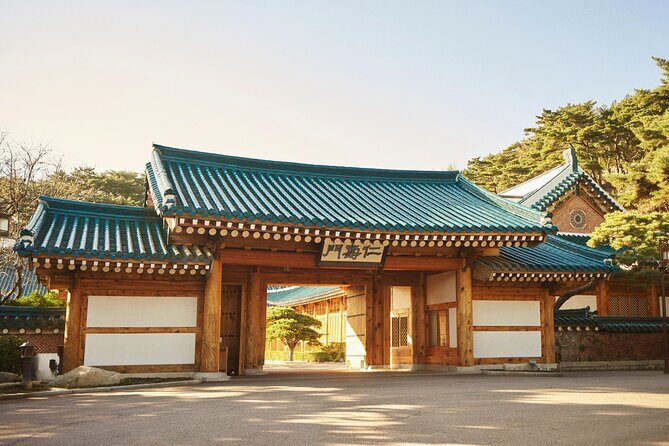
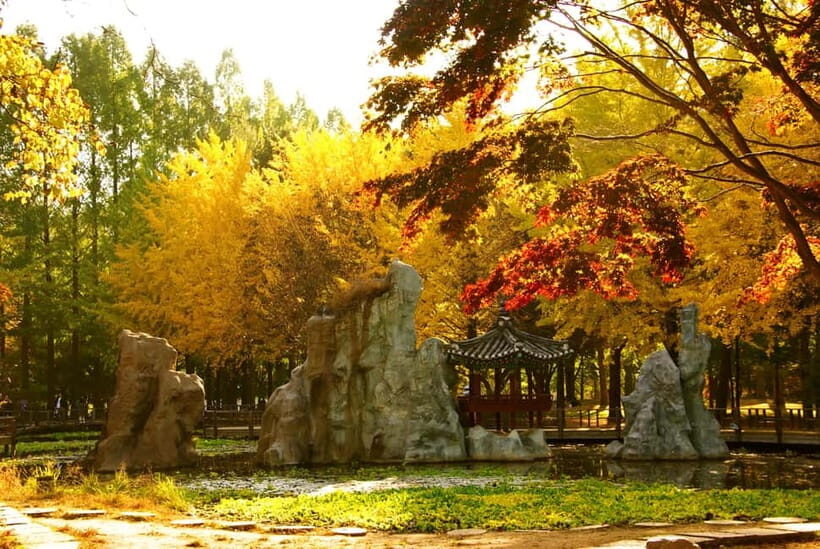
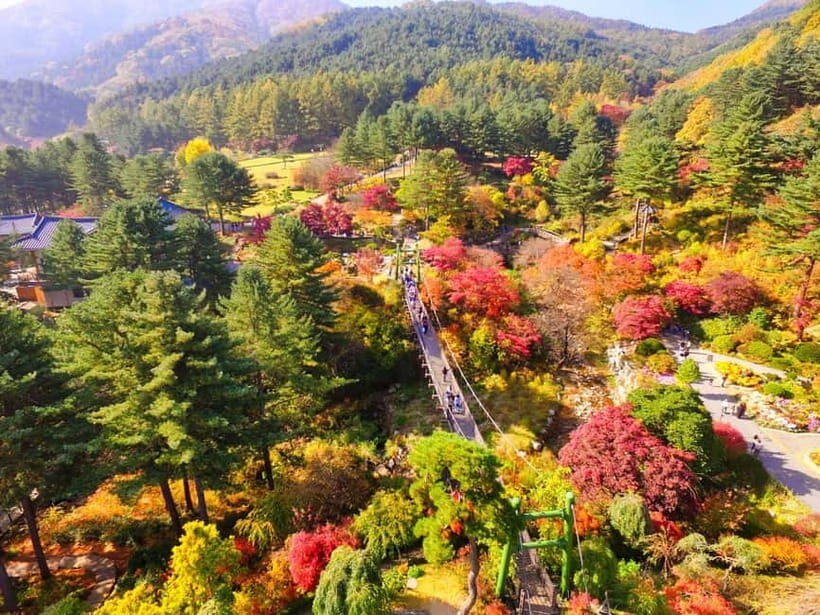
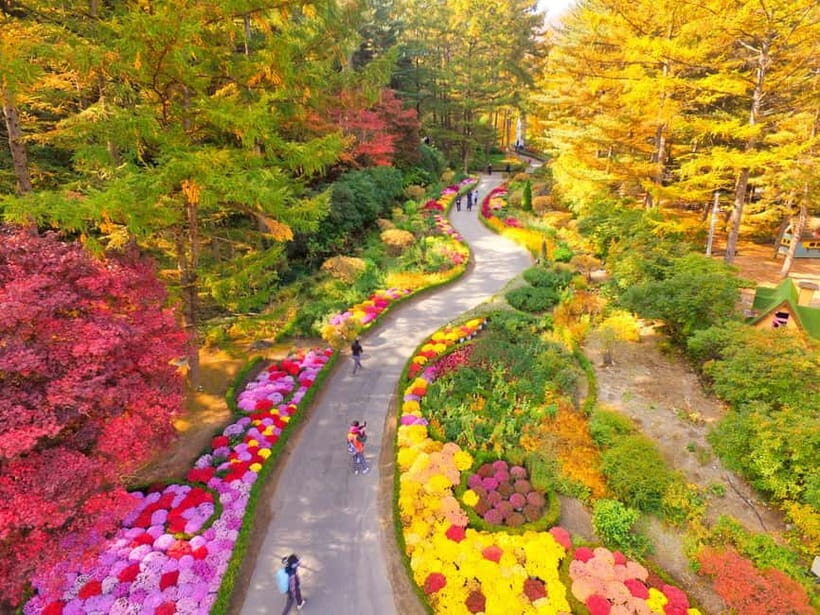
The day starts (in most seasons) at Garden of Morning Calm, one of Korea’s oldest private gardens. The big draw here is walking through themed areas and seasonal displays in a setting meant for slow strolling—families, friends, couples, and photographers all show up for a reason.
You’ll get a real window of time—about 2 hours 20 minutes—for photos, wandering, and sightseeing at your own pace. This matters. In a lot of one-day tours, garden stops become photo ops and you’re done. Here, you have enough time to actually enjoy the layout instead of just ticking boxes.
Winter Light Festival note (Feb 16–Mar 15)
Between Feb 16 and Mar 15, the garden participates in a Winter Light Festival with millions of colorful LEDs. During that period, the tour order can reverse so the light experience lands at the end of your day instead of the beginning. If you’re the kind of traveler who likes night scenes more than daytime flowers, that timing switch is a meaningful detail.
Best way to enjoy Morning Calm
Wear shoes you can walk in. It’s a garden, so you’ll be moving. Also, don’t over-pack your expectations: this is about atmosphere and seasonal design more than big-ticket museum exhibits. If you like calm places where you can slow down for photos, you’ll feel at home here.
Farm time in Korean seasons: strawberries first, then apples (plus pie for part of summer)
The second anchor of the day is the fruit farm. What you do depends on the date, and the tour is clearly built around seasonal reality.




Spring–Summer (Feb 16–Jun 14): strawberry picking
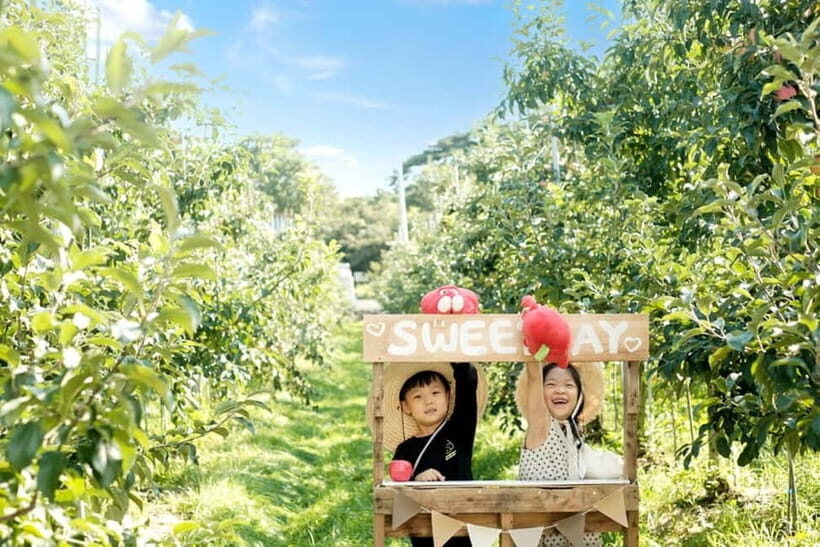
In the Spring–Summer window, your farm experience is strawberry picking. You’ll pick sweet strawberries directly from the plants, then take them home so the flavors don’t vanish by bedtime.
This is one of the most satisfying parts of the itinerary because it’s tactile. You’re not just watching a show—you’re handling the fruit, tasting, and choosing what you want. Even people who usually skip “agritourism” tend to enjoy this portion because it’s simple and hands-on.
Summer–Fall (Jun 15–Nov 30): apples, with variation by month
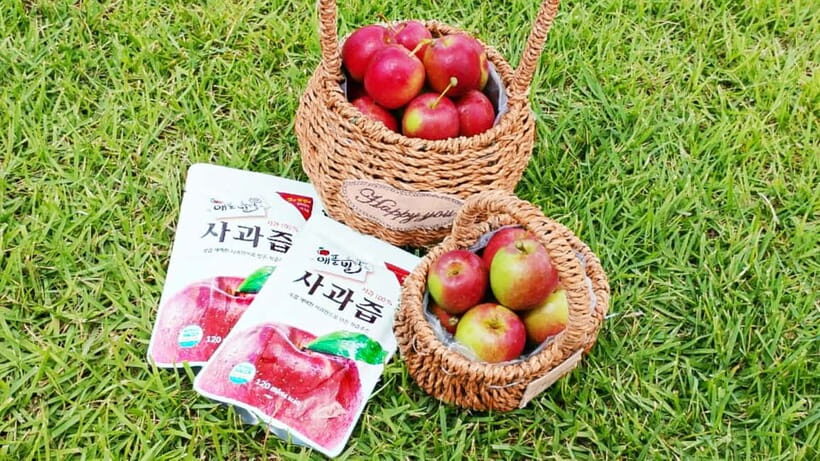
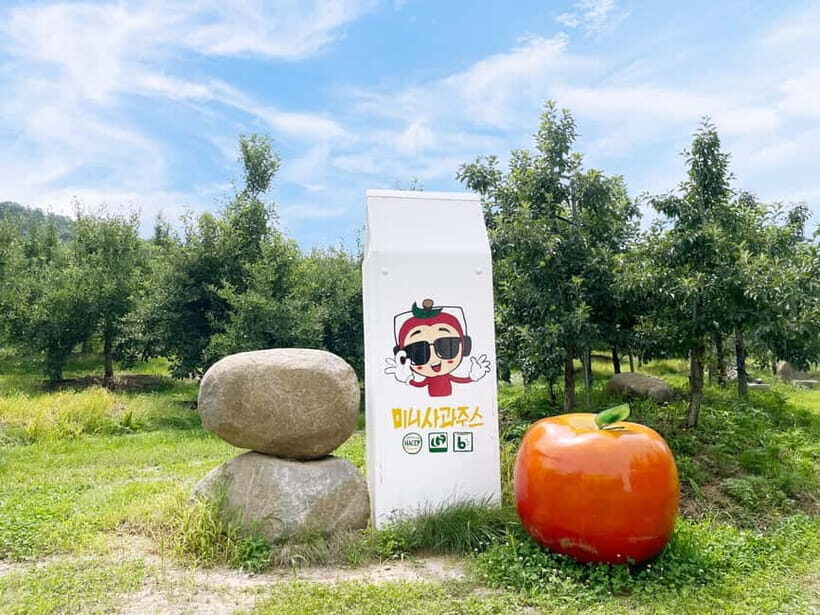
For Summer–Fall, the focus shifts to apples. The schedule includes Boss Apple Farm (사과깡패) with a guided tour and class time.
Here’s the seasonal twist you should care about:
- Jun to mid-Aug: apple pie making
- Late Aug to Nov 30: apple picking
For the apple experience, you can also expect fresh organic apple juice and bread at the farm. That’s a small detail, but it makes the visit feel like more than a quick picking stop. It’s also a nice fallback if the weather is less ideal for outdoor wandering.
If harvest is low, expect a swap
Reality check: the tour notes that if the harvest is low, the picking experience may be replaced with a different farm experience. You can’t control farming, but you can control your mindset. I’d go in expecting “fruit-focused farm time,” not a guaranteed photo-perfect bowl of one specific fruit every single day.
Pocheon Art Valley: quarry-to-art sculptures over a crystalline blue lake
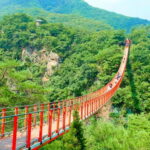
Now for the reason many people book: Pocheon Art Valley. This place used to be a quarry, then transformed into an art and scenic destination that shows up in Korean films and dramas. You’ll be walking through a mix of sculptures, installations, and panoramic viewpoints framed by rugged mountains and a calm blue lake.
You get about 2 hours here. That’s a good length for this type of attraction because you can choose your pace—hit the main view spots, then take extra time if you want to linger on details.
The monorail makes a difference
A highlight that’s not just marketing: you have a round-trip monorail ticket included. For this kind of site, the monorail helps you access higher or wider views without turning your day into a steep hike marathon.
Even if you don’t ride it like an attraction, it still changes the experience. From up high, the lake and cliff framing make more sense, and you’ll understand why this setting was so photogenic for films and dramas.
When Pocheon feels small
Art Valley is scenic and fun, but it isn’t an endless city of museums. Some visitors may want more time in the final area at the end of the day, and a rainy day can also affect how much you feel like walking outside. If you prefer maximum density of sights per hour, you might find the time here just a bit tight.
Still, the views and the mix of installations are the point—and the monorail helps you squeeze value out of the time you have.
Getting there and back: pickup points, drop-offs, and why timing matters
This tour runs on a coach schedule, so transportation is a core part of the experience. Expect around 1.5 hours getting out to the first stop, plus a longer return window of roughly 2 hours 20 minutes.
That makes the day feel full. It’s not a “quick escape.” It’s more like a guided whole-day outing, with the bus doing the heavy lifting.
Where you meet and where you end
You can start from one of several Seoul-area locations, including:
- Hongik Univ. Station (Exit 4)
- Dongdaemun History & Culture Park Station (Exit 10)
- Namsan Yejang public parking lot (남산 예장 공영주차장)
After the last stop, you’ll be dropped off at options like:
- Lotte Department Store Main Store (Dongdaemun area)
- Dongdaemun History & Culture Park Station (Exit 10)
- Hongik Univ. Station (Exit 4)
This matters because it affects how easy it is to continue your evening in Seoul. Choose the pickup closest to your lodging, and you’ll reduce friction at both ends.
How to make the bus time better
I’d pack like it’s a long day on public transit:
- water (meals aren’t included)
- a light layer (coaches can swing temperatures)
- something small to snack on between stops
Also, if you’re traveling with a baby stroller or a wheelchair, the tour asks you to inform them ahead of time. That’s one of those “simple planning beats stress later” details.
Guides, language support, and a calmer pace than many day tours
You’ll travel with a live guide with Chinese, English, and Korean support. That’s a real advantage here because you’re moving through multiple locations with different activities, and it’s nice to know what’s happening and where you should focus.
In practice, guides have been praised for staying helpful and friendly, and for keeping the pace manageable. Some groups specifically mention having enough rest time on the bus instead of constant talking, and some guides also make time for photos.
How to use the guide well
When you get to each stop, ask one simple question early, like:
- What are the best photo angles right now?
- Where should we spend the first 20 minutes?
Then you can “lock in” your priorities and enjoy the rest at your own speed.
Price and value: what $77 really buys you
Let’s talk value in plain terms.
You’re paying for four categories of cost:
- Transportation between Seoul and Gyeonggi Province
- Garden of Morning Calm ticket
- Pocheon Art Valley ticket
- Art Valley monorail round-trip
Plus, for the farm portion, the tour includes the strawberry picking fee in the spring-summer season or the apple farm experience fees in the summer-fall season.
Meals are not included, so you should plan for lunch and snacks on your own. That’s the trade-off. If you want meals included, this isn’t built that way. But if you like the freedom to choose where and what to eat, that can be a plus.
In the end, this tour feels like good value when you’d otherwise spend time figuring out tickets and transport yourself. If you love DIY travel, you could build something similar with public transit, but you’d lose the convenience and the day-order logic.
Who should book this Pocheon day tour, and who might not love it
This tour is a strong match if you:
- want a variety day (garden + farm + scenic art park)
- like seasonal activities you can taste or bring home
- enjoy photo stops but also want enough time to wander
- prefer guided structure without rushing constantly
You might think twice if you:
- hate long coach days and prefer shorter city itineraries
- expect an “all-out” art immersion day with more time at the final attraction
- are booking during a season where harvest conditions could affect the picking component (low harvest can trigger a swap)
Weather also matters. The itinerary notes it can be affected by traffic & weather, and some outdoor time will be outdoors. The upside: even rainy conditions don’t necessarily ruin the day, but your comfort level will depend on what you wear and how you feel about walking.
Should you book this Seoul to Pocheon art, garden, and fruit day tour?
If you want one day outside Seoul that still feels organized, I’d book this. It’s the rare tour that gives you both calm scenery and a hands-on seasonal payoff, with tickets and the monorail handled for you.
Book it especially if you’re visiting during the fruit season when strawberries or apples are the focus, and if you like wandering spaces like Garden of Morning Calm without feeling rushed. If you’re picky about timing or you’re only excited about one stop, then you might find the full-day format a bit long.
Overall: this is a solid, practical day trip. It’s not trying to do everything. It just does three things—garden, farm, and art views—well, with enough time in each to enjoy the day.
FAQ
How long is the Seoul to Pocheon day tour?
It runs for about 570 minutes, or roughly 11 hours total, including travel time between stops.
What fruit experience do I get: strawberries or apples?
It depends on the season and date. From Feb 16 to Jun 14 you get strawberry picking. From Jun 15 to Nov 30 you get an apple farm experience, with apple pie making from Jun to mid-Aug and apple picking from late Aug to Nov 30.
Which attractions are included?
You get tickets for Garden of Morning Calm and Pocheon Art Valley. The Art Valley monorail round-trip ticket is also included.
Where can I meet the tour in Seoul?
You can choose from multiple starting points, including Hongik Univ. Station Exit 4, Dongdaemun History & Culture Park Station Exit 10, and Namsan Yejang public parking lot.
Where will I be dropped off after the tour?
Drop-off locations include Lotte Department Store Main Store, Dongdaemun History & Culture Park Station Exit 10, and Hongik Univ. Station Exit 4.
What languages are available with the tour guide?
The tour provides live guidance in Chinese, English, and Korean, and the staff includes English- and Chinese-speaking support.
What if the harvest is low on the day I go?
If harvest is low, the picking experience may be replaced with a different farm experience.
Is anything included for meals?
No. Meals are not included, so you’ll need to budget for lunch and snacks on your own.