REVIEW · SEOUL
Day Trip to UNESCO: Suwon Fortress Adventure from Seoul
Book on Viator →Operated by I Love Seoul Tour · Bookable on Viator
Suwon feels like a history lesson with steps. This half-day UNESCO outing pairs Hwaseong Fortress with the Hwaseong Haenggung Palace, with a guide to make the Joseon Dynasty story click fast. You also get round-trip transport from the Seoul core, so you are not spending your morning figuring out buses.
I especially like how this tour is built around the big-ticket meaning of the place, not just photo stops. The fortress visit connects to King Jeongjo’s filial piety backstory, and you will learn why directional gates matter along the way.
One thing to keep in mind: the timing is tight, and if the weather turns nasty or plans shift, you may lose some of the ideal pacing. Still, it is a solid, efficient way to see two UNESCO sights without giving up your entire day.
In This Review
- Key Points at a Glance
- Suwon Fortress in Half a Day: Worth It for UNESCO Time
- King Jeongjo’s Wall Story: What the Fortress Visit Feels Like
- Hwaseong Haenggung Palace: A Temporary Royal Retreat With a War-Purpose
- Your Guide: The Real Difference Between a Good Tour and a Great One
- Timing and Getting There from Seoul: Start Early, Then Breathe
- What You’ll Get (and What You Won’t): Value Beyond the Ticket Price
- Weather, Performances, and Day-of Reality
- Who This Tour Suits Best
- Should You Book This Suwon Fortress Tour?
- FAQ
- How much does the Suwon Fortress UNESCO tour cost?
- How long is the tour?
- What time does the tour start?
- Where do I meet the tour in Seoul?
- Is hotel pickup included?
- What’s included in the price?
- What is not included?
- Is there a mobile ticket?
- How many people can be on the tour?
Key Points at a Glance
- UNESCO in a half day: Hwaseong Fortress plus Hwaseong Haenggung Palace, with admission included
- Meaningful storytelling: direction-gate significance and Joseon context are part of the route
- Pros steer the pace: many guides earn praise for clear English and making time feel comfortable (names you may run into include Sophie, JL, Shin, Stella, Thomas, Chloe, Park, Henry, and Melvin)
- Transport that reduces hassle: air-conditioned coach or minivan from central Seoul areas
- You finish back in Myeong-dong: the afternoon stays open for your own exploring
- Not a shopping stop tour: it does not route you through sales centers
Suwon Fortress in Half a Day: Worth It for UNESCO Time
A trip to Suwon from Seoul can be as easy or as messy as you make it. This one is designed to be easy: a morning start, guided walking, and the important bits kept together. You cover Hwaseong Fortress first, then move on to the temporary royal palace.
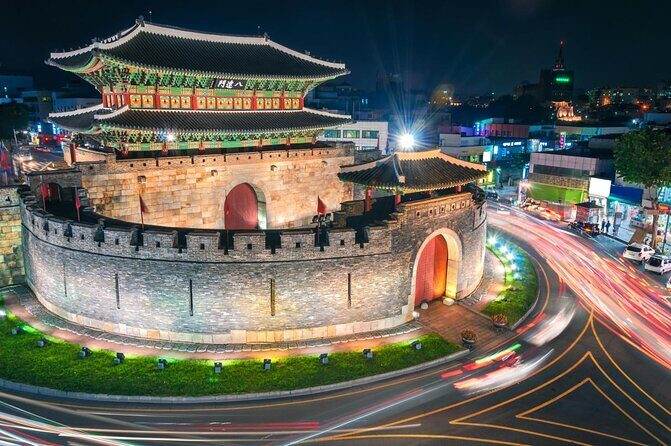
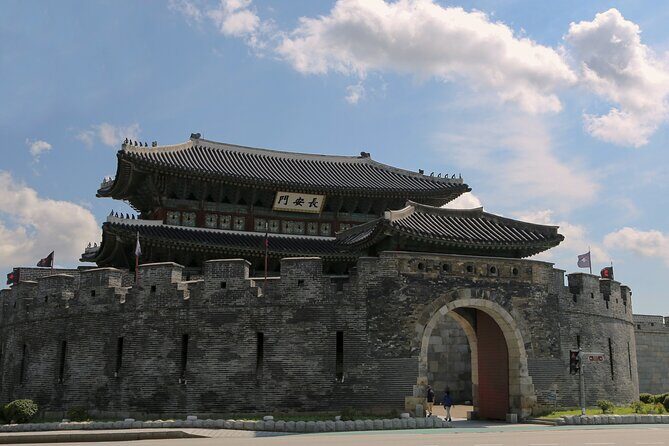
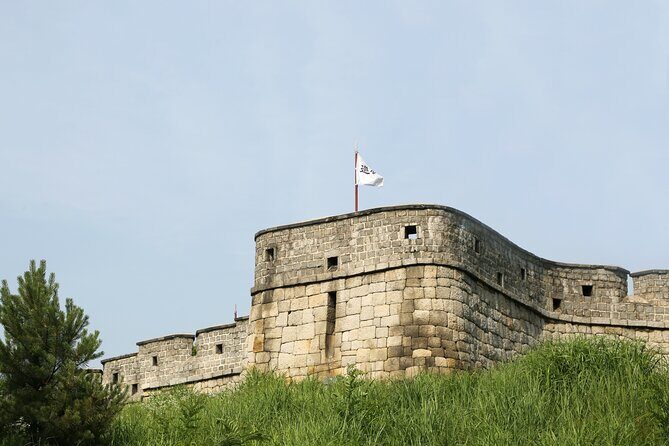
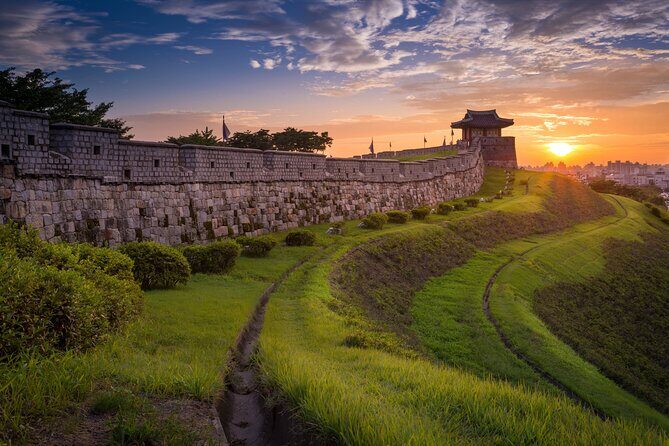
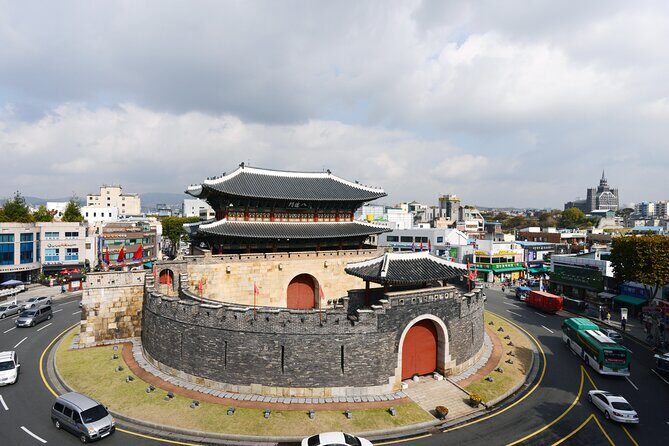
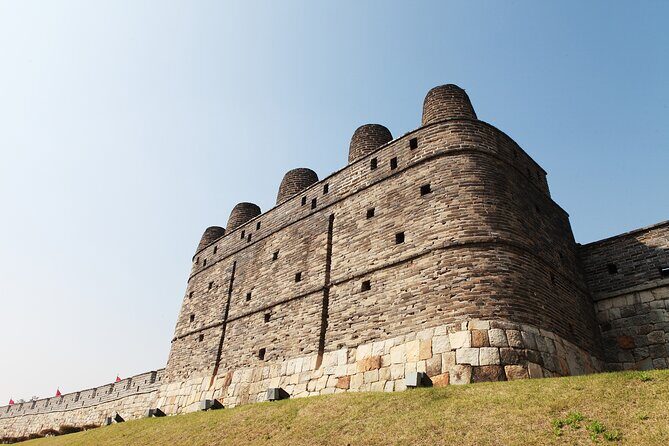
The fortress part matters because it is not just an old wall. You are looking at a Joseon Dynasty project from the later period (1392–1910), built to show King Jeongjo’s filial piety toward his father. Even if you have zero interest in royal trivia, that framing gives you a reason to look closely at what you are seeing instead of just admiring stonework.
I also like that the guide’s job is to explain what is in front of you, including the significance of directional gates. That kind of context makes the site feel less random. You start noticing patterns and intent. And if you are the kind of person who loves turning ruins into a story, this is where the tour earns its spot.
You can also read our reviews of more tours and experiences in Seoul
King Jeongjo’s Wall Story: What the Fortress Visit Feels Like
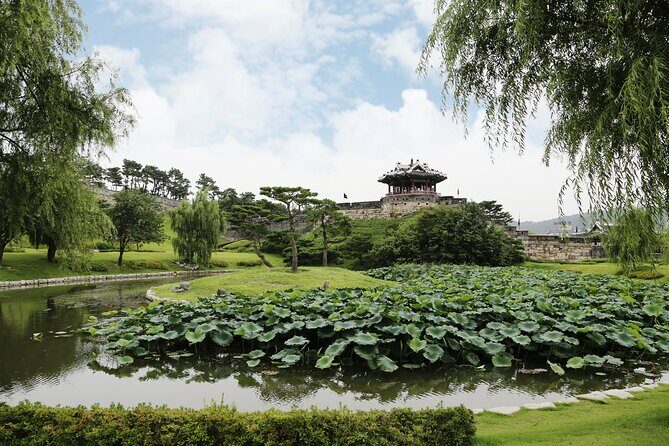
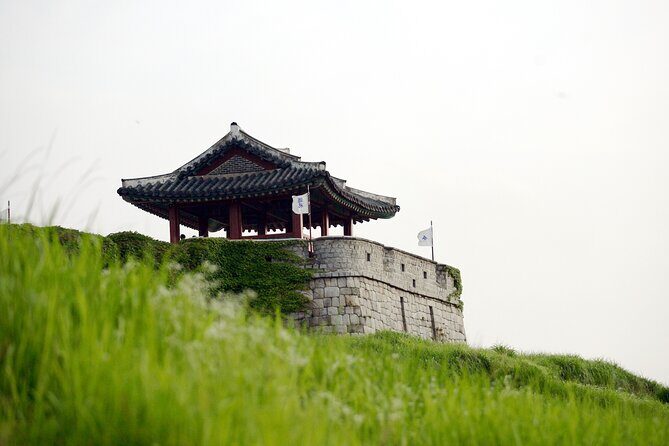
When you arrive at the fortress, you are stepping into a big stretch of atmosphere—wind, uphill walking, and those wide views you get from being on defensive walls. The tour keeps the experience structured around the fortress highlight areas, so you do not have to guess your own order.
You will spend about 1 hour 30 minutes at Hwaseong Fortress, and admission is included. That duration is long enough to walk and look, but short enough that you still feel like you are on a half-day schedule instead of a full-day grind.
Here is what I think you will notice most if you care about details:
- The guide links features to the larger Joseon-era purpose, so you understand why the fortress exists in this form.
- The directional gate explanation gives you a way to read the layout, instead of seeing gates as just another set of arches.
- The pacing stays tour-shaped, which is useful if you want history without building an entire self-made plan.
One practical note: one visitor described some waiting time around a trolley ride and felt it pulled focus away from the most photographic parts. So if you are very photo-driven, bring the mindset that the tour route is guided and timed, not purely optimized for your camera angles.
Hwaseong Haenggung Palace: A Temporary Royal Retreat With a War-Purpose
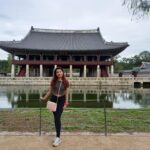
After the fortress, you shift gears to a different kind of place: Hwaseong Haenggung Palace. This stop is shorter—about 30 minutes with admission included—but it is a concentrated hit of meaning.
A Haenggung was a temporary palace where the king and royal family could retreat during war. Hwaseong Haenggung is the largest of these temporary palaces, and it is tied especially to King Jeongjo. The tour also points out that this palace was not only a shelter in danger; King Jeongjo stayed here during trips connected to worship at his father’s tomb.
That combination is why I like this stop. It is not an extra add-on. It reinforces the fortress theme with a second layer: the defensive landscape and the royal need for safety and ritual.
In plain terms, you will walk away thinking:
- The fortress is about protection and display.
- The palace is about how the royalty planned for crisis and ceremony.
If you are traveling with family, this is also a nice balance: the fortress is long and exposed, while the palace stop feels more contained. And for history nerds, it gives you a second angle on King Jeongjo beyond monuments alone.
Your Guide: The Real Difference Between a Good Tour and a Great One
Most tours claim the same thing: professional guide, explanations, good English. This one is praised heavily for making the information land. Names that popped up in guide feedback include Sophie, JL, Shin, Henry, Stella, Thomas, Chloe, Park, Leo, Melvin, and Geanie.
What matters is not the name—it is the approach. Many of the best comments point to guides who:
- Explain in a way that feels clear and approachable
- Add context that turns objects into decisions and stories
- Keep the pace comfortable, instead of rushing people through
If you care about learning but do not want lectures, you should feel comfortable. One review singled out a guide being attentive about walking pace and even helping with photos. That is a small thing that can change how the whole morning feels, especially when you are carrying a phone and trying to time footsteps with viewpoints.
Also, one guide was noted as speaking both Japanese and English. So if you want a little extra comfort in communication, there is a chance you could get that kind of language support depending on who is assigned.
Timing and Getting There from Seoul: Start Early, Then Breathe
This tour starts at 8:20 am. You meet at Myeong-dong Station Exit 1061-7 (Chungmuro 2(i)-ga, Jung District). The tour ends back in Myeong-dong, so you can convert the rest of your day into your own plan.
Transport is provided by an air-conditioned coach or minivan. The tour also notes that hotel pickup is only for centrally-located Seoul hotels. If your lodging is outside that zone, the English speaking guide meets you in front of the nearest central hotel or nearest subway station.
This matters because it changes how painful the day is. If you are staying near Myeong-dong, you will likely find it straightforward. If you are farther out, treat the nearest subway meeting point as your practical anchor.
And then there is the scheduling benefit: multiple people liked having the afternoon free for shopping and sightseeing. This is not a full-day commitment that eats your energy. It is a morning dose of UNESCO, then you get your life back.



What You’ll Get (and What You Won’t): Value Beyond the Ticket Price
The price is $48.00 per person, and admission is included for both stops. You are also paying for a professional guide and round-trip transport from Seoul. When you put it together, this starts to look like convenience plus interpretation, not just entry fees.
A fair way to judge value: compare the cost of getting yourself to Suwon, buying tickets, and assembling a guide-like plan that makes the site make sense. If you want a simple, structured morning that removes friction, this feels like the kind of purchase that pays you back in time.
What is not included:
- Meals and drinks
- Personal expenses
- Travel insurance
- Hotel pick-up/drop-off from every location (you are dropped at the Myeong-dong area)
So you should plan for food on your own. Since the tour is only about four hours total, you will probably want something light before you head out or grab it afterward near Myeong-dong.
One more point: the tour does not stop at shopping centers. That might sound minor, but it can be a win. It keeps the schedule focused on the monuments instead of turning your day into a mall run.
Weather, Performances, and Day-of Reality
This kind of outdoor walking depends on conditions. One visitor shared that terrible weather reduced what they could do, and they felt the operator should have handled it better with cancellation or refund. Another person still had a good time and even enjoyed the views under rain.
What I’d take from that for your planning:
- Bring rain gear if the forecast looks iffy. Your photos and comfort will thank you.
- If the day includes an end-of-tour military display, it can be fun. But be aware some days may not have performances depending on the schedule.
In other words: keep a flexible mindset. The fortress is always the fortress. But specific program extras can vary.
Who This Tour Suits Best
This tour is a great match if you:
- Want UNESCO sights without committing a whole day
- Prefer a guide to explain meaning, not just point at buildings
- Like walking but still want an efficient schedule
- Are staying in central Seoul and want a smooth morning plan
It is also a good choice for history fans and for families who want something structured but not overly long. The pacing is often described as comfortable, and people liked that the group size could feel closer to a small group setup rather than a huge bus party.
If you are the type who wants to spend hours wandering with zero structure, you might find a half-day too short. But if you want the highlights and context with minimal hassle, this is exactly the right format.
Should You Book This Suwon Fortress Tour?
Book it if you want a smart use of time: Hwaseong Fortress + Hwaseong Haenggung Palace in one guided half day, with admission and transport handled. At $48, the value comes from not only the entry fees, but the direction-gate Joseon context, plus a pace that keeps the morning from dragging.
Skip it or consider a backup plan if you hate walking in weather, or if you are extremely photo-critical and need every second to land on the most camera-perfect moments. Also, if you are staying far outside central Seoul, you will need to coordinate your meeting point carefully since hotel pickup is limited.
If you want my simple take: this is the kind of day trip that leaves you thinking, not just snapping pictures—especially if your guide is the sort who makes the Joseon story make sense.
FAQ
How much does the Suwon Fortress UNESCO tour cost?
It costs $48.00 per person.
How long is the tour?
The duration is about 4 hours.
What time does the tour start?
The start time is 8:20 am.
Where do I meet the tour in Seoul?
You meet at Myeong-dong Station Exit 1061-7 (Chungmuro 2(i)-ga, Jung District, Seoul).
Is hotel pickup included?
Hotel pickup is only available for centrally-located Seoul hotels. If your hotel is not in that area, the English speaking guide meets you in front of the nearest central hotel or the nearest subway station. You are dismissed at Myeong-dong area.
What’s included in the price?
Included items are a professional guide, transport by air-conditioned coach or minivan, and admission.
What is not included?
Meals, drinks, personal expenses, travel insurance, and hotel pick up & drop off outside the centrally-located hotel option.
Is there a mobile ticket?
Yes. The tour includes a mobile ticket.
How many people can be on the tour?
There is a maximum of 100 travelers, and the minimum per booking is 2 people.