REVIEW · SEOUL
3-Day Korea Western course by K-shuttle Tour from Seoul to Busan
Book on Viator →Operated by US Travel Korea · Bookable on Viator
A west-coast tour that saves you from guesswork. In just 3 days, this Seoul-to-Busan course strings together classic Korean culture sites and a few lesser-hit stops, while handling the big headache: getting there. I like that you travel in comfort by coach and that the trip includes 4-star accommodation plus breakfasts, so you can focus on the sights instead of logistics.
You also get a guide who can explain what you’re seeing, not just where to stand for photos. One thing to keep in mind: meals beyond breakfast aren’t included, and the pacing means you’ll move each day—great if you like structure, less so if you prefer slow travel.
In This Review
- Key takeaways before you go
- What you’re really paying for: coach travel, 4-star nights, and guided stops
- Getting on track in Seoul: meeting point timing and your first-day advantage
- Day 1 in western Korea: Baekje tombs, Gongju views, and Jeonju hanok life
- Songsan-ri Tombs and the Royal Tomb of King Muryeong: Baekje power in brick and stone
- Gongju Gongsanseong Fortress: river views plus an easy hike feel
- Jeonju Hanok Village: traditional roofs, traditional food, and a hands-on hall
- Day 2 in western Korea: democracy memorial, Suncheon flowers, and Admiral Yi’s national-treasure hall
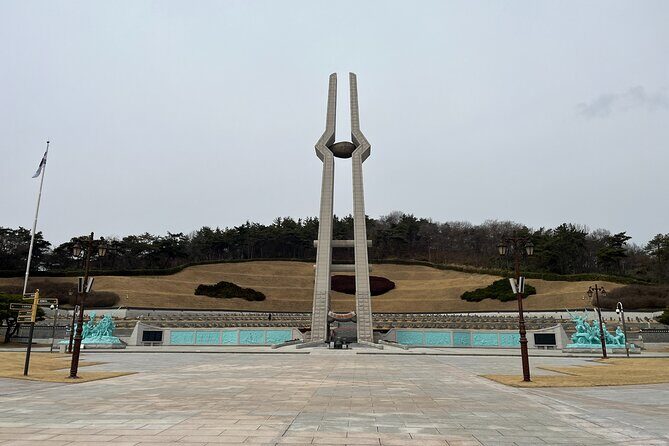
- May 18th National Cemetery: a memorial with weight and clarity
- Suncheon Bay Garden: conservation area details plus flower-season timing
- Statue of Admiral Yi Sun-sin: the headquarters story and a designated treasure hall
- Day 3 in Busan area: Jinjuseong Fortress history to the final drop at Busan Station
- Jinjuseong Fortress: a fortress with name changes across kingdoms
- Busan Station Plaza: plan your next steps before you board out
- Guides, pace, and the small details that affect your day
- Price and value: is $749 reasonable for this route?
- Who should book this Seoul-to-Busan Western Korea course?
- Should you book it?
- FAQ
- How long is the Korea Western course from Seoul to Busan?
- What is the meeting point and start time in Seoul?
- What’s included in the price?
- What is not included?
- Where do you end the tour in Busan?
- Is there a single traveler option?
- Are there any limits on group size?
- How flexible is cancellation?
Key takeaways before you go
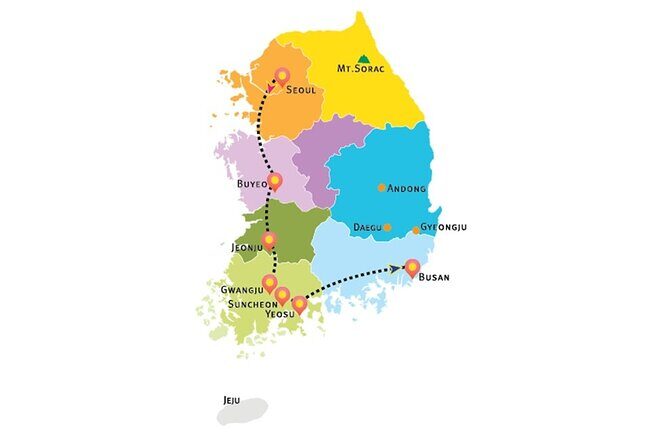
- Comfort-first transport: coach travel from Seoul toward Busan with the logistics handled for you.
- Proper historic anchors: Baekje-era tombs, mountain fortresses, and a major Joseon fortress.
- A culture hit in Jeonju: hanok village time with traditional food and a life-experience angle.
- Nature and flower season timing: Suncheon Bay Garden includes tulips, royal azaleas, and (in May) a canola field “yellow wave.”
- Memorial that lands: the May 18th National Cemetery is a serious stop, not a quick photo stop.
- Rooming rules can affect the value: odd-number bookings may use a pullout bed to avoid extra cost, while singles can pay a surcharge.
What you’re really paying for: coach travel, 4-star nights, and guided stops
At $749 per person for about 3 days, the value here isn’t just the tickets—it’s the package effect. You’re buying three things at once: coach transport, a professional guide, and two nights in 4-star accommodation. For western Korea, where some sites are harder to reach independently, that bundle can feel like a shortcut.
The tour also includes breakfasts (marked as B in the plan) and some entrance fees. So even though lunch and dinner are on your own, you’re not paying separately for every stop. You’re also getting a mobile ticket, which cuts down on the small hassles that add up on a multi-stop trip.
The group stays at a maximum of 40 people. That usually means you get enough people for a lively bus day, but not so huge that you’re constantly waiting in line for the guide.
You can also read our reviews of more tours and experiences in Seoul
Getting on track in Seoul: meeting point timing and your first-day advantage
The day starts with a very specific meet-up: 8:00am at the parking lot next to DongHwa Duty Free on Sejong-daero (in Jongno-gu). It’s tied to Exit 6 of the Gwanghwamun subway station, so you can orient yourself quickly once you’re there.
This matters because the tour runs by schedule. If you arrive late, you may end up playing catch-up with the group. And there’s a real-world lesson from past participants about how easy it can be to miss the correct bus when a new route or guide team is still getting up to speed. Your best move: be early, and make sure you can identify your guide and bus before you step onto the coach.
Luggage is limited to one item per person, depending on group size and vehicle space. If you travel with a big hard-shell suitcase plus a lot of extras, the storage area can become a squeeze. Pack smart so you can ride comfortably.
Day 1 in western Korea: Baekje tombs, Gongju views, and Jeonju hanok life
Day 1 has three very different vibes, which is exactly why this course works for first-timers. You start with ancient royal history, then switch to a mountain fortress viewpoint, then end with a living cultural neighborhood where food and architecture steal the show.
Songsan-ri Tombs and the Royal Tomb of King Muryeong: Baekje power in brick and stone
You’ll visit the Songsan-ri Tombs linked to the Baekje period (234 to 678). This is a major historical anchor because it connects to the era when Baekje’s capital was in Gongju. What I like here is the scale of time: you’re seeing burial sites that are tied to how rulers organized power, not just random ruins.
The standout is the Royal Tomb of King Muryeong (Mu-ryeong, 462–523), which is described as the 7th tomb. A neat detail is how it was found: it surfaced accidentally during pipe installation aimed at preventing flooding of nearby tombs. The tomb’s construction is said to be unusual, built with bricks similar to the 6th tomb, and it housed many national treasures—materials that helped scholars study Baekje culture.
Practical note: because the focus is tomb architecture and site interpretation, wear shoes you trust. Some paths can be uneven, and you’ll likely want a relaxed pace instead of rushing.
Gongju Gongsanseong Fortress: river views plus an easy hike feel
Next you head to Gongju Gongsanseong Fortress, a mountain castle established during Baekje. The best part is the view—especially the look toward the Geumgang riverside. Even if you’re not a hardcore hike person, the walk up to viewpoints gives you a satisfying sense of effort without feeling like a marathon.
Up the trail, the plan highlights Imnyugak Pavilion, noted as the largest of its kind within the fortress. For me, this is where the history stops being abstract. A fortress makes sense when you can see how the terrain protects and controls movement.

Jeonju Hanok Village: traditional roofs, traditional food, and a hands-on hall
Jeonju Hanok Village is the culture flip on Day 1. The hanok houses keep their traditional charm while the rest of the city has modernized. Look for those signature roof edges that are slightly raised.
A strong value add is the Hanok Life Experience Hall, where a portion of the hanok area is set aside so you can experience traditional Korean life. The tour also points to traditional food options—especially bibimbap associated with Jeonju.
If you’re someone who likes to understand how people lived (not just monuments), Jeonju is the payoff. The downside is that hanok areas can be busy in peak times, so treat this as a food-and-culture window rather than a quiet stroll.
Day 2 in western Korea: democracy memorial, Suncheon flowers, and Admiral Yi’s national-treasure hall
Day 2 is balanced: a serious memorial, a floral garden that feels like a seasonal reset, and a major figure from Korea’s defense history.
May 18th National Cemetery: a memorial with weight and clarity
You’ll spend time at the May 18th National Cemetery, tied to the struggle for democracy in May 1980. The site honors victims whose remains were moved and buried by handcarts and garbage trucks, and the tour also notes that the area was exhumed and reburied at the memorial in 1997.
What makes this stop important is tone. This isn’t presented as a “quick stop.” It’s a place that explains meaning—why it became a national holiday and what the event represented to the people involved.
Bring a respectful mindset and a little extra time in your head. If you’re only half-paying attention, the stop can feel like a checkbox instead of an anchor.
Suncheon Bay Garden: conservation area details plus flower-season timing
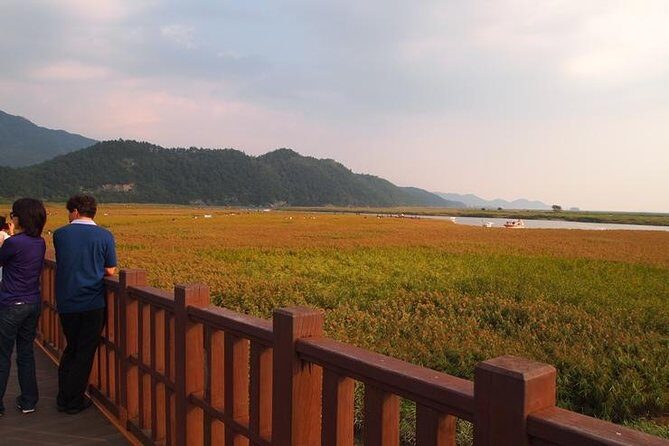
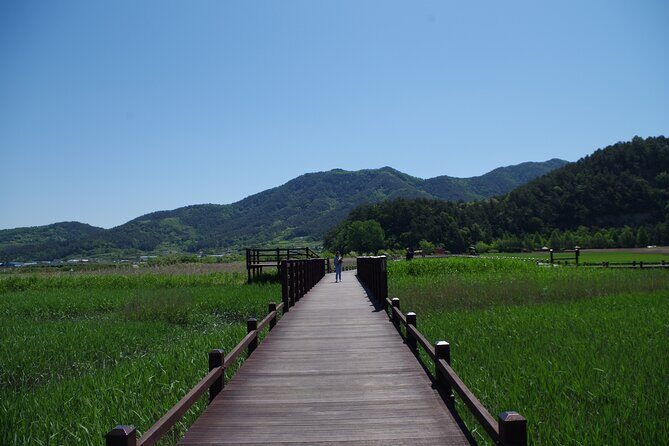
Then the mood shifts to Suncheon Bay Garden. The tour describes a conservation area created from natural habitat—about 1.12 square kilometers—with 505 species of trees and 113 species of flowers. If you like gardens, this is the kind of place that rewards slow walking because you keep spotting different groups.
The plan calls out tulips and royal azaleas. It also notes that nearby canola flowers (about 30,000 square meters) can create a yellow “wave” in May, with trees offering canopy shade. Even if you’re not visiting in full bloom, the structure and plant variety are still the point.
Practical tip: garden time often means lots of outdoor minutes. If your travel month isn’t May, you’ll still get a pleasant walk, but the yellow canola effect may not match what the description promises.
Statue of Admiral Yi Sun-sin: the headquarters story and a designated treasure hall
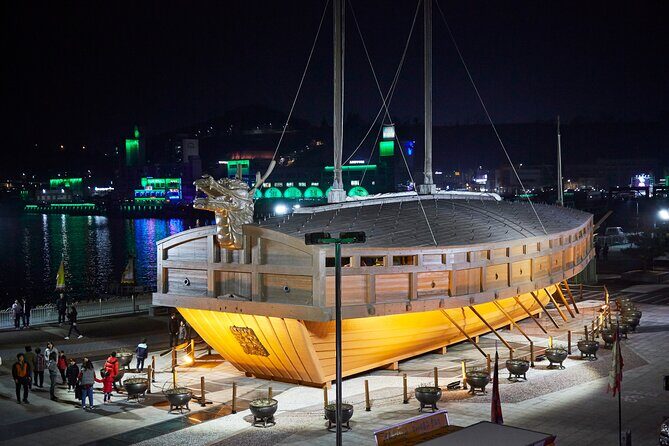
Finally, you visit the Statue of Admiral Yi Sun-sin site. During the Imjin War (1592 to 1598), the plan explains that Admiral Yi used the area as a headquarters. The tour also points out artifacts honoring his protection efforts and specifies that the hall was designated National Treasure No. 304 in 2011.
This stop works well if you want history that connects to a named person, not just a dynasty timeline. Yi’s story is simple to follow, and the national-treasure designation gives you a concrete reason to spend time reading and looking closely.
Day 3 in Busan area: Jinjuseong Fortress history to the final drop at Busan Station
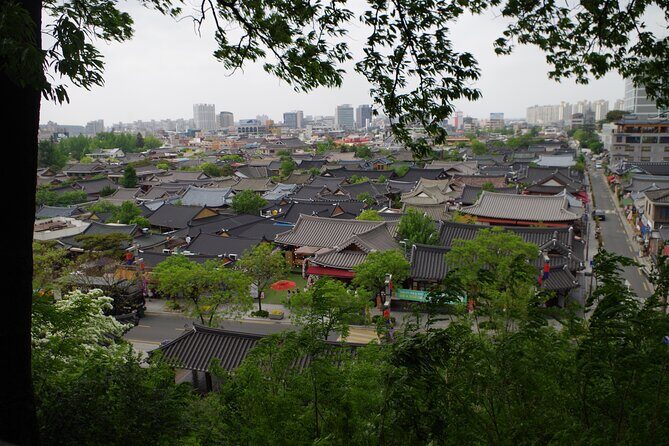
Day 3 concentrates on one major fortress and then a clean exit into your own plans in Busan.
Jinjuseong Fortress: a fortress with name changes across kingdoms
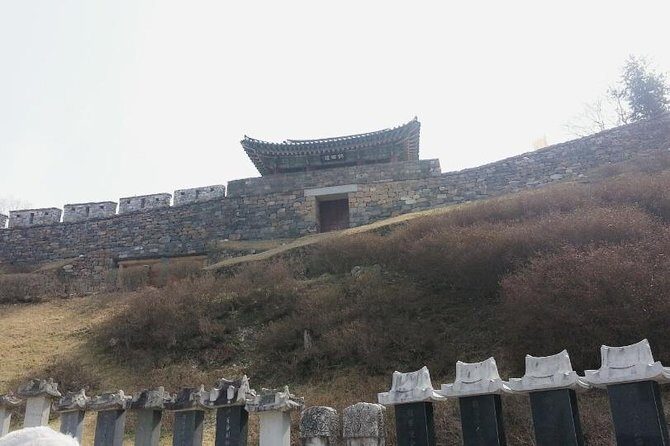
You’ll visit Jinjuseong Fortress, historically linked to the Japanese invasion in 1592. The tour notes a timeline of names: it was called Geoyeolseong Fortress in the Three Kingdom period, renamed Chokseokseong Fortress in the Goryeo dynasty, and settled as Jinjuseong Fortress in the Joseon dynasty.
That naming sequence is more than trivia—it tells you the site kept strategic importance as power shifted across eras. Fortresses aren’t museum pieces; they’re living geography. When you stand there, you’re trying to imagine why this exact spot mattered.
Busan Station Plaza: plan your next steps before you board out
The day ends around 13:00 with a drop at Busan Train Station (on Jungang-daero, near Choryang-dong). The “Busan Station Plaza” mention is helpful because it means you’re not dumped into the middle of nowhere. You’ll be near transport for the rest of your trip.
So before you arrive, decide what you want next: another neighborhood, seafood, a beach walk, or simply decompression time. This tour is a connector, not a full-day Busan experience.
Guides, pace, and the small details that affect your day
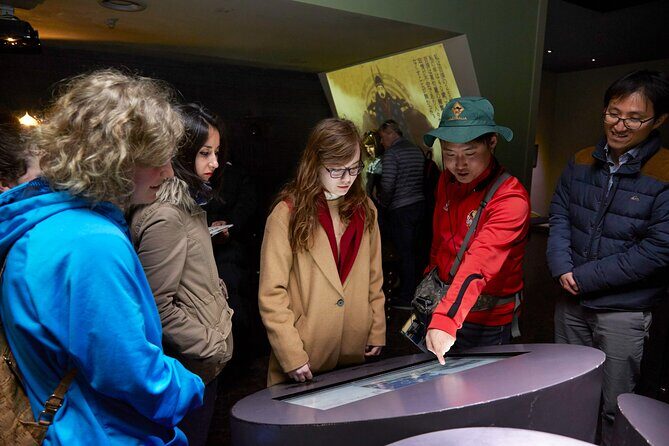
This is a guided tour, and the reviews data you provided points to real variation in guide quality. Names mentioned include Justin and Mr Kim (MS), both praised for making sites easier to understand and helping with practical tips like evening food and how hotel check-in and onward travel can work smoothly.
That matters because you’re covering multiple regions in a short window. A good guide can turn each stop into a story with a point. A weaker guide can leave you with a map and your phone battery.
Group size (up to 40) helps keep things organized. Still, you should expect a “move-and-look” rhythm: time at each site is limited (often around 1 to 2 hours), so choose what you want to linger on.
One more pacing note: the tour includes transfers and coach time, and the plan covers quite a lot of territory. If you hate bus rides, this may feel like too much structure. If you like having your days planned and your tickets handled, you’ll probably feel the relief fast.
Price and value: is $749 reasonable for this route?
Let’s be honest about the cost. $749 is not a cheap weekend, but it’s also not just paying for a bus. In your package you’re getting:
- 2 nights in 4-star accommodation
- Breakfasts
- Professional guide
- Transfers
- Some entrance fees
- Coach travel over multiple regional stops
For many travelers, the biggest hidden expense is time—and time is money. Western Korea can require extra transfers, taxi/ride-hail costs, and more planning hours. This tour trades that work for a fixed price. You’re buying convenience plus guided interpretation.
Rooming rules can also affect how much value you actually get. If you book as three people, the plan indicates sharing a room with a pullout bed for the third person, with no extra charge for that third person. Singles can book, but a single traveler surcharge applies. If you’re traveling solo and you’re flexible about room setup, that surcharge could shift the value enough that you’d want to compare to other options.
Who should book this Seoul-to-Busan Western Korea course?
This one is a great fit if you want:
- A guided introduction to Baekje-era sites, major fortresses, and a classic culture stop in Jeonju
- Less planning stress, especially on transport across regions
- A mix of history and nature without committing to a long multi-city itinerary
You might want to skip or reconsider if you:
- Only want food and shopping and prefer not to spend multiple hours at historical sites
- Hate fixed schedules and want freedom above all
- Are extremely budget-sensitive for meals, since lunch and dinner aren’t included
Also, the tour notes that most travelers can participate, which suggests it’s not designed as a hardcore activity program. Still, because the plan involves walking at fortresses and sites, wear supportive footwear and plan for uneven ground.
Should you book it?
If you’re the type who likes to learn while you travel and you want western Korea coverage without transportation headaches, I’d lean toward booking this. The combination of guided history, a real culture neighborhood stop in Jeonju, and a big memorial plus nature time creates a trip that feels balanced for just 3 days.
Before you lock it in, do two practical checks. First, confirm what your exact day-by-day stops include regarding the green tea area in Boseong, since the tour description mentions it but the stop list you have here focuses on other sites. Second, plan your meals in advance enough that lunch and dinner don’t become a stressful scavenger hunt on travel days.
If that sounds like your style—structured, informative, and efficient—this route can be a smart way to get your bearings across South Korea’s west.
FAQ
How long is the Korea Western course from Seoul to Busan?
It runs for 3 days (approx.).
What is the meeting point and start time in Seoul?
You meet at the parking lot next to DongHwa Duty Free on Sejong-daero in Jongno District at 8:00am near Exit 6 of Gwanghwamun subway station.
What’s included in the price?
The tour includes 2 nights of 4-star accommodation, transfer, a professional guide, and breakfasts as marked in the plan. Some entrance fees are also included.
What is not included?
Lunch and dinner are not included.
Where do you end the tour in Busan?
You’re dropped at around 13:00 at Busan Train Station Plaza on Jungang-daero, near Choryang-dong, Dong-gu.
Is there a single traveler option?
Yes, one person can book, but a single traveler surcharge applies if you don’t share a room.
Are there any limits on group size?
The tour has a maximum of 40 travelers.
How flexible is cancellation?
You can cancel up to 6 days in advance for a full refund. If you cancel 2–6 days before, you get a 50% refund, and if you cancel less than 2 days before, it isn’t refundable.