REVIEW · SEOUL
Seoul: Learn Traditional Korean Strings Instrument & Hanbok
Book on GetYourGuide →Operated by TRIPPER · Bookable on GetYourGuide
A Korean zither lesson with Hanbok style. I love this class because you learn the Gayageum hands-on and you do it while wearing a Hanbok in Bukchon Hanok Village. If you want an activity that feels cultural without being vague, this is a solid pick. The session mixes a guided intro to the 12-string instrument, practice time, and a short performance finish.
The main thing to keep in mind is timing. With 80 minutes, you’ll focus on fundamentals and a short song, not full mastery of the instrument.
In This Review
- Key highlights at a glance
- Gayageum and Hanbok in Bukchon: a Seoul class you can actually feel
- Meeting in Bukchon and getting oriented quickly
- Hanbok rental: the cultural look that also improves the experience
- Learning the Gayageum: what you actually practice in 80 minutes
- From first notes to a song like Arirang
- The instructor matters, and you get one
- Professional photos while you play: getting shots that actually look like you
- Timing, pacing, and what 80 minutes feels like
- Price in context: is $106 good value for this package?
- Who should book this class, and who might not
- Should you book this Gayageum and Hanbok class?
- FAQ
- Where is the meeting point for the class?
- How long is the Gayageum and Hanbok class?
- Is the instruction in English?
- Do I need any prior musical experience?
- What song will I learn or perform?
- Is Hanbok rental and professional photography included?
- What is the cancellation policy, and can I pay later?
Key highlights at a glance
- Step-by-step Gayageum basics with a professional instructor (English instruction)
- Hanbok rental during the class for a full look, not just a quick costume moment
- A performance moment after the basics, including a famous song such as Arirang
- Professional photo session while you play, set against Bukchon’s traditional backdrop
- Patient, beginner-friendly teaching style highlighted by multiple instructor examples like Ava and Yoo Min/Yu Min
Gayageum and Hanbok in Bukchon: a Seoul class you can actually feel
Seoul has plenty of cultural experiences that stay on the surface. This one goes the other way. You’re not just watching. You’re holding the instrument, making sound, and learning how the music fits into a Korean visual tradition you can wear right on your body.
Bukchon Hanok Village is the right setting for this kind of class. The area is known for traditional-style houses, so the whole experience feels naturally themed. You walk into a lesson that already looks Korean, then you add the Hanbok and the Gayageum and the theme clicks.
I like that it’s built for real first-time learners. The class is positioned for all levels, and the practical approach matters. When the teacher is patient, you stop worrying about getting it wrong. You start listening to the instrument and understanding the basic mechanics.
You can also read our reviews of more tours and experiences in Seoul.



Meeting in Bukchon and getting oriented quickly
You meet at 3F, 43 Bukchon-ro 5ga-gil, Jongno-gu, Seoul. The location detail matters because Bukchon is easy to wander around, but you don’t want to burn time hunting the exact spot.
Once you’re there, the experience is set up so you can get started fast: hanbok first, instrument instruction next. From what you’re told up front, you can expect an intro to the Gayageum and then short, clear steps that build into playable notes. This is the opposite of a lecture.
If you’re the type who likes to know what happens before it happens, you’ll likely appreciate the flow. People mention being guided in short, organized steps, with room to practice at your own pace. That’s useful when you’re nervous about coordinating fingers and focus.
Hanbok rental: the cultural look that also improves the experience
The Hanbok isn’t just a prop. During the class, you wear it for the full experience, including the photo session. That changes the whole tone of what you’re doing. The outfit turns a music lesson into a moment of Korean everyday aesthetics, where clothing and performance belong together.
You’ll also notice that the fit and styling can affect comfort. One helpful detail from the experience: you might get guidance on how to choose what matches you better. That’s practical, because Hanbok fit can feel different depending on the style and your body position while sitting.
And yes, people love the photos here. Wearing traditional clothing while you play makes the picture look intentional, not like you borrowed a costume and stood somewhere. The class is designed so you’re photographed while playing, not after the fact.
Learning the Gayageum: what you actually practice in 80 minutes
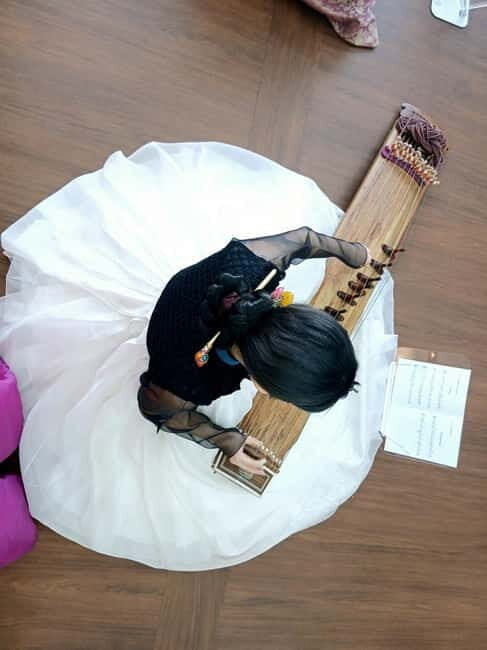
The Gayageum is a 12-string Korean zither, and the class teaches you how to approach it like a beginner. The structure is straightforward: you get the basics, learn techniques, then practice together and individually.
Here’s what I think is most valuable for you: the goal isn’t to make you a performer. The goal is to make you understand enough to create a recognizable sound and feel the instrument’s character. Multiple people mention a warm tone, which is exactly what you want to experience in person rather than just hearing it in a video.
Expect instruction in a sequence like:
- an initial introduction to the instrument and its background
- first steps with clear guidance
- technique practice in short sections
- time to keep going on your own or together, depending on how you feel
That flexibility is underrated. If you learn better by repeating alone, you can. If you feel more confident practicing with someone else in the group, you can do that too.
Also, the class is meant for beginners. You don’t need prior musical experience. That matters, because with string instruments, fear of messing up can shut people down fast. The setup here is built to prevent that.
From first notes to a song like Arirang
After the basics, the experience includes a performance moment. The highlight mentions playing a famous Korean song such as Arirang after learning the basics.
This matters because it turns the class into something you can remember. A lesson where you only learn theory feels forgettable. But if you end with a recognizable tune—even a short one—you leave with a story: I played that.
Some versions of the class may also include the idea of playing other tunes, even popular melodies. The key is that the teaching is designed to help you reach that point quickly.
For your own expectations: treat this as a musical introduction that ends with a small win. In 80 minutes, you’ll be learning. You won’t be rewriting your life as a Gayageum virtuoso. But you will feel what it’s like to produce the sound and move through the song steps.






The instructor matters, and you get one
A big part of why this class works is the teaching tone. People highlight specific instructors by name, including Ava and teachers like Yoo Min / Yu Min. The theme is consistent: patient, enthusiastic, and good at explaining.
Why you should care: in cultural lessons, the content is only half the job. The other half is confidence. If an instructor can correct without making you feel slow, you start enjoying the learning curve instead of fighting it.
English instruction is also a clear advantage. The class is listed as English with a professional instructor, and that reduces the typical stress of trying to follow directions you can’t fully understand.
If you’ve had trouble with group classes before, this setup tends to help. People describe it as structured but not stiff, with time for practice and feedback. That’s a winning mix for first-time students.
Professional photos while you play: getting shots that actually look like you
The professional photo session is one of the strongest reasons this class has real value. You’re photographed while playing the Gayageum, dressed in Hanbok, with the Bukchon setting as your backdrop.
You might be thinking: will I look awkward? That’s normal. But the class is structured so you’re not scrambling around posing. You’re already in position because you’re playing, and the photographer captures you in the moment.
One detail you may appreciate: even if you don’t usually think you photograph well, people mention getting many nice photos. That suggests the session isn’t only for people who love cameras.
The other bonus is that you get a physical souvenir feel. One person mentions receiving a diploma with a picture of your choosing. That’s not listed in the core highlights, so treat it as a possible extra, but it fits the overall idea of leaving with something beyond photos on your phone.
Timing, pacing, and what 80 minutes feels like
An 80-minute class is short enough to fit easily into a day in Seoul, and structured enough that you won’t sit through long explanations. The pace is built around learning steps, then applying them.
In practice, it tends to feel like:
- a start with outfit and instrument setup
- focused beginner instruction and technique practice
- a joint moment at the end where you play together
- then the photo session and wrap-up
If you hate rushing, you’ll still likely be okay because teaching is step-based. If you love learning slowly, you may want to bring a calm mindset and accept that this is about fundamentals and a final performance moment.
Price in context: is $106 good value for this package?
At $106 per person for an 80-minute class, the real question is what you’re paying for. You’re not just paying for a music lesson. The price includes:
- a Gayageum class with a professional instructor
- Hanbok rental for the duration
- professional photos while you play
When you price those items separately, it’s easier to see the value. Hanbok rental plus a real photo session usually turns into a paid add-on somewhere else. Here, it’s packaged with the instruction, so you get a complete experience: you learn, you perform, and you get imagery that looks consistent with what you just did.
It also helps that the class is positioned for all levels and explicitly for beginners. You’re less likely to feel like you booked something you won’t be able to enjoy.
If you’re traveling solo, this can also be a confidence-building activity because you’re not forced into social plans. You’re learning with a teacher and a small group vibe, with the structure doing the work.
Who should book this class, and who might not
This is a great fit if you want:
- a hands-on Korean cultural activity in Seoul
- a beginner-friendly music experience with clear guidance
- a Hanbok photo moment that’s tied to an actual performance, not a staged stop
- an activity that gives you something to show your friends back home besides a picture of a building
It may be less ideal if you:
- are expecting long deep training on technique (this is a short introduction)
- only want to watch performances and not play yourself
- get uncomfortable with getting dressed in a traditional outfit for the session (some people love it, some don’t)
Also, note the class format includes instruction in English, so if you prefer other languages, you’ll want to confirm availability before committing.
Should you book this Gayageum and Hanbok class?
I’d book it if you want a Seoul experience that blends music, costume, and a performance finish in one clean block of time. The strongest reason is the practical structure: you learn basics, you play a recognizable song like Arirang, and you get professional photos that match the moment.
It’s especially worth it when you like doing something that’s hands-on and not overly complicated. If you’re even slightly curious about Korean instruments, you’ll probably leave feeling satisfied rather than merely entertained.
One more practical thought: since the class notes limited slots, it’s smart to reserve early in your trip planning. This is the kind of activity that sells out when people start building their Seoul schedules.
FAQ
Where is the meeting point for the class?
You meet at 3F, 43 Bukchon-ro 5ga-gil, Jongno-gu, Seoul.
How long is the Gayageum and Hanbok class?
The class runs for 80 minutes.
Is the instruction in English?
Yes, the instructor provides instruction in English.
Do I need any prior musical experience?
No. The class is designed for all levels, including absolute beginners.
What song will I learn or perform?
After learning the basics, you’ll perform a famous Korean song such as Arirang.
Is Hanbok rental and professional photography included?
Yes. Hanbok rental is included during the class, and professional photos are taken while you’re playing the Gayageum.
What is the cancellation policy, and can I pay later?
You can cancel up to 24 hours in advance for a full refund. You can also reserve now and pay later.