REVIEW · SEOUL
[Private] DMZ & Imjingak Peace Gondola Experience Inter-Korean War
Book on Viator →Operated by Cosmojin Agency · Bookable on Viator
One day, two Koreas feel painfully close. I love the steady, human-scale commentary from an English, licensed guide, and I love the big-picture sightlines from Dora Observatory to Dorasan Station. The main drawback is physical: the 3rd Infiltration Tunnel is steep and not a casual walk.
You’ll start at 7:00am from the President Hotel and end in Myeong-dong after an 8 to 10 hour circuit that includes DMZ and gondola admissions, plus an air-conditioned vehicle. Bring a passport, wear sneakers, and expect rules—like riding the authorized bus and following time photo guidance—because this is a security zone.
In This Review
- Quick hits before you go
- Morning logistics: what the day timing really means
- Entering the DMZ: ID checks, exhibits, and why you start indoors
- The 3rd Infiltration Tunnel: the most physical stop
- Dora Observatory and Dorasan Station: how to read the division from a distance
- Imjingak Peace Resort: Dokgae Bridge and the feeling of a broken link
- Imjingak gondola: Camp Greaves, Descendants of the Sun, and moving exhibits
- The middle-of-the-day flow: Unification Bridge, bunker stops, and lunch time
- The shop stop: Amethyst or ginseng center (and how to handle it)
- Guides and group size: the difference between a trip and an understanding
- Value for $195: what you’re paying for (and what you aren’t)
- Who this DMZ & Imjingak day fits best
- Should you book this DMZ & Imjingak Peace Gondola experience?
Quick hits before you go
![[Private] DMZ & Imjingak Peace Gondola Experience Inter-Korean War - Quick hits before you go](https://7.seoulescapes.com/wp-content/uploads/private-dmz-imjingak-peace-gondola-experience-inter-korean-war-1.jpg)
- DMZ morning access plus structured stops that make the day feel less like rushing and more like understanding
- Dora Observatory and Dorasan Station for seeing how the division plays out on the ground
- Imjingak Peace Gondola with views toward Camp Greaves, tied to Descendants of the Sun filming
- Dokgae Bridge and the broken railroad span left for decades as a visible reminder of separation
- 3rd Tunnel is steep and you’ll need good footing and the right body posture
- The day can change if military training or an official event affects access to certain DMZ areas
Morning logistics: what the day timing really means
![[Private] DMZ & Imjingak Peace Gondola Experience Inter-Korean War - Morning logistics: what the day timing really means](https://7.seoulescapes.com/wp-content/uploads/private-dmz-imjingak-peace-gondola-experience-inter-korean-war-2.jpg)
This is an early start tour, meeting at 7:00am at the President Hotel on Eulji-ro in central Seoul. Expect the whole experience to run about 8 to 10 hours, even though only part of it is spent at the DMZ itself.
The flow matters because you’re dealing with a controlled, time-sensitive area. You’ll travel by air-conditioned vehicle, then move within the DMZ area using the authorized bus, with a guide who keeps the schedule moving. There’s also a clear “check-in first” vibe: you’ll have an ID check and then head into the DMZ theater and exhibition hall before going to the more intense stops.
If you’re sensitive to early mornings, plan your night accordingly. Also plan your energy for the body work: this is not just sightseeing on flat ground.
You can also read our reviews of more private tours in Seoul

Entering the DMZ: ID checks, exhibits, and why you start indoors
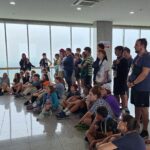
Your DMZ day starts with the ID check and time in the DMZ theater and exhibition hall. I like this part because it helps your eyes later. When you step outside and see the infrastructure and restricted areas, the exhibits give you a mental map for what you’re looking at and why it matters.
From there, you move into the major DMZ stops. The sequence typically hits the 3rd Infiltration Tunnel, then goes on toward Dora Observatory and Dorasan Station. That order is useful: you get the physical reality of the tunnel experience before shifting to the wider, observational viewpoints.
One practical note: if there’s an unannounced military training or official event in the DMZ, your tour may be replaced with a different route that includes Tomorrow’s Whistle, Bunker Beat 131, Odusan Unification Tower, and the War memorial of Korea. So don’t treat any single photo spot as guaranteed.
The 3rd Infiltration Tunnel: the most physical stop
![[Private] DMZ & Imjingak Peace Gondola Experience Inter-Korean War - The 3rd Infiltration Tunnel: the most physical stop](https://7.seoulescapes.com/wp-content/uploads/private-dmz-imjingak-peace-gondola-experience-inter-korean-war.jpg)
The 3rd Infiltration Tunnel is the biggest “do something, not just look” moment on the day. The tunnel is quite steep, and the guidance specifically notes that you’ll need good physical ability and the posture of leaning forward.
Wear sneakers. Yes, it’s a simple instruction, but it’s exactly what you’ll want here because you’ll be moving through a slope where footing matters. If you have knee or balance issues, consider whether you can handle a steep, forward-leaning walk.
I also think this stop gives the day a different emotional weight. Observatories and bridges can feel abstract. A tunnel forces your body to understand how this place is built for movement and pressure, not comfort.
Dora Observatory and Dorasan Station: how to read the division from a distance
![[Private] DMZ & Imjingak Peace Gondola Experience Inter-Korean War - Dora Observatory and Dorasan Station: how to read the division from a distance](https://7.seoulescapes.com/wp-content/uploads/private-dmz-imjingak-peace-gondola-experience-inter-korean-war-4.jpg)
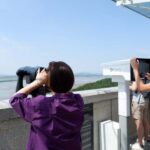
After the tunnel, you shift to the viewpoint-style stops: Dora Observatory and Dorasan Station. These are the moments where you can feel how the security line becomes a daily reality.
Dora Observatory is the place where you can see North Korea. Dorasan Station is framed as a wish for unification, which turns a simple transit landmark into something more symbolic. I like that the tour doesn’t only show “old conflict” objects. It also points to future-facing infrastructure and the human idea behind it.
A tip for these viewpoint moments: treat them like photo stops, but also like observation stops. Slow down. Look at the distance and at the “shape” of the area around you. It’s easier to understand when you give your eyes a few minutes instead of snapping and moving on.
Imjingak Peace Resort: Dokgae Bridge and the feeling of a broken link
![[Private] DMZ & Imjingak Peace Gondola Experience Inter-Korean War - Imjingak Peace Resort: Dokgae Bridge and the feeling of a broken link](https://7.seoulescapes.com/wp-content/uploads/private-dmz-imjingak-peace-gondola-experience-inter-korean-war-5.jpg)
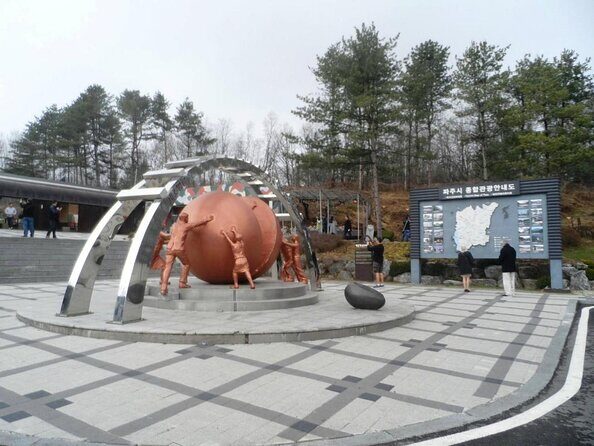
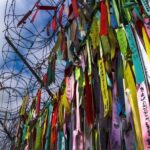
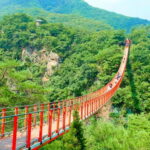
Midday, you head into Imjingak Peace Resort territory, starting with Dokgae Bridge. This northbound line of the old Gyeongui Line railroad bridge over the Imjingang River has been left broken for nearly 70 years. That detail is powerful because you’re seeing something that isn’t just historic; it’s stalled.
The tour also includes a stop at Imjingak Pavilion, built in 1972, known for a panoramic view of the area. Even if you’re not a “views person,” the pavilion stop is worth using your time on because it gives you context for what you saw earlier in the DMZ.
If the morning DMZ stops felt like intensity, Imjingak gives you a wider, slower emotional register. You’re not in the tunnel anymore. You’re standing back, trying to understand the geography that produced the division.
Imjingak gondola: Camp Greaves, Descendants of the Sun, and moving exhibits
![[Private] DMZ & Imjingak Peace Gondola Experience Inter-Korean War - Imjingak gondola: Camp Greaves, Descendants of the Sun, and moving exhibits](https://7.seoulescapes.com/wp-content/uploads/private-dmz-imjingak-peace-gondola-experience-inter-korean-war-6.jpg)
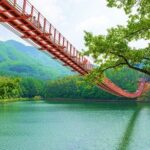
Riding the Imjingak gondola is one of the most enjoyable parts of the day because it adds motion and perspective. You’re not just walking and standing—you’re gliding, looking outward, and taking in the broader area.
The gondola experience also connects to pop culture and film history. The tour highlights Camp Greaves as a filming location for Descendants of the Sun, and ties it to the 506th Regiment, linked in the information to American film and series stations. It’s a surprising connection, and it makes the setting feel more immediate for English-language audiences.
You’ll also have time at the Imjingak gondola area for exhibits. One review specifically praised multilingual presentation—English, Japanese, and Chinese in addition to Korean—and singled out a heartbreaking letter a young man wrote to his mother before dying. Moments like that are why I think the gondola stop isn’t just a ride. It’s a reminder that the conflict reached real families, not only maps.
The middle-of-the-day flow: Unification Bridge, bunker stops, and lunch time
![[Private] DMZ & Imjingak Peace Gondola Experience Inter-Korean War - The middle-of-the-day flow: Unification Bridge, bunker stops, and lunch time](https://7.seoulescapes.com/wp-content/uploads/private-dmz-imjingak-peace-gondola-experience-inter-korean-war-7.jpg)
The itinerary is designed like a theme route: division, access, observation, and then return to symbolic peace landmarks. Along the way, you may pass the Unification Bridge and move through Dokgae Bridge again as part of the broader area circuit.
There’s also a bunker-focused stop called Bunker Beat 131. The name is short, but the placement in the day makes sense: after you’ve seen the tunnel and the observatory viewpoints, this helps you shift your understanding to what a conflict-ready environment looks like on a smaller scale. On some days, Bunker Beat 131 can also appear as part of an alternate DMZ route if access changes.
Lunch is listed as a stop in the overall sequence, but the only clear guidance about meals is that personal expenses aren’t included. So I’d budget for buying lunch or bringing something you can manage with the day’s timing. This is one of those days where being hungry can make everything feel harder.
The shop stop: Amethyst or ginseng center (and how to handle it)
![[Private] DMZ & Imjingak Peace Gondola Experience Inter-Korean War - The shop stop: Amethyst or ginseng center (and how to handle it)](https://7.seoulescapes.com/wp-content/uploads/private-dmz-imjingak-peace-gondola-experience-inter-korean-war-8.jpg)
Later in the tour you’ll stop at an Amethyst or Ginseng center. I’m mentioning this because it affects how you manage your time and spending. These stops are often part of the typical route and can take longer than you expect if you’re hoping to skip them.
If you’re not interested in shopping, use the stop for a short break and water. If you do want souvenirs, it’s smart to think of this as your “buy if it’s worth it” moment, not as an impulse trap.
Also, don’t plan your whole day around squeezing in extra shopping afterward. The tour ends by sending you to Myeong-dong, which is convenient for transit and food, but you’ll likely be tired.
Guides and group size: the difference between a trip and an understanding
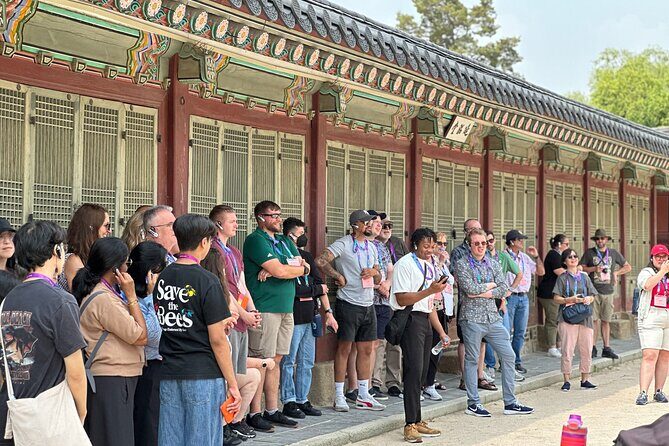
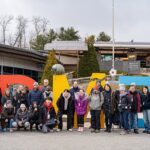
This tour runs with a maximum of 99 travelers, which is large enough that you’ll want a guide who can keep the group moving without losing the human side of the story. What stands out in the available feedback is that the guide experience can make or break the day.
Guides named JJ and Jackie were praised for being patient, engaging, and attentive, with clear explanations that kept people focused. One review even described a moment where the group got to speak with a real live North Korean, which is the kind of firsthand connection that turns the day from information into something harder to forget.
Here’s how to use this advantage: ask your guide small questions at the right time. Not during security checks, but when you’re between stops or waiting at a viewpoint. The guides are there to translate what you’re seeing into real meaning, and the best results come when you treat the day like a conversation rather than a checklist.
Value for $195: what you’re paying for (and what you aren’t)
At $195 per person, the big value pitch is what’s included. You get:
- an air-conditioned vehicle
- an English tour guide
- admission fees for the DMZ and the gondola
For many visitors, that bundled access is the point. DMZ-area travel isn’t a casual add-on, and admission plus authorized routing saves you the hassle of piecing everything together.
Where you need to be honest with yourself is in expectations. This isn’t a relaxed afternoon. It’s a controlled-access, rule-driven day that includes steep physical areas, a scheduled pace, and possible itinerary swaps if access is affected.
I’d also weigh the tour’s strengths against your goals. If you want big spectacle only, you might find some stops feel “touristy” because there are many visitors in controlled areas. If you want a structured day that explains the division with stops that have meaning, this is a strong fit.
Who this DMZ & Imjingak day fits best
This tour fits best if you:
- want an organized, fully guided DMZ day with English commentary
- can handle an early start and a long day
- are comfortable with at least moderate physical demands, especially the steep tunnel
It may not be ideal if you:
- have difficulty with steep slopes or mobility limits
- want a flexible, self-paced schedule
- get stressed by security rules and timing constraints
For couples, solo travelers, and small families with older kids (children must be accompanied by an adult), the mix of observatories, symbolic sites, and the gondola ride gives you variety in one day.
Should you book this DMZ & Imjingak Peace Gondola experience?
If your goal is to understand Korea’s division through the main security sites, this is a solid booking. I like the combination of indoor orientation, the physical reality of the tunnel, and then the gondola + peace-park perspective that slows you down.
I’d book if you can do steep walking, and if you’re comfortable that the day may shift due to military training or official events. Bring your passport, wear sneakers, and keep expectations grounded: it’s not just about seeing places, it’s about processing what they represent.
If that sounds like your kind of travel, go for it. If you’re hoping for a gentle, purely scenic outing, look for something else.