REVIEW · SEOUL
Bukhansan mountain hiking tour – 6 hours
Book on GetYourGuide →Operated by Paul Koo · Bookable on GetYourGuide
Seoul has a real mountain escape. Bukhansan rises right in the city, and this hike with English guide Paul Koo takes you past granite rock formations and up toward views over Seoul.
I especially like that it’s timed and guided well: you get a structured route, photo stops at key peaks, and real explanation of what you’re seeing. One caution: the route has a moderate-high effort section early on, including a 50-minute steep incline, so comfy shoes and some stamina matter.
In This Review
- Key things that make this Bukhansan hike work
- Bukhansan, right inside Seoul
- Starting at Gwanghwamun: the smart way into the mountains
- The 6-hour rhythm: what happens when
- What the trail actually feels like (steep then steady)
- Granite rock formations and the named peaks that matter
- Cultural context: more than just rocks
- Timing, photos, and a realistic pace for 50-60+ walkers
- Value and price: $305 for a private group up to 2
- What to bring so the 6 hours feel easy
- After the hike: Seochon and Toingin Market
- Should you book this Bukhansan hiking tour?
- FAQ
- What time and where do we meet for the Bukhansan tour?
- How long is the hike and how long is the full tour?
- Is there an English-speaking guide?
- How difficult is the hiking route?
- Does the tour include transportation and food?
- What does the tour include?
- Is there free cancellation and flexible payment?
Key things that make this Bukhansan hike work
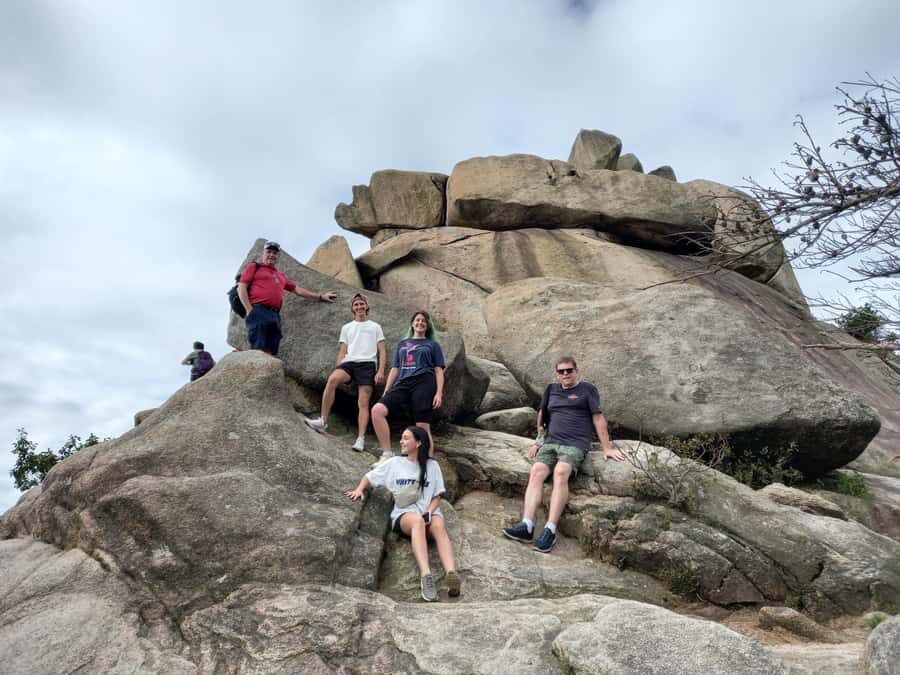
- English guide Paul Koo keeps the day moving and adjusts help when needed
- Downtown Seoul views from Munsubong Peak and along the ridge
- Granite rock formations you’ll recognize by the names on the trail
- About 5 hours of hiking inside a 6-hour full experience
- Good for a wide range of walkers if you pace yourself on the steep parts
Bukhansan, right inside Seoul
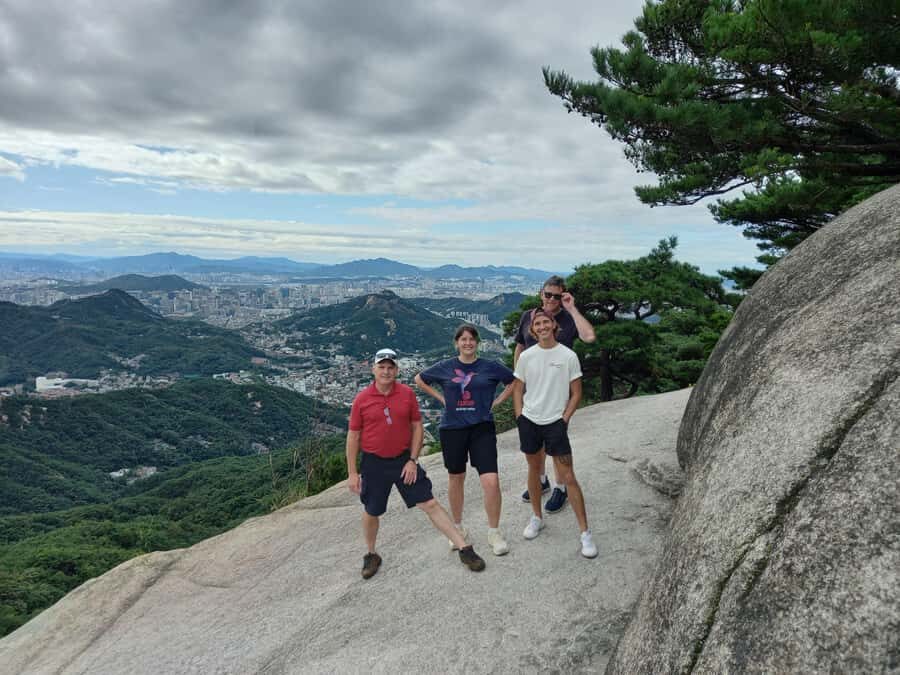
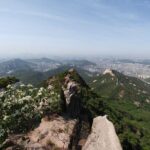
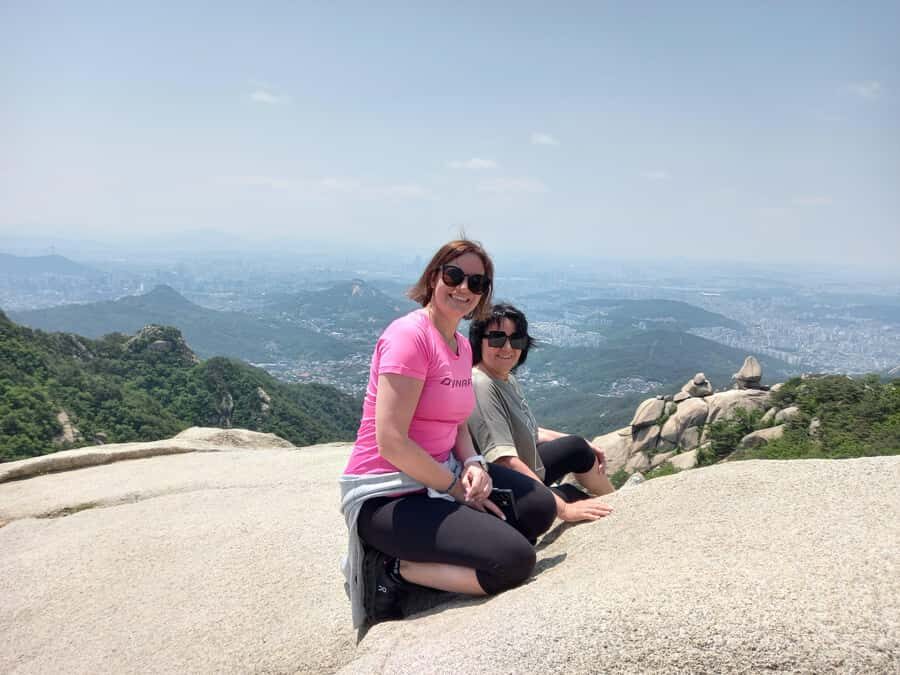
Bukhansan is one of those rare nature spots where the city doesn’t feel far away. The mountain sits in Gyeonggi Province but dominates the skyline of central Seoul, so when you reach the higher viewpoints, you’re looking at rooftops and towers alongside rugged rock.
The hike also has a strong sense of place. Bukhansan is Korea’s national park (designated April 2, 1983), and it’s one of Seoul’s three iconic nature landmarks, alongside the Han River and Namsan Mountain. With an elevation of 836.5 meters (2,744 feet), it’s not a huge height challenge—but it does deliver real mountain terrain.
What makes it especially appealing is the “rock-and-view” combo. The trail is built around oddly formed granite and strangely shaped stones, plus the payoff is concrete: you can see Seoul from the peaks when the sky is clear.
You can also read our reviews of more hiking tours in Seoul
Starting at Gwanghwamun: the smart way into the mountains
Your day starts at Gwanghwamun Square, at the King Sejong statue. That’s a great choice because it’s one of Seoul’s easiest landmarks to find, and it puts you in the middle of the city before you head out.
From there, you ride by bus/coach toward the Bukhansan area. The schedule includes about 30 minutes each way. One practical note: transportation for moving is listed as not included, even though the plan uses buses. So budget a little extra for transit and keep some cash or a transit card handy.
This “city-to-mountain” pacing matters. Instead of wasting time figuring out how to get to trailheads, you focus on the hike itself—and you’re back in central Seoul afterward.
The 6-hour rhythm: what happens when
This is built as a guided, time-managed walk, not a slow wander. The full experience is about 6 hours, with roughly 5 hours spent hiking on the trail segments.
Here’s how the day generally flows:
1) Gwanghwamun Square to Gugi National Park office
You meet at 09:30, then travel by bus/coach (about 30 minutes).
2) Gugi National Park office to Deanammun gate
This is your first main block of guided hiking, about 1.5 hours. It’s a good time to warm up and get your bearings while the guide sets the context for the mountain.
3) Snack and break
There’s a break and snack window (listed from 11:40 to 12:00). Even with that planned stop, you should still bring your own water and small snacks because food and beverage aren’t included.
4) Munsubong Peak and photo time
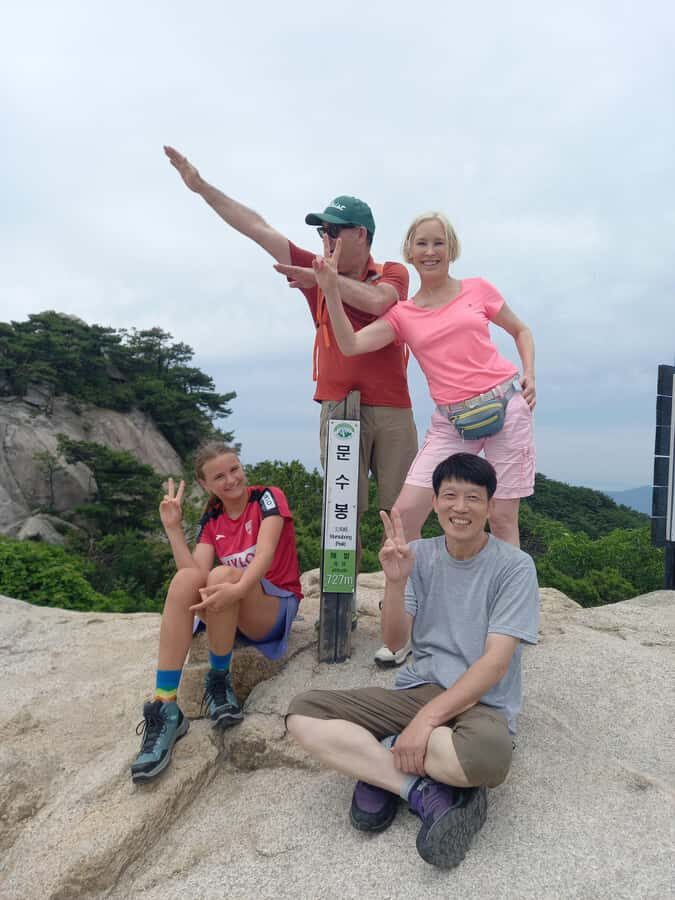
From 12:00 to 12:20, you reach Munsubong Peak and get time for photos. This is one of the most meaningful “work for it” moments because it’s where the Seoul views really start to feel big.
5) Tongcheonmun Rock and Seunggabong Peak
Next you move through more named rock and peak points (about 30 minutes). These are the sections where the granite formations and ridge views become the main event.
6) Bibong Peak and Samo Rock
Around 12:50 to 13:20, you hit another photo-worthy set of viewpoints. The trail naming here isn’t random—it’s basically your guide map in motion.
7) Bibong ridge
A short ridge section follows (about 10 minutes). Ridge hiking tends to be easier on your legs than steep switchbacks, but you still get plenty of changing scenery.
8) North 5 Provinces area
You finish the hike near the North 5 Provinces government office area (about 1 hour). This is where the day transitions from mountain effort back toward city-level ease.
9) Return to Gwanghwamun
You travel back by bus/coach (about 30 minutes).
What the trail actually feels like (steep then steady)
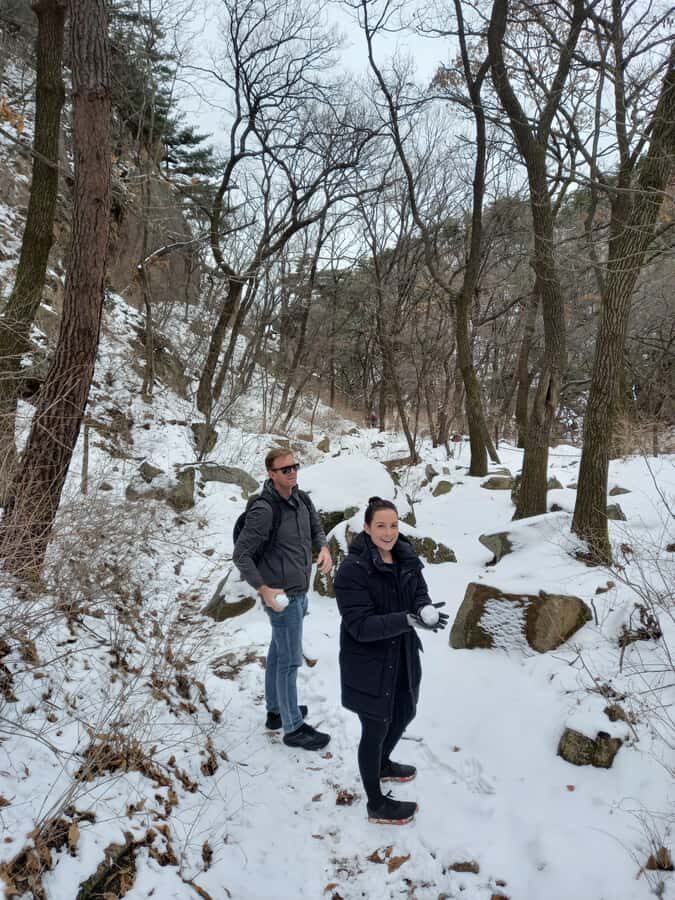
The difficulty level is described as middle-high, which is honest. This isn’t an ultra-hard climb, but it does include real uphill sections.
Plan for two effort spikes:
- In the beginning, you hike a little steep incline for about 50 minutes.
- On the middle section to Munsubong, there’s another steep incline for about 20 minutes.
After that, the route shifts more toward almost-flat mountain ridge trail. That’s important because it means your heart rate can recover while you still keep making progress and enjoying the views.
If you’re a casual walker, you’ll want to treat this like a workout you control. Go slower on the steep sections, take short pauses when you need them, and use the guide’s pacing. A nice detail from the experience notes: Paul’s style is supportive—he’s managed time well and helped a group member (including someone with more difficult steps) when the trail got challenging.
Good shoes matter here. The description emphasizes steep inclines and ridge walking, so wear footwear that’s stable and comfortable for uneven ground.
Granite rock formations and the named peaks that matter
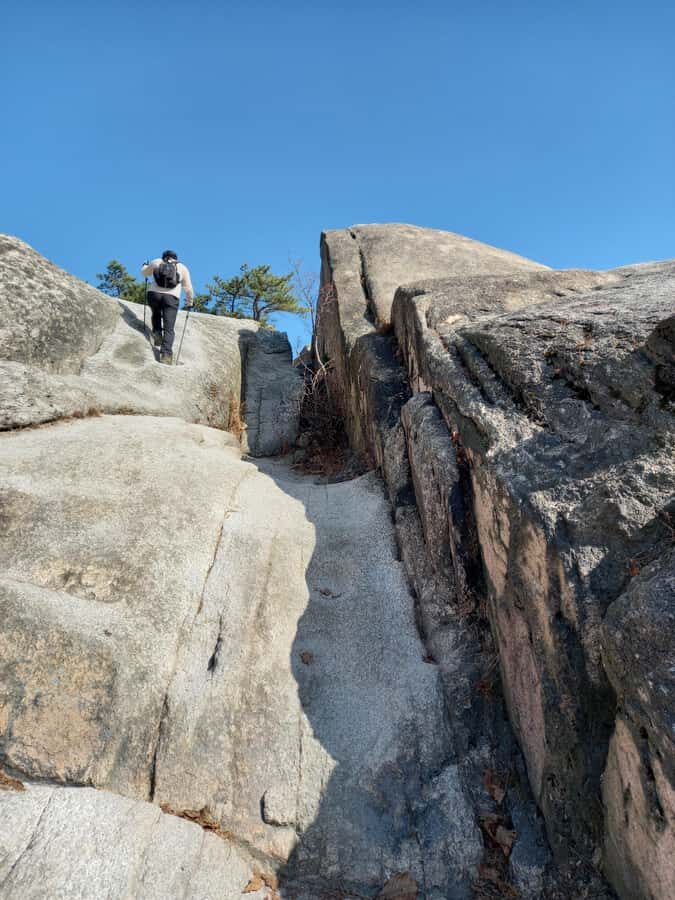
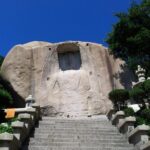
One of Bukhansan’s signature features is that it looks sculpted. The trail is especially associated with granite rock formations—oddly shaped stones that look almost stacked or twisted rather than naturally smooth.
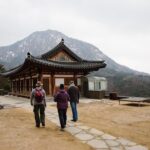
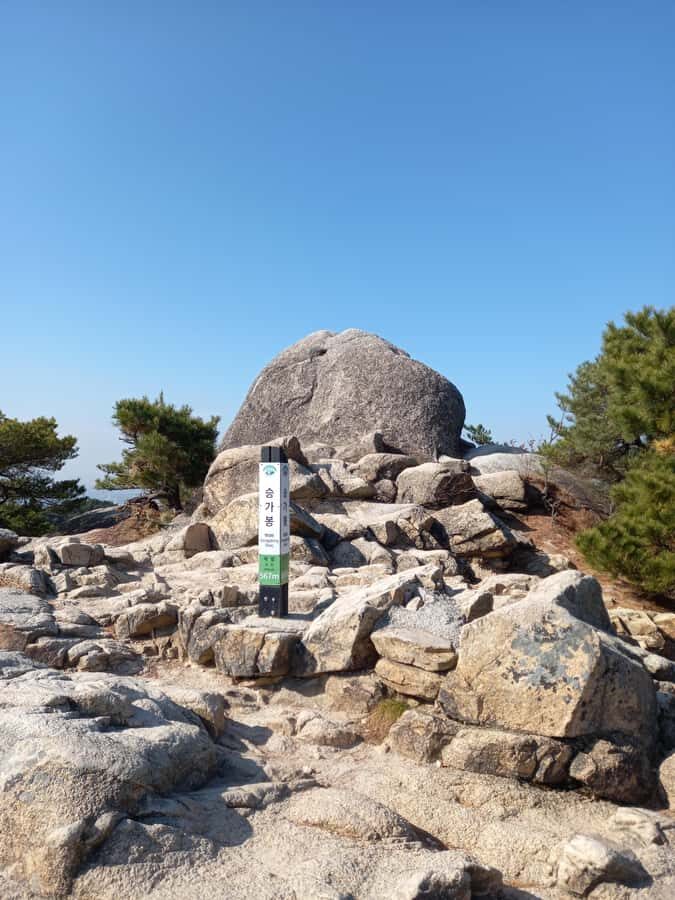
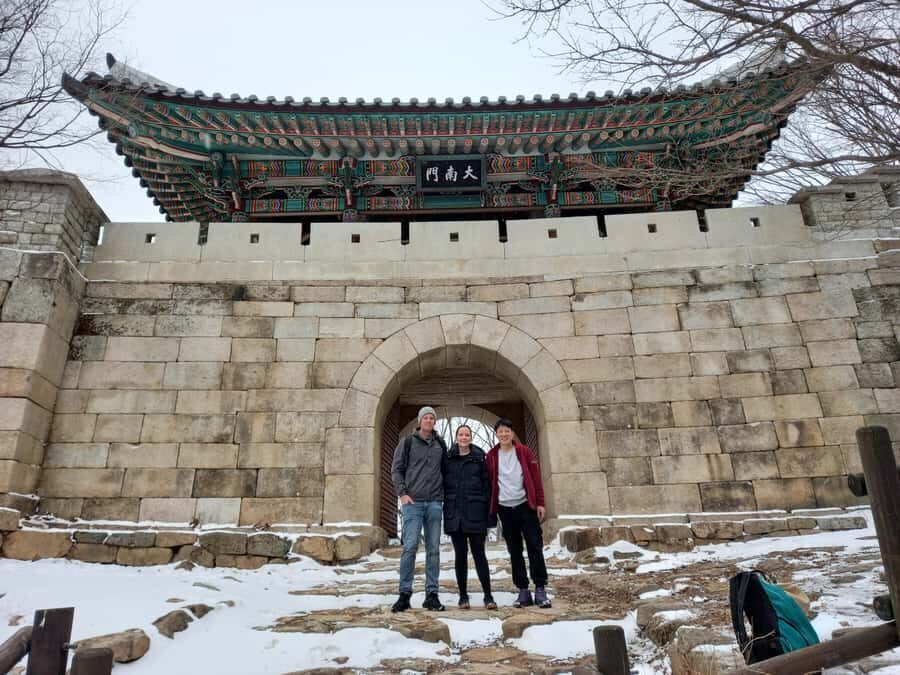
As you move along the route, you’re also moving through named stops that anchor the scenery. The trail section you’ll experience includes: Geumseonsa, Bibong Peak, Samobawi Rock, Seunggabong Peak, Tongcheonmun Rock, Munsubong Peak, Daenammun Gate, and the Gugi branch office of the National Park.
If you like hiking where you can actually remember what you saw, this naming helps. You’re not just walking between view spots; you’re hitting distinct rock points and peaks that the guide can interpret and point out.
Then there’s the payoff: Munsubong Peak offers wonderful views, especially on clear days. You also get a valley descent with a refreshing sound of flowing water, even in drought conditions. That kind of sensory detail is one of the reasons this mountain feels calmer than the effort level suggests.


Cultural context: more than just rocks
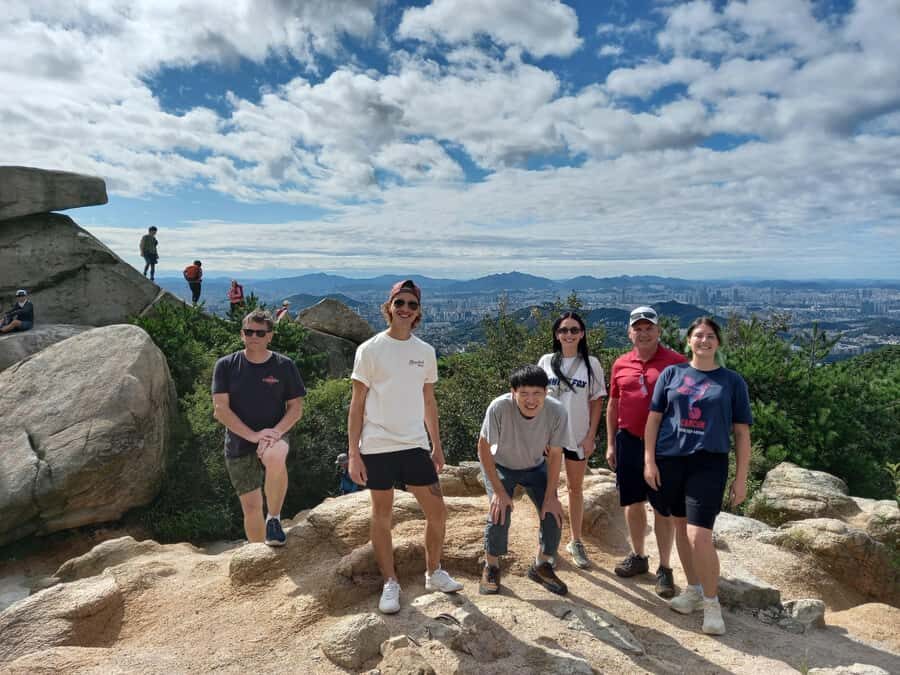
Bukhansan isn’t only outdoor scenery. It has long Korean history and spiritual traditions, and the tour guide explains the geography, history, and spiritual features along the way.
The key idea is simple: for Koreans, mountains have been more than nature. They’ve been places of worship and reflection. During the hike, you also hear about the life of Buddhist monks and the idea of temple stays, because there are multiple Buddhist temples in Bukhansan (10 are listed).
You won’t be turning this into a full temple tour. Still, the cultural framing changes how the hike feels. Instead of treating it like a generic cardio session, you start noticing how the trail connects to a bigger story—why people cared about these peaks long before Seoul looked like Seoul.
Timing, photos, and a realistic pace for 50-60+ walkers
The schedule is structured so you’re not wandering all day. You get dedicated time blocks for photo stops and a planned break. That helps a lot when the group includes different walking speeds.
In the experience feedback, the most praised point is often the guide’s pacing and care. Paul is described as managing time well, and being patient—especially when someone in the group needed extra help on harder parts.
So if your hiking style is more “steady and careful” than “fast and fearless,” this setup makes sense. You won’t be left behind, and you won’t be rushed so hard that you forget to look up.
Value and price: $305 for a private group up to 2
The price is $305 per group up to 2 people. That means the economics are strongest for couples or small groups who want a private English guide without a big-group feel.
Think of it this way:
- If it’s just you and one partner, you’re effectively splitting the guide cost.
- If you’re traveling solo, it can still be good value, but it’s more of a premium versus joining a larger group.
Where the value really comes from is control and attention. You’re not just getting a map—you’re getting a guide who can explain the rock formations, time the route, and support you on steep moments. On a mountain hike, that kind of help can prevent you from turning the experience into stress.
What to bring so the 6 hours feel easy
Food and beverage aren’t included, and the guidance is to bring your own basics. The notes specifically suggest you carry:
- snacks (like energy bars)
- bananas or simple food
- water
- basic supplies for your comfort
Also bring the usual hiking common sense: a light layer for temperature changes, and gear that works for uneven ground. Since you’ll have 50 minutes of steep incline early, you’ll appreciate being prepared rather than improvising.
After the hike: Seochon and Toingin Market
One of the best perks of this tour is what it sets you up to do afterward. You end back near central Seoul around Gwanghwamun Square, and the guidance points you toward Seochon of Hyojadong for traditional food at Toingin Market.
You can also look for a cafe stop to reset your legs. This is exactly the kind of “mountain morning, city afternoon” plan that works well in Seoul, because you can keep exploring without commuting across town again.
Should you book this Bukhansan hiking tour?
Book it if you want a guided Seoul mountain hike that’s structured, English-friendly, and focused on both views and understanding what you’re walking through. It’s a smart pick for pairs who want privacy and for walkers who can handle steep sections with breaks.
Skip it (or ask questions before booking) if you’re looking for an easy, flat stroll. The route includes a steep 50-minute section at the start and another steep climb toward Munsubong, so mobility and stamina matter. If you’re unsure, use the guide’s support as part of your plan, not as an afterthought.
If your goal is classic Bukhansan: granite rocks, named peaks, city views, and a guide who pays attention—that’s what this delivers.
FAQ
What time and where do we meet for the Bukhansan tour?
You meet at 09:30 at Gwanghwamun Square, at the King Sejong statue. Meeting time and place can be adjusted after booking, and your hotel can also be used as a meeting point.
How long is the hike and how long is the full tour?
The full experience is about 6 hours, and it includes about 5 hours of hiking on the trail.
Is there an English-speaking guide?
Yes. This activity includes a live tour guide in English.
How difficult is the hiking route?
It’s described as middle-high difficulty. The day includes a steep incline for about 50 minutes early on and another steep incline for about 20 minutes on the way to Munsubong, with a lot of ridge trail that is almost flat afterward.
Does the tour include transportation and food?
Food and beverages are not included, and transportation for moving is also not included. The schedule includes a break and snack time, but you should bring your own snacks and water as requested.
What does the tour include?
It includes the guide fee for 6 hours and the hiking trail to Bukhansan Mountain.
Is there free cancellation and flexible payment?
Yes. You can cancel up to 24 hours in advance for a full refund. There’s also a reserve now & pay later option available.
If you tell me your walking comfort level (and whether you’ll be going as 1 or 2 people), I can help you judge whether the steep portions feel manageable for you.