REVIEW · SEOUL
Korean Traditional Music Performance Ticket
Book on GetYourGuide →Operated by The Creators · Bookable on GetYourGuide
A hanok show that feels like another century. This Korean Traditional Music Performance takes place in a calm, atmospheric venue in Insa-dong, where skilled musicians move you through court formality, folk soul, and even creative modern twists. The whole thing runs about an hour, with comfortable seating and a clear, staged flow you can follow even if it’s your first time with Korean traditional music.
I particularly love how the program is structured in three distinct stages—starting with a blessing ceremony, shifting into banquet-style court music, then ending with folk songs plus fusions you’ll recognize from modern Korea. I also like the intimate setup: it’s designed for small groups (up to 20), which makes the performance feel personal instead of like a big auditorium production.
One thing to consider: the venue is reached by stairs only, with no elevator, and the experience is scheduled on weekdays only (11:00, 13:00, 15:00). If you’re traveling with mobility limits or you’re not sure you can manage the stairs, plan carefully.
In This Review
- Key highlights you’ll feel right away
- A Hanok Concert in Insa-dong: What You’re Paying For
- The 60-Minute Program: Gilje, Jinyeon, and Together in Harmony
- 1) Arrival and the musicians’ entrance
- 2) Gilje: opening blessing ceremony
- 3) Jinyeon (The Banquet Performance)
- 4) Together in Harmony: folk songs and modern fusions
- Photo time with the musicians
- The Sound and the Instruments: Why This Show Feels Special
- Getting to Jinyeon Hall on Insadong 5-gil (Stairs Included)
- Nearest subway exits
- Stairs only, no elevator
- Timing That Fits Your Seoul Day
- What’s Included (and What Isn’t)
- Who This Is Perfect For (and Who Should Skip It)
- Tips That Make the Show Go Smoothly
- Book It or Pass: My Quick Decision Guide
- FAQ
- How long is the Korean traditional music performance?
- What time slots are available?
- Where is the meeting point?
- Is the venue wheelchair accessible?
- What languages are supported?
- What’s included in the ticket price?
Key highlights you’ll feel right away
- Gilje blessing ceremony that sets a peaceful tone before the music even starts
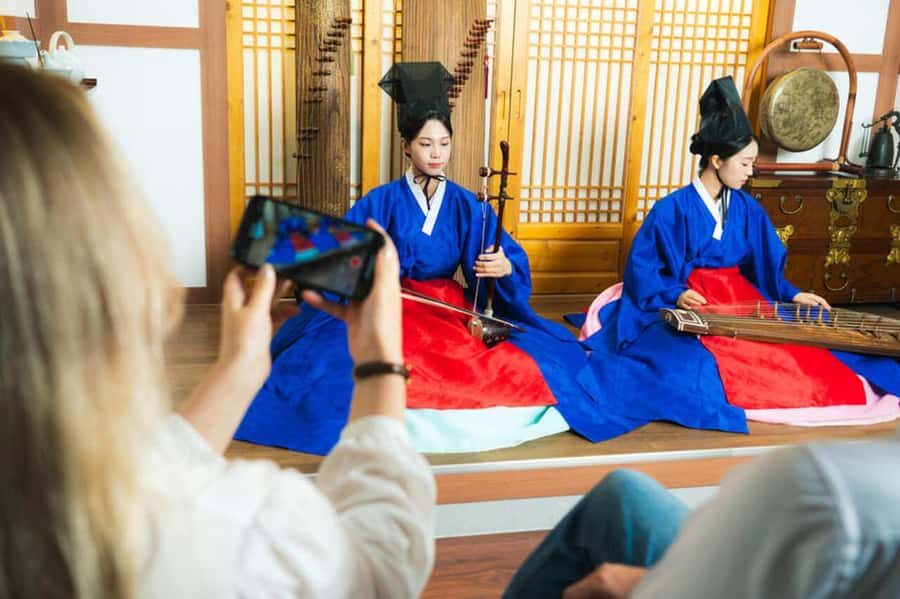
- Jinyeon (banquet performance) with graceful court music and standout solo instrumentals
- Together in Harmony that connects traditional folk sounds with K-pop and drama OST melodies
- Intimate hanok atmosphere in a small, thoughtfully arranged space in Insa-dong
- Photo time with the musicians after the show, plus a chance for friendly exchanges
- English and Korean supported, with seating set up for a relaxed listening experience
A Hanok Concert in Insa-dong: What You’re Paying For
This ticket is for a 60-minute traditional music performance in a real hanok setting in Insa-dong, one of Seoul’s most convenient neighborhoods for experiencing old-and-new Korea. For many visitors, the value isn’t just the music—it’s the environment. The hanok makes the sound feel closer and the mood feel more ceremonial than you’d get from a standard theater.
Now, about the price: at about $47 per person, this isn’t the cheapest cultural stop in Seoul. But you’re paying for a small-format show with experienced performers (the experience information notes over 10 years of experience), a structured three-part program, and a venue that’s built for listening. You’re also not stuck waiting through long add-ons. The show is the product, and it runs about an hour.
I like that the pacing is clear and you’re not left guessing what’s happening. The ceremony-style start helps you get oriented fast, even if you’re unfamiliar with Korean music traditions. And the final stage uses familiar pop and drama influences, which helps the modern audience connect without turning the whole evening into a casual concert.
You can also read our reviews of more tours and experiences in Seoul


The 60-Minute Program: Gilje, Jinyeon, and Together in Harmony
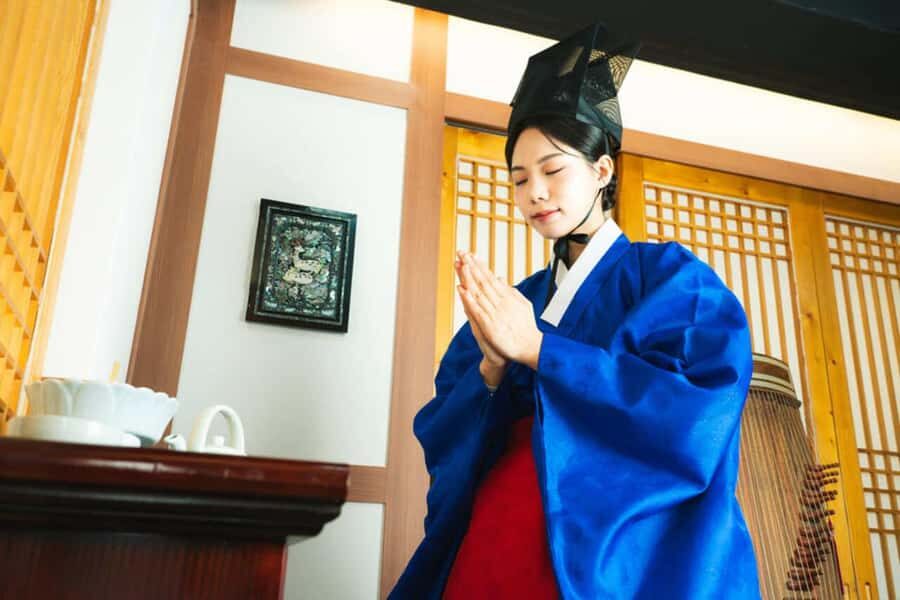
Here’s what the performance does, in the order you’ll experience it.
1) Arrival and the musicians’ entrance
You’ll start by getting seated in the prepared seating area. Chairs are provided, so you can focus on listening instead of trying to find the perfect posture. The show begins with a warm welcome as the musicians enter, which is a small but important step. It signals that this is a formal cultural performance, not a casual background show you can half-watch.
Tip: you’re asked to arrive 10 minutes early. That matters more than you might think, because you’ll want time to find the hall, get settled, and get your phone situation sorted before things start.
2) Gilje: opening blessing ceremony
The first stage is Gilje, described as an opening blessing ceremony to begin the experience with peace and good wishes. Even if you don’t understand every detail, this portion works because it frames the evening like a ritual. It sets expectations: listen carefully, keep the room quiet, and let the music unfold at its own pace.
This is also the moment where you’ll notice the solemn tone. The organizer requests mobile phones be set to silent mode before the performance starts, and that instruction is there for a reason. The show’s power depends on a quiet room.
3) Jinyeon (The Banquet Performance)
Next comes Jinyeon, the banquet performance. This is where you shift from blessing ceremony mood into court music elegance. The format includes graceful court music plus powerful solo instrumentals that showcase Korean musical artistry.
This stage is a great fit if you like performances where you can hear individual instruments clearly and track how they interact. It’s also the section that helps you understand Korean traditional music as something structured and expressive, not just a set of unfamiliar sounds.




4) Together in Harmony: folk songs and modern fusions
The final stage is Together in Harmony. You’re told to expect the soul of Korean folk songs, plus creative fusions of K-pop and drama OSTs performed with traditional instruments.
This is the part that makes the whole night accessible for first-timers. You might recognize a melody or two, but it won’t feel like a gimmick. The interesting trick here is that familiar tunes get heard through a different musical “lens,” using traditional instruments and techniques. It’s a bridge between past and present without turning the tradition into a novelty.
Photo time with the musicians
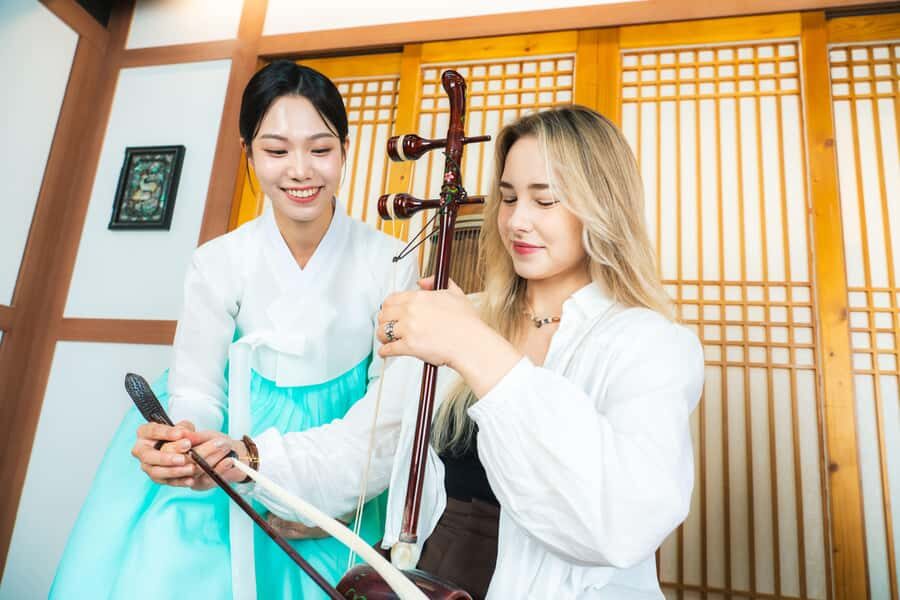
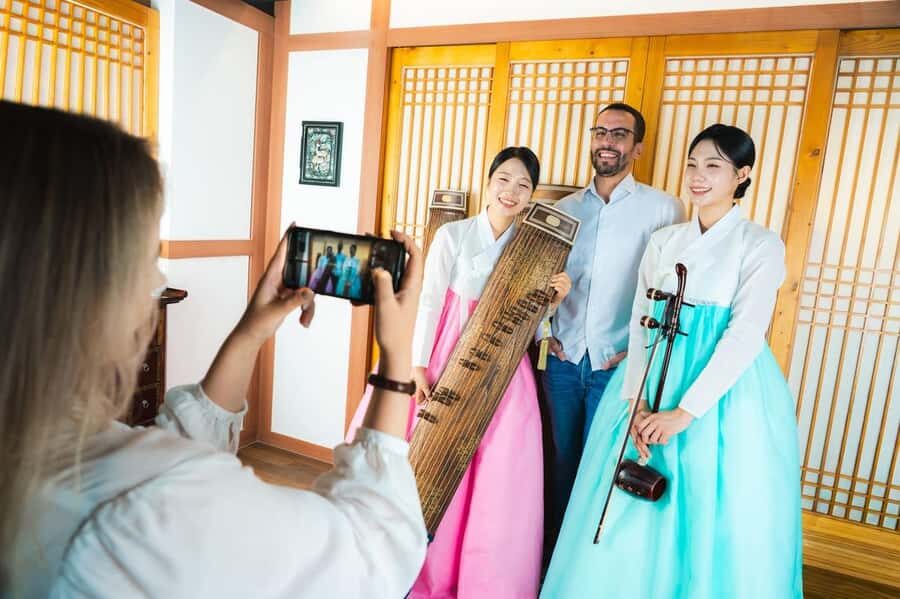
After the performance, don’t rush out. The experience info specifically says you shouldn’t miss the chance to take photos with the musicians after the show. Some audiences also get friendly exchanges that go beyond the photo moment—like questions about instruments and how the sounds are made—so if you’re curious, this is your window.
The Sound and the Instruments: Why This Show Feels Special
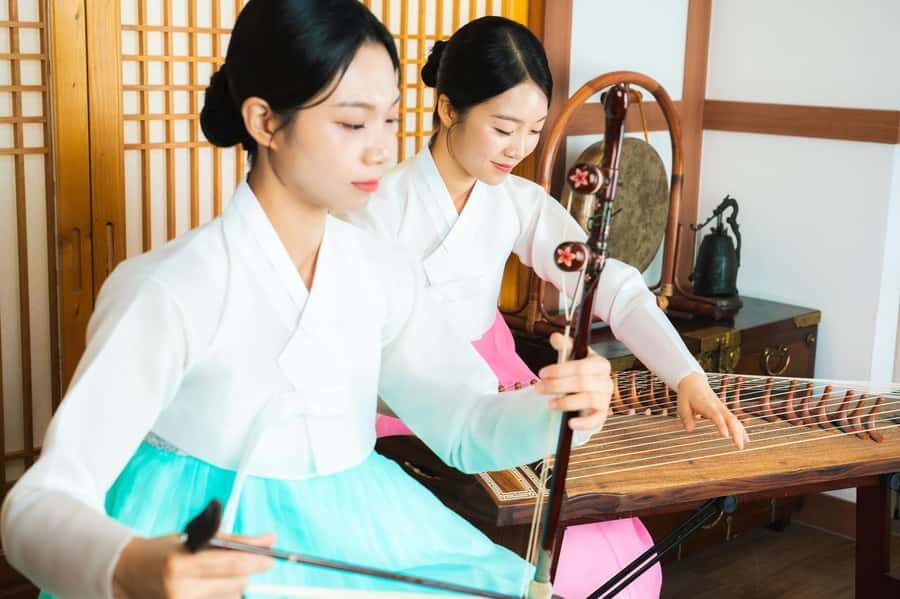
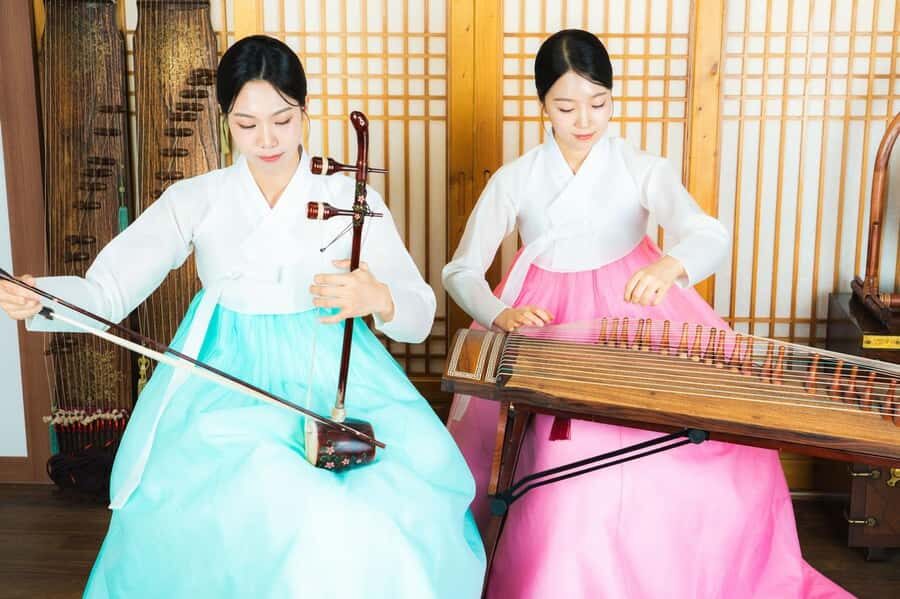
Even if you don’t know Korean traditional instruments by name, you can still enjoy what makes the sound distinct. The performance includes traditional instruments, and the show’s design gives each section room to breathe.
One instrument detail that pops up in strong feedback is the blend involving the gayageum and haegeum. The gayageum is known for its delicate, plucked tone; the haegeum is the bowed counterpart that can sound both gentle and intense. When you hear them together, the result is often the “wow” moment for first-time listeners—because the music can feel both lyrical and gripping at the same time.
Another reason the experience works: you’re seated in a calm hanok space, so the listening experience is the point. This format makes subtle musical shifts easier to catch. You also get performers in traditional attire as part of the overall vibe, which helps you take the evening seriously without needing to be a music expert.
Getting to Jinyeon Hall on Insadong 5-gil (Stairs Included)
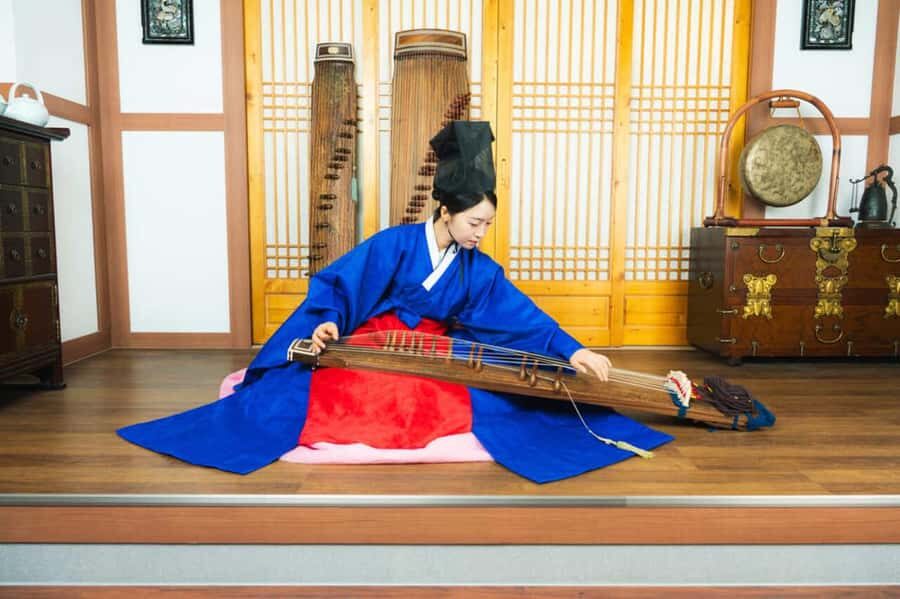
The meeting point is at Jinyeon Hall, 2F 10 Insadong 5-gil, Jongno District, Seoul. The location matters because this isn’t a “meet under a big street sign” type of setup.
Nearest subway exits
You’ll likely use one of these:
- Jonggak Station (Line 1), Exit 3-1: about 6 minutes on foot
- Jongno 3-ga Station (Line 5), Exit 5: about 8 minutes on foot
A practical tip: get your map working before you start walking. One common issue here is that map apps don’t always land you on the exact door for small venues. If your first option looks off, switch to Google Maps and follow the instructions carefully.
Stairs only, no elevator
Access to the venue is via stairs only. There is no elevator, and the experience is not suitable for people with mobility impairments. This isn’t just a “bring comfortable shoes” detail. It affects whether you’ll enjoy the show comfortably from the start.
If you can do stairs but want to minimize strain, aim to arrive early and take your time finding the hall. And if you’re traveling with luggage or you’re coming in from a long day of walking, consider how you’ll feel once you’re climbing.
Timing That Fits Your Seoul Day
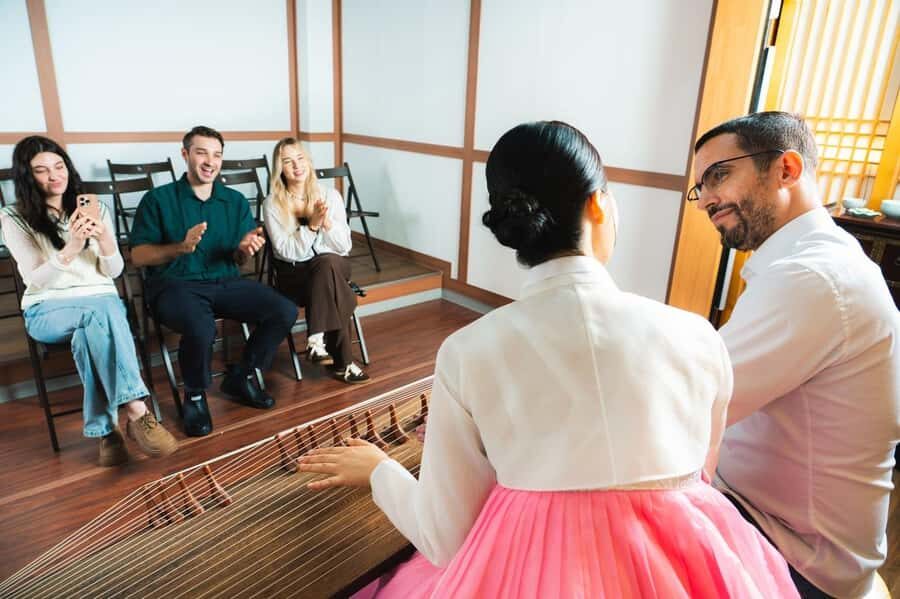
This show runs on weekdays only, excluding weekends and public holidays. The scheduled times are 11:00, 13:00, and 15:00.
If your days are packed, the hour-long format is easier to slot than a longer performance. Also, because it’s in Insa-dong, you can pair it with nearby cultural wandering before or after (tea stops, craft browsing, and historic streets). The key is to keep your schedule flexible enough that you actually arrive 10 minutes early.
What’s Included (and What Isn’t)
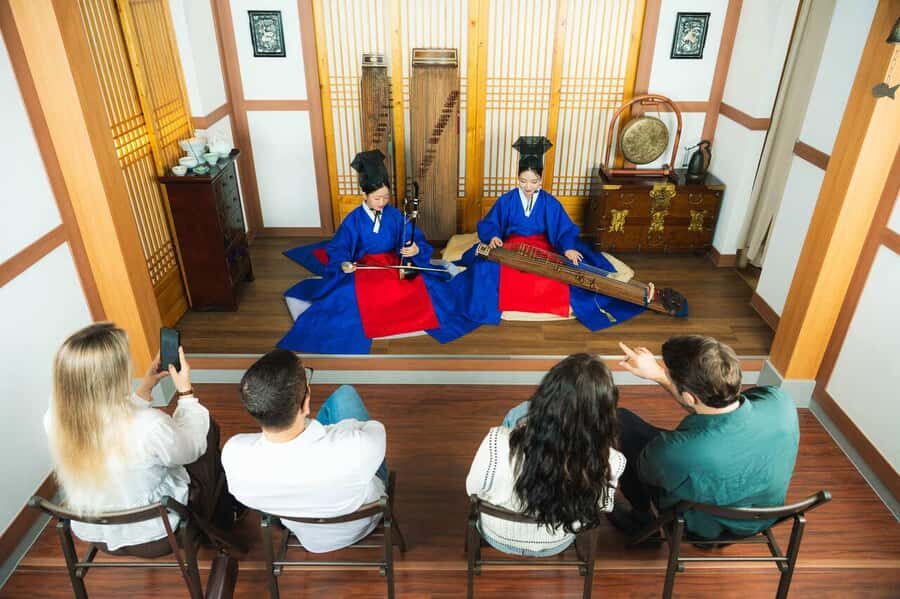
You’re paying for the main event: Korean Traditional Music Performance.
Not included:
- hotel pickup and drop-off
- food and drinks
That means you’ll want to handle meals around the show time. If you’re planning lunch, I’d either eat before you go or choose a nearby option with an easy walk, so you’re not scrambling when you should be quietly seated.
Also, bring the right mindset: this is a performance where the room’s calm matters. If you treat it like a quick snack stop, you’ll miss what the show is trying to do.
Who This Is Perfect For (and Who Should Skip It)
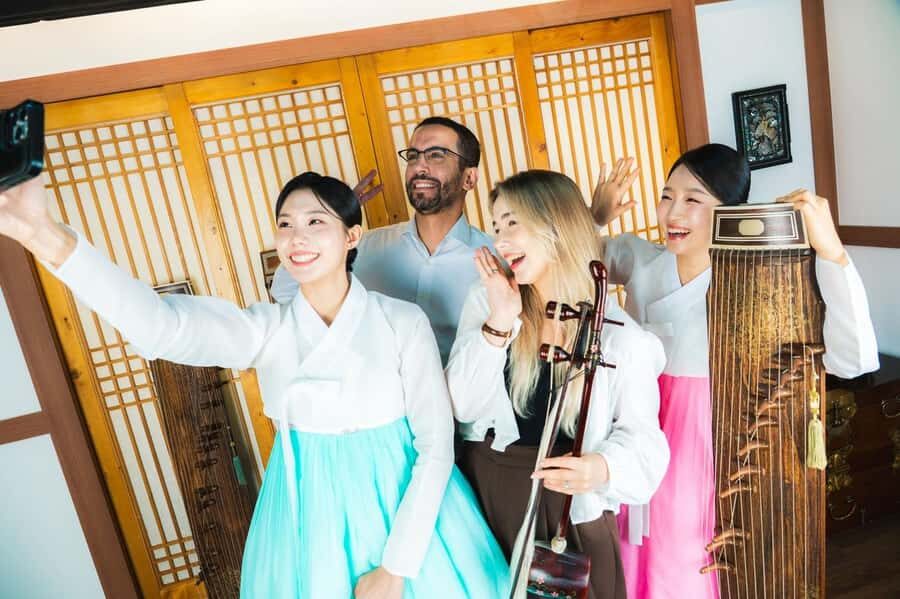
This is a strong choice if you want:
- a structured introduction to Korean traditional music
- a setting in a hanok rather than a modern hall
- a small-group atmosphere where the performance feels closer
- a blend of tradition and modern references (K-pop and drama OSTs) played with traditional instruments
It’s also a good family-friendly cultural stop in the sense that it’s comfortable and seated, and it runs about an hour. One useful hint from real-world experience: it can work especially well when you want something calmer than the usual nightlife scene in Seoul.
Who might skip it:
- anyone who can’t manage stairs only access
- people who need constant action or loud volume to stay interested (this is music-forward, not a high-speed stage show)
Tips That Make the Show Go Smoothly
A few small moves can make a big difference here:
1) Arrive 10 minutes early
This gives you time to find the right hall and get seated without feeling rushed.
2) Set your phone to silent
It’s requested for a reason. A quiet room is part of the show.
3) Choose your time slot with your walking schedule in mind
Even if the area is easy, you’ll still climb stairs once you reach the venue.
4) Plan to stay for the photo moment
It’s built into the experience, and it’s often the part that turns a performance into a memory you can keep.
5) Ask one question if you’re curious
If there’s a chance for exchanges after the show, this is where you’ll learn what the instruments do and why the music sounds the way it does.
Book It or Pass: My Quick Decision Guide
Book this if you want a high-value cultural hour in Seoul’s Insa-dong that’s designed for first-timers, with a clear program and a hanok setting. The three-part structure (Gilje → Jinyeon → Together in Harmony) is the biggest reason to buy: it guides you through a full emotional arc in about an hour, then adds modern melodies so you still recognize something even on your first listen.
Pass or reconsider if stairs are an issue for you, or if you’re traveling on a weekend/public holiday and can’t make a weekday slot. Also, if you hate any formality around performances, the solemn tone (and the phone-silent request) might feel like too much.
If you’re flexible and you like listening-focused experiences, this is the kind of ticket that makes Seoul feel both historic and alive at the same time.
FAQ
How long is the Korean traditional music performance?
The performance lasts approximately 60 minutes.
What time slots are available?
Performances are scheduled on weekdays only (excluding weekends and public holidays) at 11:00, 13:00, and 15:00.
Where is the meeting point?
The meeting point is Jinyeon Hall, 2F 10 Insadong 5-gil, Jongno District, Seoul. It is about 6 minutes on foot from Jonggak Station Exit 3-1 (Line 1) and about 8 minutes on foot from Jongno 3-ga Station Exit 5 (Line 5).
Is the venue wheelchair accessible?
No. Access to the venue is via stairs only and there is no elevator, so it is not suitable for people with mobility impairments.
What languages are supported?
The performance is available in English and Korean.
What’s included in the ticket price?
The ticket includes the Korean Traditional Music Performance. Hotel pickup/drop-off and food and drinks are not included.