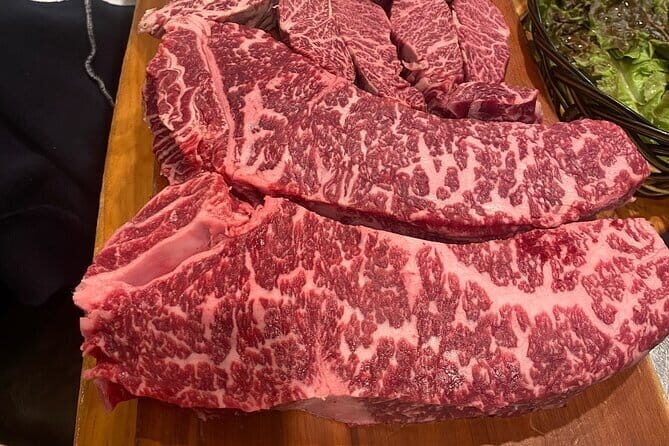
I especially love the hands-on choice of premium Han-woo cuts (graded 1++), plus pork options, before cooking them yourself. And I like how the meal is built around the actual sourcing experience, not around a generic dinner stop.
One thing to consider: this is a real meat market. You’ll see animal parts, even though the market is described as clean, so it’s not the right fit for vegetarians or anyone avoiding beef.
Key highlights you’ll care about
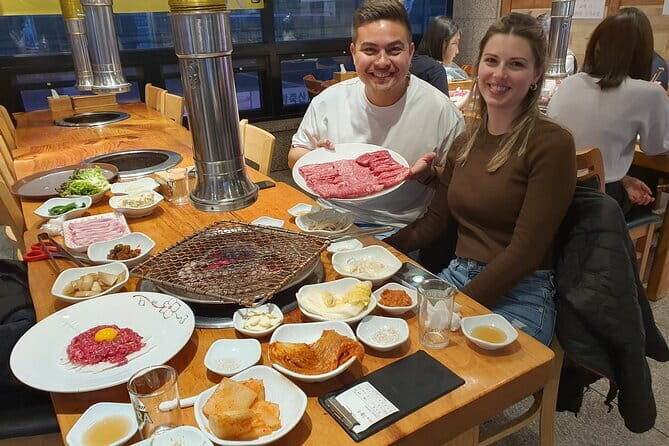
- Pick your own cuts: choose Han-woo graded 1++ or pork before you eat
- A real butcher scene: Korea’s meat-focused market culture, not a staged food set
- BBQ with purpose: your purchases go straight to grilling for a butcher-to-BBQ flow
- Short and focused: about 3 hours total, starting at 6:00 pm
- Optional craft drinks: stop for soju and makgeolli at a traditional pocha-style pub
Majang Meat Market at 6:00 pm: why this timing works
In Seoul, the evening food energy is real, and a market tour at 6:00 pm hits when people are hungry and the stalls are moving. That matters, because this isn’t a museum walk. You want the pace of an active market, where you can see how meat is handled and sold as part of daily business.
This tour also stays tight: it’s about 3 hours, and it ends back at the starting area. That makes it easier to fit into a first-time Seoul plan, without turning your whole night into one long food crawl.
Getting to Yongdu Station and the start point without stress
You’ll meet your guide at Yongdu Station, exit 4, and then head into the Majang area. The tour’s listed start point is at Inteokan in Seongdong-gu (마장동 773-5), which gives you a fixed anchor if you’re using a maps app.
It’s set up to be public-transport friendly, and confirmation is handled at booking. You’ll also get a mobile ticket, which is handy if you’re juggling multiple tours or have spotty Wi‑Fi.
Group size stays small—up to 10 travelers—so you’re less likely to feel lost in a crowd. That also tends to help when you have questions about what you’re seeing, eating, or ordering.
What you’ll see inside: a clean market with a real edge
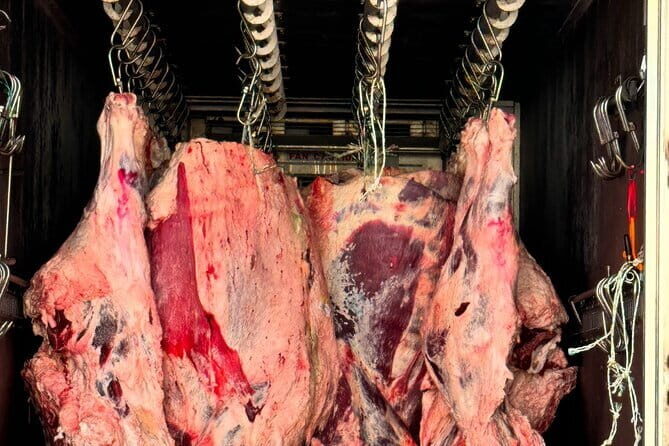
Majang Meat Market is described as Korea’s only meat market and a major source of meat for Seoul, and it has a reputation for being intense. The guidance is clear: you’ll see animal parts. Even with that warning, it’s still presented as clean.
So go in with the right mindset. This is not a gentle tasting tour for everyone. It’s the kind of place where understanding comes from seeing the full chain—how meat is graded, prepared for sale, and treated as working material.
If you’re curious about food culture, this is exactly why the experience is valuable. You see the seriousness behind the quality labels, and it gives context for why Han-woo fans are so specific about marbling and grade.
Choosing Han-woo 1++ (and pork): what the grading tells you
One of the best parts of this tour is that you don’t just eat Han-woo—you choose it. The experience focuses on selecting Han-woo beef graded 1++, and it also includes pork options.
Why does grade matter? In Korean BBQ culture, quality isn’t a vague idea. A premium grade affects texture and the way fat renders at the grill. In plain terms: you’re paying for consistency, and you’re reducing the risk of a meal that looks great on paper but doesn’t deliver on the plate.
This is also where the market guide earns their keep. A good guide helps you connect what you see in the market to what you’ll taste later. You’re essentially translating butcher logic into dinner expectations, so your BBQ isn’t just food—it’s a live comparison of choices.
From purchase to coals: how the BBQ feast is built
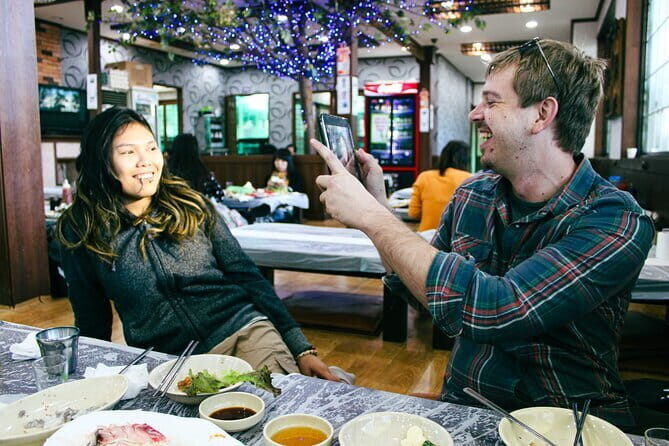
After the market, you take your selected cuts to a local restaurant to grill over coals. The key detail here is that the BBQ experience is designed to keep the connection to the source, rather than swapping your meat picks for a random set menu.
The tour is described as an all-inclusive BBQ feast with drinks. That matters because it turns the night into a full meal plan instead of a choose-your-own-adventure situation where you’re constantly reaching for your wallet mid-grill.
The vibe here is also described as butcher-to-table. In other words, you’re not pretending the meat showed up magically. You’re eating what you chose, and that makes the flavors feel more intentional.
If you’re the type who likes to understand why people are obsessed with Korean BBQ, this format gives you the closest thing to a direct line from sourcing to cooking.
Optional pocha stop: pairing BBQ energy with soju and makgeolli
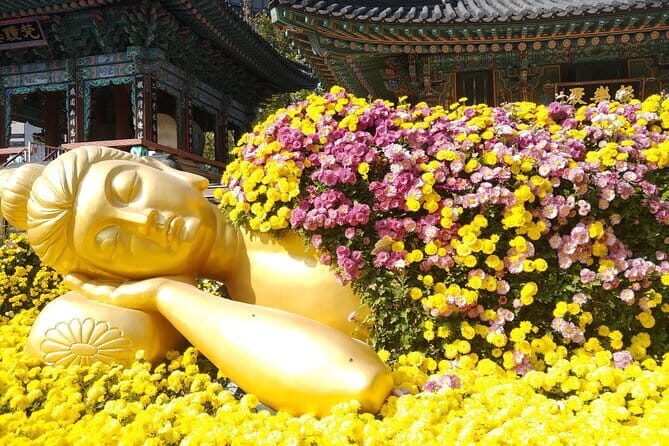
There’s an optional extra stop at a traditional pub—often called a pocha-type spot. If you add it, you’ll get a chance to taste small-batch craft soju and makgeolli, along with local snacks.
This is a smart add-on for two reasons. First, it matches the way many Koreans experience food: one part eating, one part drinking and chatting as the meal stretches into an evening. Second, it gives you a different angle on the night after the intensity of the meat market.
The pairing is practical, too. Makgeolli is creamy and cloudy, so it can soften and balance heavier grill flavors, while soju tends to keep things crisp and easy to sip alongside savory food.
If you’re trying to keep your night light, you can skip this part and still have a complete experience with the BBQ alone. But if you want the full street-food-adjacent rhythm of Seoul evenings, it’s a nice fit.
Price and value: what $223.25 per person is buying
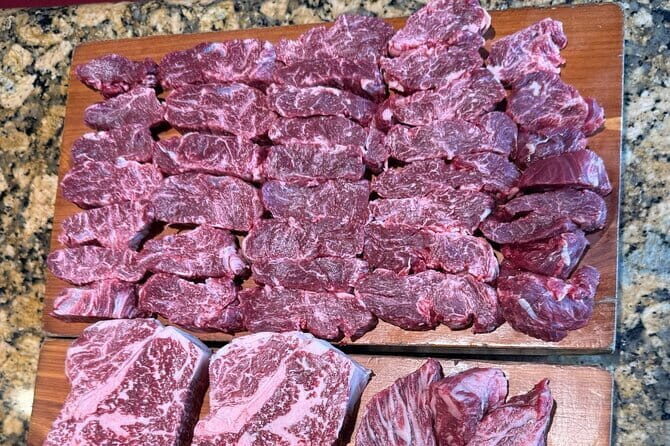
At $223.25 per person, this is not the cheapest way to eat Korean BBQ in Seoul. The value comes from the structure: you’re paying for the guided market selection plus the butcher-to-BBQ flow, not just for meat and a seat at a restaurant.
A few cost drivers are built in:
- A guided tour through a working market
- Selection of graded Han-woo 1++ (and pork options)
- A BBQ feast with drinks
- Optional craft alcohol tasting at a local pub
The price also makes sense when you consider the group limit of up to 10. Small groups usually mean more time for questions, more help choosing cuts, and less of that awkward feeling of trying to decode a busy market on your own.
It’s also listed as a private tour experience, with mobile ticket use and a market admission ticket noted as free. Those details may sound minor, but they reduce friction. You spend your energy on the meat, not on logistical guesswork.
Net: this cost fits travelers who care about how food is sourced and who want a more guided, higher-quality BBQ meal than a basic restaurant reservation.
Who this tour is best for (and who should skip it)
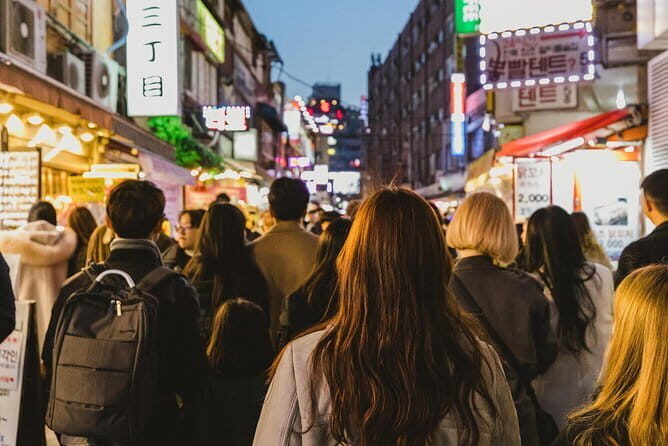
This is a clear win if you:
- Eat beef and are serious about Han-woo
- Want an authentic market experience tied directly to the dinner you’ll cook
- Prefer guided context over wandering a food market with no plan
- Like small-group tours where you can ask questions without shouting over a crowd
This is not the right match if you:
- Don’t eat beef
- Are vegetarian
- Feel strongly uncomfortable seeing animal parts, even in a described-clean market
One more practical note: the experience is near public transportation, and service animals are allowed, which is helpful if you need that kind of accommodation.
What to expect from the guide (Ron is a good sign)
The guide plays a big role here, and the names in the experience matter. Ron comes up in the feedback as the kind of guide who makes the night fun and informative, not stiff or scripted.
The best part isn’t just food talk. Ron is also credited with giving insight into Korean customs, history, and how daily life works in South Korea today. That kind of context turns a meal into a story you can keep in your head after you leave.
If you want the experience to feel like more than grilling, choose a time that lets you arrive calm and hungry. Then you’ll get the full benefit of a market guide who can connect what you’re seeing to what you’re eating.
Practical tips so your BBQ night goes smoothly
Go in hungry. This is a market-to-meal route, and the BBQ is a major focus.
Wear something comfortable for walking and standing. Even though the total time is about 3 hours, meat markets are active places where you’ll likely spend time looking up close at stalls.
Be ready for the sensory side of a working meat market. That includes the sight of animal parts. If that’s hard for you, save your energy and pick a different food tour theme.
If you’re adding the pocha stop, pace yourself. You’ll likely be eating well, then tasting alcohol like soju and makgeolli with snacks, so take small steps and enjoy the pairing instead of rushing it.
Should you book the Majang Meat Market BBQ tour?
Book it if your idea of a great Seoul night includes Han-woo quality, market context, and a BBQ that’s tied to your actual choices. This tour earns its reputation by connecting sourcing, selection, and grilling into one flow, and the small-group size helps the whole experience feel personal.
Skip it if seeing animal parts would spoil the experience for you, or if beef isn’t your thing. You’ll have a better night elsewhere.
If you do book, aim to arrive a touch earlier so you’re not rushing at Yongdu Station exit 4. Then settle in for a compact, high-impact dinner plan where the food story starts before the grill is even lit.
FAQ
How long is the Majang Meat Market Han-woo BBQ tour?
It’s listed as about 3 hours.
What time does the tour start?
The start time is 6:00 pm.
Where do I meet the guide?
The guide meets you at Yongdu Station, exit 4. The tour also lists a start location at Inteokan in Seongdong-gu (마장동 773-5).
What does the tour include?
You’ll tour Majang Meat Market, then go to a BBQ restaurant to grill what you selected. The BBQ feast includes drinks.
Can I choose what I eat?
Yes. You select Han-woo cuts graded 1++ and you can also purchase pork.
Is there an option to drink alcohol?
Yes. There’s an optional stop at a traditional pub to taste craft soju and makgeolli with local snacks.
What’s the group size?
The experience has a maximum of 10 travelers.
Is this tour suitable for vegetarians?
No. It’s not for vegetarians or for people who can’t eat beef.
What’s the cancellation policy?
Free cancellation is available up to 24 hours in advance for a full refund.
]]>After the market, you eat a freshly prepared meal at a nearby restaurant, grilled to order, so you taste what you just chose. The tour runs about 3 hours and uses a mobile ticket, with the meeting area near public transportation, which helps when Seoul timing is tight. At $223.25 per person, it is not a budget add-on, but it can feel like good value if you want guidance, shopping help, and dinner without the guesswork.
Key things I’d plan around
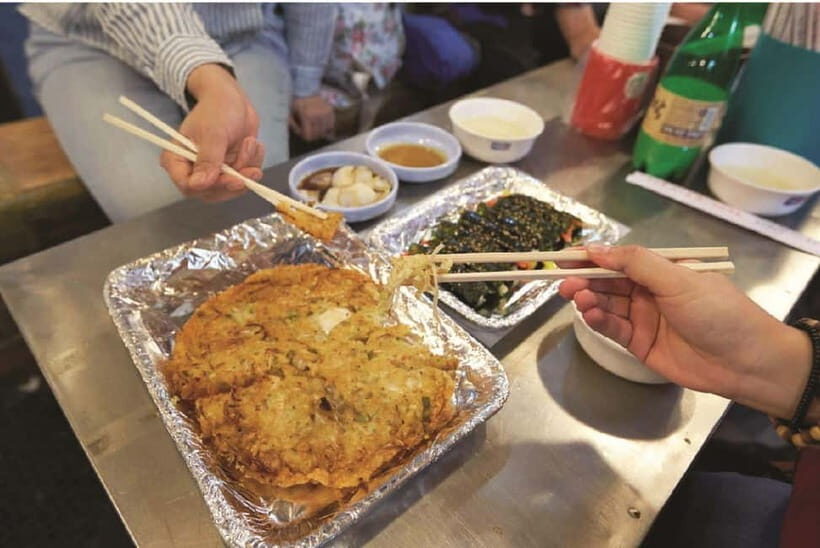
- Live-tank shopping: Handpick seafood directly from tanks, with your guide helping you make sense of options.
- Real prep in front of you: Watch filleting and sashimi-style preparation as the work happens at the stalls.
- A local guide who explains what to do next: You learn what each seafood type is used for and how Koreans prepare it.
- Market-to-meal payoff: After selection, you get a grilled meal at a nearby restaurant so the whole experience ends in food.
- Private by default: It is just your group, so questions stay on-topic and you move at a comfortable pace.
Noryangjin Fish Market: why a private tour works so well
Noryangjin Fisheries Wholesale Market is one of those places where it is easy to feel like you’re watching from the outside. A private format fixes that. Your guide is there to translate the chaos into choices you can actually make, from what looks similar to what tastes completely different.
The biggest win is that you are not just walking past seafood. You are learning how Koreans shop for it, what gets prepared in what style, and why certain cuts show up ready for specific dishes. When you pair that with the fact that you’ll eat after selecting, the market becomes a full experience instead of a quick photo stop.
Price and what you really get for $223.25
At $223.25 per person for about 3 hours, this costs more than a basic market stroll. But you are paying for a guide who stays with your group, helps you choose seafood, and keeps the flow moving through a busy food marketplace.
You also get two value multipliers that matter in Seoul:
- The market portion is admission ticket free for stop 1.
- The tour wraps in a freshly prepared grilled meal, not just a snack.
If you love food and want someone to help you understand what you’re buying before it becomes dinner, that combination can feel fair. If you mainly want independent wandering and are happy to figure things out on your own, the cost may feel steep.
Meeting point reality check: timing and connection
The tour starts at 14-47 Noryangjin-dong, Dongjak District, Seoul, South Korea and ends back at the meeting point. It is near public transportation, which is useful because Seoul transit can be excellent and also a little confusing when you’re rushing.
Do yourself a favor and plan to arrive a few minutes early. One reported booking issue involved the guide arriving at the meeting point at 1:50 p.m. and staying until after 2:15 p.m., including taking a timestamped photo to document the wait. That tells me two things: (1) they take showing up seriously, and (2) you should take connection seriously too—message quickly if you’re delayed.
Stop 1: Noryangjin Fisheries Wholesale Market and the live-tank selection
This is the heart of the experience, with 2 hours spent at the market. You’ll walk through seafood stalls with live fish and shellfish, where your guide helps you handpick your catch. The market options can include things like tuna, octopus, and sea urchins, and you’ll hear how different seafood types are typically used.
One of my favorite parts to expect here is the visibility. You can see skilled workers fillet fish and prepare sashimi-style items right in front of you. That matters because it turns seafood from an abstract idea into something concrete—what a cut looks like, how it’s cleaned, and how it’s portioned for eating.
Practical things to keep in mind at a wholesale market:
- Expect strong food smells and lots of motion. This is a working market, not a museum.
- Be ready to ask questions. Your guide is there to explain the types of seafood and what dishes you can prepare from them.
- Stay flexible. Wholesale stalls can have their own rhythm, so you might not control every minute, but you can control your questions.
The guide’s role: learning Korean seafood prep without sounding clueless
A big reason this tour is worth considering is the way the guide frames choices. The guide is described as a local with deep knowledge of Korean culinary traditions, and the focus is not just facts—it’s what those facts mean when you’re buying seafood.
In practice, that helps you with things like:
- understanding differences between seafood types you might mix up on sight
- learning traditional methods of preparation that match what you selected
- getting a quick lesson on what dishes you can make with different ingredients
You’ll also get some market context—how Noryangjin became one of Korea’s largest seafood hubs. Even if you only remember a few points, it gives you a better sense of why the market is arranged the way it is and why local shoppers behave the way they do.
From fish selection to a grilled meal nearby
After you pick your seafood, you’ll head to a nearby restaurant for a freshly prepared meal. The description calls out that it’s grilled, which is a nice change of pace from the raw or lightly prepared items you may have watched at the stalls.
This is where the tour earns its keep. You are not just seeing food. You’re eating it after a guided shopping experience. That reduces the usual travel frustration of markets: you buy something and then hope it turns into something good.
A couple considerations to think through:
- If you have strict dietary restrictions, you’ll want to communicate them clearly to your guide in advance, since the selection is based on what’s available at the market.
- If you’re expecting a long sit-down restaurant meal, keep your expectations aligned with a 3-hour total experience. This is more “market-to-plate” than “all afternoon dining.”
Timing: how 3 hours fits a food-focused Seoul day
With a 3-hour overall duration and 2 hours at the market, the tour is designed to be compact. That makes it workable as part of a food day without blowing up your schedule.
It also fits the reality of Seoul logistics. You’ll be near public transportation at the meeting point, and the experience uses a mobile ticket, so there’s less waiting around for paperwork. For me, that is the difference between a fun market morning and a market morning that turns into admin.
One more planning note: the tour is on average booked about 50 days in advance. That doesn’t mean you can’t book later, but it does suggest it’s popular. If you’re traveling in peak season or have a tight itinerary, earlier planning helps.
Who this tour suits best (and who should skip it)
I think this fits best if you:
- enjoy food markets and want help translating what you see into smart buying choices
- like hands-on experiences where you can ask questions while you shop
- want the market experience to end with a meal you can connect directly to your selection
- prefer private touring over crowded group logistics
I’d be more cautious if you:
- just want casual browsing and photos, with minimal interaction
- dislike strong smells or loud, fast-moving market environments
- have complex dietary needs you’d need guaranteed substitutions for (not stated as covered in the info)
Should you book ZenKimchi’s Noryangjin Fish Market experience?
If you want Noryangjin without the stress of figuring out what to buy or how to interpret the seafood, I’d book it. The combination of live seafood selection, watching prep work, and then eating a grilled meal nearby is a simple, satisfying loop.
The one reason to slow down is logistics awareness. The marketplace is busy, and meeting-point timing matters. If you’re the type who arrives early, messages fast, and is ready to follow the plan, you’ll likely feel comfortable. If you’re chronically late or hate communication, choose another style of tour.
Given the private format and the full market-to-meal structure, this is a strong pick for Seoul food lovers who want more than a walk-through.
FAQ
FAQ
How long is the Noryangjin Fish Market experience?
It lasts about 3 hours.
What is the price per person?
The price is $223.25 per person.
Is this tour private?
Yes. It is a private tour/activity, so only your group participates.
Where does the tour start?
The meeting point is 14-47 Noryangjin-dong, Dongjak District, Seoul, South Korea.
Is there an admission ticket included for the market?
The admission ticket for stop 1 is free.
Will I eat during the tour?
Yes. After selecting your seafood, you’ll enjoy a freshly prepared grilled meal at a nearby restaurant.
What will you do at the market?
You’ll handpick fresh seafood from live fish tanks, interact with local vendors, and learn about seafood types and Korean preparation methods. You’ll also watch workers fillet fish and prepare sashimi-style items.
What ticket format is used?
It uses a mobile ticket.
When will I receive confirmation?
Confirmation is received at the time of booking unless you book within 1 day of travel, in which case confirmation is received as soon as possible, subject to availability.
Can I cancel, and is there a refund?
Yes. You can cancel up to 24 hours in advance for a full refund.
]]>I especially like how the structure is built for seeing the highlights without wasting time. You get key admission-covered stops at Gyeongbokgung Palace and Bugak Skyway, while other stops stay light so you can enjoy them instead of rushing through.
The main thing to plan for is your pace. It’s only about 4 hours 30 minutes, and you’ll do some walking around areas that involve moderate effort, so wear comfy shoes and expect a bit of hill work.
Key highlights you will feel right away
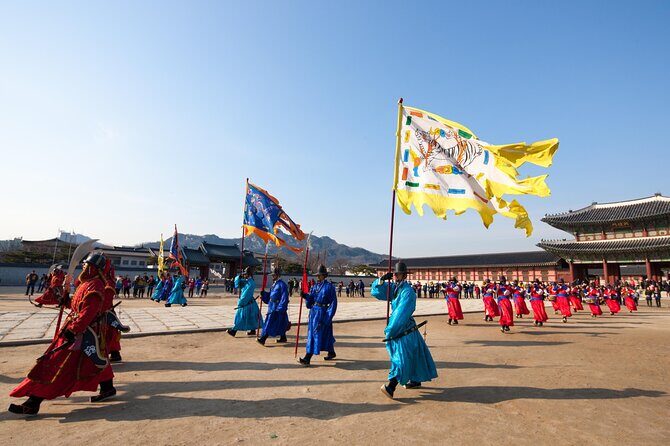
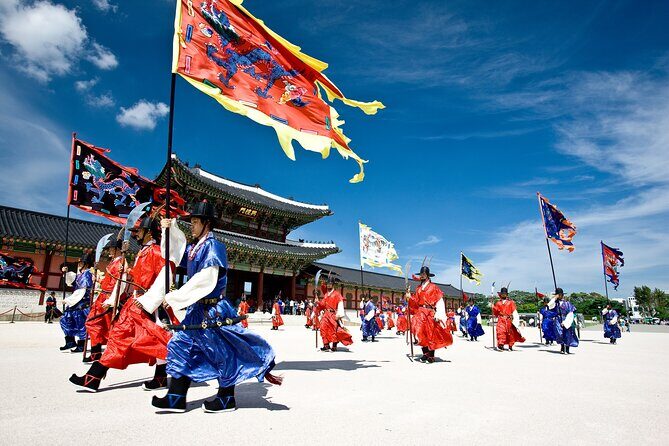
- Royal Guard Changing Ceremony at Gyeongbokgung Palace sets the tone from minute one
- Bukchon Hanok Village gives you focused time for classic hanok photos
- Bugak Skyway and Bugak Palgakjeong deliver panoramic Seoul views from the mountain slopes
- Cheongha Korea Ginseng Museum adds quick, grounded context to a Korean staple
- Gwangjang Market is the payoff stop, with plenty of options to snack at your own speed
Gyeongbokgung Palace and the Royal Guard Ceremony: the perfect starting punch
Gyeongbokgung Palace is one of Seoul’s biggest and most impressive palaces, and starting here makes sense. You’ll spend about 30 minutes inside, with the Royal Guard Changing Ceremony as a highlight. If you’ve never seen palace ceremonies before, this is the fast track. It’s visual, structured, and easy to follow even if your Korean is limited.
What I like about this start is that the guide can help you look smarter. Instead of just taking photos, you’ll understand what you’re seeing at a pace that works for real sightseeing time. Palaces can feel overwhelming if you’re on your own. Here, you get a clear route and a sense of what matters.
Timing matters too. Since your visit is fixed to the tour flow, you don’t have to spend extra mental energy lining up entrances, transit, or where to stand. If the ceremony timing shifts on the day, your guide can adjust your viewing plan so you still get the key moment.
Practical tip: Go in with a camera plan. Wide shots work great at palaces, but also watch for details like gates, courtyard lines, and traditional roof shapes while you’re waiting for the ceremony cues.
Bukchon Hanok Village: photo time that doesn’t eat your whole day
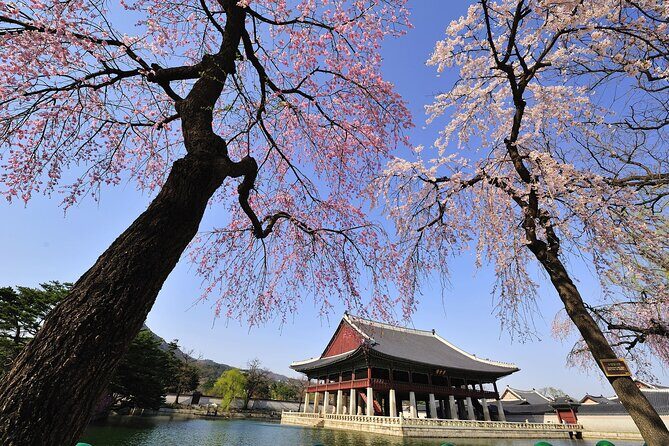
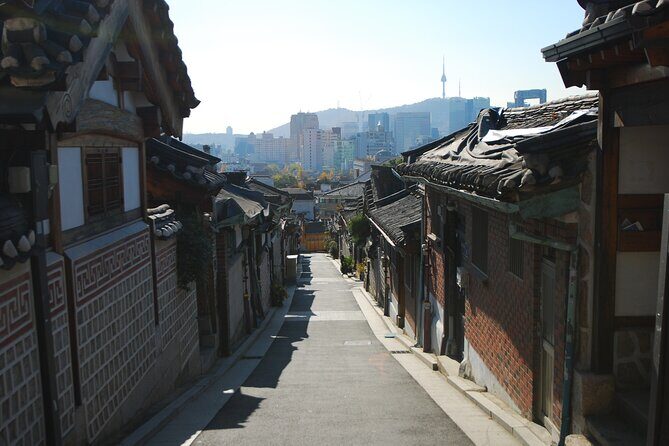
Next up is Bukchon Hanok Village, with about 20 minutes. This is where the “postcard Seoul” effect is strongest. You’ll see hanok-style houses and streets that make it easy to frame photos with traditional rooftops and narrow lanes.
The value here is the short, targeted stop. Bukchon can turn into a long wander if you’re chasing every angle. With a guide-led flow, you get the best picture locations without burning the whole morning or afternoon. And because it’s a quick stop, you can treat it like a photo break, not a second major destination.
That said, 20 minutes is not a lot. If you’re the type who wants to read every plaque and step into multiple courtyards, this may feel brief. But if your goal is a classic walk-through and a few strong images, it’s an efficient use of time.
Photo tip: Shoot in both directions. Back-and-forth framing helps you catch the variety of roof lines and street perspectives, even in a short window.
Bugak Skyway and Bugak Palgakjeong: mountain views with real Seoul scale
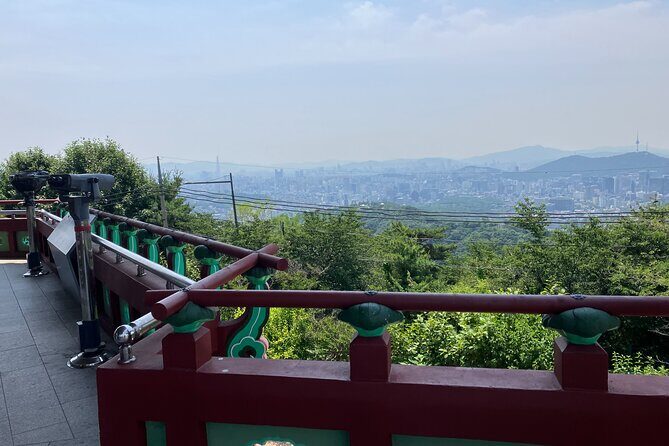
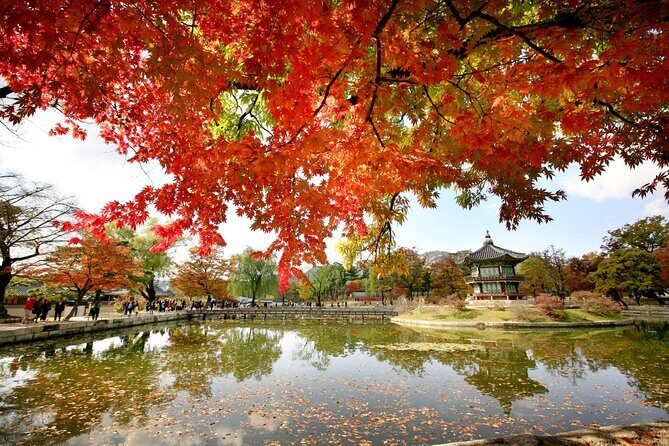
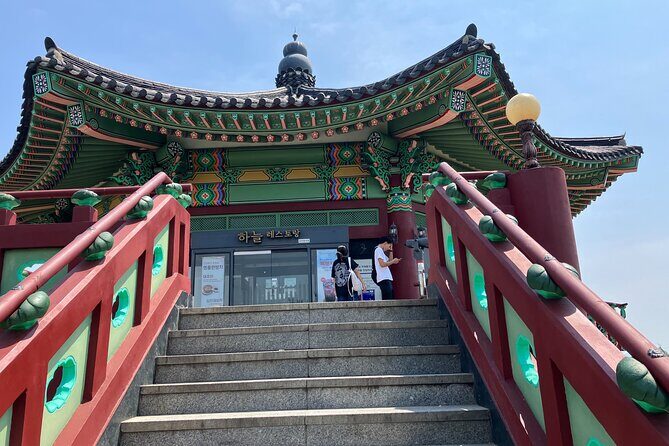
Now you climb into the best “wow” factor on the tour: Bugak Skyway and Bugak Palgakjeong, also called Bugak Pavilion. You’ll have about 40 minutes, and this is the stop that gives Seoul depth. The view is panoramic, and the pavilion sits on the slopes of Bugaksan Mountain, which means you’re not just staring at buildings. You’re seeing the city with mountains in the background.
This is also where the tour’s pacing shows its worth. A long hike might not fit a 4.5-hour day, but this option gives you an elevated viewpoint without turning the day into a fitness test. Just remember: the tour notes a moderate physical fitness level, and the mountain-side setting can mean some walking that feels steeper than flat-city sightseeing.
You’ll also get admission included for this stop, which is handy. It removes one more cost decision in the middle of the day and keeps you focused on enjoying the view.
Practical tip: If you’re sensitive to heights or uneven ground, keep your steps slow. Views are amazing, but don’t rush for the perfect angle and lose footing.
Cheongha Korea Ginseng Museum: a short stop that explains something useful
After the views, you shift gears to something indoor and calmer: Cheongha Korea Ginseng Museum for about 30 minutes. Admission is free here, so you’re not paying extra for a quick context stop.
Ginseng is a big part of Korean food and traditional wellness culture, and the museum gives you background that helps the later parts of your day make more sense. The material ties ginseng to early records, including mention in Ji Jiu Zhang from the Han dynasty of China, where it’s described as an herb used for many ailments.
Even if you don’t plan to buy anything, this kind of stop is useful because it turns a common product into a story you can understand. It also breaks up the day so you’re not only doing outdoor sightseeing.
What to watch for: If you’re hoping for a hands-on workshop or tasting, the tour info doesn’t mention it. This stop is positioned more as a quick museum-style visit, so treat it like a briefing on ginseng culture.
Gwangjang Market finish: where you can eat at your own pace
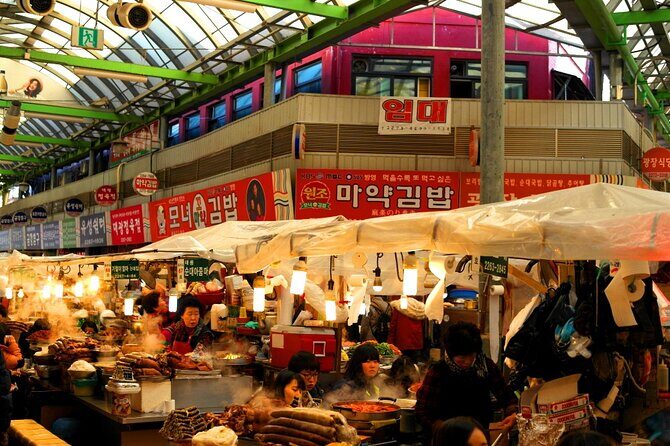
The day ends at Gwangjang Market, one of Seoul’s oldest and most popular markets. You’ll have about 15 minutes here, and the tour is set up so you can taste what you want. Admission is free, but you’ll buy your own food and drinks since meals aren’t included.
This is a strong ending for two reasons. First, market food is the fastest way to understand local tastes after walking through palaces and hanok streets. Second, a short time limit stops decision fatigue. You’re not stuck studying menus for an hour.
That said, 15 minutes means you should choose quickly. Markets are busy (and that’s part of the fun), so if you arrive indecisive, you can burn your best moments in line. Go in ready with one or two snack categories in mind: savory street bites and maybe one warmer option, then leave space for water.
Smart move: Walk a few steps first, then commit. You’ll usually spot what looks freshest and easiest to grab fast.
Price and what you’re really paying for in a 4.5-hour private tour
At $170 per person, this isn’t a budget tour. But it’s also not just a car ride plus a checklist. You’re paying for a professional guide, an air-conditioned vehicle, and hotel pickup. Two stops also come with admission included, which helps your money go where it matters.
In a 4.5-hour window, that “guided efficiency” can be the difference between enjoying Seoul or simply getting through it. A guide helps you interpret what you’re seeing at Gyeongbokgung, pick the right angles in Bukchon, and use your viewpoint time well at Bugak Skyway.
Also, you’re getting a private tour, meaning only your group participates. That can make the experience feel more flexible, especially if you have questions. The tour info also notes mobile ticket use, which is a practical bonus when you’re moving around.
One note: the tour is about highlights. Each stop is time-boxed (30, 20, 40, 30, 15 minutes). If you want long, slow wandering or shopping time, you may want to add free time elsewhere on your own. If you want a well-paced sampler of Northern Seoul, this fits.
If you’re considering booking, keep in mind it’s commonly reserved about 61 days in advance on average. Earlier booking usually keeps your preferred pickup slot easier to secure.
Guide impact: what Leo, Kyung Ah/Chloe, Grace, and Henry get right
The biggest differentiator isn’t the sights. It’s how the day is explained and managed by the guide. From the guides associated with this experience, there’s a clear pattern: guides like Leo, Chloe (Kyung Ah), Grace, and Henry focus on making sure everyone understands what they’re looking at.
A few things stand out from how these guides approach the tour:
- They answer questions instead of brushing them off.
- They keep the energy friendly, not stiff.
- They help the group feel included, not like they’re just following someone’s pace.
That matters because Seoul can be layered. Palaces, hanok neighborhoods, mountain viewpoints, and markets all feel different, and it helps to have someone connect the dots. When explanations are clear, you spend less time guessing and more time noticing details you would otherwise miss.
Also, guides can handle the small friction points. Ceremony timing, crowd movement, and the short market window all require quick choices. A good guide helps you keep moving without feeling rushed.
Should you book this Seoul private tour?
I’d book this tour if you want a tight, high-impact Northern Seoul day with a mix of culture, views, and food. It’s a great fit for first-timers who want Gyeongbokgung and the hanok photo streets without building an itinerary from scratch. It also works well for couples or small groups who like asking questions and getting practical guidance.
Skip it if you’re craving slow wandering, deep museum time, or lots of shopping time. The stops are intentionally short, and the schedule is built for efficiency.
If you have moderate walking tolerance and you like having your sightseeing route handled for you, this is a strong value way to see four different sides of Seoul in one go.
FAQ
How long is the Seoul private tour?
The tour runs for approximately 4 hours 30 minutes.
Is hotel pickup included?
Yes. Hotel pickup is included.
Is this a private tour?
Yes. It’s private, and only your group participates.
Which admissions are included?
Admission fees are included for Gyeongbokgung Palace (including the Royal Guard Changing Ceremony) and Bugak Skyway. Bukchon Hanok Village and Cheongha Korea Ginseng Museum are listed as free, and the tour ends at Gwangjang Market with free admission.
Do I need a mobile ticket?
Yes. Mobile ticket is listed as a feature.
Are food and drinks included?
No. Food and drinks are not included.
What transportation is provided?
An air-conditioned vehicle is included, and pickup is offered.
Is this tour physically demanding?
The tour notes that travelers should have a moderate physical fitness level.
Can I cancel for a full refund?
Yes. You can cancel up to 24 hours in advance for a full refund. Canceling less than 24 hours before the start time is not refundable.
]]>I also liked that the group is small, capped at 10 travelers, and the pace is built around short, focused stops instead of one endless march through Seoul. You start at 11:00 am and end near Gwangjang Market, which is convenient because it’s a major food area, but it’s not a straight return to where you began.
One more thing to consider: if you’re very strict about dietary needs, don’t wait until you arrive. The tour asks you to let them know about allergies and restrictions in advance, which is the right move when you’re eating Korean dishes in markets.
Key Highlights You’ll Actually Feel
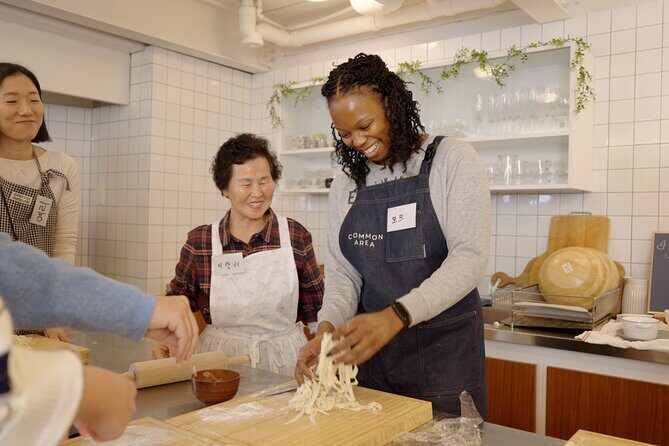
- Hand-pulled noodles with a Korean grandma: stories plus technique, not just watching someone cook.
- Changdeokgung Palace with royal cuisine context: you’ll understand how court food shaped what Koreans eat today.
- Euljiro-dong food walk: a mix of long-running eateries and trendier spots in the same neighborhood.
- Gwangjang Market with trusted vendors: vendors who’ve worked with the tour provider for years.
- Night market food tour with local guidance: you’ll know what to order and how to do it like a local.
- Max 10 travelers: small-group feel with fewer awkward pauses.
A Long 11:00–About 9 Hours Day That Stays Fun
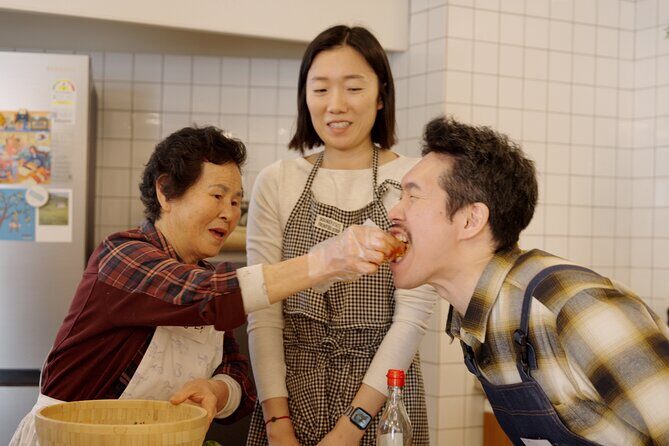
This is a full-day Seoul experience that starts at 11:00 am and runs about 9 hours. That time window matters because you’re moving through both daytime cultural stops and evening food. In plain terms: you should eat like you mean it, then be ready for more eating, because the itinerary is structured that way.
The route is also designed to keep transit simple. The starting point is in Mapo-gu (near 53-9 Tojeong-ro), and you finish at Gwangjang Market (near 88 Changgyeonggung-ro in Jongno). Since the tour is described as near public transportation, I’d treat it as easy to get to, even if you’re staying in a different part of Seoul.
Group size is capped at 10 travelers, which is a real quality-of-life upgrade. Smaller groups tend to mean quicker decision-making at food stops and fewer situations where you feel lost or rushed. It also makes it easier for your guide to check in as you’re moving between palace, neighborhoods, and markets.
Cooking With a Korean Grandma: The Noodle Lesson Is the Star
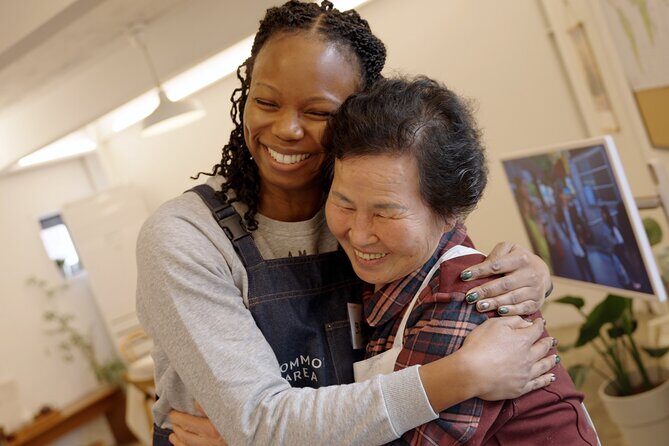
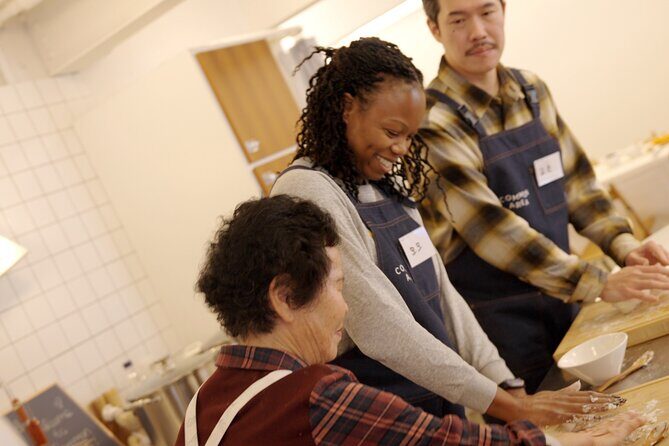
Stop one is a cooking class led by a retired local grandma. Expect warmth first—then technique. You’ll knead dough and learn how to hand-pull noodles, with the grandma sharing personal stories along the way. This is the part of the day that feels least like a scripted tour and most like a genuine cultural exchange.
Why this matters: hand-pulled noodles aren’t just a food novelty. The act of stretching and shaping dough changes the noodle texture, and that’s the kind of detail you only get when someone teaches you in real time. Even if you don’t become a noodle-making wizard by the end, you’ll leave understanding what makes Korean noodles feel different in the bowl.
Another quiet benefit: the cooking class gives you a mental anchor for the rest of the trip. After you’ve worked with dough and heard the stories behind it, the later food stops make more sense. You’re not just collecting dishes; you’re learning how food traditions move through daily life.
This stop lists admission as free for the class ticket, which helps with value. Also, the tour specifically notes you should tell them about food allergies or dietary restrictions in advance—smart, because cooking class menus can still involve shared ingredients.
Changdeokgung Palace and Royal Cuisine: More Than Pretty Gates
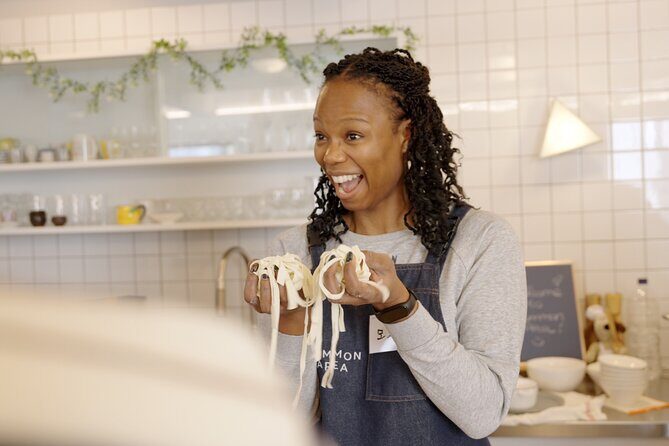
After the noodle lesson, you head to Changdeokgung Palace, a UNESCO World Heritage site. This isn’t positioned as a long lecture about walls and dates. Instead, it focuses on royal culinary history—how court food traditions shaped Korean food culture.
The guided walking portion here is 1 hour 30 minutes, with palace entry included. That inclusion is useful because palace tickets add up when you’re doing multiple sights, and it reduces friction on the day. You also get context before you wander—so when you’re looking at palace spaces, you have a reason for what you’re seeing beyond photos.
Practical tip: palace grounds can involve walking on uneven surfaces. Bring shoes you can move in comfortably. And since this is sandwiched between the cooking class and later markets, it can help to keep water on your mind even if you don’t feel thirsty yet.
The bigger value is the “why.” When the guide connects the palace setting to royal cuisine traditions, you end up with a story you can carry into your meal choices later. That’s the difference between seeing Changdeokgung as a landmark versus understanding it as part of Korea’s food identity.
Euljiro-dong Food Walk: Where Old Eateries and New Trend Mix
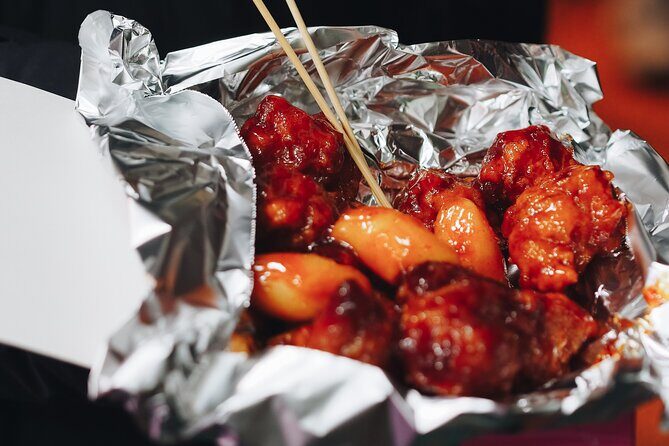
Next comes Euljiro-dong, a neighborhood that blends tradition and current trends. This stop is set up as a culinary adventure: you’ll explore areas with beloved eateries over 50 years old while also passing modern pubs and restaurant culture.
The timing here is about 2 hours, and the stop lists admission as free. That means the cost of this segment is mostly your guide’s expertise and the route design, which is exactly where a good food walk earns its keep. A local guide helps you spot places you’d skip on your own—either because you wouldn’t notice them from the street or because you’d be unsure what’s worth ordering.
What you should look for during this portion is contrast. You’re trying to see how Korean eating culture changes when it meets modern taste and lifestyle. That’s why this stop works well for both food nerds and casual eaters. You can enjoy it even if you don’t know the names of every dish, because the guide’s job is to translate choices into something approachable.
If you’re a picky eater, take a deep breath. This isn’t a tasting-menu tour where you’re forced to swallow something you don’t like. Still, it is food-focused, so you should go with curiosity and a willingness to try a couple of bites before deciding what you’ll commit to later.
Gwangjang Market to Night Market Eats: Your Stomach Becomes the Guide
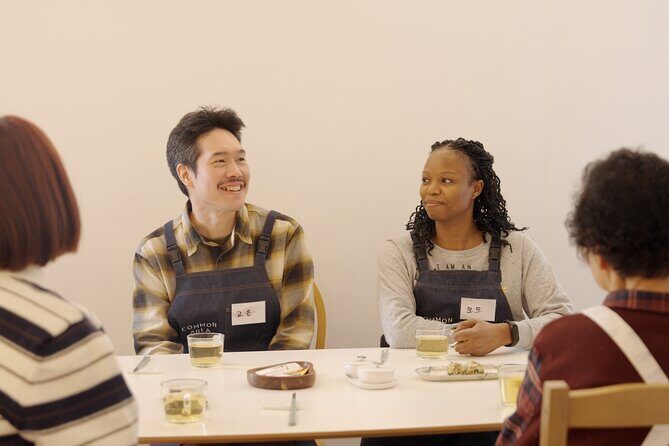
The next major food chapter is Gwangjang Market, where you’ll visit trusted vendors. The tour notes these vendors have collaborated with the group for years, which is a nice detail. It suggests you’re not gambling on random street stalls; you’re eating with some reliability built in.
This market stop lasts about 2 hours, and admission is included. Markets are where Seoul feels most everyday—people buying snacks, cooking smells drifting through alleys, and locals treating the market like an extension of their neighborhood. In other words: it’s not “museum Seoul.” It’s the real stuff.
Then the day keeps going into night-market food time. The overview frames it as a night market tour guided by locals who treat you like old friends. Since the night-market segment is part of the overall 9-hour day, plan to keep energy up. You’ll want to eat enough to enjoy things, but not so much that you feel like you’re dragging yourself through alleys.
One of the best practical advantages here: you’re not left to interpret menus alone at the hardest moment. In Seoul, that’s where a guide can save you from decision fatigue. It’s also where you can get recommendations that match what’s fresh and available now, not what’s just popular in general.
The tour ends at Gwangjang Market, which is convenient. If you want to continue eating, shopping, or just wander after your guided portion ends, you’ll already be in the right place.
Price and Value: Why $280 Can Make Sense
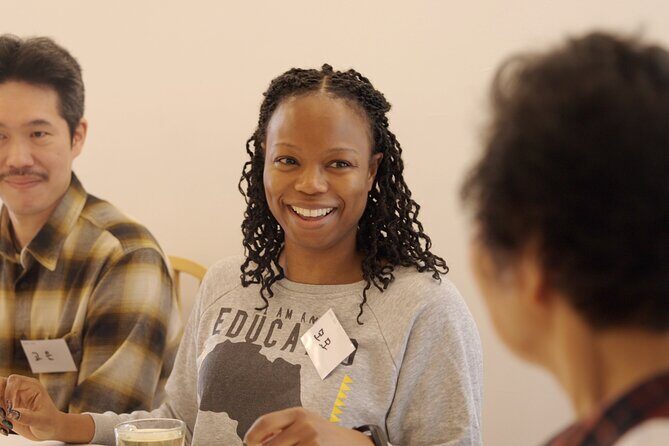
At $280 per person, this isn’t a budget tour. So the right question isn’t Is it expensive? It’s Does it replace several separate bookings with something better?
Here’s what you’re effectively paying for:
- A grandma-led cooking class with a hands-on noodle session
- Guided walking time through Changdeokgung Palace (with admission included)
- A neighborhood food walk in Euljiro-dong
- A market stop at Gwangjang Market (with admission included)
- Guided night-market food time
That’s a lot of guided hours. It’s also a lot of “stuff” you’d otherwise have to plan yourself: finding a cooking class, booking palace entry, arranging a food walk, and then figuring out night-market logistics. Even if you could DIY some of it, the tour offers structure and a local voice at every step.
Small-group size (max 10) also changes the value equation. In crowded tours, you spend half your time waiting your turn. In a smaller group, you’re more likely to keep moving and actually enjoy each stop.
Finally, there’s a group-discount element mentioned in the tour info. That doesn’t guarantee lower cost for every departure, but it’s a signal the provider designed this for shared experiences rather than one-person ticket maximization.
What the Best Reviews Point To (and What You Can Do)
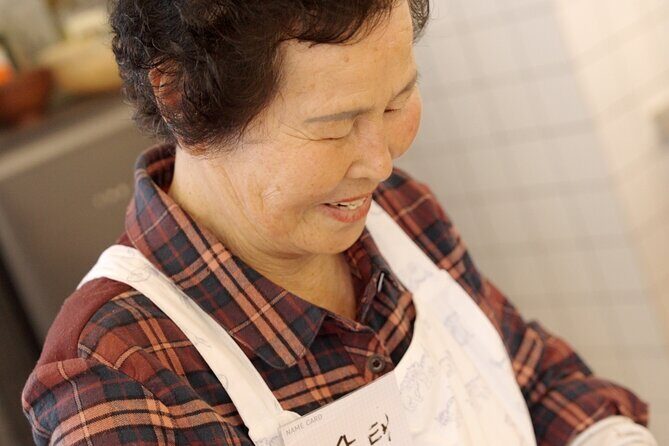
The strongest feedback centers on the overall food experience and the guide’s communication. One review highlighted Kevin for explaining the food and culture, and that made the whole day more fun and easier to follow.
So here’s what you can do to get the same payoff: ask questions while you’re eating. Don’t wait until the end of a stop. If something tastes unfamiliar, ask what it is and how Koreans typically eat it. If you don’t understand a dish name, ask what to look for next bite—sweet, salty, chewy, spicy. You’ll get more out of the tour fast that way.
You’ll also enjoy it more if you approach the cooking class as learning, not performance. The noodle session is hands-on, so expect a little mess and a little laughter. That’s part of why this works better than a “watch and take photos” class.
Who This Tour Suits Best (and Who Should Skip)
This tour fits best if you want a Seoul day that’s practical and food-centered, with culture woven in. It’s especially good for:
- First-timers who want major sights plus real eating in one day
- People who like guided explanations while they eat
- Anyone interested in Korean cooking traditions, especially noodles
- Small groups who want a more personal experience with a guide
Consider a different plan if you:
- Hate long walking days (it’s about 9 hours)
- Want lots of free time to roam without structure
- Have very complex allergy needs and want a highly controlled menu (the tour asks you to inform them, but details on exact substitutions aren’t provided here)
If you’re somewhere in the middle, bring flexibility. This is a “follow the food” style tour. The payoff comes from moving with the guide instead of trying to out-plan them.
Should You Book Flavors of Seoul?
I’d book it if you want the best kind of Seoul combo day: handmade noodles, a meaningful palace stop tied to royal cuisine, and guided street food that runs from markets into night time. The price isn’t low, but you’re buying multiple guided segments, included admissions for the palace and market, and a small-group experience that keeps things friendly.
Skip it if you’re hoping for a short, low-effort sightseeing day or if you need super-custom meals without any uncertainty. In that case, you may prefer a tour that clearly lists every dish and offers guaranteed substitutions.
If you do book, do one simple thing: tell the operator about allergies or dietary restrictions ahead of time, and come ready to taste. This tour rewards curiosity.
FAQ
How long is the tour?
The tour lasts approximately 9 hours.
What time does the tour start, and where does it end?
It starts at 11:00 am and ends at Gwangjang Market (88 Changgyeonggung-ro, Jongno District).
How much does it cost per person?
The price is $280.00 per person.
What group size should I expect?
The tour has a maximum of 10 travelers.
Are any admissions included?
Yes. Changdeokgung Palace admission is included, and Gwangjang Market admission is included. The cooking class admission is listed as free.
Is the tour suitable for people with food allergies or dietary restrictions?
You should let the tour know in advance if you have any food allergies or dietary restrictions.
What is the cancellation policy?
You can cancel for a full refund up to 24 hours before the experience’s start time.
]]>The flow is straightforward and guided, so you spend less mental energy figuring out connections and more energy enjoying the day. Your feet will do some work, though, especially if you wander the beach and linger in the market before the foot bath.
Key things I’d plan around
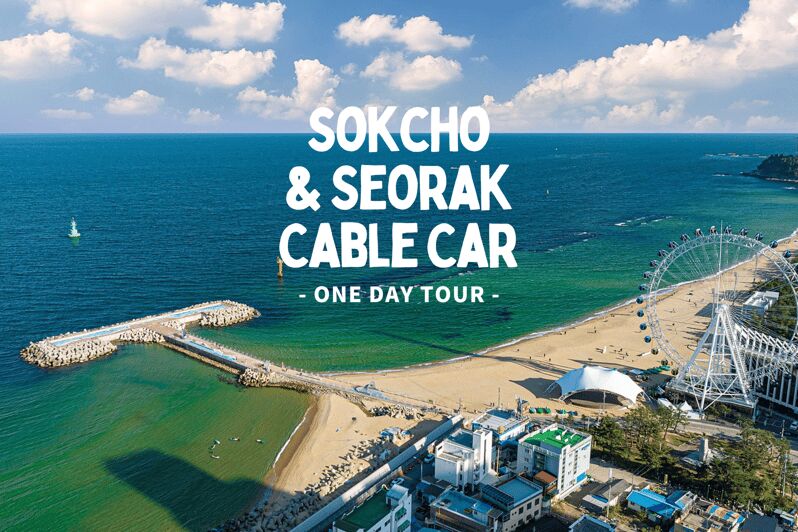
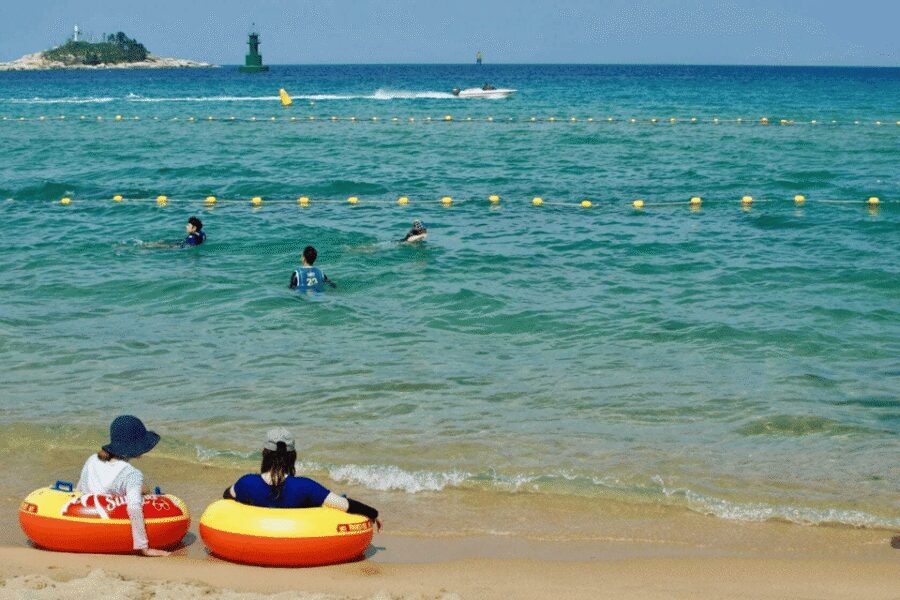
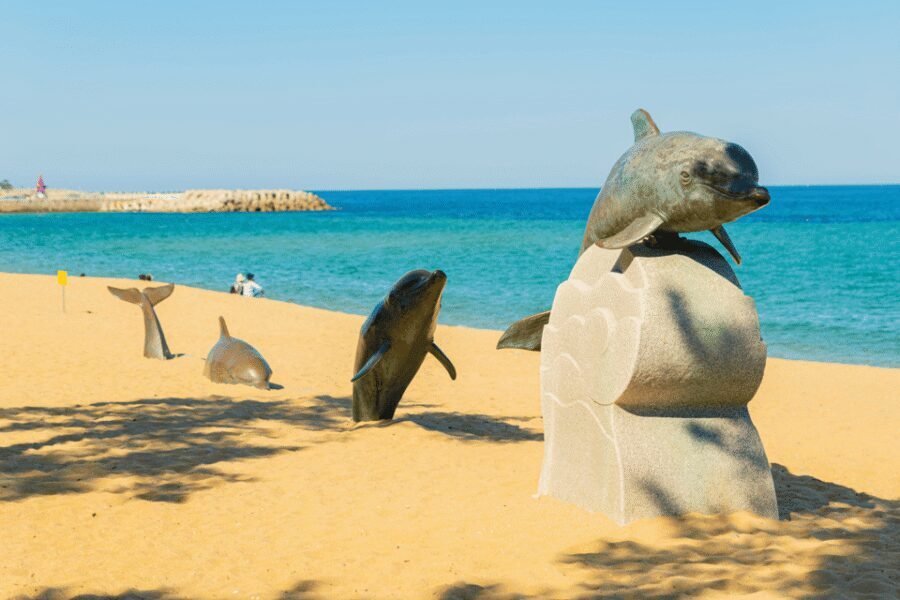
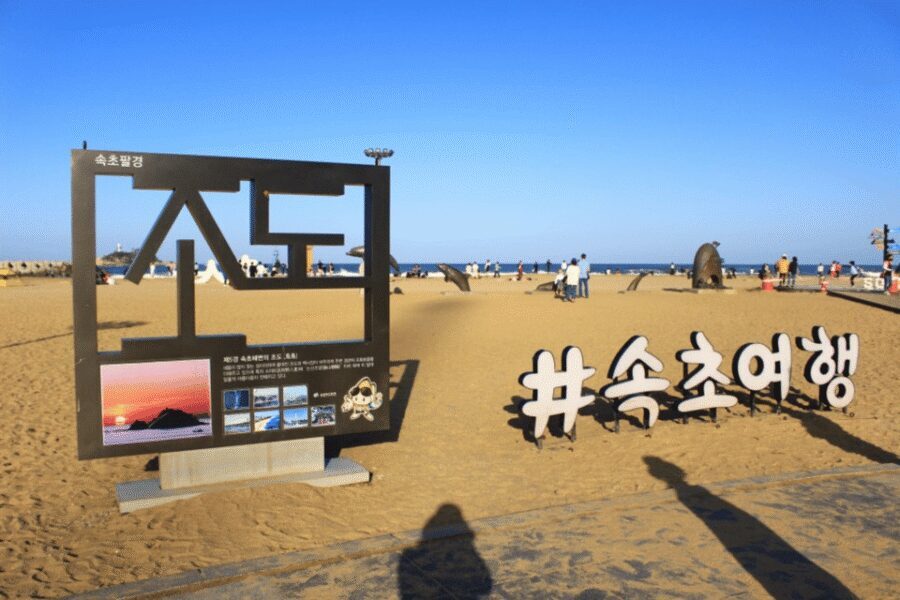
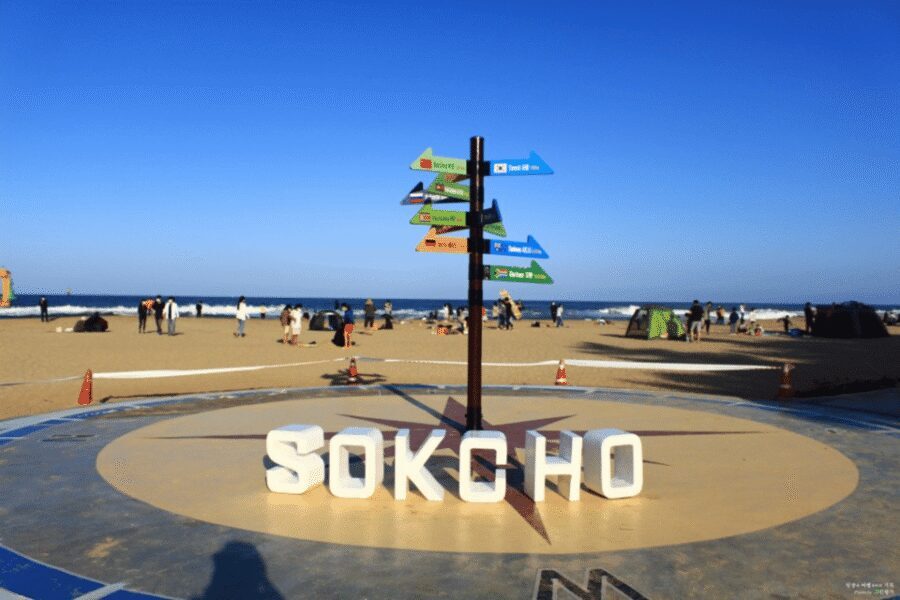
- Sokcho Beach shoreline walk for that easy seaside stretch with salty air and warm sand
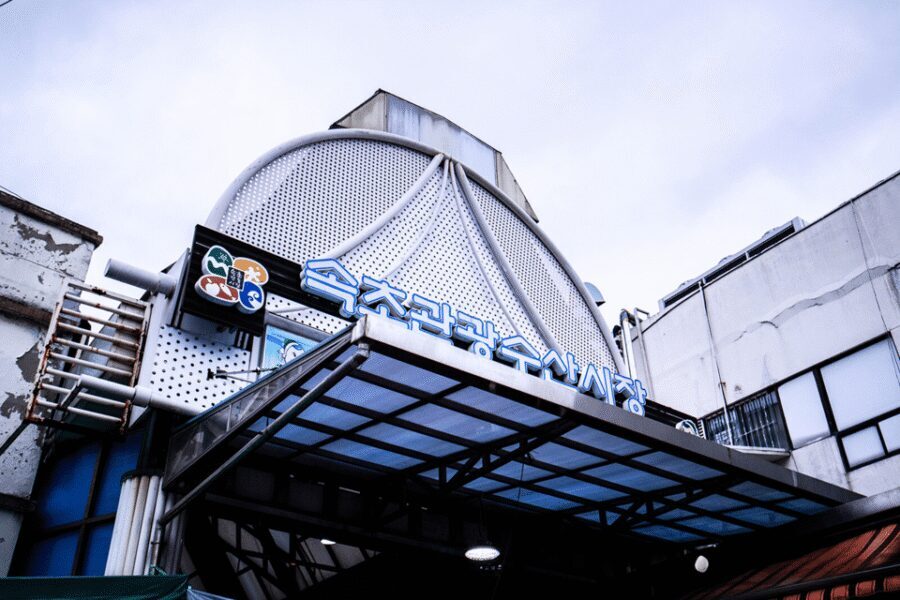
- Sokcho Tourist & Fishery Market for fresh seafood snacks and ready-made lunch vibes
- Cheoksan Foot Bath Park to recover your legs after walking
- Seorak Cable Car over Seoraksan National Park for panoramic mountain views
- Rain can cut visibility on the mountain, so bring a light rain layer and keep expectations flexible
Why this Sokcho and Seorak day trip works in one long chunk
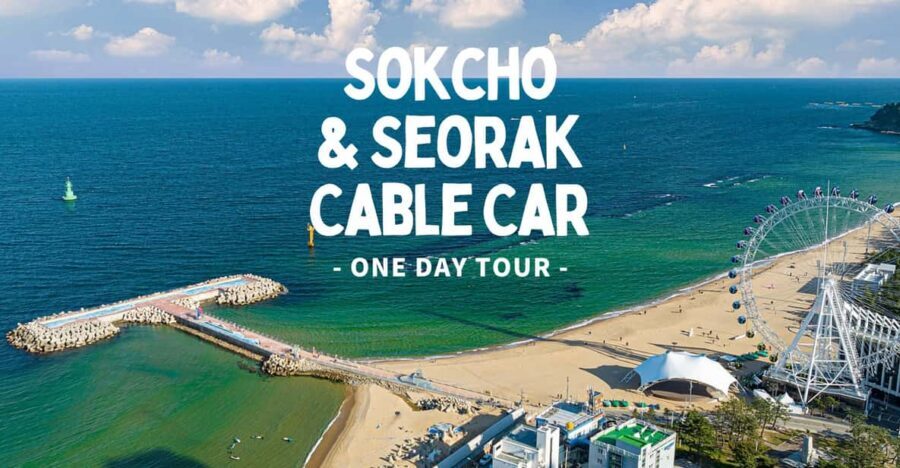
This is the kind of day tour that makes sense when you have limited time in Korea. Instead of choosing just sea or just mountains, you get both, plus a food-stop that actually feels local (the fishery market) and a practical recovery stop (Cheoksan foot baths).
I also like that the trip includes the big-ticket activities. Seorak Cable Car and the Cheoksan Foot Bath Park entry are in the package, along with round-trip transportation and a guide. That means the day has fewer surprise expenses and fewer decision points once you’re out of Seoul.
The day is still active. Even with a guide, you’ll be walking—beach paths, market alleys, and the cable car area—so pack like you’re going to be on your feet for most of the day.
Sokcho Beach: your calm start by the water
You’ll begin with time at Sokcho Beach, with enough room to take a slow shoreline walk. This part is about pace. The goal isn’t to rush through photos. It’s to let the rhythm of the waves set your tempo while the sea breeze cools you off.
What I’d pay attention to here:
- Morning/early daylight tends to feel nicer for walking, especially if the rest of the day becomes weather-dependent.
- Wear comfortable shoes. Shoreline walking is easy, but sand and uneven edges add up over time.
- Bring a light layer even in warmer months. Coastal air can feel cooler when you stop moving.
If you’re coming from Seoul, the sea air alone helps reset your body clock. By the time you reach the market, you’ll actually feel hungry instead of just running on caffeine.
Sokcho Tourist & Fishery Market: where lunch becomes an event
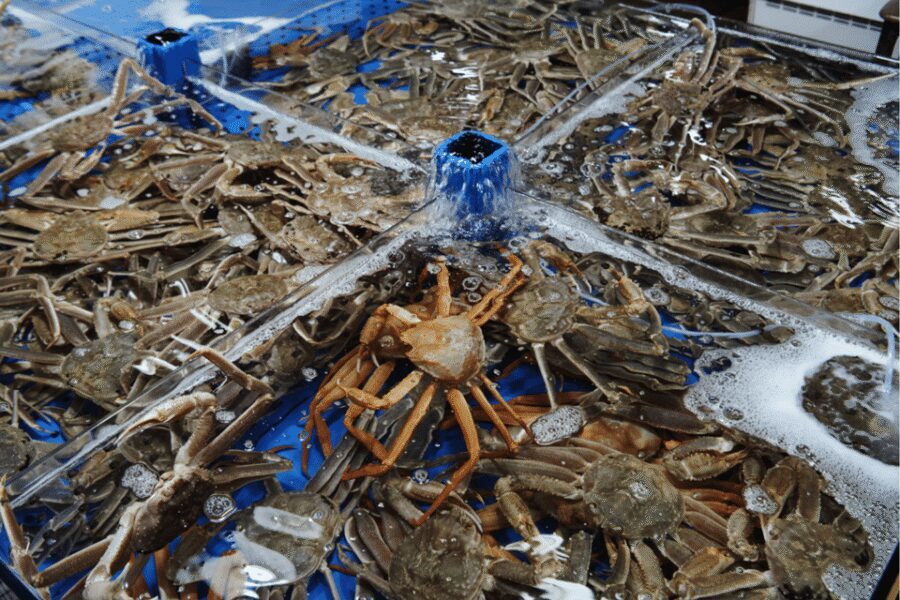
Next is the Sokcho Tourist & Fishery Market, and this is where the trip becomes more than sightseeing. You’re walking through stalls and alleys tied to the daily flow of seafood, which makes the food feel immediate rather than staged.
Here’s how to make this stop work for you:
- Come hungry. You’re not just browsing; you’re sampling and building your meal plan on the spot.
- Keep your choices flexible. If you see something that looks fresh and cuts through the crowds, go with it.
- If you want a simple strategy, start with one snack, then decide what you want next based on what looks best at the moment.
One useful detail from real trip experiences: a guide recommendation can seriously improve your odds of finding a good meal. In one rainy-day outing, the guide (Liu) suggested a restaurant that led to a satisfying crab meal. That’s a reminder that on market days, you don’t have to figure it all out by yourself.
If the weather turns sour later, the market is also a good “anchor” stop. You can still enjoy the day even if mountain visibility isn’t perfect.
Cheoksan Foot Bath Park: recovery that actually helps
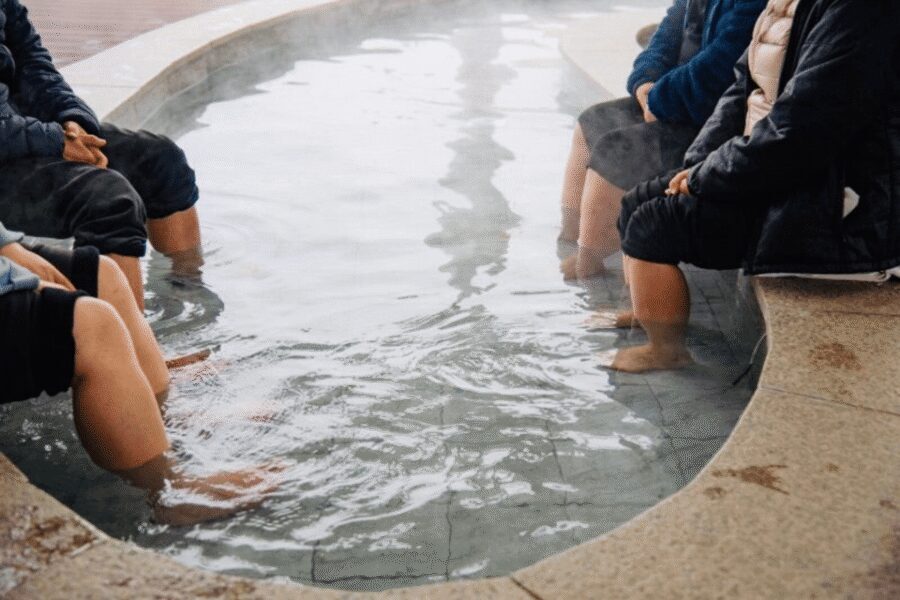
After market walking and beach time, Cheoksan Foot Bath Park is a smart mid-to-late day switch. This is a straightforward reset: you stroll the peaceful paths, then put your feet in warm water to melt away the day’s soreness.
Why this matters:
- Cable cars and mountain paths can be demanding on your lower legs.
- Markets are surprisingly hard on feet if you keep circling, comparing, and stopping for samples.
- A foot bath is the kind of comfort stop that doesn’t require a reservation or a long sit-down meal.
The entry fee is included, so you can treat this as part of the plan rather than an extra add-on you might skip. I like that the tour doesn’t just move you from one view to the next—it gives you a chance to recover and feel human again.
Seorak Cable Car over Seoraksan National Park: the payoff, weather included
The last major highlight is Seorak Cable Car, giving you panoramic mountain views of Seoraksan National Park. From up top you’ll see sweeping forests, rugged peaks, and even waterfalls if conditions allow. This is the moment when the day’s effort feels worth it.
What to expect at the cable car level:
- Wide views over the mountain area, which are a big part of the appeal.
- A transition from coastal air to cooler, higher elevation feel.
- Lots of visual detail, especially when skies are clear.
Now, the honest consideration: visibility can change fast. One guide-led trip had rainy weather, and mountain visibility was poor. Still, the day worked because people adapted, focused on what they could see, and kept the schedule moving. If you get fog or rain, don’t assume the whole experience is ruined. In many cases, the mountains still feel dramatic—you’ll just get a different kind of view.
Practical tips for the cable car portion:
- Bring a light rain layer or compact umbrella if rain is possible.
- Dress in layers. Cable car areas can feel cooler than the city.
- Keep your camera ready, but don’t lock yourself into constant photo-taking. If you’re lucky with gaps in the clouds, you’ll want your eyes more than your lens.
How the guide and group flow keep the day smooth
This tour runs with a guide, and the experience includes round-trip transportation. Meeting points can vary depending on the option you book, but you’ll end back at your meeting point, with one important exception: the final drop-off is at Hongik University Station for everyone’s convenience.
You’ll also have a guide working in English, Chinese, or Korean. That matters because you can ask practical questions—like where to eat, what to prioritize in the market, and how to pace the day—without feeling stuck.
From the feedback you can learn a lot about the guide style:
- Guides tend to be friendly and accommodating.
- The itinerary has enough structure that you can still see the main highlights even if the day feels a bit strenuous.
- When weather changes, good guides help you reframe the plan instead of treating it like a loss.
In other words, you’re not just buying transportation. You’re buying someone to keep the day moving and help you make better on-the-ground choices.
Price and value: what $76 covers and why it can be fair
At $76 per person, you’re paying for more than a bus ride. The included items are the heart of the day:
- round-trip transportation
- tour guide
- Cheoksan Foot Bath Park entry
- Seorak Cable Car
Meals and drinks are not included, so you’ll still spend on food, especially at the market and any lunch stop you pick. But that’s also where the value can feel better for you. Market food lets you customize taste, portion size, and budget more easily than a fixed lunch option would.
I’d treat this price as fair if you’re the type who wants:
- guaranteed access to Seorak Cable Car
- minimal planning stress from Seoul
- a single day that covers sea + food + mountain + foot recovery
If you’re the type who prefers independent pacing and you already know exactly how you’ll get to Sokcho and the cable car, you might find cheaper options. But the included structure is what makes this feel like a plug-and-play day.
Who this tour is best for (and who should skip it)
This fits best if you want variety without switching plans. You’ll likely enjoy it if you:
- love seafood markets and want to sample rather than just look
- enjoy nature views and don’t mind a full day outdoors
- like “easy recovery” stops like foot baths after walking
- appreciate having a guide who can steer you toward good food choices
You might want to skip it if:
- you hate being on your feet for a long day (this is active, even if it’s guided)
- you only want one theme, like all-beach or all-mountain
- you’re traveling with someone who won’t tolerate weather changes and reduced visibility without frustration
Quick FAQ for planning your day
FAQ
What’s included in the tour price?
The tour includes round-trip transportation, a tour guide, Cheoksan Foot Bath Park entry, and Seorak Cable Car. Meals and drinks are not included.
Where does the tour start and end?
Meeting points can vary based on the option you book. The tour ends back at the meeting point, but there is a single drop-off point at Hongik University Station at the end for convenience.
What languages will the guide speak?
The guide is available in English, Chinese, and Korean.
Is the tour canceled if there aren’t enough travelers?
Yes. If the minimum traveler requirement isn’t met, the activity can be canceled and you’ll receive an email one day before departure offering an alternative date or a full refund.
What if weather or unforeseen circumstances force a cancellation?
In case of force majeure or unforeseen circumstances, the provider can cancel. If that happens, you’ll be offered a reschedule or a full refund.
Are children allowed?
Children under 24 months can join for free if they do not require a separate seat and you have a valid ID.
How late can I cancel for a full refund?
You can cancel up to 24 hours in advance for a full refund.
Should you book this Sokcho beach, market, foot bath, and Seorak cable car tour?
If you want one organized day that combines Sokcho Beach, the Sokcho Tourist & Fishery Market, Cheoksan Foot Bath Park, and Seorak Cable Car, I think this is a smart use of time. The pricing looks reasonable because the big items are included, and you get a guide to help you eat well and keep the day flowing.
Book it especially if you like variety and you’re okay with an active schedule. If rain or fog is a concern for you, bring the right layers and keep expectations flexible—you’ll still get a good day, even if the mountain views are more muted.
]]>Here’s the other big draw: you’re not just buying clothes, you’re learning how to shop in Korea—style choices, fit ideas, and what to look for in local stores. You’ll also get help narrowing down an outfit for a special occasion, from date-night to events where you want to look intentional. The possible drawback is simple: the tour is made for adults and set body/age limits, so it may not be a match if you fall outside their listed requirements.
Key highlights to know before you go
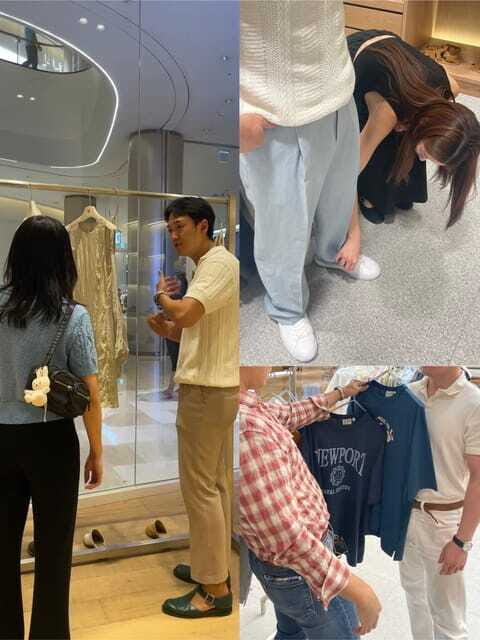
- Outfits prepared first: you try on 6 to 7 looks planned from your preferences
- A real stylist-led route: multiple stores chosen to fit your budget and style
- K-fashion you can’t easily replicate: local pieces and styling ideas
- Special-occasion support: help choosing one outfit that feels right for the moment
- English and Korean guidance: English tour guide with Korean support as needed
- Optional extension: add 30 minutes for 60,000 KRW in person
K-Fashion Shopping in Seoul, Styled Before You Shop
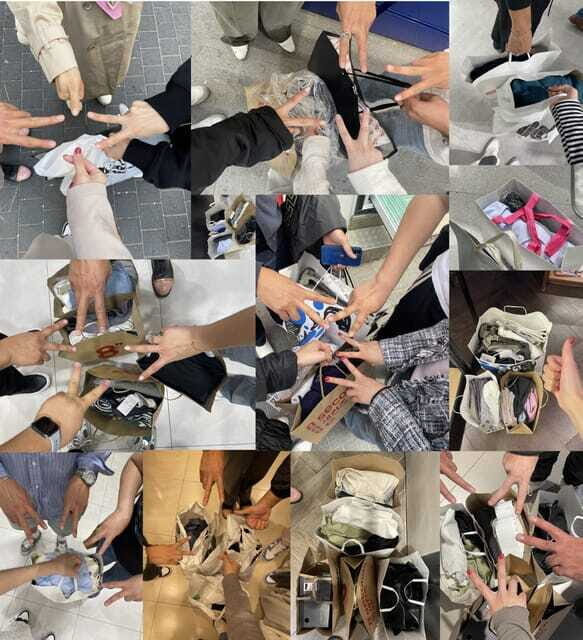
This isn’t the typical shopping trip where you wander, ask one vague question, and hope for the best. The tour starts with a survey (a Google Form pre-interview) that tailors your session, and then the stylist prepares outfits before you arrive. That prep changes everything: you get momentum from minute one.
The tour is private, so you’re not competing with a big group for attention. In plain terms, it means more time for fit, styling questions, and trying on pieces you might skip on your own.
Also, the meeting point isn’t one fixed address. It’s determined based on your survey results, so the first practical step is to actually complete that questionnaire. If you don’t receive it, you’ll need to contact the provider at [email protected] so they can set you up.
How the 1-Hour Session Turns Into 6–7 Outfit Trials
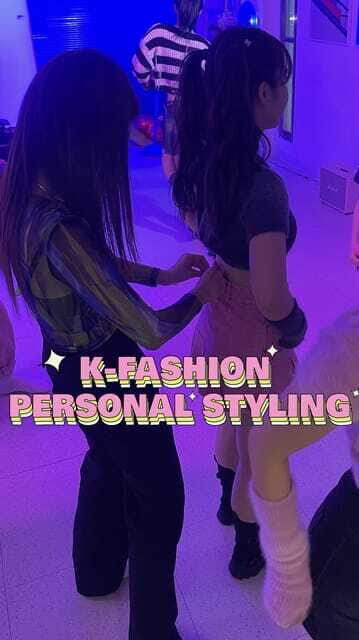
The scheduled shopping time is one hour. That sounds short until you understand how the format works: the stylist brings a lineup of clothes for you to try on, and you keep cycling through options.
You should expect around 6 to 7 outfit changes in an hour, which is a solid pace. It’s enough time to test different directions—casual versus dressier, streetwear versus something more polished—without turning it into a marathon. Your final purchase is always your choice, but the structure helps you stop overthinking.
This is also where the stylist earns their fee. A pro can tell you fast what’s flattering, what’s off, and what you can fix with simple choices like layering or swapping accessories. In other words, you’re not just shopping Korea. You’re learning Korea-style logic: proportion, fit, and how to make trends wearable.
If you hit your stride and want more time, you can add an extra 30 minutes on the spot. The cost is 60,000 KRW, paid in person on the shopping date. That’s a useful option if you’re close to a decision and don’t want to rush out.
Your “Route” Through Korean Stores (and Why It Matters)
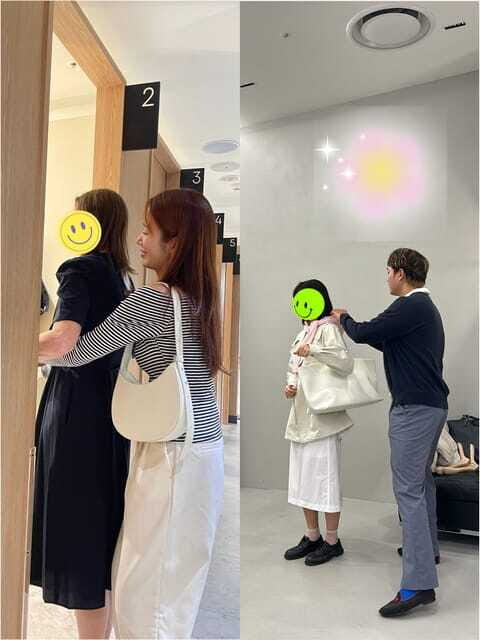
You won’t have to plan your own store hopping. The stylist takes you to several different stores that match your preferences and budget. The goal is to reduce guesswork and maximize the hour, since the tour doesn’t include transportation to and from the shopping area.
This matters because K-fashion shopping isn’t only about finding items—it’s about seeing how stores build outfits. One shop might be strong on the silhouette and basics, while another might nail statement details or trend pieces. When you see those differences quickly, you make better purchases instead of buying one random item you don’t know how to wear.
A detail I like: your outfit lineup is prepared based on your survey, so when you step into each store, you’re not starting from zero. You already know what you want to test next. That makes the experience smoother, especially if you’re jet-lagged, busy, or simply want shopping that feels organized.
K-Pop Energy for Real Life: From BTS/Blackpink Style to a Wearable Fit

The tour is built around K-fashion trends, including K-pop style preferences. That’s a fun promise, but what you really want is clarity: what version of that vibe should you actually wear?
In a session like this, the stylist can steer you toward pieces that capture the look without drowning you in trend-for-trend’s sake. You’ll also get help finding the right outfit for a special occasion. That could mean you’re going to something photographed, something formal, or something where you want to look like you planned your outfit intentionally.
The best part is you can try more than one direction in a short time. You might come in thinking you want one aesthetic, then try an alternative silhouette that surprises you—something that fits your body and still feels current. That’s usually the difference between buying clothes you like in the store and clothes you actually wear when you’re back home.
Price and Value: Paying for Time, Planning, and Expertise
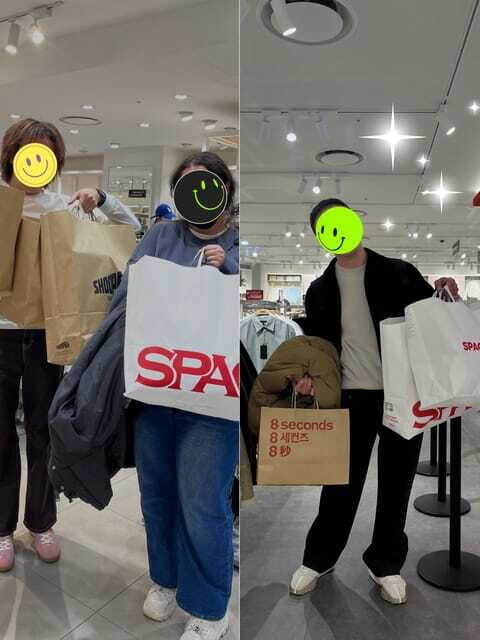
At $133 per person for a 1-hour session, you’re paying for the stylist’s time plus the planning effort: the pre-interview, the outfit prep, and the store-to-store guidance. The purchase price of the clothes themselves is not included, so you’re still responsible for what you buy.
The value is strongest if you want results fast. If you’re only in Seoul briefly, or you don’t enjoy shopping, this type of tour saves energy. You’re trading time and decision fatigue for expert selection and faster trial-and-feedback.
The tour also sets you up to learn, not just buy. Even if you don’t end up purchasing everything you tried, you’ll likely walk away with clearer ideas about what to look for in Korean stores. That can make your future shopping trips in Seoul much easier.
One practical note: you’ll need to cover transportation to and from the shopping location yourself. If you plan your meeting area carefully, you’ll get more value out of your hour.
Practical Tips That Make the Styling Hour Feel Easy
This tour has a simple success formula. You show up ready to try things on.
Wear comfortable shoes. Even though the session is short, you’ll be moving between parts of the shopping area and fitting rooms. Also wear comfortable clothes that are easy to change in and out of. It helps you keep momentum when you’re testing multiple outfits.
Think ahead about what you want. The more specific your goals, the better your stylist can prepare. Try to bring:
- A clear occasion (date, event, photo day, work trip)
- Your preferred vibe (more streetwear, more clean and minimal, more glam)
- Any budget limits you want respected
If you want the full benefit, complete the Google Form survey on time. It decides where you meet and what gets prepared. And if you never receive it, contact [email protected] so you don’t lose your slot.
Communication is English and Korean. The tour guide is listed as English and Korean, and other languages may use Google Translate. If you’re nervous about language, focus on photos and simple descriptors like short, long, fitted, oversized, sporty, or dressy.
Fit, Comfort, and Who This Tour Is Designed For
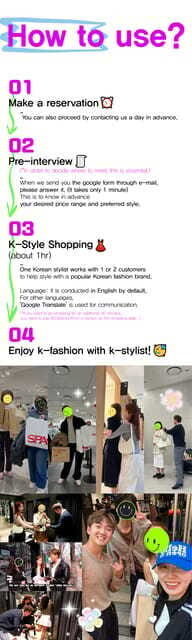
This is a styling and fitting experience, so the rules matter. The tour is not suitable for children under 13, pregnant women, and babies under 1 year. There are also height and weight limits listed:
- People over 6 ft 6 in (200 cm)
- People over 220 lbs (100 kg)
- People over 70 years
That’s not meant to be picky—it’s about making sure the fitting process is comfortable and realistic for everyone involved. If you’re within the limits, plan to be on your feet and changing outfits during the hour.
Also, the tour doesn’t allow pets, smoking, or alcohol and drugs. It’s a normal, keep-it-clean shopping setup.
One more detail to keep in mind: for groups of 4 or more, you should contact the provider directly. That’s for group planning, and it may affect how they schedule your session.
Should You Book This Seoul K-Fashion Shopping Tour?

If you want K-fashion that feels tailored, not random, this is a strong choice. The biggest reasons to book are the pre-prepared outfits and the fact that you’re guided through stores with a stylist who can adjust on the fly. You get structure, faster decisions, and a better shot at leaving with something you genuinely love.
Skip it if you love wandering and browsing at your own pace, or if you’re hoping for a long, open-ended shopping spree. The one-hour limit is real, and adding time costs 60,000 KRW for an extra 30 minutes.
My best-fit recommendation: solo travelers, couples, friends, and groups who want to look like they shopped intelligently in Korea—whether that means K-pop inspired style or an outfit for a specific event.
FAQ
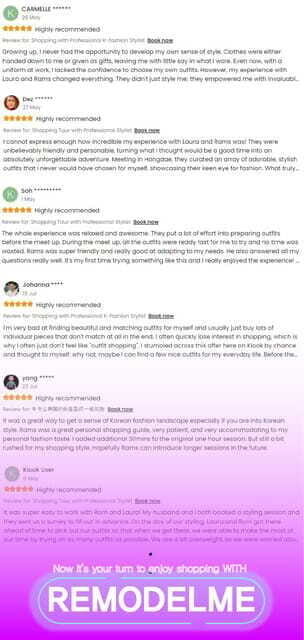
FAQ
How long is the Seoul K-Fashion Shopping Tour?
The tour is 1 hour.
How many outfits will I try in that time?
The tour recommends about 6 to 7 outfits per 1 hour.
Can I add more shopping time beyond the first hour?
Yes. You can add an additional 30 minutes, but you need to pay 60,000 KRW in person on the shopping date.
What is included in the $133 price?
You get a personalized shopping experience with a professional K-fashion stylist for an hour, plus styling advice tailored to your preferences. You also have the chance to buy unique Korean fashion items.
What is not included?
Transportation to and from the shopping location isn’t included, and the cost of any outfit you choose to buy isn’t included.
What should I do if I do not receive the pre-interview questionnaire?
If you do not receive the questionnaire, contact the provider by email at [email protected] so they can coordinate your survey and meeting point.
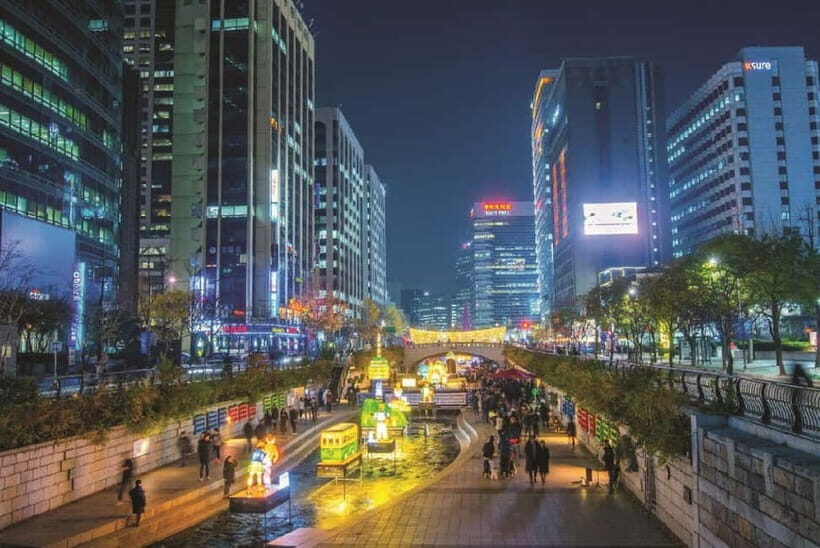
]]>I especially like the guided walk through Changgyeonggung after dark—lighting makes the courtyards feel calmer, and guides like Yoon or Travis bring the place to life with clear explanations. I also love Naksan Park as a reward: peaceful paths, panoramic views, and the bonus thrill for K-Pop Demon Hunters fans following the Rumi & Jinu story along the fortress-wall setting.
One thing to consider: this is a walking-and-viewing route, so bring comfortable shoes and expect slopes and steps, plus it’s not suitable for wheelchair users or kids under 5.
Key highlights you’ll care about
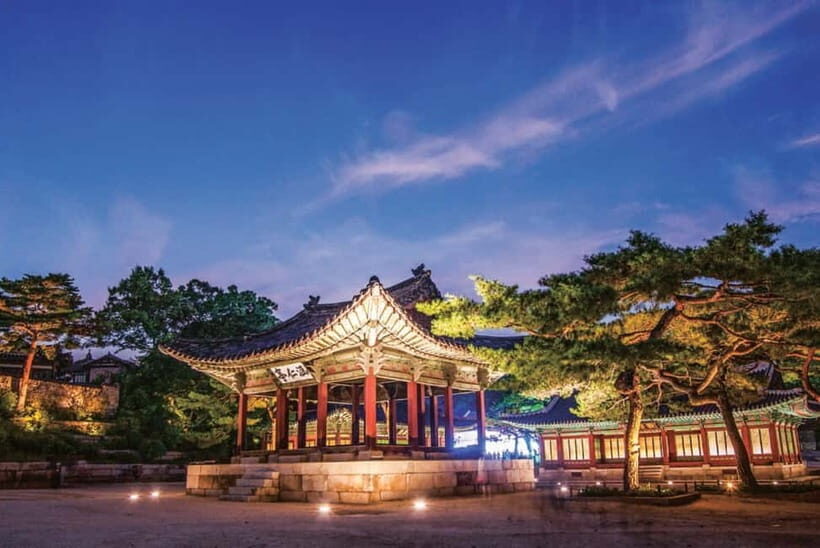
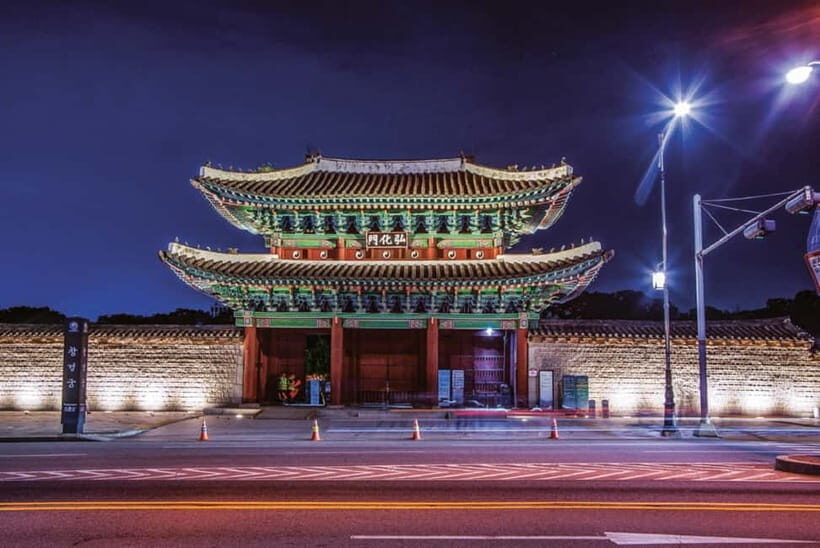
- Changgyeonggung at night: lit courtyards plus a guided story you can actually pace and absorb
- Small group (up to 8): easier questions, less waiting, and a more personal rhythm
- Gwangjang Market snack stop: a simple way to sample iconic local food without planning every bite
- Naksan Park photo views: the classic skyline angles—plus the K-Pop Demon Hunters Rumi & Jinu spot by the fortress walls
- Eungbongsan skyline viewpoint: starlit panoramas that feel like a different Seoul
- Optional short van transfers: helpful if parts of the route get steep
Changgyeonggung Palace lit up: what that night timing changes
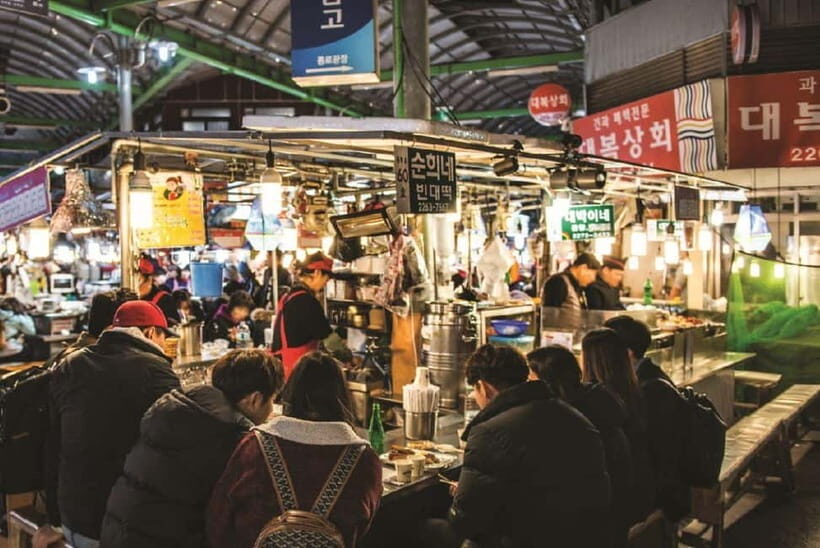
Changgyeonggung Palace is already worth your time in daylight. But at night, the experience shifts. The walls and gates look softer under evening lights, and you can walk through without the same daytime pressure you’d expect in a major Seoul site.
On this tour, you get a guided walking look at the palace, which matters because the layout can be confusing when you’re on your own. With a guide, you can connect what you’re seeing—gates, courtyards, and the palace story—to the bigger picture of the site, instead of just taking photos and moving on.
There’s also an added “light moment” effect. One of the best-reviewed parts is how the palace lighting can include small show-like touches, turning ordinary points into memorable snapshots. Even if you’re not hunting for showmanship, it helps you feel the atmosphere change as the sky darkens.
The drawback? Night palace walks are still walks. If you’re not used to uneven paths and staying on your feet for a sustained stretch, you’ll want to go in with a calm pace and supportive shoes. You’ll be glad you brought water, too.
Gwangjang Market after dark: snack-first Seoul, without the stress
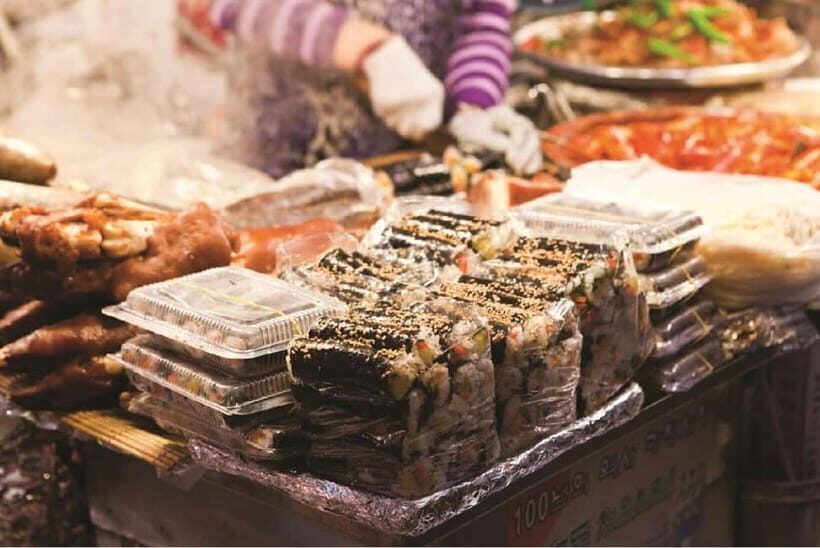
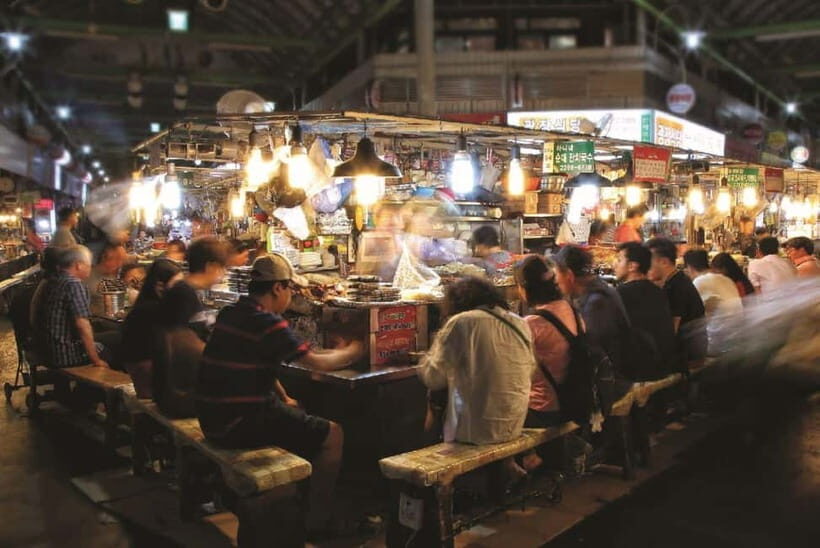
Most people hit Gwangjang Market earlier, when it’s packed and loud. The evening shift is different: you can still browse and eat, but the vibe feels more relaxed. You have a dedicated block of time for the market—enough to try a few iconic snacks and also actually enjoy strolling instead of sprinting between stalls.
This stop is best if you want two things at once:
- You want food that’s undeniably local.
- You don’t want to spend your limited time in Seoul translating menus and second-guessing what’s worth your money.
Because dinner isn’t included, treat this as a guided tasting window rather than an all-you-eat meal plan. That’s actually good value for the price: you’re paying for the tour experience (guide + access + timing), and you decide how much you want to spend on food.
Practical tip: wear shoes you can stand in comfortably. Even if the tour pacing is sensible, markets ask you to linger, not just pass through. If you’re sensitive to crowds or smell intensity, you’ll still be better off at this evening hour than peak daytime.
Naksan Park at night: fortress views and the Rumi & Jinu connection
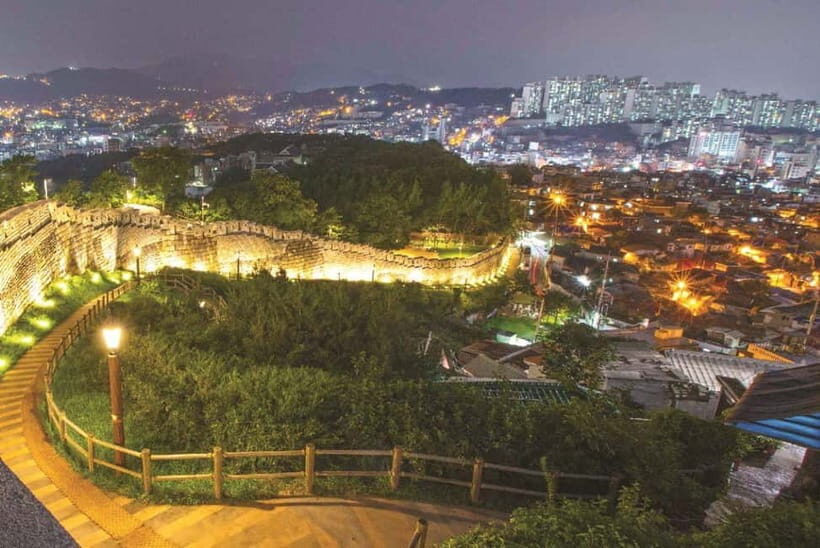
Naksan Park is where this tour earns its “night Seoul” reputation. The paths feel calmer after dark, and the softer lighting makes it easier to focus on views rather than just getting from one tourist stop to another.
The best part for photography is the way the park gives you a wide-angle feeling toward the city. When the skyline lights are on, the viewpoint hits harder. This isn’t a quick “one photo and leave” kind of stop. You get time for a proper photo pause and for slow walking that helps you actually see Seoul’s scale.
And yes, there’s a pop-culture layer that makes this stop extra fun if you’re into K-Pop Demon Hunters. The tour connects the location with the story of Rumi & Jinu and places it within the fortress-wall setting. If you recognize the spot from the screen, you’ll likely enjoy how the guide ties that on-screen feeling to the physical location you’re standing in.
If you’re not into the show, you can still appreciate Naksan as a viewpoint and a break from the market-and-palace pace. The park is also a nice “mental reset,” because it shifts you from indoor-like historical spaces to open air and city lights.
The main consideration here is simple: it’s nighttime walking, and some areas can involve steps. If you’re the type who hates uphill effort, go slow and don’t rush your photo timing.
Eungbongsan Mountain skyline: the best way to see Seoul’s night scale
After Naksan Park, you’ll head up toward Eungbongsan Mountain for a panoramic view of Seoul’s skyline under the starlit sky. This is the part I’d call the payoff, because the city looks more dramatic once you’re higher up and the night is fully set.
A viewpoint like this can be hit-or-miss if you’re alone and don’t know where to stand. On a guided tour, you’re more likely to get to the right vantage point and the route that gets you there with less guesswork.
The value of this stop is that it turns your evening into more than “three locations.” It gives you a skyline moment that makes the night feel complete. You’ll probably find you stop taking quick photos and start scanning the city—following the light patterns and the contrast between older walls and modern neighborhoods.
Again, it’s not a lazy viewpoint. Expect some climbing or incline walking. If you’re already worn out from the palace and market, pace yourself and take breaks when you need them.
Guides, group size, and the pacing that keeps it enjoyable
The tour runs with a local English and Chinese-speaking guide, and it’s a small group limited to 8 participants. That small size changes the whole experience. You’re not stuck waiting for a big crowd, and questions don’t get lost in the chaos.
In the best-reviewed experiences, the guide energy is what people remember. Yoon is mentioned for being informative and well-paced, and Travis is described as pleasant, warm, and available. The common thread: the guide doesn’t just point at sights; they help the group feel taken care of.
You’ll also notice how pacing matters for night touring. You’re not forced to sprint through dark streets. Instead, you move in a route that strings palace story, market snacks, and scenic viewpoints into a single evening flow.
There are optional short van transfers too. That helps if you want the views but don’t want to spend the night battling distance alone.
Price and value: is $30 a fair deal?
At about $30 per person (for a tour running roughly 1 to 5 hours depending on the departure time), this pricing makes sense for a few reasons:
- You’re getting more than one major site: palace + market + viewpoint areas.
- You get interpretation from a guide in English/Chinese, which saves you time and confusion.
- Small group size means you’re paying for attention, not just transportation.
The parts that aren’t included are also important for budgeting. Dinner isn’t included, and hotel pickup and drop-off aren’t included. That means you should plan to cover your own food at the market and handle getting to the meeting point on time.
Still, the overall value feels strong because so many of the costs in Seoul come from doing everything yourself. Here, your money goes to timing, walking route management, and getting the story at the right places—especially at night.
Who this night tour fits best (and who might skip it)
This tour is ideal if you:
- Want a night-focused Seoul itinerary that feels different from the daytime crowds.
- Enjoy palace settings, viewpoints, and a bit of cultural storytelling.
- Are a K-Pop Demon Hunters fan and like matching show locations to real places.
- Prefer a small group when you’re traveling alone or with a partner.
You might skip it if:
- You need wheelchair accessibility (it’s not suitable for wheelchair users).
- You’re traveling with very young kids (not suitable for children under 5).
- You dislike walking and inclines—comfortable shoes are genuinely important here.
- You’re hoping dinner is included (it isn’t).
Should you book this Changgyeonggung, Gwangjang, and Naksan night tour?
If your goal is to see Seoul in a way that feels calmer, brighter, and more story-driven, I think booking makes sense. The strongest reason is the night format: Changgyeonggung looks different after dark, Naksan Park delivers classic skyline views, and Eungbongsan adds the big panoramic moment that ties the evening together.
Book it if you’re excited by the combination of history + food + views, and you’re comfortable walking at night. Skip it if you want a fully seated, low-effort experience or if you’re only chasing a quick photo without any guide interpretation.
FAQ
FAQ
How much does the tour cost?
The tour is priced at $30 per person.
How long is the tour?
The duration is listed as 1 to 5 hours, depending on the starting time available.
Where does the tour start?
You can start from either 창경궁 홍화문 or 종로5가역. The exact meeting point may vary based on the option booked.
Where can you be dropped off at the end?
Drop-off options include areas around Myeongdong, with other subway station choices depending on the option you book.
Is dinner included?
No. Dinner is not included.
What’s included in the price?
You get a local English and Chinese-speaking guide, a small group tour (up to 8 participants), and optional short van transfers.
What language will the guide speak?
The guide speaks Chinese and English.
What should I bring?
Bring comfortable shoes, a camera, and water.
Is there a minimum number of participants?
Yes. The tour requires a minimum of 4 participants to depart.
Is the tour refundable if my plans change?
Yes. You can cancel up to 24 hours in advance for a full refund, and you may also be able to use reserve now & pay later.
]]>You’ll get history with context, then you’ll get fed. After sites tied to Korea’s fight for independence, you end up at Namdaemun Market for comforting local favorites like hotteok and knife-cut noodle bowls. Guides such as Janice and Ron are especially good at turning big themes into clear, human stories you can actually follow.
One more consideration: this experience isn’t for everyone. It isn’t suitable for wheelchair users, and it’s not geared to people with altitude sickness. Also, it runs in rain or snow, so plan for weather and wear comfortable shoes.
Key highlights you’ll feel fast
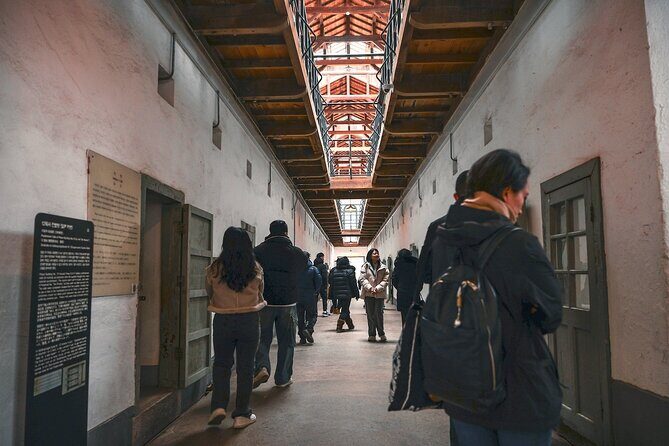
- Seodaemun Prison History Hall: somber cells and execution grounds tied to independence activists under Japanese colonial rule
- Dilkusha and Albert Taylor: an American journalist’s home and his role in spreading Korea’s cause
- Deoksugung Palace’s Korean-Western mix: Emperor Gojong’s era, set against a modern skyline
- Sungnyemun (Namdaemun) Gate: a 600-year-old national treasure at Seoul’s southern entrance
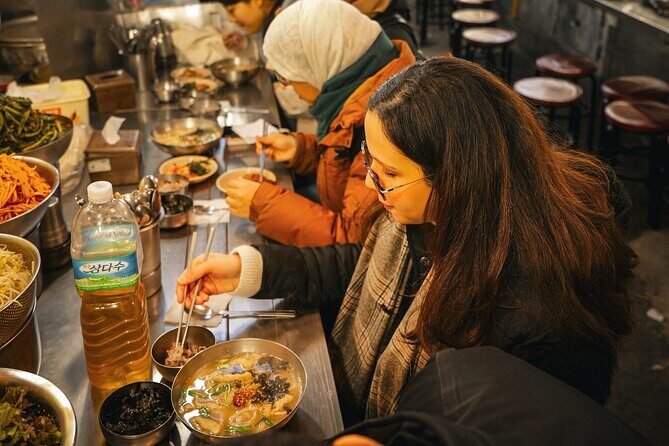
- Namdaemun Market’s Kalguksu Alley: steaming knife-cut noodles eaten in tight, local stalls
- Street-food tastings included: you’ll snack in the market instead of just looking
Seoul from Independence Gate: how the tour sets the mood
The day starts at Dongnimmun (Independence Gate) Station, Exit 5, and you’ll spot your guide holding a Tripper sign. Starting there matters. It’s a reminder that independence is not just a page in a textbook in Korea—it’s built into the city’s wayfinding and public memory.
This is a small-group format, which helps a lot on a tour like this. When you’re switching between prison walls, royal halls, and food alleys, you want a guide who can keep the story straight without rushing you. And the pacing here is designed that way: you move from heavy history to everyday life in a natural order.
If you like asking questions, you’re in luck. The guides on this route (including people like Janice and Ron) tend to keep the conversation open, whether you’re curious about what colonial rule meant or why a noodle bowl is comfort food in any country.
Inside Seodaemun Prison History Hall: resistance in stone
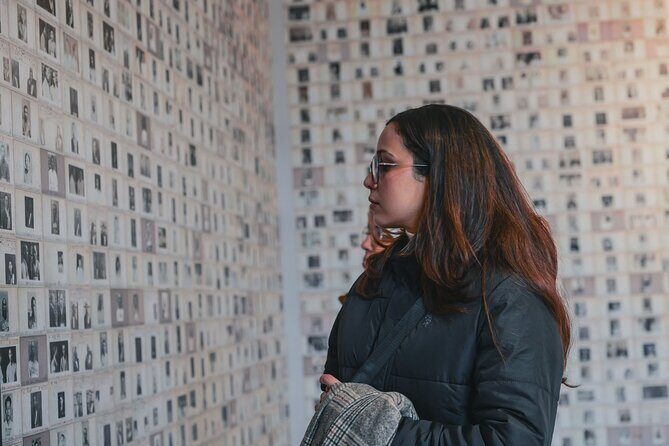
Seodaemun Prison is the emotional anchor of the whole experience. You walk through somber cells and execution grounds where Korean independence activists were imprisoned during the Japanese colonial era. This isn’t a “quick photo stop.” Expect to slow down and take in how place can explain power and fear better than a lecture.
What I value most in this stop is the way the guide ties personal stories to larger political realities. You hear real-life accounts of resistance fighters and you’ll see exhibits that show how Korea’s road to independence took shape under colonial pressure. Even if you only remember a few names afterward, you’ll come away with a clearer sense of what everyday life meant under that system.
There’s also a practical side: this is your moment to mentally prepare for the rest of the day. Once you understand the stakes here, Dilkusha and Deoksugung Palace don’t feel like separate “tourist sights.” They start feeling like chapters in one long story.
One caution: if you don’t handle heavy history well, Seodaemun can land hard. The upside is that the tour doesn’t leave you stuck there. It moves you onward, and that contrast is the point.
Dilkusha and Albert Taylor: Korea’s cause went global
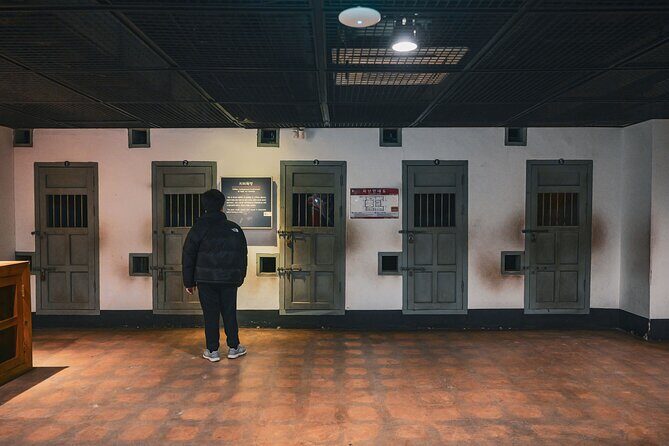
After Seodaemun, you shift from imprisonment to influence, and that change is refreshing. Dilkusha is the home of Albert Taylor, an American journalist who supported Korea’s independence movement. This stop matters because it broadens the story beyond Korea’s borders.
You’ll learn how international support played a role and why Taylor’s home became more than just a residence. Even if you’re not a journalism-history person, the idea is easy to grasp: movements need attention, allies, and communication. Taylor’s support helped spread Korea’s cause to the wider world.
I like this part because it avoids a one-note narrative. Korean resistance is front and center, but you also get a sense of how global awareness can affect local struggles. It’s a “how change spreads” lesson, wrapped in a specific, real place.
Deoksugung Palace: Korean royal ground with Western hints
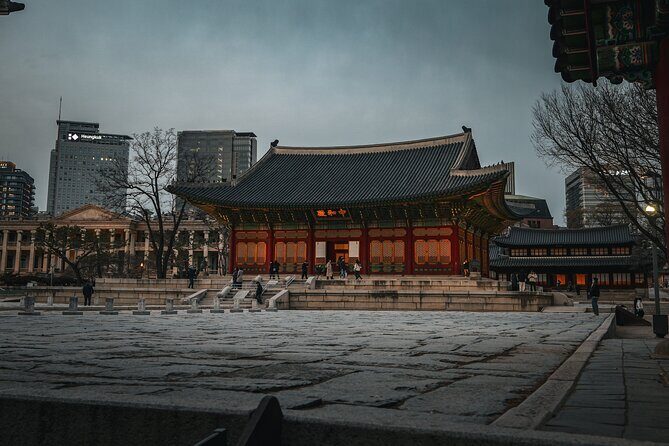
From Dilkusha, you’ll head to Deoksugung Palace, where the visual story gets more complex in a good way. This palace is known for a blend of Korean and Western architecture in the same royal setting. That isn’t just an aesthetic detail. It’s a snapshot of a country moving between old systems and new pressures.
The big focus here is Emperor Gojong, the last emperor of Korea. You’ll walk through areas connected to the period when he sought refuge and worked through Korea’s modernization. In other words, this is where you see political transition reflected in buildings and space.
Then there’s the contrast you can’t miss. Deoksugung Palace sits with the modern skyline around it, including a clear visual connection to Seoul City Hall. That background keeps the story anchored in the present: Korea didn’t simply change once. It kept changing, sometimes quickly, sometimes painfully.
If you’re the type who likes architecture, you’ll enjoy how this palace lets you compare styles without needing a lecture. If you’re not, the guide will still translate what you’re seeing into the history of the time.
Seoul City Hall and Sungnyemun Gate: the city’s southern heartbeat
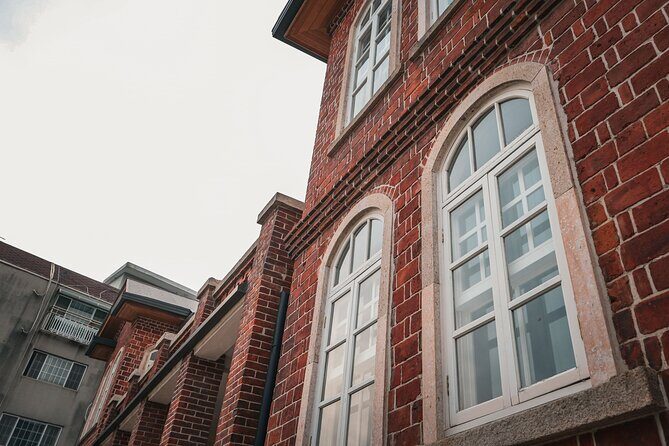
Next up are the stopovers near Seoul City Hall and Sungnyemun (Namdaemun) Gate. This is the “place where history still runs the city” part of the day.
Seoul City Hall gives you a quick lens on transformation—from the grip of colonial past into today’s democracy. It’s not the kind of site that demands long reading, but it helps you connect the earlier themes to what Korea built afterward.
Then you get Sungnyemun, the national treasure gate that has served as a southern entrance since the Joseon Dynasty. The fact that it’s around 600 years old isn’t just a number. It’s a reminder that Seoul’s identity didn’t start with modern skyscrapers. Gateways, routes, and symbols have always mattered.
I like having this stop after the palaces and before you hit the market. It gives your brain a reset without letting the story go cold. You’re still on the same historical track—you’re just swapping royal focus for city geography.
Namdaemun Market: Kalguksu Alley and comfort food after hard stories
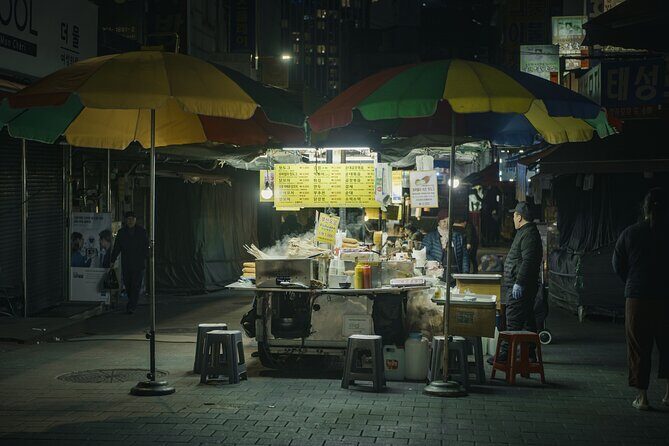
Namdaemun Market is where the day turns from survival to taste. This is Seoul’s largest and oldest traditional market, with vendors selling goods for over 600 years. You can feel the age in the rhythm of the stalls, even if you’re just walking through for the first time.
Your guide brings you into the market’s everyday rhythm through specific food areas. One highlight is Kalguksu Alley, where locals gather at small, busy stalls for handmade knife-cut noodles in steaming bowls. The noodles are cut by hand, which affects texture and bite. And in plain terms: when you’ve been through Seodaemun, a hot bowl feels like a life decision.
You’ll also taste street foods like hotteok, a comforting, sweet-and-savory treat that works well as a snack while you keep moving. The tour includes food tastings at Namdaemun Market, so you’re not stuck deciding on everything yourself before you’re ready.
What makes this market stop valuable is that it’s not a random food crawl. You’ll connect the morning’s themes with the way people actually live now. After walls and architecture, you end up in the place where daily life keeps going. That’s the emotional math of the tour: hard history, then warmth.
Practical tip: go slow through the food areas. The market is a sensory place—smells, noise, steam. If you rush, you miss the best parts of the experience: how the food looks in the moment and how easy it is to talk to vendors and your guide.
Price and food value for $65, with entrances and transport covered
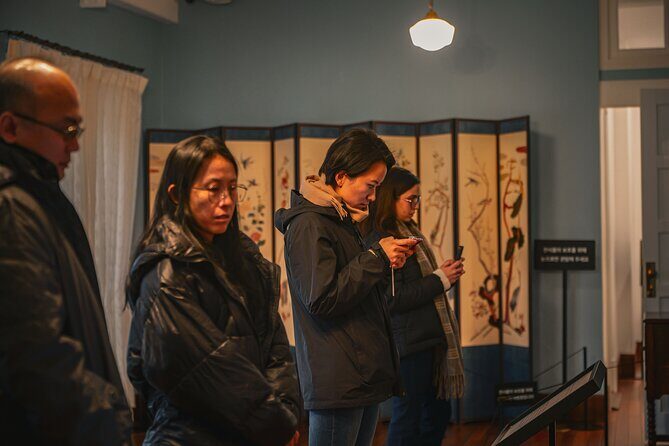
At $65 per person, this isn’t a “cheap snack tour,” and it’s also not priced like a private museum driver. The value comes from what’s included:
- An English-speaking professional guide
- All entrance fees
- Transportation cost
- Food tastings at Namdaemun Market
So you’re paying for both sides of the equation: structured history access and a guided food experience. Many tours force you to pay for admissions on top, or they include only one or two tastings. Here, you get multiple major stops across the day, and then you eat on the backend while you’re already in the right neighborhood.
What’s not included is extra fees. In practice, that means you should budget a bit for anything you choose to buy beyond the tastings, especially if you find a stall you love. But the core experience is already covered: you’re not guessing whether your tickets and entrances will multiply later.
If your Seoul plan includes palaces and markets anyway, this is often the easiest way to connect them with meaningful context. You’ll spend your time more efficiently because your guide does the linking for you.
Who this Seoul dark past and market-food tour fits best
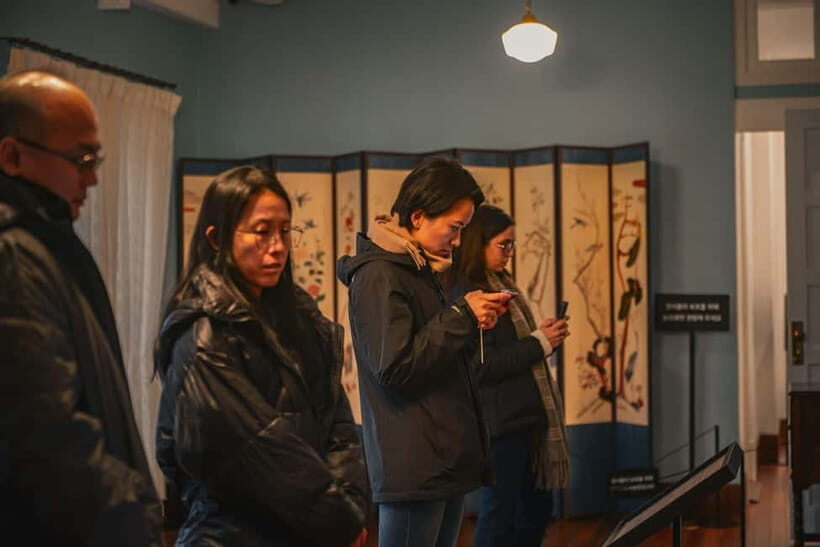
This is a great match if you want a Seoul that has layers. If you’re the kind of person who reads a plaque and then asks why it was placed there, you’ll enjoy the storyline from resistance to modernization to everyday life.
You’ll also appreciate it if you like variety in one day. The tour moves from prison history to an American journalist’s home to palace architecture to city landmarks, then finishes with market comfort food. That rhythm keeps it from feeling repetitive.
Where it may not fit:
- If you need a completely light, feel-good day, Seodaemun Prison may be too intense.
- If you have mobility constraints, note that it’s not suitable for wheelchair users and includes moderate walking.
- If you’re dealing with altitude sickness, this tour isn’t suitable for you.
Weather is another factor. The tour operates as scheduled in rain or snow, and your route may shift depending on on-site conditions. That’s usually fine, but it’s a reminder to dress for the day, not the brochure.
Should you book this Seoul dark past and market street-food tour?
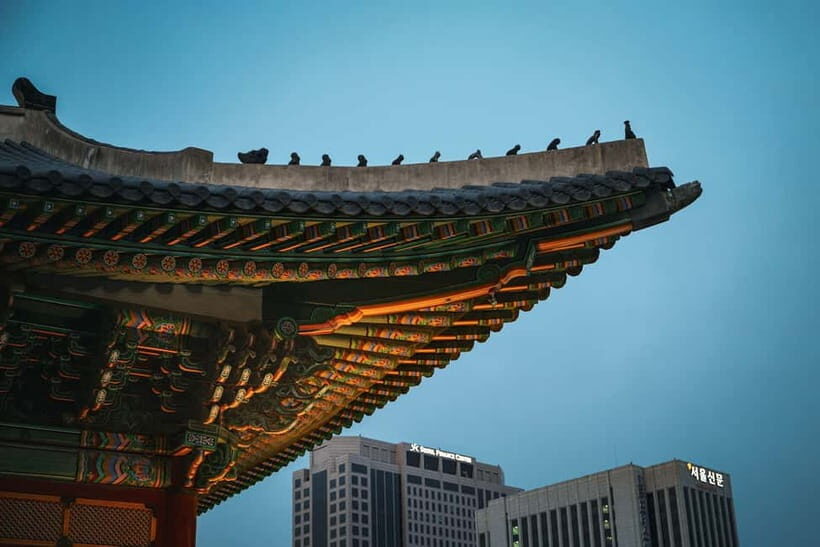
I’d book this if you want history that actually changes how you see Seoul, not just a list of stops. The strongest reason is the pairing: Seodaemun Prison’s resistance story followed by a market where locals eat warm noodles and street snacks. That contrast is memorable and, honestly, satisfying.
Choose it if you’re comfortable with moderate walking and you’re okay with emotional themes. Skip it if you want an easygoing day with minimal heavy content, or if you need wheelchair access or altitude-sickness accommodations.
If you do book, wear comfortable shoes and go in hungry. By the time you reach Namdaemun Market, you’ll be ready for a bowl that tastes like relief.
FAQ
What is the tour price?
The price is $65 per person.
Where does the tour start?
It starts at Dongnimmun (Independence Gate) Station, Exit 5. You should look for the guide holding a Tripper sign.
Where does the tour end?
It ends back at the meeting point.
What language is the tour offered in?
The tour is offered in English.
What stops are included in the itinerary?
Key stops include Seodaemun Prison History Hall, Dilkusha, Deoksugung Palace, Seoul City Hall & Sungnyemun Gate (Namdaemun), and Namdaemun Market.
What food will I get during the tour?
Food tastings at Namdaemun Market are included, including items like hotteok and noodles at Kalguksu Alley.
Is transportation included?
Yes. Transportation cost is included.
What should I bring?
You should bring comfortable shoes.
Will the tour run in bad weather?
The tour operates as scheduled in rain or snow. Only if weather makes it completely impossible will you be contacted separately.
Is this tour suitable for wheelchair users?
No, it is not suitable for wheelchair users.
]]>I like that Chef Yie makes the whole thing practical and easy to follow, with hands-on fish selection and lots of English-friendly guidance (plus the chance to talk about Korean food culture). One drawback to consider: crab isn’t included in the price, and it’s priced by type and weight, so you’ll need to decide on the spot.
What Makes This Noryangjin Fish Market Tour Worth Your Time
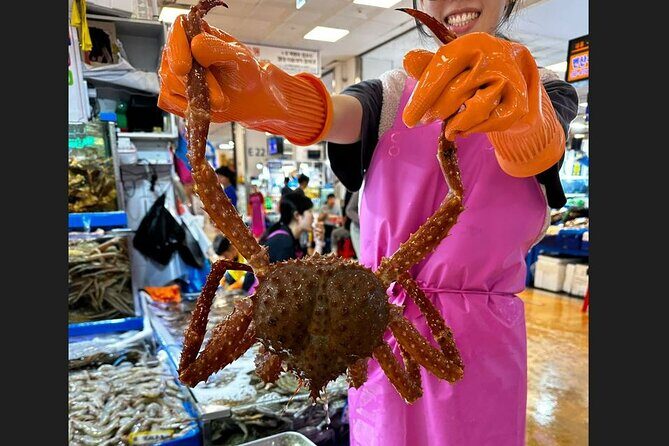
- Chef Yie’s friendly, confident guidance: clear English and real street-level insight while you walk the market
- Market food that matches what you pick: your handpicked seafood becomes your meal at a traditional restaurant
- Small group size (max 6): less waiting, more time to ask questions and see what’s freshest
- A market with long roots: the traditional fish market concept here opened in 1927
- Crab is optional (and extra): you can add it, but plan for the added cost and decision moment
- You leave with a story, not just photos: anecdotes about Korean culinary habits and seasonal choices
Noryangjin Fisheries Wholesale Market: a 1927 stop you can feel
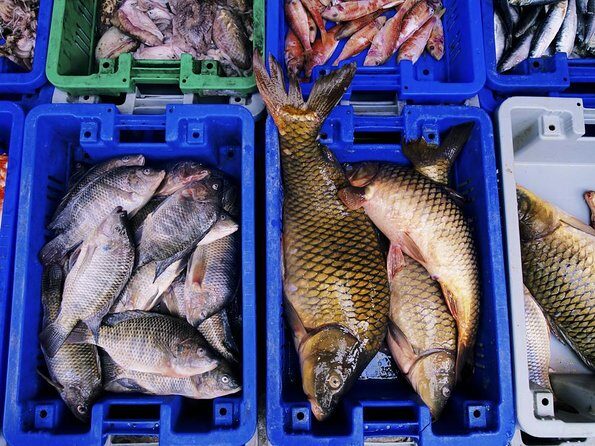
Noryangjin is one of those places where you quickly understand how seafood moves in Korea. Instead of a seafood restaurant version of the market, you’re in the real wholesale-and-selection zone, where the quality you see is the quality you’ll be offered.
The tour is designed around a traditional fish market opened in 1927, so you’re not treating this like a quick look-and-leave shopping errand. You’re getting a guided walkthrough that helps you read the scene—what matters, what to ask for, and how Korean seafood buying works day-to-day.
Meet Chef Yie: the person who turns a market walk into a lesson
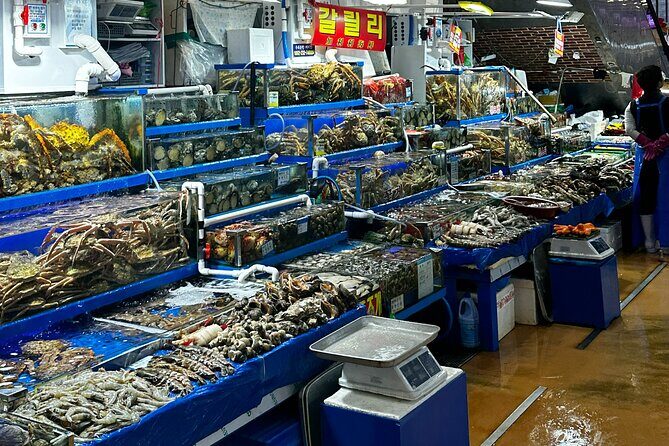
Chef Yie is the core of the experience. He has over 10 years of experience, and that shows in how he explains what to look for and why certain choices make sense for the meal you’ll eat.
From a practical standpoint, I like tours where the guide can do more than point. Chef Yie doesn’t just translate—he helps you understand the logic behind selecting seafood, and he keeps things friendly so questions feel normal, not awkward.
In the market, that matters. You’ll be surrounded by fish options, seafood products, and people working fast. A good guide helps you stay oriented so you can enjoy the sights without feeling lost.
Hands-on fish selection: how your lunch gets decided
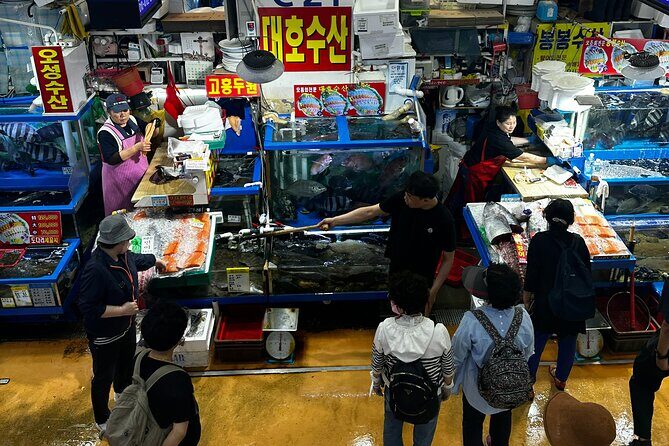
This tour is built around one very specific idea: you hand-pick the fish, then you eat it. That changes your role from observer to chooser. You learn what makes seafood feel fresher and how seasonal availability can affect what you see.
Here’s what makes this part valuable for your trip: when you understand what “fresh” means in a market context, it improves every seafood meal you eat later in Korea. You’ll start noticing texture, selection patterns, and how seafood is presented—not just what it looks like.
You also get time to talk through choices instead of rushing. With a maximum of 6 travelers, it’s easier to get a clear recommendation and compare options without the tour turning into a fast conveyor belt.
The market meal: what you’ll likely eat and why it tastes better
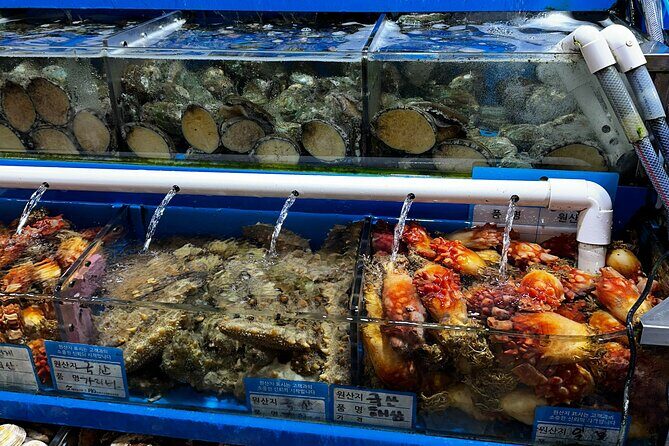
Your seafood choice turns into a meal at a traditional restaurant located within the market area. That’s a big deal. Eating on-site means your selection experience and your tasting experience happen as one continuous chain, not two disconnected parts of the day.
Expect Korean seafood prepared in styles that highlight freshness. In particular, people often end up trying sashimi along with other seafood dishes you wouldn’t necessarily order right away on your own. When you’ve just made the selection, the flavors and textures feel more personal—and you know what decision caused what taste.
The tour also aims for a satisfying quantity of food. Based on what you’re told to expect, the portion size can be surprisingly generous for a 2.5–3 hour experience. That makes it a strong option when you want lunch that feels like an event, not a snack.
Crab add-on: how to plan for the one cost that can change everything
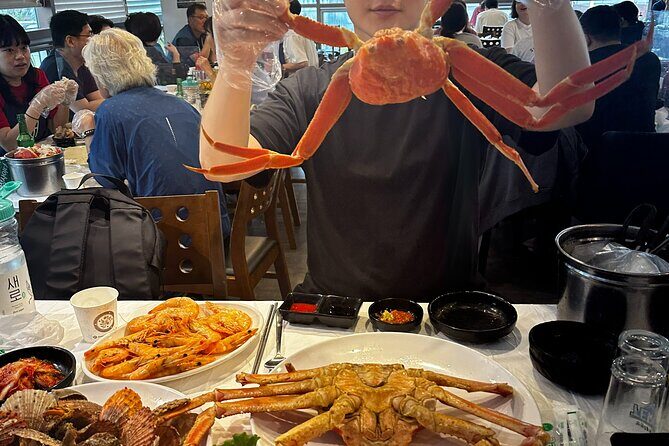
Crab is not included in the base price. If you want it, you’ll pay directly when selecting the seafood, and the cost depends on type and weight.
The helpful part: Chef Yie is there to make the crab purchase feel smooth. If you message in advance that you want crab, the process should be easier because you won’t be trying to figure out pricing and options while everyone moves around you fast.
My practical advice: go into the meal decision ready for a small budget swing. If crab is a must for you, treat it as a deliberate add-on rather than a surprise fee, and you’ll enjoy the experience more.
Price and timing: is $150 good value for Noryangjin?
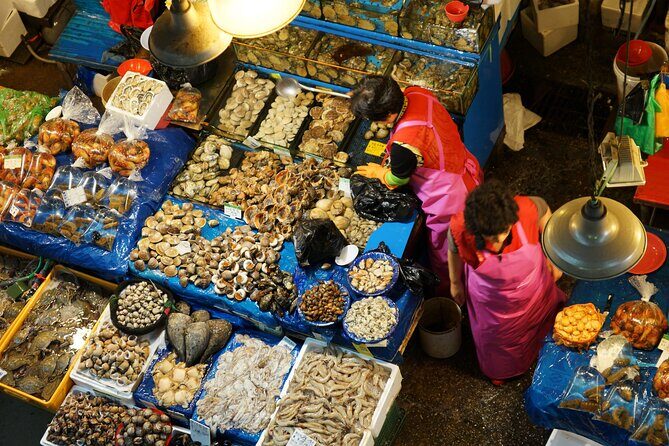
At $150 per person, this tour isn’t a “cheap and cheerful” market stroll. It’s priced more like a guided food experience where you pay for the guide, the structure, and the included meal tied to your selection.
What makes it feel like reasonable value:
- You’re not only walking—you’re getting expert help choosing seafood and then eating it
- The tour includes a meal at a traditional restaurant inside the market area
- The group stays small (max 6), which keeps the experience personal
- Chef Yie brings both language support and real buying logic, which is the hardest part to do alone
Timing matters too. The tour runs about 2 hours 30 minutes to 3 hours. That’s long enough to learn and eat, but short enough that you can still fit in other Seoul plans that day.
You’ll also want to check the day and hours, since the provided opening info lists Monday: 10:00 AM – 5:00 PM for the operating date range shown. If you’re scheduling a tight itinerary, build in a little buffer so the market timing doesn’t squeeze you.
Who should book this Seoul fish market tour?
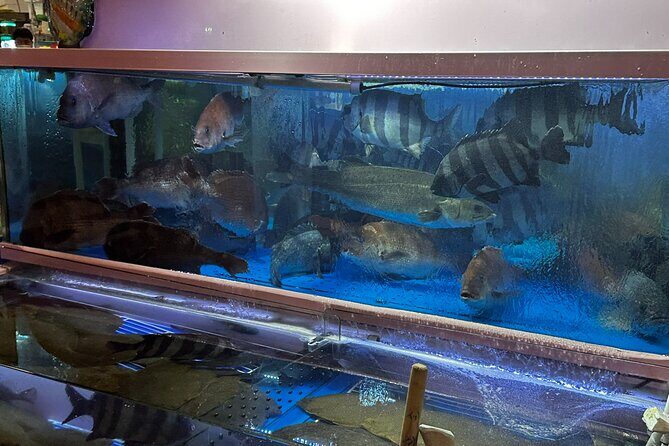
This fits best if you like food that comes with context. If you enjoy asking questions and you’re curious about how Koreans buy seafood, you’ll get more out of it than you would from a standard “see and taste” outing.
It’s also a strong choice if you’re traveling as a small group or family unit and want a guide who can keep things friendly. With a limit of 6 travelers, it’s easier for kids or picky eaters to stay engaged because there’s room to get help choosing what to eat.
If you only want to sample a little seafood without making choices, you might find the “pick your own fish” format slightly more involved than you want. But if you enjoy the idea of being part of the process, it’s a great match.
Practical tips for making the most of Noryangjin
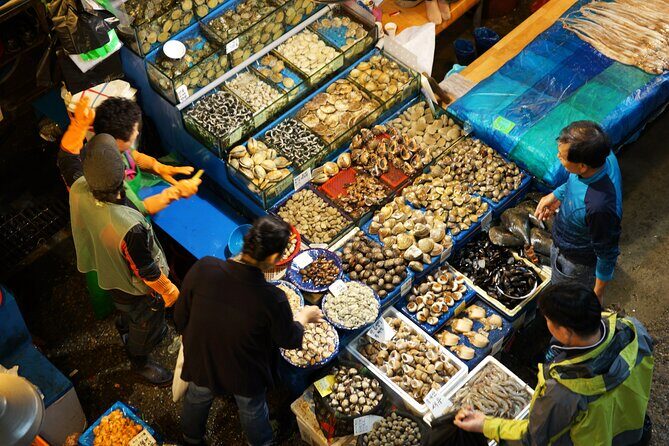
Come with a mindset of decision-making. The selection moment is the heart of the tour, so it helps to be open to what’s fresh and seasonal rather than demanding a single specific fish.
Also, think about crab early in your planning. Since crab is priced by type and weight, your final bill can change based on what looks best at the time. If crab is on your list, ask Chef Yie and treat it as an intentional add-on.
Finally, keep expectations realistic about markets: it’s a working environment. The more you let the guide steer, the smoother your experience will be—less second-guessing, more learning.
Should you book this Noryangjin Fish Market with Chef Yie?
Yes, if you want a small-group seafood experience that teaches you how to choose fish, not just where to stand for photos. The biggest value here is the combination of Chef Yie’s guidance, the chance to select what you eat, and a meal delivered right after your choices.
Skip it (or at least think twice) if you’re allergic to making decisions on the spot, or if you’re avoiding extra costs because crab can add to the total. Otherwise, this is the kind of Seoul food tour that can improve how you order seafood for the rest of your trip.
FAQ
Where does the tour start?
The tour starts at Noryangjin Fisheries Wholesale Market, at 674 Nodeul-ro, Dongjak District, Seoul, South Korea.
How long is the Noryangjin Fish Market tour?
It runs about 2 hours 30 minutes to 3 hours.
What’s included in the price?
The price includes a guided visit of the traditional fish market (opened in 1927), guidance from Chef Yie, a hands-on experience selecting fish, and a meal at a traditional restaurant where you eat the seafood you hand-picked.
Is crab included?
No. Crab is not included in the price. If you want crab, you can pay for it directly when selecting it, and the price depends on the type and weight.
How big is the group?
The tour has a maximum of 6 travelers.
Do I need to book far in advance?
On average, it’s booked about 29 days in advance, and you’ll receive confirmation at booking unless you book within 5 hours of travel, in which case confirmation comes as soon as possible depending on availability.
]]>What Makes This Class Feel Like Korean Home Life
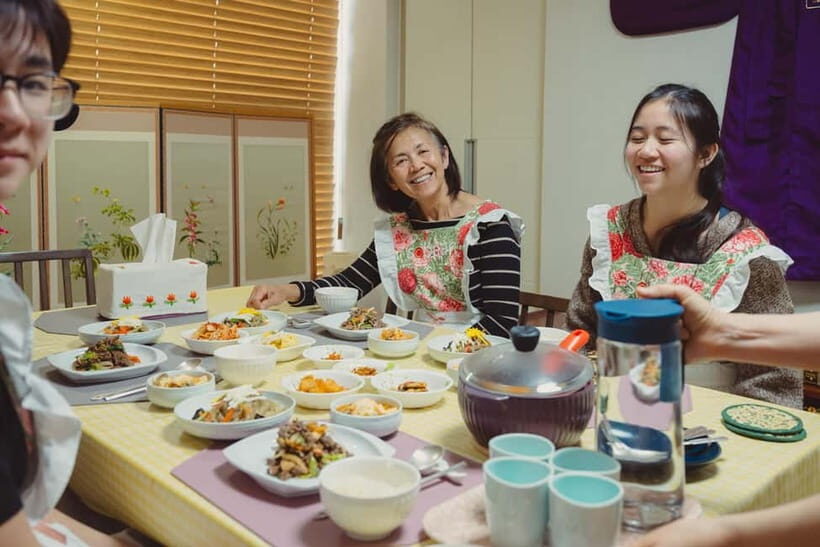
This is the kind of experience where you learn by doing, not just watching. You pick what you want to cook, shop with guidance, and end with dessert and tea in a room that feels like it has a story behind every wall.
Key Points You’ll Care About
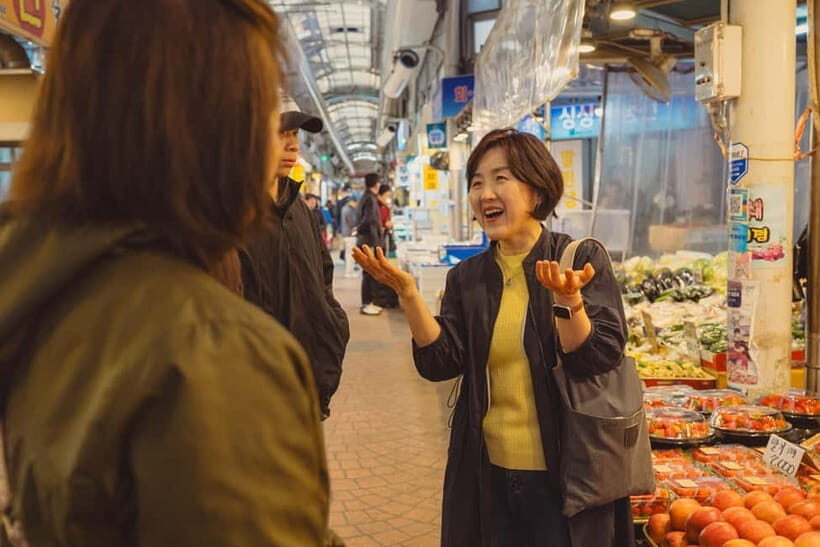
- Market shopping with practical ingredient tips so you know what to buy (and why)
- Small-group format (max 4) that keeps the pace friendly and questions easy
- Cook dishes you choose including bulgogi, bibimbap, and kimchi pancakes
- Lunch + tea-time included, plus a traditional Korean dessert you help make
- A beautiful embroidery-filled home, with welcoming hosts like Ann and her family
A 210-Minute Seoul Taste Lesson You Can Repeat at Home
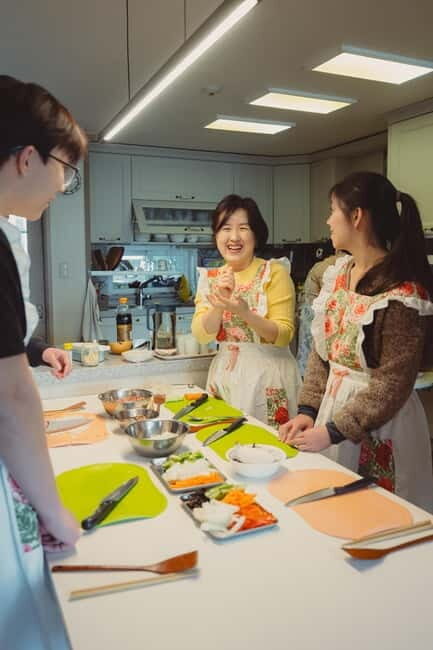
For $69, this isn’t just a cooking show. It’s a full food-focused outing that takes you from market shelves to a kitchen you can actually learn from. You leave with more than recipes; you leave with a better sense of Korean ingredients and how they work together.
The timing also matters. In 210 minutes, you get enough structure to learn, cook, eat, and still make dessert without feeling rushed. If you’ve ever cooked Korean food at home and wondered why it didn’t taste the same, this kind of ingredient-first approach helps.
And because this is a small group, you’re not stuck waiting for your turn. You can ask about basics—like what seasonings to look for at the market—and your guide can adjust to what you want to cook.
Finding the Meet-Up at Sillim Station (Line 2, Station #230)
You’ll meet inside Sillim station at 10:30am. The station details are specific for a reason: you’ll meet inside the subway area, before you go out through the exit, near Cafe Mignon.
Look for someone holding a Sobaan cooking sign—that’s how you’ll spot your host quickly. This setup is helpful when Seoul stations feel like mazes, especially if you arrive early and want to orient yourself fast.
One thing to plan: arrive a few minutes early and give yourself time to find Cafe Mignon inside the station. Since the meeting point is inside, you won’t have street-level landmarks to guide you.
Market Walk: Choosing Seasonal Ingredients (and Knowing What They Mean)
The experience starts with a guided tour of a local traditional market. This part is where the day becomes more than a hands-on class. You’ll learn the cultural stories behind dishes and get practical tips for picking ingredients from real vendors—not generic descriptions.
A few things I like about this market stage:
- You don’t just browse. You shop together for fresh produce and authentic seasonings.
- You get guidance on what matters in Korean cooking, so you buy with confidence.
- You make stops where the guide explains typical foods and their background, not just how they taste.
From the way the day is described, you’re likely to learn how seasonal ingredients affect flavor. Even if you don’t memorize every detail, you’ll come away thinking differently when you see Korean staples in a grocery store back home.
The House with Hand-Embroidered Rooms: Cooking Where the Stories Live
After the market, you head to a Korean house filled with traditional hand-embroidered works. It’s not just a pretty backdrop. This setting helps explain why the food feels personal—this is the kind of place where meals are part of family life.
You’ll be welcomed into the home and shown around. Then you move into cooking, with a calm pace that leaves room for questions and real participation. The class structure is hands-on, and you’re not just doing one task and then watching the rest.
A highlight here is that you cook dishes you choose. Options mentioned include bulgogi, bibimbap, kimchi pancakes, or something else you’re curious about. That flexibility is valuable because it shapes the whole day: you’ll pay attention to the steps that matter for your meal, not a preset menu.
Cooking Your Chosen Dishes: Hands-On, Unhurried, and Practical
In the kitchen, you’ll cook Korean dishes using what you selected at the market. That ingredient-to-dish link is the point. If you’re the type who wants to understand the why behind cooking, this method works because you saw the ingredients up close first.
The teaching style is practical. You’re guided through the steps, and the pace is designed so you can actually participate without feeling like you’re sprinting. You also get a clear sense of what the finished food should look and taste like.
Why this matters for you:
- You’re more likely to remember the steps because you picked the dish in advance.
- You’ll learn technique, not just a list of ingredients.
- You can adjust based on your preferences, since your dish choices drive the class.
If you’ve been intimidated by Korean cooking before—maybe from complicated-looking bowls or the number of components in a meal—this format helps because you’re focusing on a few key dishes, not trying to learn everything at once.
Lunch at the Table: A Meal That Makes the Learning Click
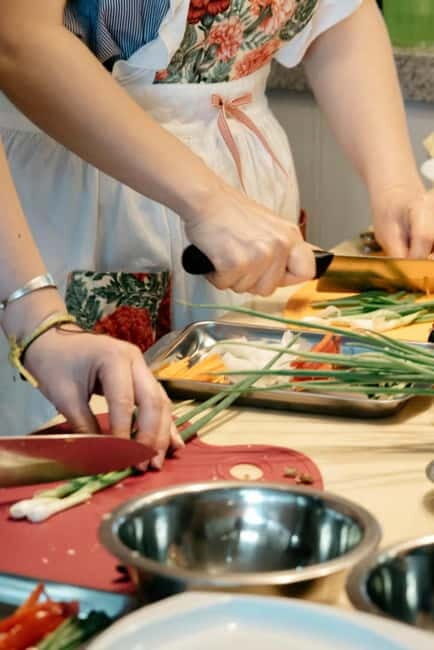
You’ll enjoy a homemade Korean lunch after cooking. This is a simple but important part of the experience: tasting confirms what you did right.
Because the class includes lunch, you won’t have to figure out where to eat or how to order safely if you’re still getting comfortable with Korean menus. Instead, you eat what you made, in the setting where it was prepared.
It also makes the cooking portion feel complete. You don’t leave the kitchen and then hope the flavor matches what you intended. You taste immediately—while the steps are still fresh in your mind.
Dessert Making and Tea-Time: The Sweet Finish in an Embroidery-Filled Room
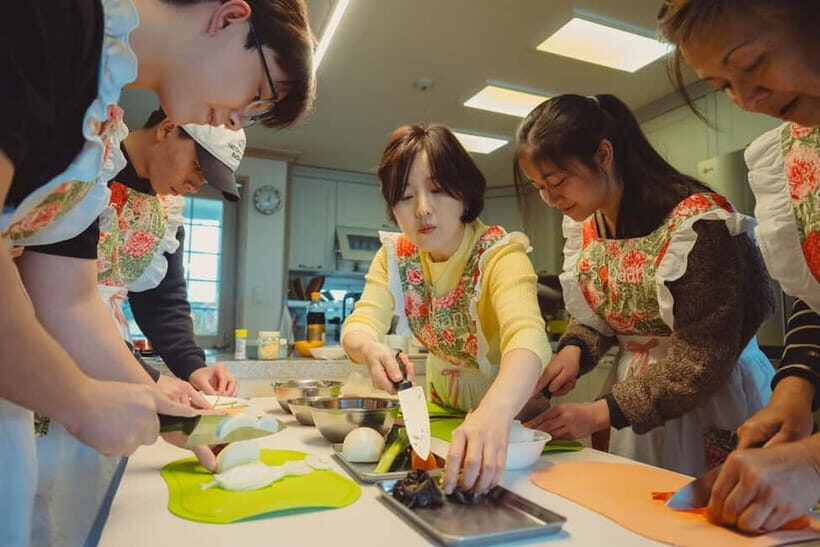
After lunch, you’ll craft a traditional Korean dessert together. Then comes tea-time, relaxing in the same beautiful home environment—described as being filled with hand-embroidered works.
This part is more than a finale. Dessert-making helps reinforce the day’s theme: you learn Korean food as something everyday people actually make and share, not just something fancy for special occasions. Making it together also gives you a moment to slow down and enjoy the atmosphere.
Tea-time works like the closing chapter. You can talk about what you liked, ask follow-up questions, and mentally collect the steps you’ll want to repeat later.
Price and Value: What $69 Buys You (and Why It Feels Fair)
At $69 per person for 210 minutes, the value is in the mix. You’re paying for:
- A guided market tour with shopping for fresh produce and authentic seasonings
- A cooking class in a real Korean home
- Homemade lunch
- Dessert making
- Tea-time in an embroidery-filled room
The price feels fair because you’re not just buying access to a kitchen. You’re getting guidance, shopping support, and multiple meals included in the experience. And the small group size (limited to 4 participants) matters: it reduces waiting and keeps attention on you rather than splitting time among a crowd.
Also, the host uses English, which reduces the risk of feeling lost. You’ll get explanations you can actually use, especially during market shopping.
If you’re comparing this to cooking classes that only cover one recipe and send you off to find your own food, this format is a better deal for most people.
Who This Class Fits Best (and Who Might Want a Different Day)
This experience is a strong match if:
- You want a hands-on cooking session where you help make the food
- You like learning ingredients first, then cooking with confidence
- You enjoy quieter, more personal cultural experiences instead of big-group tours
- You want to cook dishes that you actually care about (not a fixed menu you didn’t choose)
It might be less ideal if:
- You prefer a high-energy group setting with lots of social noise
- You want only one quick recipe with no market shopping or dessert
Because it’s limited to four participants, the vibe tends toward calm and personal. For many travelers, that’s the point.
A Few Smart Tips Before You Go
These are small things that help you get more out of the day:
- Go hungry but not ravenous. You’ll snack at the market only if you find the rhythm, but lunch is included.
- If you have a favorite Korean dish, think about it ahead of time so you can choose quickly in the kitchen.
- Bring curiosity about ingredients. This day is built around learning what to buy and how it connects to the final taste.
Also, if you’re sensitive to smell or spice levels, just pay attention when choosing dishes—your cooking choices drive what you’ll be working with.
Should You Book This Seoul Cooking Class?
I think it’s worth booking if you want an experience that feels like Korean food culture, not a tourist performance. The combination of market shopping, cooking in a home, and finishing with dessert and tea is exactly the kind of structure that helps you learn—and remember—what you ate and how you made it.
Book it if you like:
- practical ingredient knowledge
- a small group where you can ask questions
- a full food day instead of a short demo
Pass if you want a big-group energy or a super fast “one recipe and done” workshop. But if you’re planning a Seoul trip around food, this one belongs on the list.
FAQ
How much does the Seoul cooking class and market tour cost?
It costs $69 per person.
How long does the experience take?
The duration is 210 minutes.
What time does it start and where do we meet?
Meet at 10:30am inside Sillim station (subway line 2, station number 230), in front of Cafe Mignon, before you find any exit.
Is there help in English?
Yes. The host or greeter provides English support.
How big is the group?
It’s a small group limited to 4 participants.
What do we do in the market?
You take a guided tour of a local traditional market, learn about ingredients, and shop for fresh produce and authentic seasonings.
What kinds of dishes can I cook?
You cook Korean dishes you choose. Examples mentioned include bulgogi, bibimbap, and kimchi pancakes, or another dish you’re curious about.
Is lunch and dessert included?
Yes. You’ll have homemade Korean lunch, then you’ll make a traditional Korean dessert together.
Is tea included?
Yes. The day ends with tea-time in an embroidery-filled room.
What is the cancellation policy?
You can cancel up to 24 hours in advance for a full refund.
]]>I also like that this tour is built for people with limited time. You meet at Exit 5 of Hoehyeon Station, spend about 1 hour in the market, then wrap up around 90 minutes total by returning to the same meeting point.
Key highlights you should care about
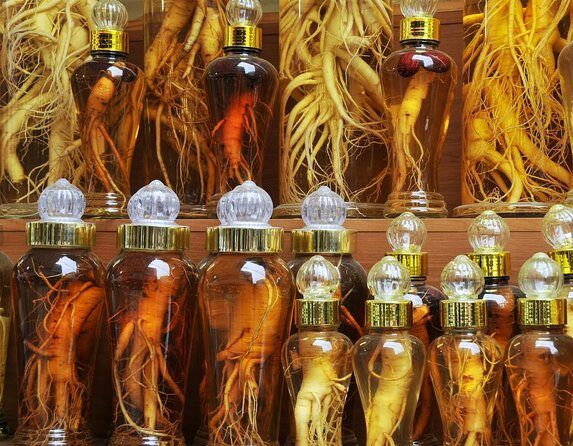
- Namdaemun Market scale: Seoul’s largest traditional market, with 10,000+ vendors, meaning tons of food choices to crowd in around.
- Food variety in a short time: dumplings, rice rolls, spicy rice cakes, sweet stuffed pastries, and more.
- A real lunch option included: Kalguksu or Bori Bibimbap, not just a few bites.
- Sungnyemun Gate as the cultural bookend: 30 minutes to see the architecture with the market experience.
- Small group (max 12): typically easier to move and ask questions than large bus tours.
Where you meet and how the timing stays simple
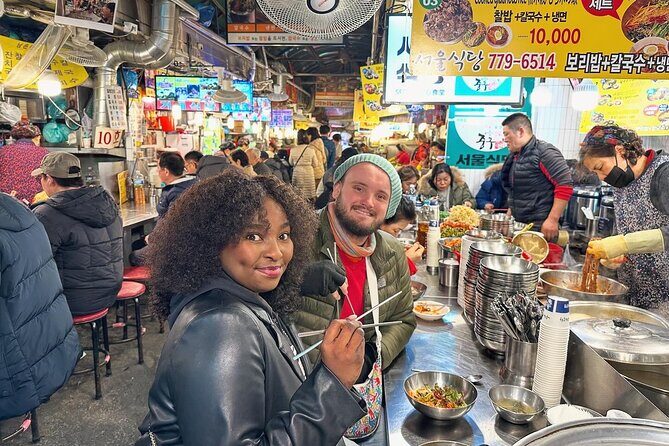
This is a focused, 1 hour 30 minutes kind of tour, designed for a first pass at Namdaemun Market without you having to plan every meal in advance. You start at Hoehyeon Station, at Exit 5, and you finish back at the same place. There’s no hotel pickup or drop-off, so you’ll want to be comfortable getting yourself there by public transit.
The flow matters. One hour is dedicated to Namdaemun Market, so you’ll actually have time to eat a handful of signature items rather than rushing through stalls. Then you head to Sungnyemun Gate for about 30 minutes, which gives you a clean contrast: food first, then a calm landmark stop and a bit of architecture context.
Also note the group size. With a maximum of 12 travelers, you’re less likely to get split up and you should be able to ask questions as you go. You’ll also use a mobile ticket, which is straightforward when you’re moving between busy areas.
Namdaemun Market: what makes this a strong street-food base
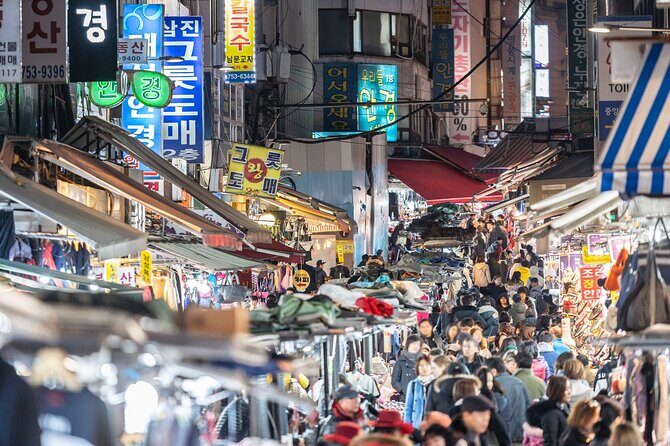
Namdaemun Market is Seoul’s largest traditional market, and that size changes the whole experience. With 10,000+ vendors, it’s not a place where you can easily see everything in one stroll. A guide helps you cut through that chaos and go straight to the kinds of stalls and foods the market is known for.
During the market portion, your accredited guide accompanies you through the area so you can feel the rhythm of a working Korean market. You’re not just grabbing random snacks. The point is to try popular classics—foods that locals actually line up for—so you leave with a better mental map of what Korean street food means here.
The biggest practical benefit is ordering confidence. Street stalls can be fast and loud, and menus can be intimidating if you don’t read Korean. In this kind of tasting tour, the food selections are already planned, so you can focus on eating and learning instead of translating your way through every decision.
One more detail I like: the tour isn’t only about eating. You’re also meant to notice market character and hear stories, plus pick up context for how food fits into daily market life.
The street-food lineup you’ll actually taste
This outing is built around a clear theme: classic Korean street snacks with a mix of textures and flavors. You’ll sample items including Wang Mandu, Hotteok, Gimbap, Tteokbokki, and Bungeo-ppang, plus a sweet rice drink called Sikhye.
Here’s how those pieces fit together, practically:
Wang Mandu (big dumpling)
A dumpling is ideal in a tasting tour because it’s filling and easy to share, but still feels special when it’s fresh. Wang Mandu is described as a huge dumpling, which means you should get a satisfying portion compared to the small street bites you sometimes see on cheaper tours.
Hotteok (sweet stuffed pancake)
Hotteok is deep fried dough filled with brown sugar. Expect sweetness that offsets the savory items around it. It’s also one of those foods you can eat while moving, because it’s handheld and comforting.
Gimbap (rice seaweed roll)
Gimbap is a savory rice roll, great for balancing stronger flavors. Think of it as a steady, everyday bite—less fiery than the spicy items, and good for resetting your palate.
Tteokbokki (spicy rice cake)
Tteokbokki is the heat in this lineup: spicy rice cake. It’s included as part of the tasting, so you’ll get a proper introduction to Korean street food spice without having to hunt it down yourself.
Bungeo-ppang (sweet red bean pastry)
This is a pastry stuffed with sweetened red bean paste. It’s a dessert-like end to the savory track, giving you a finish that’s still very market-authentic.
Sikhye plus coffee or tea
You’ll also get Sikhye, a traditional sweet rice beverage, plus coffee and/or tea. I like drink inclusions because they keep the pace comfortable. Market snacks can stack up fast, and Sikhye is a good palate calmer after spicy bites.
Lunch included: Kalguksu or Bori Bibimbap
You don’t just snack for 90 minutes. Lunch is part of the price, and you’ll choose between Kalguksu (knife-cut noodle) or Bori Bibimbap (barley rice bowl mixed with various vegetables). This is a big value point: it turns the experience from a few samples into an actual meal day-plan.
Sungnyemun Gate: why this second stop is worth the ticket
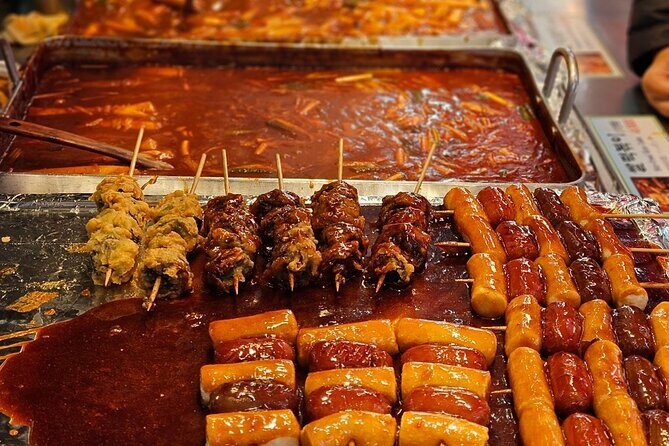
After the market, the tour shifts to Sungnyemun Gate for about 30 minutes. This stop is listed as admission ticket free, and it’s included to pair food culture with a major architectural landmark.
For me, the payoff is the contrast. You spend the first part in a dense food environment, then you get a clear “Seoul landmark” moment—an easy way to make your street-food sampling feel anchored to place. The gate is described as a marvelous and beautiful traditional Korean architecture site, and the way the tour is planned suggests you’ll also move along a well-planned route rather than wandering.
This portion is also a nice photo window, and more importantly, it helps you connect what you ate to the city around it. Street food doesn’t exist in a vacuum, and Sungnyemun helps your brain file the experience under Seoul, not just snack time.
What the small-group format feels like
This is a tight schedule, and that’s the point. You’re in the market for about an hour, then you’re at the gate for about 30 minutes, and you’re done. With a maximum of 12 people, you shouldn’t feel like you’re herding a group, and it tends to make questions easier.
You’ll also be moving on foot, and since there’s no hotel pickup, your start location matters. Plan to arrive at Hoehyeon Station Exit 5 a bit early so you don’t feel flustered when you’re trying to find your group. Markets can be loud and crowded, and meeting points can be confusing if you arrive right on time.
One small scheduling reality: popular market foods can mean short waits at stalls. In a tasting tour, that’s normal, and the guide’s job is to manage the flow so everyone gets their items.
And because the duration is fixed, you can fit this into a tight sightseeing day. It’s especially useful if you want a food experience but also want energy left for later neighborhoods.
Price and value: what $49 covers (and why it can be a smart buy)
At $49 per person for roughly 1.5 hours, the best way to judge value is what’s actually included. You’re getting multiple snack tastings: Wang Mandu, Hotteok, Gimbab, Tteokbokki, and Bungeo-ppang. You also get Sikhye, plus coffee and/or tea. Then you get a full lunch—either Kalguksu or Bori Bibimbap.
That mix is what makes the price feel reasonable. If you tried to replicate it on your own, you’d still pay for each item plus drinks, and you’d spend time figuring out what to order, where to stand, and how much to get. Here, you’re buying speed, guidance, and a structured set of tastings.
Another value signal: the tour includes an admission ticket for the Namdaemun Market stop. The Sungnyemun Gate stop is free, so your money isn’t being spent on multiple paid entrances—it’s going into the experience itself.
One practical note for planning: this tour is often booked about 32 days in advance on average, so if you’re traveling in peak periods, you’ll want to reserve early to get the date you want.
The guide experience: EJ’s strength and a real-world caution
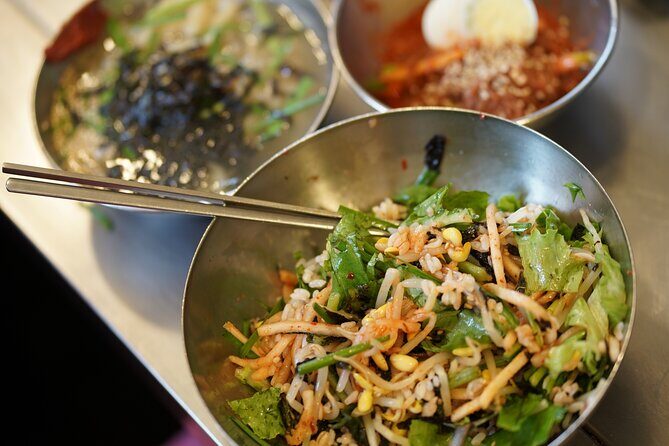
When a tasting tour works, it’s because the guide makes it easy to learn and easy to eat. One of the standout positives from a high-rating review was that the guide, EJ, was friendly and answered questions, and the food choices were described as delicious with lots of learning built in.
That’s what you should look for when you book a food tour: someone who can explain what you’re eating and how to spot key flavors or textures. In a market with 10,000+ vendors, a good guide is the difference between random eating and a memorable Seoul food education.
Now for the caution. There is also a very negative review where the guide never showed up, and the company didn’t respond to messages in the app quickly until support got involved. The review also noted there was no phone or WhatsApp number to call. That’s not common based on the overall rating, but it’s still worth thinking about.
If you book, be proactive: keep your confirmation details accessible, show up a little early, and if anything feels off, contact through the platform immediately so you’re not waiting around.
Who should take this tour (and who might not love it)
You’ll probably love this tour if you:
- want a structured street-food introduction without doing a lot of planning
- like the idea of trying both classic market snacks and an included lunch
- want one market-focused activity plus a clear landmark stop
- prefer a small group (max 12) rather than being lost in a huge crowd
You might not love it if you:
- need hotel pickup or are not comfortable navigating to Hoehyeon Station yourself
- want a very long, free-form market wander (this one is time-limited by design)
- are the type who needs absolute certainty about guide attendance on the day (because one guide no-show issue has been reported)
Also, most travelers can participate, and the age rate applies to travelers over 36 months. If you’re traveling with kids, it’s worth checking how the snack and lunch pacing will work for your group.
Should you book the Street Food Fiesta in Namdaemun Market?
I’d book it if you want a practical, high-hit-rate food experience that includes lunch and doesn’t require you to build a mini itinerary yourself. The combination of Namdaemun Market classics, a variety of snacks, drinks like Sikhye, and a guided look at Sungnyemun Gate makes the 1.5 hours feel efficient rather than rushed.
I’d hesitate only if you strongly prefer private guidance, or if you rely on a phone call to fix last-minute issues. In that rare event a guide doesn’t arrive, you may be limited to in-app contact and platform support.
If you’re flexible, like food, and want a simple plan for a Seoul day, this is a solid bet.
FAQ
Where is the meeting point for the tour?
You meet at Hoehyeon Station, South Korea, at Exit 5.
What time does the tour start and how long is it?
The tour runs for about 1 hour 30 minutes (approx.).
What does the $49 price include?
It includes the market snack tasting items, coffee and/or tea (including Sikhye), and lunch (Kalguksu or Bori Bibimbap), plus the Namdaemun Market admission ticket for the market stop.
What is included for snacks?
Included snacks are Wang Mandu, Hotteok, Gimbab, Tteokbokki, and Bungeo-ppang.
Is there lunch on the tour?
Yes. Lunch is included and you can choose Kalguksu or Bori Bibimbap.
Does the tour include Sungnyemun Gate?
Yes. The tour includes a stop at Sungnyemun Gate for about 30 minutes, and that stop is listed as free admission.
Do I need hotel pickup or drop-off?
No. Hotel pickup and drop-off are not included.
How many people are in the group?
The tour has a maximum of 12 travelers.
How do I get my ticket?
You receive a mobile ticket.
Can I cancel for a full refund?
Yes. You can cancel up to 24 hours in advance for a full refund. If you cancel less than 24 hours before the start time, it is not refunded.
]]>You’ll also see how much the guide matters here. On past departures, guides like Stella, Yoon, and Mac have been praised for telling the human side of Seoul and helping with questions, plus taking good group photos at the scenic stops. If you need a fully sit-down, relaxed evening with zero walking, this may not be your best match.
Key things that make this tour worth your time
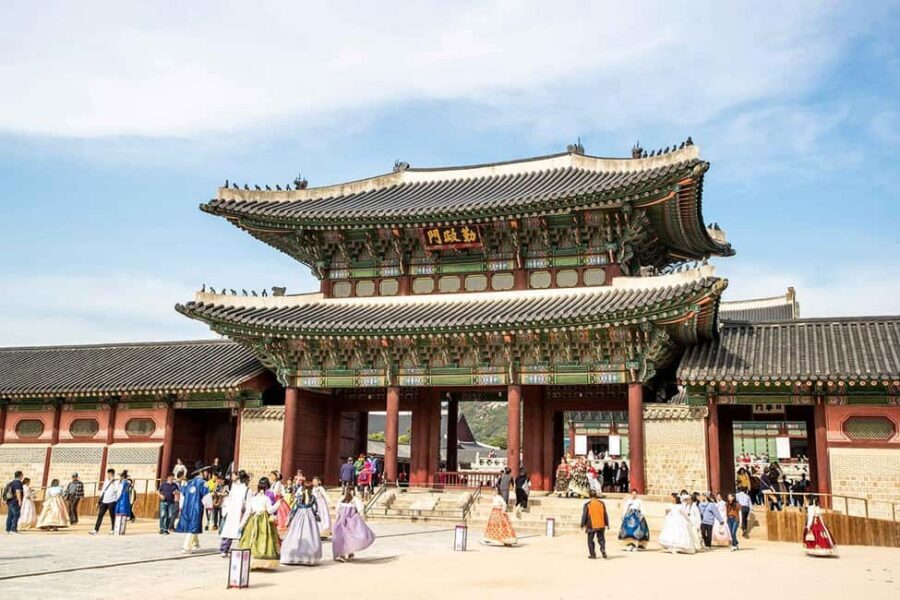
- Palaces and neighborhoods at night: illuminated royal grounds and traditional streets in one plan
- K-Pop Demon Hunters photo moments: filming spots at Gyeongbokgung, Bukchon, and Naksan Park
- Smart pacing: guided walks linked by van transfers so you’re not just shuffling across the city
- Great viewpoint rhythm: Naksan Park plus Eungbongsan Mountain for wide Seoul skyline views
- Gwangjang Market with guidance: time for street-food dinner like bindaetteok and tteokbokki
Why This Evening Loop Works: Palaces, Lanes, Views, and Food
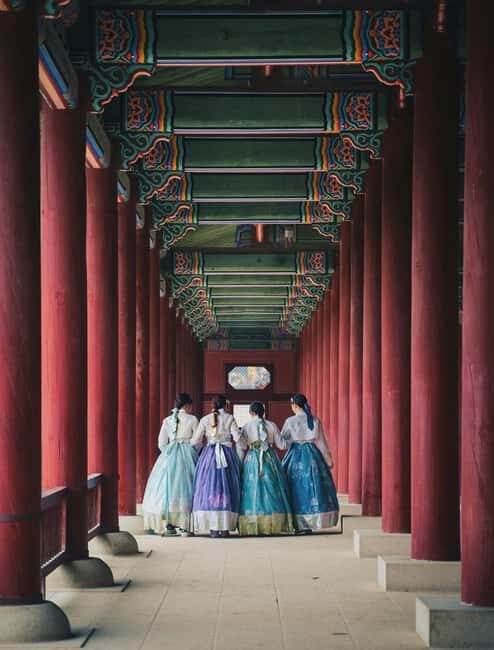
This is the kind of Seoul night plan that makes sense because it follows a clear arc. You start with royal Seoul, then move into traditional neighborhood streets, then shift to viewpoint stops where the city opens up under night skies. The food stop at Gwangjang Market lands near the middle-to-late portion of the route, so you’re hungry enough to enjoy it and not so tired that every sound and smell feels like overload.
The best part is the pairing: history + atmosphere. Gyeongbokgung at dusk is famous for a reason, and Bukchon’s hanok lanes feel different after dark when the crowds thin and the lighting softens. Then Naksan and Eungbongsan give you the contrast—fortress walls and panoramic city views—before you finish with market energy.
Also, you’re not stuck alone. This is limited to 8 participants, and you’ll have an English (and also Chinese) live guide. In practice, that means you can ask questions, get photo help, and keep the day’s timeline from getting messy.
Price and Time: What $41 Buys You in a 4–10 Hour Plan
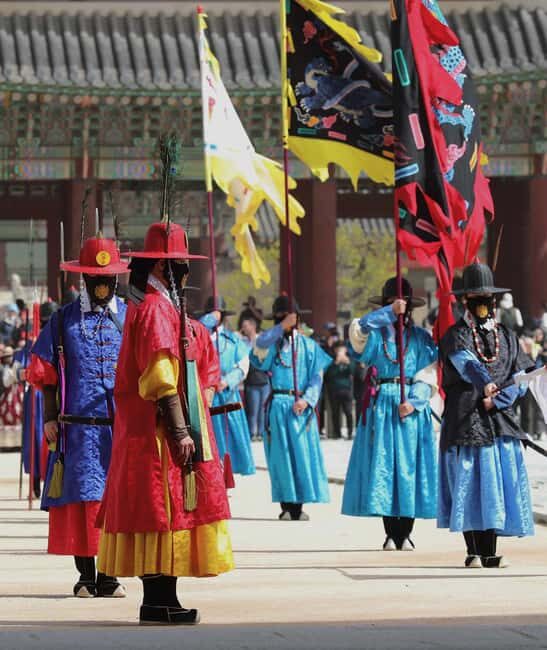
The price here is $41 per person, and for Seoul that’s a solid value if you want guided coverage of multiple areas without figuring out every transfer. What you’re really paying for is the combination of:
- guided walking tours,
- van transfers between stops,
- entrance fees (so you’re not doing surprise budget math),
- and a local guide who can tie things together.
Time is the trade-off. The tour runs 4 to 10 hours, and it can vary by route length. Expect the evening to be active, even with the van rides. Meals are not included, so you’ll pay for your food yourself at Gwangjang Market (though you’ll have time built in for dinner).
My practical tip: plan your day before this so you’re not racing across Seoul in the afternoon. If you’re already tired from other sightseeing, this kind of evening route can feel longer than the clock says.
Gyeongbokgung Palace at Dusk: Royal Grounds With a Cinematic Twist
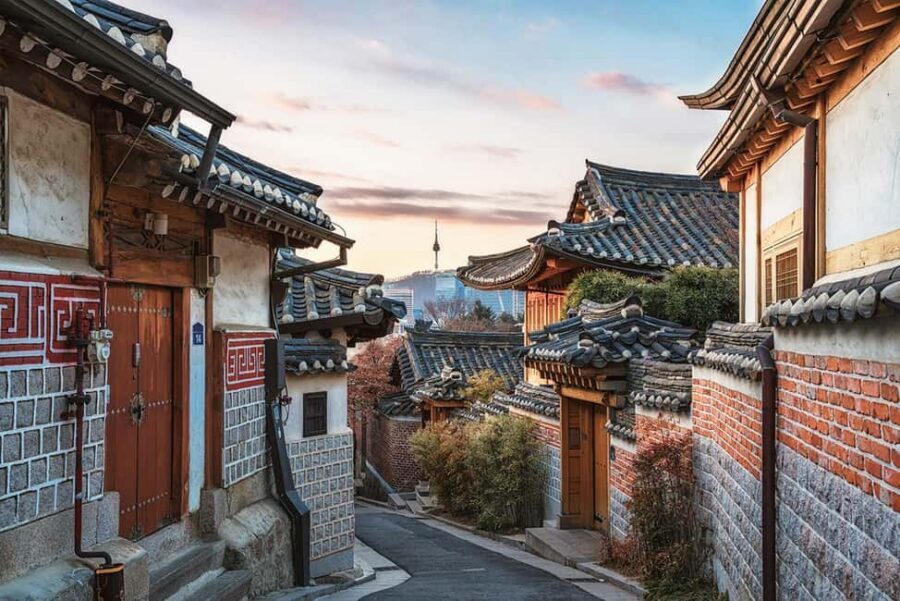
Gyeongbokgung is Seoul’s best-known royal palace for a reason. Even before you go in, you can feel how central it is to the city’s identity. This portion is a guided visit for about 2.5 hours, and it’s timed for late light, when the palace moves from daytime history lesson into night-time atmosphere.
You’ll also get the K-Pop Demon Hunters connection at this stop. If you’re a fan, the tour frames key moments of Jinu’s backstory here, turning the palace into more than just architecture. That’s useful for non-fans too: even if you don’t know the show, the storytelling structure helps you remember what you’re seeing.
What to watch for: in the evening, the palace feels more like a living set—lit gates, glowing courtyards, and calmer photo conditions than the busiest daytime hours. If you care about pictures, this is where you’ll want to slow down and take a few extra angles, because the lighting is doing you a favor.
Bukchon Hanok Village Lanes: Hanoks, Narrow Streets, and a Secret-Meeting Backdrop
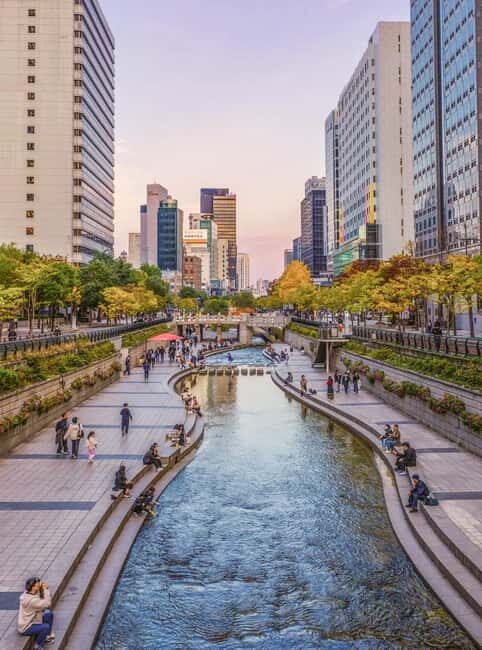
After Gyeongbokgung, you head to Bukchon Hanok Village, with a guided visit around 80 minutes. This is where Seoul’s traditional character becomes physical. The preserved hanok houses, tight lanes, and old-school neighborhood layout make it easy to understand why Bukchon keeps showing up in films.
Again, this stop has a filming reference for K-Pop Demon Hunters. The tour ties the area to Rumi & Jinu’s secret meeting, which gives you a clear story map as you walk. In plain terms: you’ll know where to look, what angle to try, and what details matter.
A practical consideration: Bukchon’s streets are narrow and made for walking. You’re not dealing with rugged terrain, but you will be on foot for this segment. If your travel style is more “slow roaming” than “photo sprint,” this is a good fit.
Gwangjang Market Food Time: Bindaetteok and Tteokbokki Without Guessing
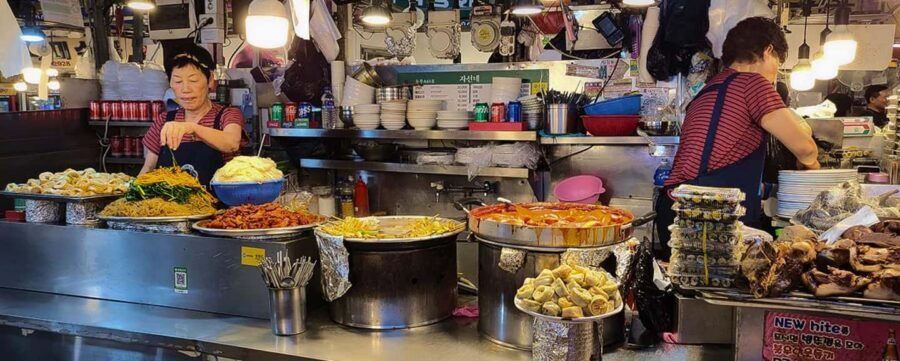
Next comes Gwangjang Market, one of Seoul’s oldest and busiest food markets. Your time here is about 2 hours, and it’s your dinner moment plus sightseeing. Since meals are listed as not included, think of this as: you get guidance and time to eat, but you pick what and how much you buy.
The tour focuses on classic comfort street food, especially bindaetteok (mung bean pancake) and tteokbokki (spicy rice cakes). This matters because it takes the pressure off. Instead of standing in front of menus and feeling rushed, you can follow the guide’s order-of-operations, ask what to try, and get practical suggestions.
One thing I really liked in the way guides handle markets in this kind of group setting: they can translate what you’re seeing. On past departures, guides like Mac have been praised for answering questions and even explaining ingredients like fruit, vegetables, and meat. That turns market wandering into learning, not just eating.
Naksan Park Night Photos: Fortress Walls and the Story Beat at the Skyline Edge
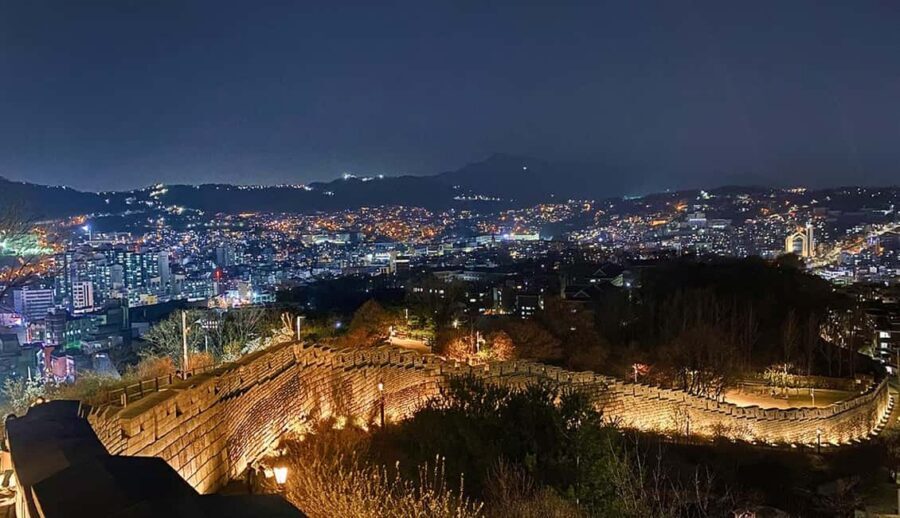
After food, you shift from market noise to a quieter, more scenic mood at Naksan Park. You’ll have a photo stop and then about an hour of free time, plus sightseeing.
The K-Pop Demon Hunters link lands here too, tied to Rumi & Jinu’s storyline. Even if you don’t follow the series, Naksan works well because it gives you the “Seoul at night” feeling in one shot: soft lighting, fortress-wall texture, and views that look best when you stop moving for a minute.
If you like photos, use your guided window for the best angles, then use free time to experiment. The park is where you can slow down and let your eyes adjust to night contrast, because that’s when the scenery becomes clear rather than just bright.
Eungbongsan Mountain Viewpoint: Starlit Seoul From an Off-the-Grid Angle
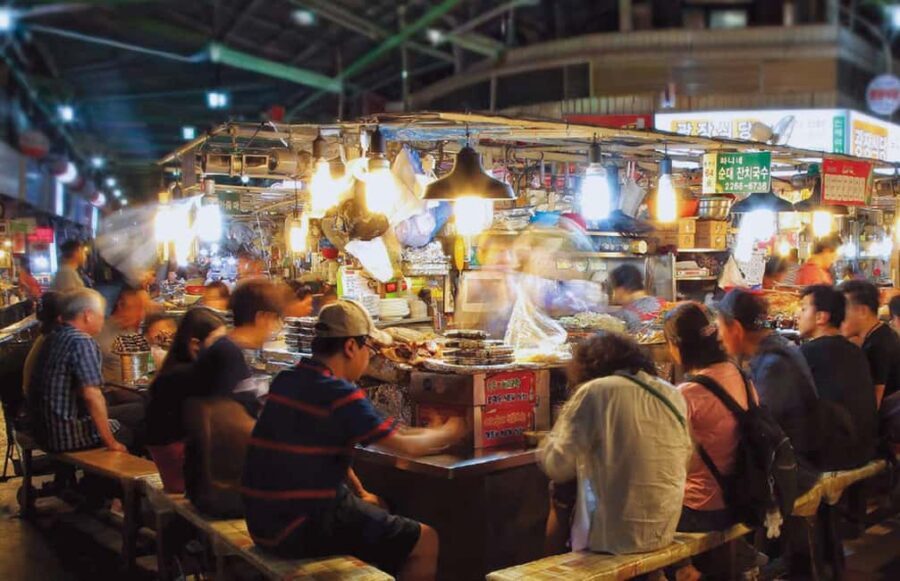
The next stop is Eungbongsan Mountain, with another photo stop plus around an hour of free time. This is described as a panoramic viewing point where the skyline shows up glittering under a starlit sky.
This segment is the payoff for people who came to see Seoul beyond street-level. You get a wider sense of scale: neighborhoods, lights, and city rhythm far below you. It’s also where the small-group format helps. You’re not fighting through a crowd; you’re taking turns with your group, and the guide can help you get into a good spot for photos.
Plan for the simple reality of mountain viewpoints: it can feel cooler and breezier than the city streets. Keep that in mind when you’re deciding what to wear. If you’re already sweaty from earlier walking, you’ll appreciate having a layer.
Getting There and Ending the Night: Stations That Make Sense
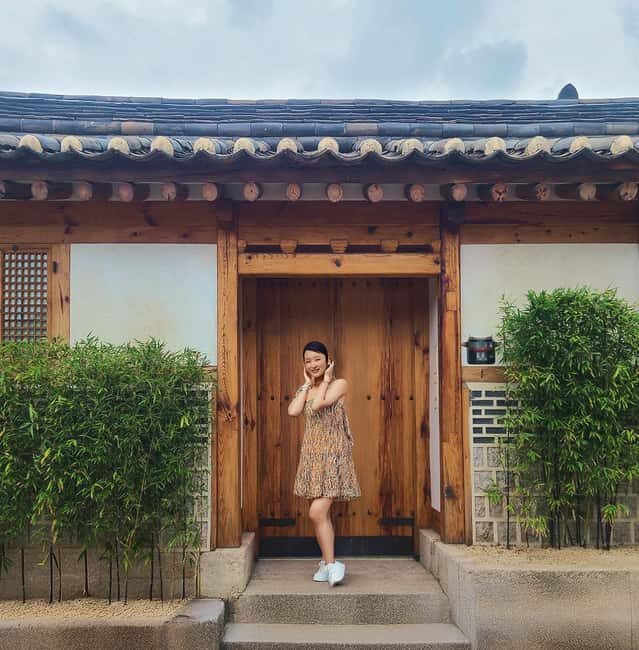
Meeting point can vary depending on what option you book, so you’ll want to double-check the exact start location before you leave. Starting with a clear meeting point matters because this tour involves multiple neighborhoods in one evening.
At the end, you’re dropped off at one of these convenient station options:
- Dongdaemun History & Culture Park Station
- Myeongdong Station (exit 10 is specifically mentioned)
- Euljiro 3-ga Station
That drop-off setup is practical. You can keep your evening going with shopping or street scenes nearby, or you can connect easily back to where you’re staying.
What I’d Recommend This For (and What to Watch)
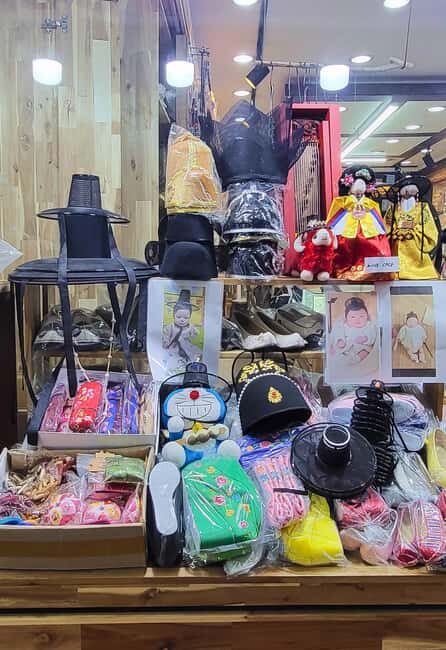
This tour makes the most sense if you want:
- a guided night plan with history and scenery,
- a compact way to hit multiple areas without overthinking transfers,
- and K-Pop Demon Hunters filming references at Gyeongbokgung, Bukchon, and Naksan Park.
It’s also a good fit for couples and solo travelers who like conversation with a small group, not a big bus crowd.
What to watch:
- You will walk. Even with van transfers, the palace, Bukchon, and park areas demand comfortable footwear and a good attitude toward uneven pacing.
- Meals aren’t included. Gwangjang Market is where you’ll eat, but you’ll pay for your own dinner choices.
If you prefer long seated breaks, you might find the schedule tighter than you want.
Should You Book This Seoul Night Tour?
I’d book it if your ideal Seoul evening is part storytelling, part skyline views, and part food you can actually enjoy without turning dinner into a stressful research project. The small group and the mix of guided walking with van transfers make it feel manageable, not chaotic. And the guide experience really shows here, with names like Stella, Yoon, and Mac getting praise for clear explanations, helpful answers, and photo support.
You might skip it if you want a purely relaxed night with no walking and no cold-weather viewpoint time. Otherwise, it’s a smart way to see a lot of Seoul’s “night personality” in one go.
FAQ
What’s the duration of the Seoul day tour?
It’s listed as 4 to 10 hours, and the duration can vary by route.
How much does the tour cost?
The price is $41 per person.
Is this tour a small group?
Yes. It’s limited to up to 8 participants.
What language is the guide available in?
The live tour guide is available in English and Chinese.
What does the tour include?
It includes guided walking tours, van transfers, a local guide, and entrance fees.
Are meals included?
No. Meals are not included, but you’ll have time to eat at Gwangjang Market.
What stops are included on the route?
The main stops are Gyeongbokgung Palace, Bukchon Hanok Village, Gwangjang Market, Naksan Park, and Eungbongsan Mountain.
Are there K-Pop Demon Hunters filming spots in the itinerary?
Yes. Filming spots are referenced at Gyeongbokgung, Bukchon, and Naksan Park.
Where will you be dropped off at the end?
You’ll be dropped off at Dongdaemun History & Culture Park Station, Myeongdong Station, or Euljiro 3-ga Station.
What if the minimum group size isn’t met?
A minimum of 4 participants is required for the tour to depart. If that minimum isn’t met 24 hours before departure, the tour is canceled and you’ll be notified.
]]>The Euljiro stop is where the fun gets more “people-watching” and less “checklist.” You’ll get time to wander Euljiro alley and sample street food and drinks like beer, cocktails, coffee, or wine, guided in English (and the guide names you may meet include Alex, Jun, or Emma). If you want a quick, well-led mix of old-school market Seoul plus modern alley energy, this is a solid fit.
Key things I’d watch for on this tour
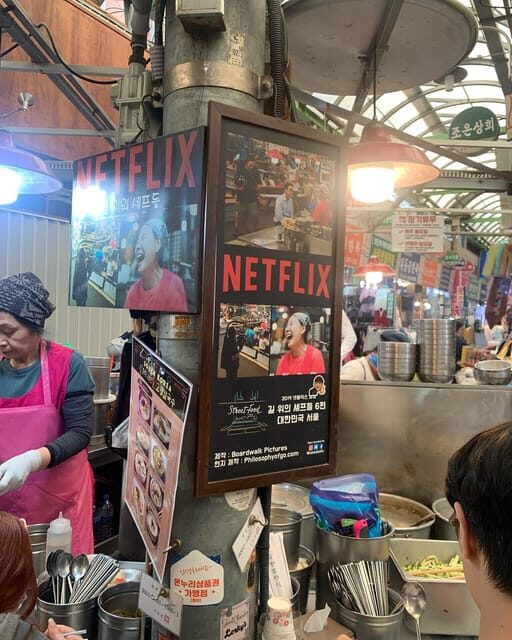
- Gwangjang Market food focus: a full stretch of time for street food tasting and market browsing
- Cheonggyecheon reset: a short riverside walk that breaks up the eating-heavy part
- Euljiro alley time: guided wandering plus free time for beer, coffee, and small plates
- English live guide: helps you pick what to try and where to find it
- Admission + guide included: you’re paying for the local direction, not just access
Why This Seoul Walking Loop Works in Just 3 Hours
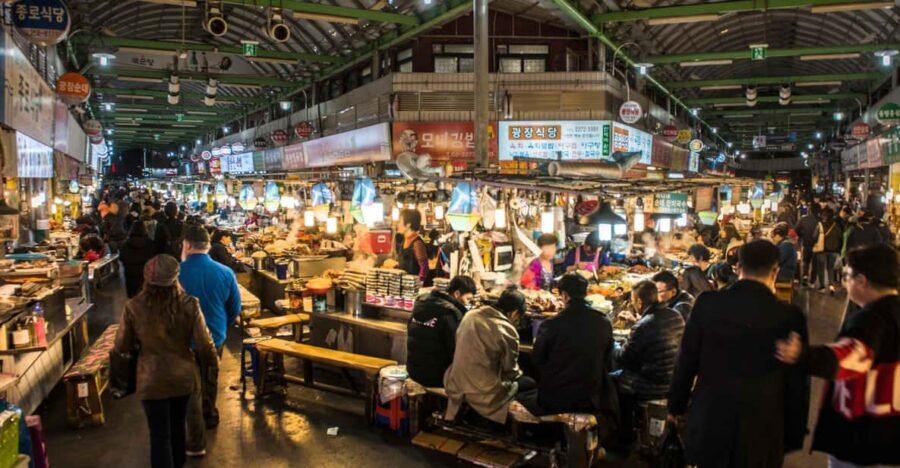
For $40 and about 3 hours, you’re buying something simple: a plan. Seoul can feel huge, and food markets get overwhelming fast—row after row of stalls, smells everywhere, menus you can’t read at a glance. This tour handles the “where do I start?” part for you, then gives you freedom to make choices once you’re oriented.
I like the pacing because it’s not only “stand and eat.” You spend roughly 2 hours at the market, then you get a quick visual palate cleanser along the Cheonggyecheon Stream, and finish with Euljiro alley exploration. That structure matters if you’re hungry but also want photos, shopping time, and a sense of place.
Gwangjang Market Bites: More Than Just a Stop for Street Food
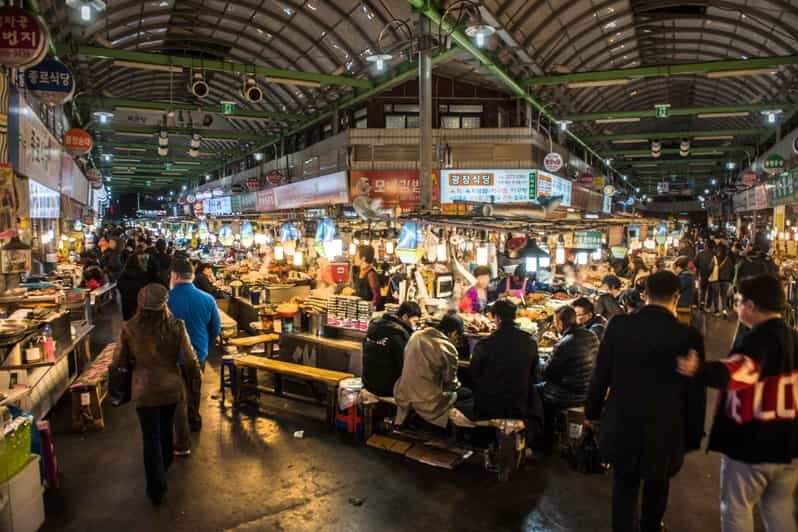
Gwangjang Market is one of the top Hallyu (Korean Wave) destinations in Seoul, and it’s also a real working market with over 100 years of history. That matters because you’re not just eating in a staged tourist zone. You’re surrounded by the daily flow of vendors, shoppers, and long-time stalls, which is exactly the vibe that makes market food worth experiencing.
You’ll have time for:
- Food tasting and local snacks
- Shopping and self-guided wandering inside the market area
- Street-food style browsing at your own pace
What makes the market time valuable
The best part of a guided market stop is translation-by-strategy. A good guide helps you match the food to what you feel like eating right then—something warm and filling, something crunchy, something snack-sized you can handle while walking. Based on the guide quality shown on this tour (Alex and Jun are both singled out for explaining what to try and steering you toward a good selection), you can expect more than vague recommendations.
A practical tip for your own choices
When you hit a market like this, decide on your “tank” first:
- If you want a full meal feeling, aim for fewer items but bigger ones.
- If you’re a sampler, go for more small bites and take breaks between.
Either way, don’t try to eat everything. The market is large enough that spreading your bites across the time you have feels better than rushing through a dozen stalls.
Budget reality check
Even though the tour highlights that the Gwangjang Market food fee is included, the exclusions list foods & beverages as not included. I’d treat this as: you’ll get tastings as part of the experience, but you should still plan on paying for anything beyond that—especially drinks. Having a little extra cash (or a payment card you trust) keeps you from having to second-guess your appetite.
Cheonggyecheon Stream: The Short Walk That Makes the Whole Tour Feel Lighter
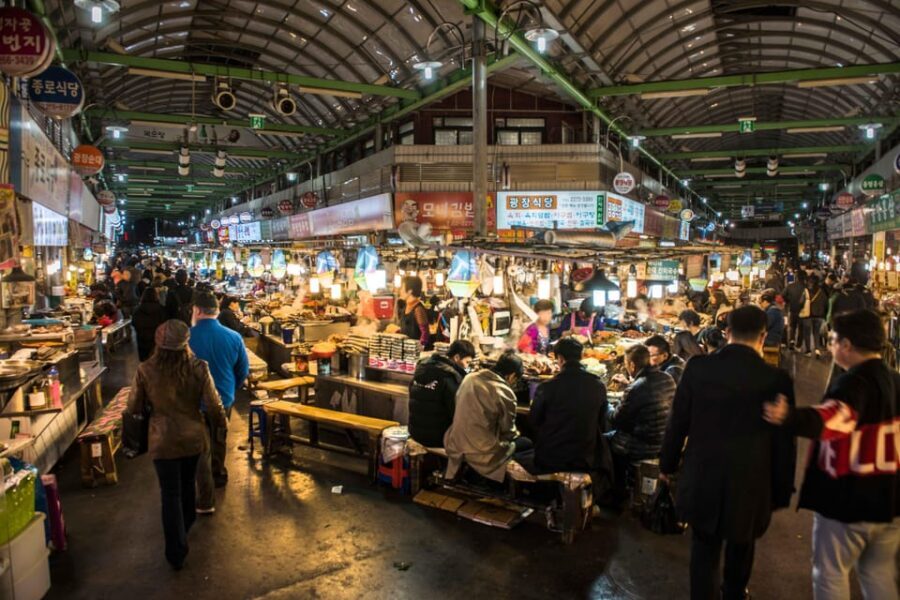
After the market, you move to Cheonggyecheon Stream, with time for a photo stop and a short riverside stroll. Even when the schedule is tight, this stop adds real breathing room. The stream is famous for its charm in the day and at night, and it also symbolizes Seoul’s history of urban development—so it’s not just pretty water.
You’ll appreciate this part if:
- You want a quieter moment after crowds and constant food decisions
- You like simple scenery that doesn’t require planning
- You want an easy photo break without turning the tour into a long sightseeing detour
Why 15 minutes can be enough
On many food tours, the pacing gets heavy: eat, eat, eat. Here, the stream segment works like a reset button. Even a short walk lets you cool down, slow your breathing, and come back to the street better ready for the Euljiro part.
Euljiro Alley Energy: Old Shops, New Drinks, and the Fun of Finding Places
Euljiro-dong is known for printing shops and hardware stores that helped shape the district for years. What’s changed is the mix. New restaurants and cafes have shown up alongside the older commercial feel, and that contrast is exactly why Euljiro is interesting.
On this part of the tour, you’ll get:
- Time for beer, cocktail, coffee, wine, and street food
- Free time to wander
- A guided push to find attractive spots in Euljiro alley
Why the alley-wandering time matters
Food tours can be either rigid or too loose. This one tries to land in the middle: the guide helps you spot places worth stepping into, then you get freedom to choose what fits your mood. That’s why the guide experience is such a big deal here. The strongest praise on the tour is about guides like Alex and Jun explaining what you could try and directing you to a good selection—helpful when every doorway in Euljiro looks like it could be the right one.
What to expect from the vibe
Euljiro’s appeal is that it’s not only “food.” It’s also mood: little alleys, people stopping in, and a mix of traditional and modern storefronts. If you like walking with purpose but also want the option to follow your curiosity, you’ll probably enjoy this section more than you expect.
Price and Value Check: What $40 Really Buys You
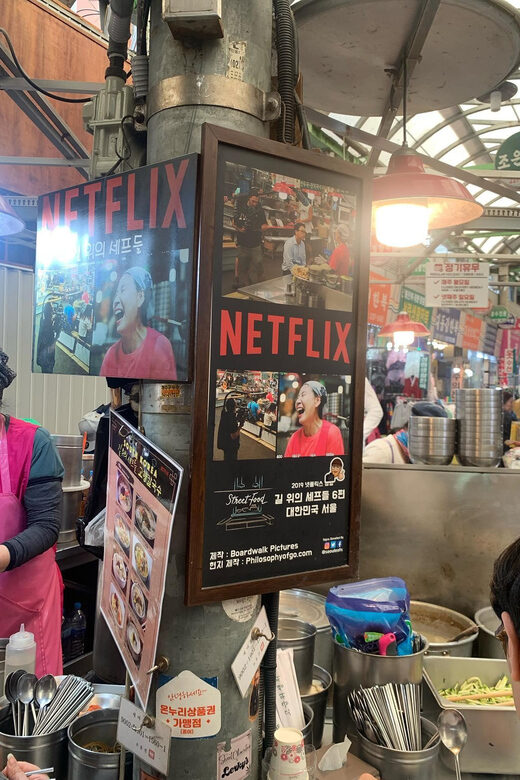
At $40 per person for a 3-hour tour, the core value is the combination of:
- A professional English live guide
- Admission to the attractions included on the route
What you should not assume is that the tour price covers every bite and drink. Foods & beverages are listed as not included, so your final “all-in” cost will depend on what you order at the market and what you choose to drink around Euljiro.
How I’d estimate your total food spend
If you’re the type who likes a tasting-style meal (a few bites, then a drink), your extra cost should be manageable. If you want multiple drinks plus more full-size dishes, your budget will rise. Either way, having the guide reduces waste: you’re less likely to pick a random stall that doesn’t match what you’re after.
In other words, the tour fee pays for direction. The rest is up to your appetite.
Meet Point and Timing: Easy Start, Manageable Walking
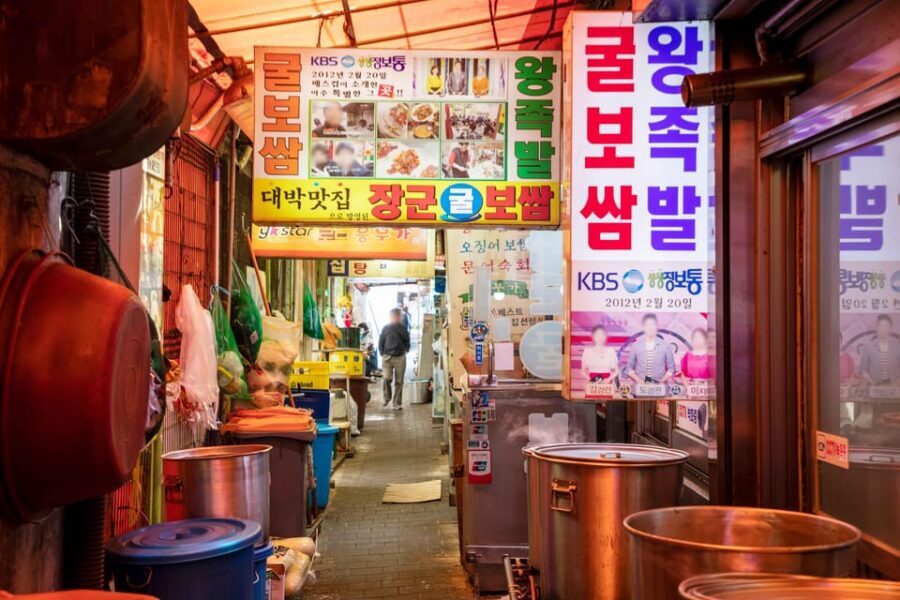
You meet at Jongno 5(o)-ga Station Exit 8. That’s convenient because you’re starting inside the transit network, not hunting down a vague street corner. If you’re using maps, also note the starting location code given as H2C2+8J.
Plan for a simple walking day:
- About 2 hours around Gwangjang Market
- A short pass by/photo stop at Cheonggyecheon
- Then more walking and exploring in Euljiro
Group size reality
The tour requires a minimum of 3 participants to depart. In practice, that usually keeps the group small enough to feel personal, but it also means departures can be canceled if demand is too low.
Guide Quality: This Tour Can Be Great or Just OK
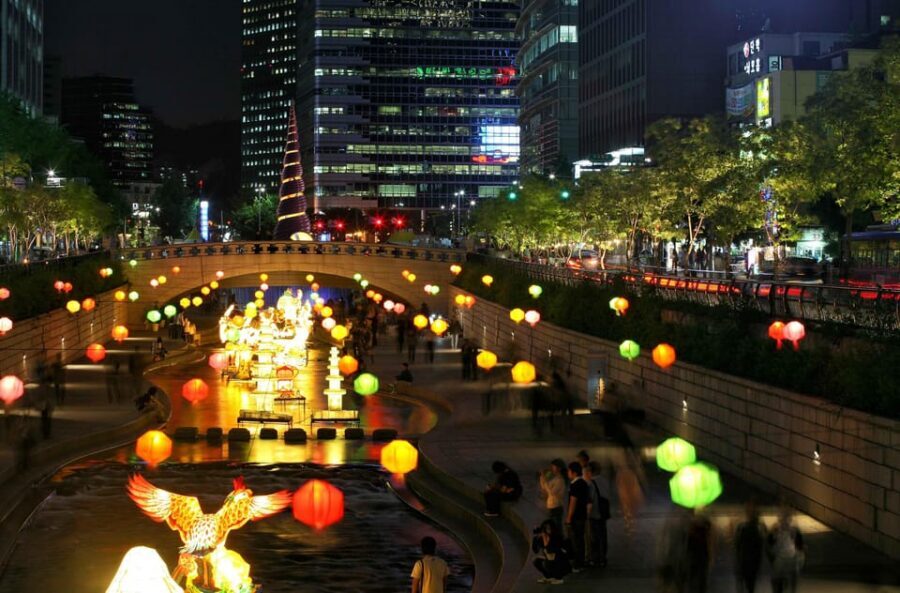
This experience lives or dies by the guide. In the positive feedback, Alex and Jun are praised for explaining foods clearly and steering the group toward the best selection in the markets. Emma also gets strong marks.
There’s also a downside signal: one booking noted a lack of preparation and that the guide spent the last hour moving the group into a coffee shop to pick up someone else for a later tour. That doesn’t mean it will happen to you, but it’s a reminder that you should show up ready to ask questions and set expectations early.
What you can do to get more value once you meet your guide
When you start, tell the guide what you want most:
- Street food vs. sit-down bites
- Spicy level (if you have a preference)
- Whether you want to focus on tastings or have a bigger meal feel
- Drinks at Euljiro versus keeping it food-only
A good guide can steer you fast once they know your vibe.
Who This Tour Fits Best (and Who Might Want Something Different)
This is a great match if you:
- Like food markets and want help making quick choices
- Prefer walking tours over packaged bus stops
- Want a mix of eating plus city scenery
- Are comfortable exploring on your own once you get oriented
It may be less ideal if you’re expecting an all-inclusive “every bite and drink covered” tour, or if you dislike walking around busy market streets for an extended block of time.
Should You Book This Seoul Gwangjang Market Foody Walking Tour?
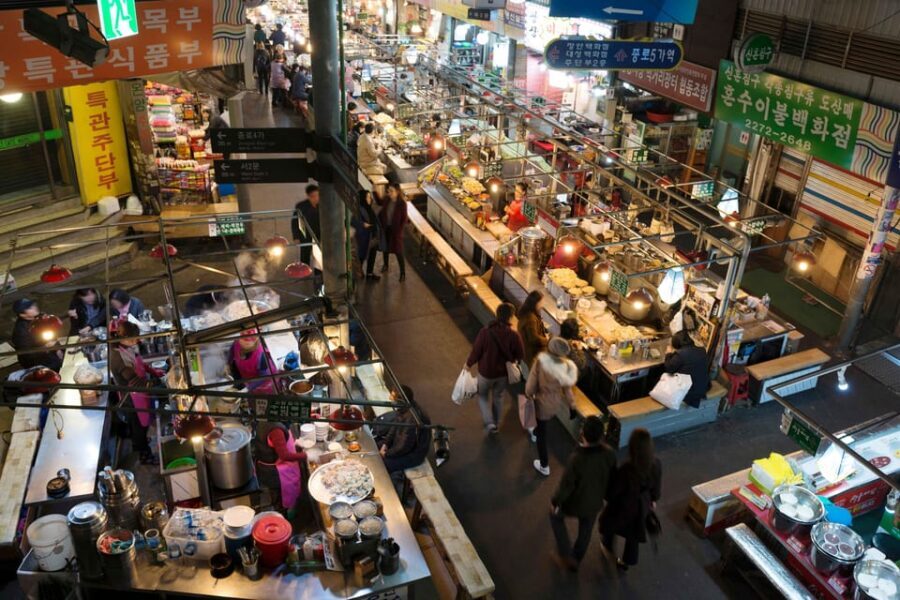
If you want a practical, guided way to taste Korean market life—then balance it with a riverside reset and Euljiro alley wandering—I’d book it. The structure is smart for a short visit: market first, scenery break second, alley exploration last. And with English live guidance from people like Alex, Jun, and Emma, you’re more likely to leave knowing what you loved and what to search for on your own later.
Just go in with one clear mindset: you’re paying for the guide and attraction access, while your final food and drink total depends on what you order. Bring that flexibility, and this tour can be a genuinely fun way to experience three very different slices of Seoul in one go.
FAQ
Where is the meeting point?
The meeting point is Jongno 5(o)-ga Station Exit 8.
How long is the tour?
The tour lasts 3 hours.
Is the tour guided and in English?
Yes. It’s a live tour guide in English.
What’s included in the price?
Admission to the attractions and a professional tour guide are included.
Are foods and drinks included?
Foods and beverages are not listed as included. The experience also mentions market food fees, so you may want to plan for extra spending if you order more than tastings.
How much is the tour?
The price is $40 per person.
Are there any minimum participants?
Yes. The tour requires a minimum of 3 participants to depart. If that minimum isn’t met 24 hours before departure, the tour is canceled and you’ll be notified.
What is the cancellation policy?
Free cancellation is offered up to 24 hours in advance for a full refund.
]]>This is a practical day out of Seoul (about 14 hours total) with two starting points: Hongik Univ. Station Exit 8 and Myeongdong Station Exit 4. You’ll ride out by van, get several hours on the mountain, then finish with Sokcho’s tourist fish market and a short beach break before heading back to Seoul.
An English-speaking guide/driver keeps the day moving and helps when the weather shifts fast. In the past, guides such as Kangwon Seo have been especially good at staying patient with questions and suggesting alternate viewpoints when visibility turns foggy. One more note: if the cable car doesn’t operate due to weather, the ticket fee is refunded in cash.
Key points that make this day trip work
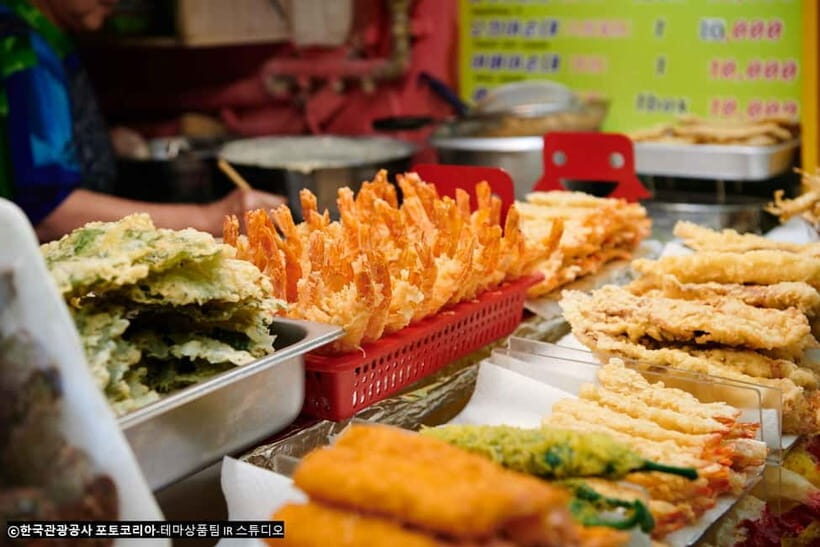
- Seoraksan foliage without complicated logistics: round-trip van from central Seoul and a full block of time at the park
- Optional cable car to control your difficulty: you can trade some hiking for views
- Sokcho Tourist Fishery Market snack time: street food and seafood in a food-first setting
- Temple + Buddha sights mixed with walking: Sinheungsa Temple and the large Buddha statue add meaning
- A guide who adapts to conditions: when fog or rain rolls in, you’ll get practical alternatives
- Sokcho Beach as the payoff: short visit, but a real change of pace from the mountains
Seoul to Seoraksan: the drive is long, but the schedule makes sense
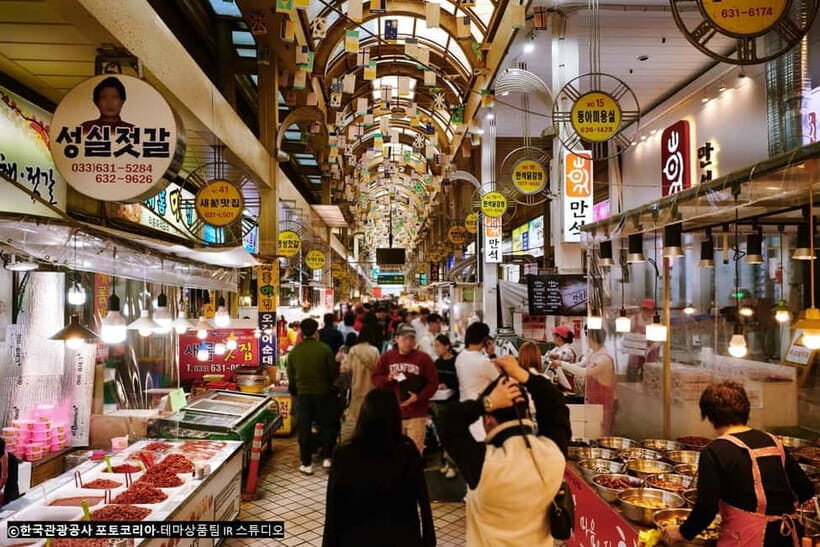
This tour is built for people who want the Korean fall highlight without renting a car or figuring out bus transfers. You’ll start from either Hongik Univ. (Exit 8) or Myeongdong (Exit 4), then spend roughly 2.4 hours traveling toward Seoraksan National Park.
That travel time matters, because it affects your expectations. You’re not doing a quick “grab the photos and go” morning. Instead, you’re doing a full day where the mountain gets real time to breathe—about 5 hours on-site, plus extra time if you choose the cable car.
What makes it feel worthwhile is the flow. You climb into autumn scenery first, then you transition into city-style eating at the fish market, and finally you end with sea air at the beach. The day is long, but it stays focused on one theme: fall in Gangwon Province, paired with food you can actually enjoy.
Seoraksan National Park, Sinheungsa, and the Buddha statue: your autumn hiking core
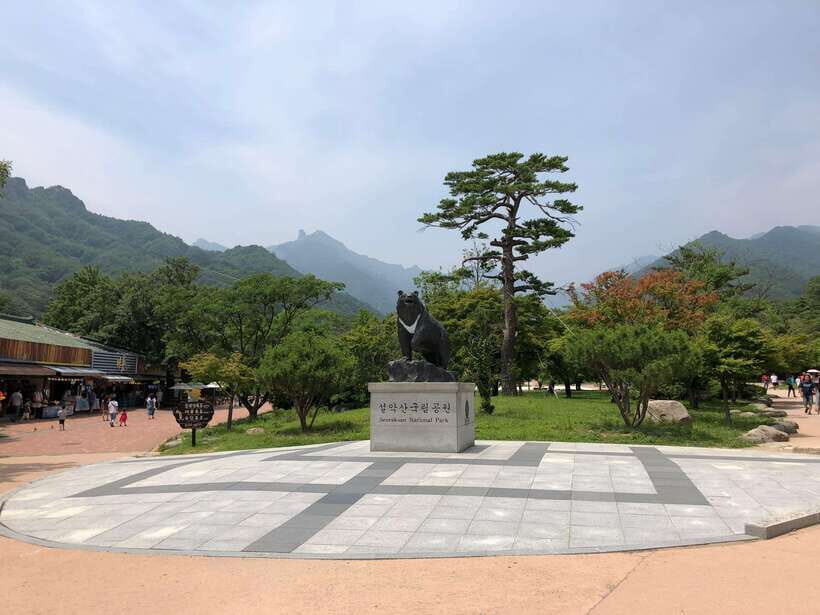
Seoraksan National Park is the reason most people book this trip. In fall, that combination of steep trails and changing leaves creates a strong sense of place—you’re not just visiting a scenic spot; you’re working through it on foot.
At Seoraksan, you’ll have a self-guided sightseeing block, with free time built in for walking and exploring. There’s also cultural context: you’ll see the large Buddha statue and visit Sinheungsa Temple. That mix helps the day feel more than a sightseeing checklist. It gives you a calm anchor when the trail energy ramps up.
Important reality check: Seoraksan includes intermediate-level hiking, and you’ll want comfortable shoes with good grip. This matters because you’ll likely be navigating uneven surfaces while the park’s weather does its own thing. Some days bring rain or low clouds, and walking conditions can change quickly.
A useful way to think about it: this isn’t a “chairlift then stroll” tour unless you choose the cable car option. If you’re comfortable with moderate hikes and you dress for the weather, Seoraksan delivers. If you’re not, the effort can feel like more than you signed up for.
Cable car option: how to decide based on weather and your comfort level
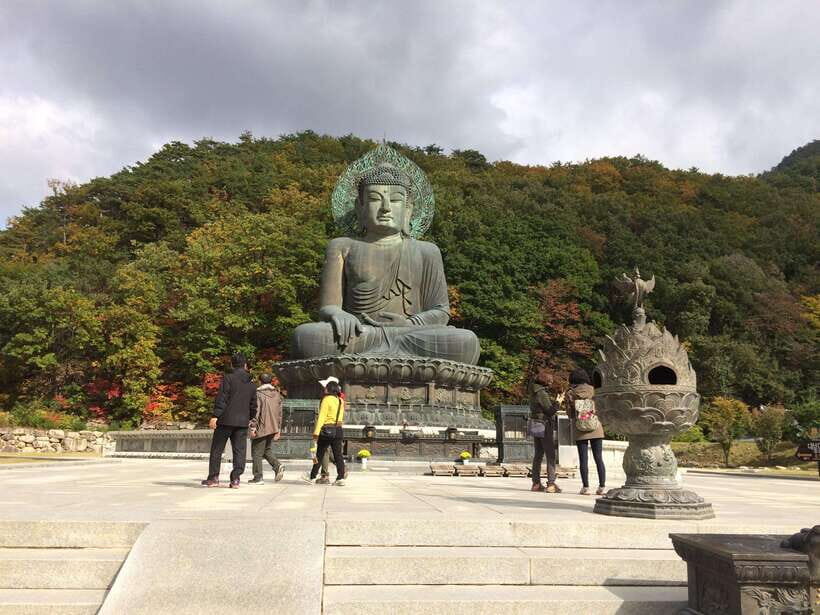
The cable car is a clear value add because it changes how much climbing you personally need to do. If you buy the option, you’ll spend about 1 hour on the cable car portion as part of the day’s plan.
This option is especially helpful if:
- you want the views with less strain
- you’re visiting in cold or rainy conditions
- you want to save energy for the later market and beach portion
Weather still rules the day. If the cable car is not operated due to weather conditions, the ticket fee is refunded in cash by the guide. That’s a small detail, but it’s reassuring: you won’t be stuck feeling like your money evaporated because of a foggy morning.
If you’re deciding right now, here’s a simple rule: if you’re unsure you’ll feel great on steep trails, buy the cable car option. If you love hiking and the weather looks stable, you may enjoy doing more on foot. Either way, you’re spending plenty of time in the park.
When fog or rain hits: why the guide’s adaptability matters
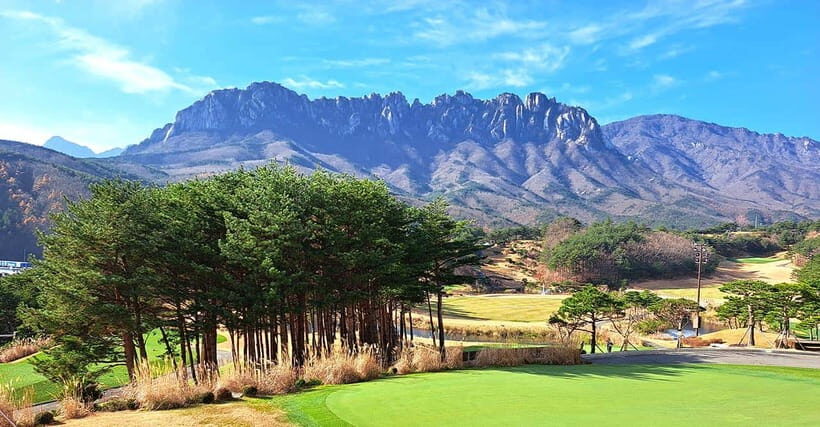
Even in fall, mountains can throw surprises at you. There are days when visibility turns foggy and rain makes the trail slower. On those kinds of days, you want a guide who doesn’t panic and who gives you options.
In past tours, guides such as Kangwon Seo have shown a strong ability to work with conditions. The practical part is what you’d hope for: patience with questions, advice on hiking choices, and recommendations for alternative viewpoints if the weather clouds the original plan.
You also learn something valuable from that kind of guidance: you don’t have to force the same route every time to still get a memorable Seoraksan experience. If weather limits one segment of hiking, you can still enjoy the overall atmosphere—temple stops, step sections if conditions allow, and the broader autumn feel.
So yes, weather can affect how far you go. But the payoff is that the day doesn’t collapse into frustration.
Sokcho Tourist Fishery Market: your street-food and seafood hour
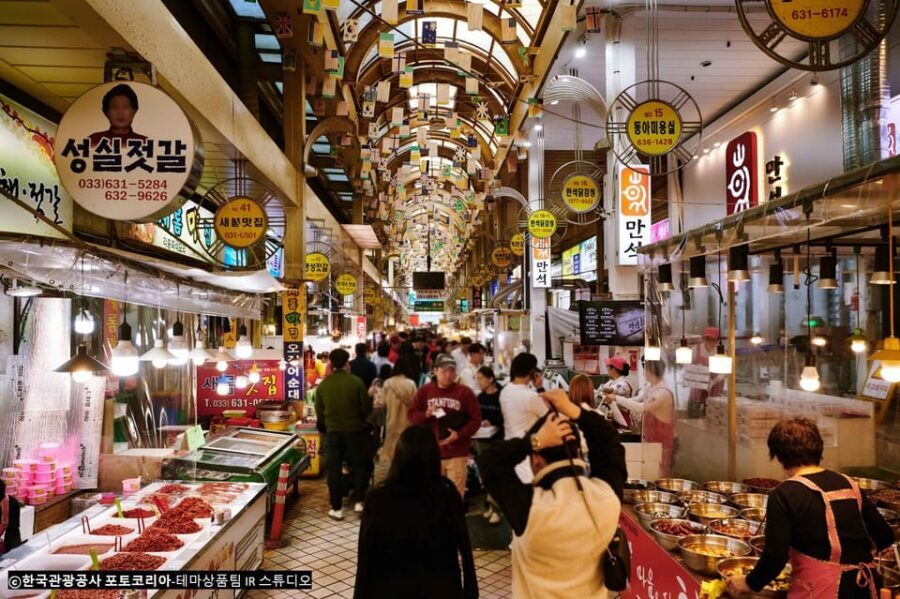
After Seoraksan, you’ll head to Sokcho Tourist Fishery Market for about 75 minutes. This is where the day shifts from mountain calm to food-focused energy.
This stop is built for self-guided exploring, with time to try street food or seafood. That matters because market time is where you’ll actually spend your calories and your curiosity, instead of just watching the view go by.
If you want this part to go smoothly, plan a simple strategy:
- Decide you’re going to taste a few small things rather than hunting for one perfect meal
- Keep cash or a payment method ready, since you’ll likely be buying from stalls
- Eat while you’re there rather than saving everything for later—market food is at its best when it’s fresh
Also, don’t overthink it. Even if you’re not a seafood expert, Sokcho’s fish market setup is usually friendly to people who just want to try a variety of snacks. The goal here is fun and flavor, not a strict dining itinerary.
Sokcho Beach: a short stop that still changes the mood
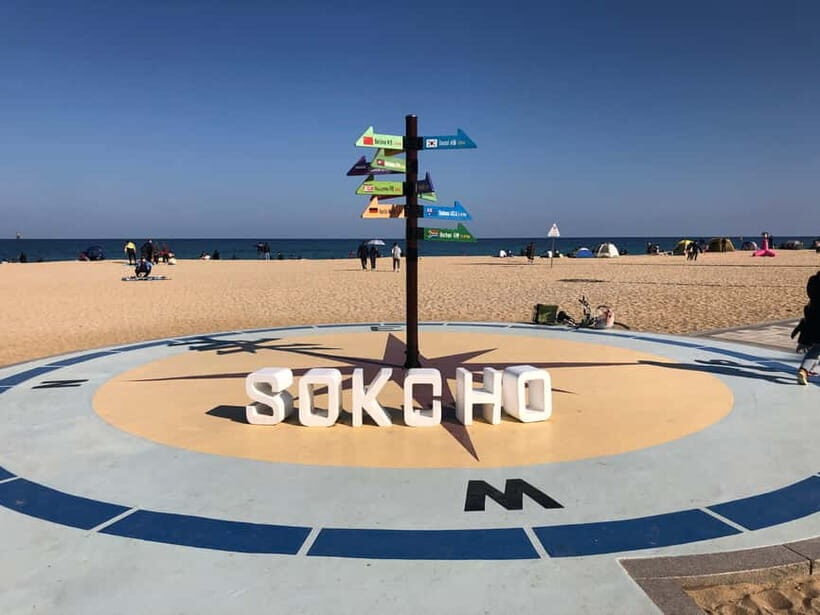
Then comes Sokcho Beach, with about 30 minutes for free time and self-guided wandering. That short window can feel brief if you’re dreaming of a full beach day—but it actually works for this specific itinerary.
Why? Because it gives your body a reset after hiking. Your eyes switch from trees and temple stone to open sea space. And you still get to enjoy the natural beauty that makes Sokcho a local favorite as well as a tourist draw.
A practical note: bring layers if the weather is chilly. Coastal wind can feel sharper than you expect after a mountain morning.
You won’t come away with a full day at the beach, but you will come away with the sensation that the trip actually includes the sea, not just the market.
Time, cost, and value: is $68 a fair deal for all this?
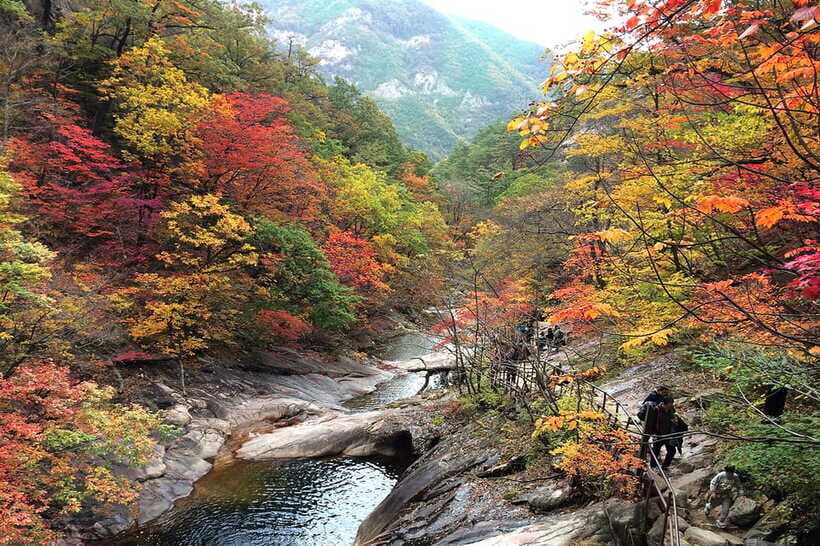
The listed price is $68 per person for a full 14-hour day with round-trip van from Seoul plus an English-speaking guide/driver. That’s the core value: transportation and guidance are the hard parts of making this region work without extra planning.
Here’s what’s included:
- Round-trip transport between destinations
- An English-speaking tour guide/driver
- Cable car ticket only if you add that option
And what’s not included:
- Meals and beverages
- Cable car ticket if you don’t add it
So the math becomes pretty simple. You’re paying for access and time. If you’re trying to independently get to Seoraksan and Sokcho, you’ll face the friction of timing, transfers, and long travel. This tour packages the “getting there” problem into one payment.
The biggest cost variable for you is whether you add the cable car option. If you’re uncertain about the hiking difficulty or you hate being slowed down by steep sections, the upgrade tends to feel like money well spent. If you’re confident on intermediate hiking and the weather looks cooperative, you may prefer the non-cable-carr plan.
In other words: the price is reasonable if you take it for what it is—a full-day experience with guided structure, not a budget meal plan.
Who this tour fits best (and who should think twice)
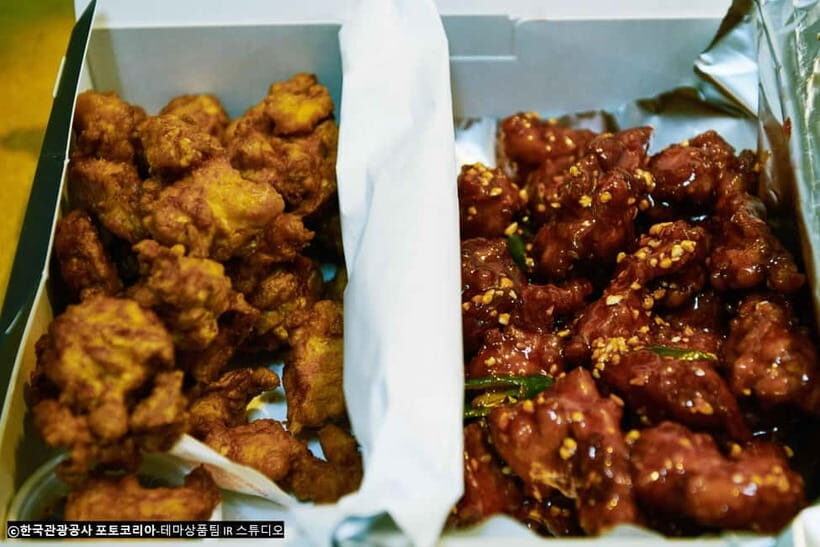
This day trip is a strong fit if you:
- want Korean fall scenery without complex transit planning
- like a mix of walking, culture, and food stops
- can handle intermediate hiking with comfortable shoes
- want an English-speaking guide who can respond to changing weather
It’s not suitable for:
- wheelchair users
- people with altitude sickness
You’ll also want to be mindful of comfort, because the schedule is long and active. There’s no way around the fact that you’re spending much of the day on the move—so if you hate long van rides, this might feel like a chore.
Should you book this Seoraksan + Sokcho day trip?
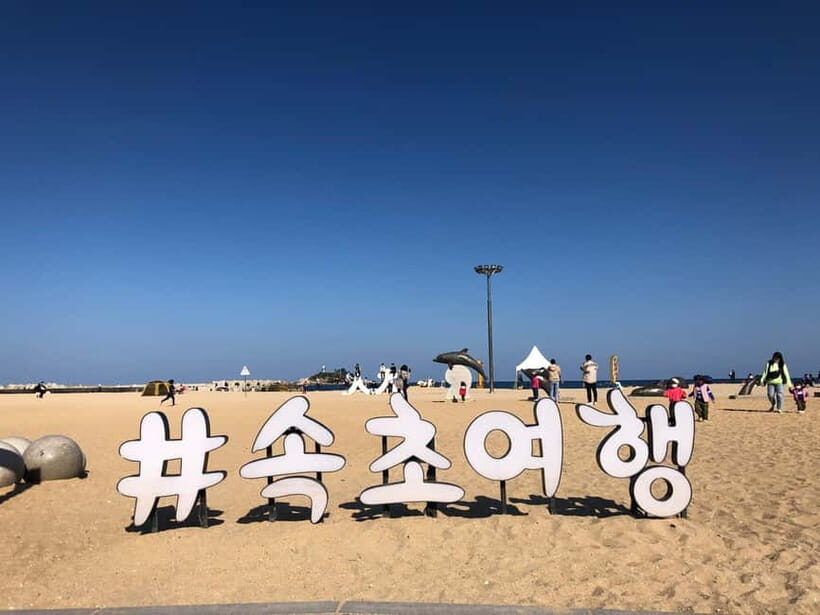
Yes, if you want a one-day plan that genuinely combines mountain color, temple culture, and a market-to-beach sequence. This is especially worth booking if you’re excited by the idea of trading a little hiking effort for big fall views through the optional cable car.
Hold off or choose carefully if:
- you strongly dislike moderate hiking
- you’re sensitive to weather changes
- you’re hoping for a relaxed, short itinerary (this one is a full day)
My practical advice: if autumn is on your trip plan and you want the Gangwon Province experience without complicated logistics, this tour is a solid way to do it.
FAQ
How long is the tour?
The total duration is 14 hours.
Where do I meet the group in Seoul?
You can meet at one of two starting locations: Hongik Univ. Station Exit 8 or Myeongdong Station Exit 4 (exact meeting point details can vary by option booked).
Is the Seoraksan cable car included?
The cable car is optional. It’s included only if you add that option; otherwise, the ticket is not included.
What happens if the cable car doesn’t operate due to weather?
If the cable car isn’t operated due to weather conditions, the ticket fee will be refunded in cash by your tour guide.
What should I wear or bring?
Bring comfortable shoes. The Seoraksan portion requires intermediate hiking.
Are meals included?
No. Meals and beverages are not included.
Who is this tour not suitable for?
It isn’t suitable for wheelchair users or people with altitude sickness.
]]>Two things I really like about this tour are the local, resident-run perspective and the clear mix of affordability and luxury. Most food tours stop at one vibe; this one intentionally stretches from cheap eats to fancier eats, so your meal tells a fuller story. One key drawback: the tour is not suitable for vegans or vegetarians, so check that early if plant-based is your must-have.
You also get a live English guide, and the food pace is designed for sampling rather than rushing. It’s built for a comfortable 2-hour window, with a market walk followed by a sit-down tasting meal. Just remember: this is a food-first experience, not a sightseeing show, so come hungry.
Key highlights you’ll feel right away
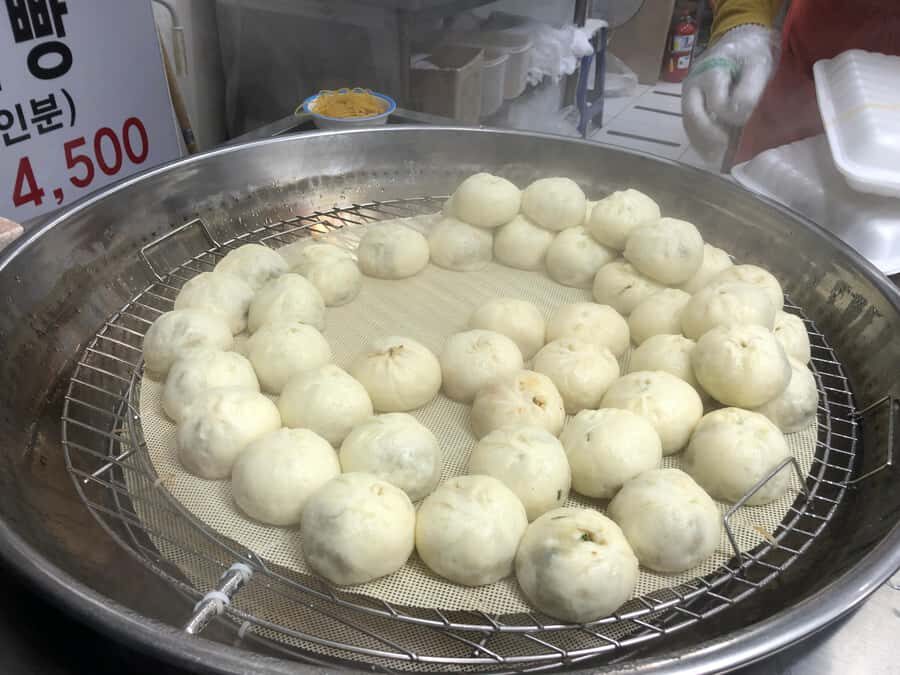
- Start at Mangwon Station (easy connection area for Hongdae)
- Resident guides Jay & Sam, running the tour in English
- A lineup that moves from classic street snacks to Hanwoo beef
- Homemade tofu and premium beef featured as part of the tasting
- A Korean fried chicken meal to wrap up the tour
Why Mangwon Market is a smart choice for real Korean food
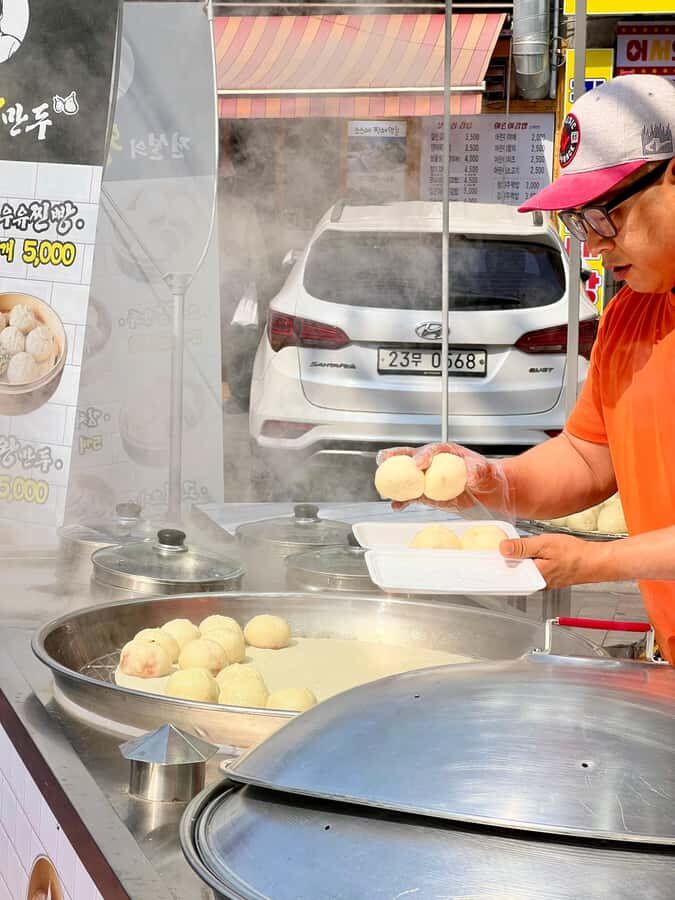
Mangwon Market is close to the Hongdae / Hongik University scene, but it doesn’t feel like a tourist shortcut. The whole point is that you’re eating where locals actually go, and the guide team (Jay & Sam) works in the food and beverage world. That matters because you’re not getting generic “this is good” explanations—you’re getting ingredient and cooking talk.
I also like the way the tour spans different price levels on purpose. Korea’s market food isn’t just one thing; it’s a range, from homey favorites to higher-end ingredients that you might not otherwise try on a short visit. Here, you’re guided to experience that whole spectrum in one smooth loop.
And yes, the tour is firmly in the meat-and-dairy lane. If you’re not eating meat, you’ll have problems here because the tour is listed as not suitable for vegans or vegetarians.
Getting to Mangwon Station and meeting your guide on time
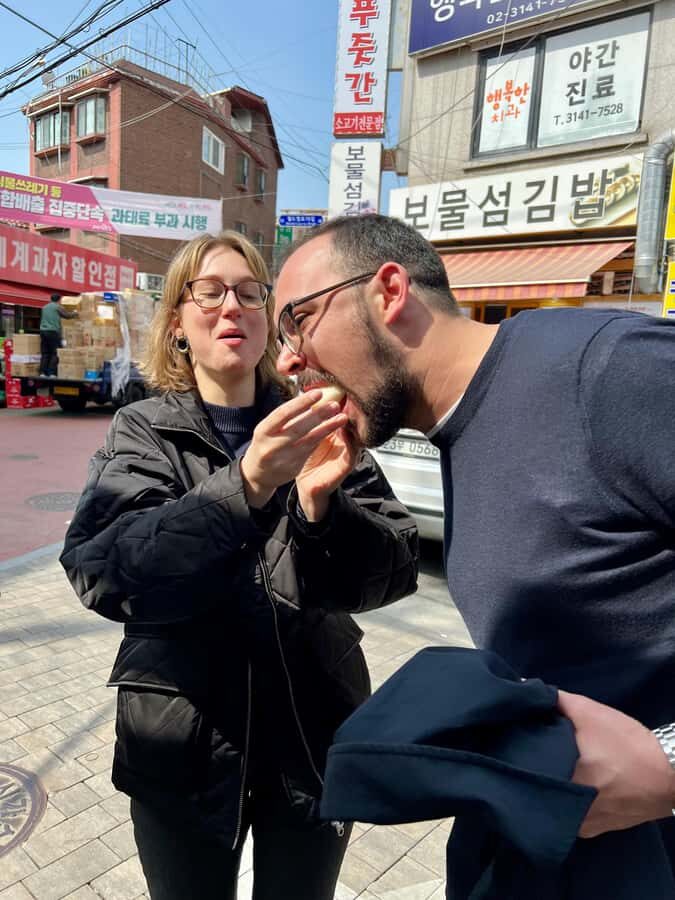
You meet outside Exit 2 of Mangwon Station. That’s a big help if you’re staying around Hongdae, because you can usually make the connection without complicated transfers. The tour time block is about 2 hours total, and you’ll want to arrive ready to start.
One practical detail I appreciate: the group only waits for late comers for up to 15 minutes. In other words, don’t plan to casually wander in at the last second. If you’re coming from somewhere else in Seoul, give yourself enough buffer time so you’re not stressed at the meeting point.
Once you’re in the group, you’ll set the tone fast. The market-style route works best when you’re not constantly asking how everything works. The guide handles that so you can focus on food.
Mangwon Market walkthrough: the 80 minutes where the variety matters
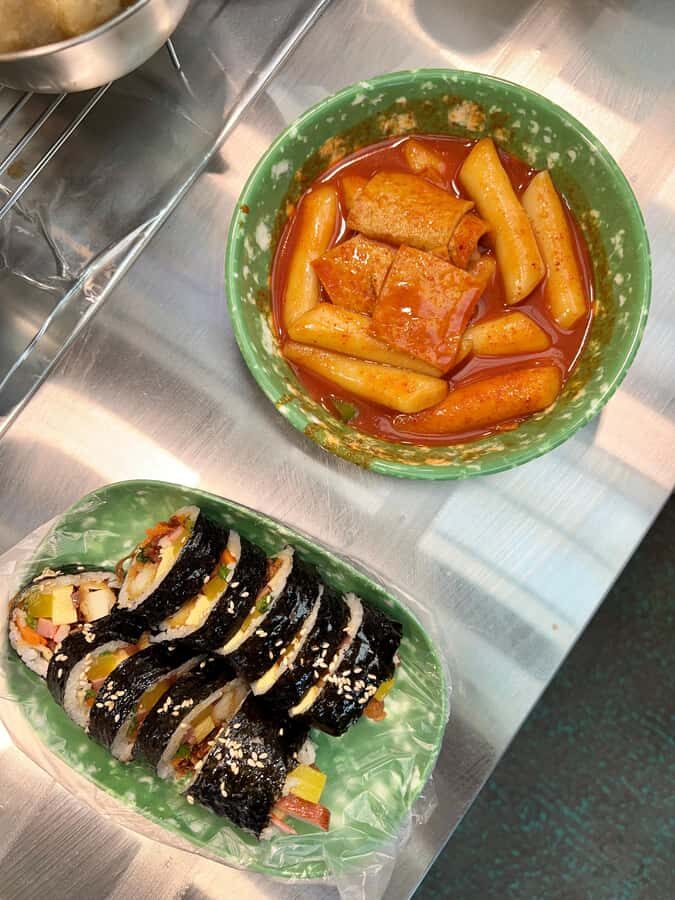
The main chunk of time is the market visit—about 80 minutes—and this is where the tour earns its keep. Markets can feel chaotic if you’re wandering alone. With a guide, you’re walking with a plan: you’re not just grabbing whatever smells best, you’re sampling different styles and textures.
What you’re looking for here is variety by design. You’ll encounter everything from pancake-like comfort bites to Korean dumplings like kimchi dumplings, plus the kind of ingredients that can be “basic” on paper but surprisingly impressive in real form. The tour’s theme is basically from street-level cravings to premium favorites, without you having to figure it out yourself.
Also, Mangwon is known for vendors that have been around for a while, including second-generation shop owners. The guide team leans into that idea. You’re not just buying food; you’re getting a sense of how certain stalls improved their game over time.
The tasting shift: homemade tofu and Hanwoo beef in the right context
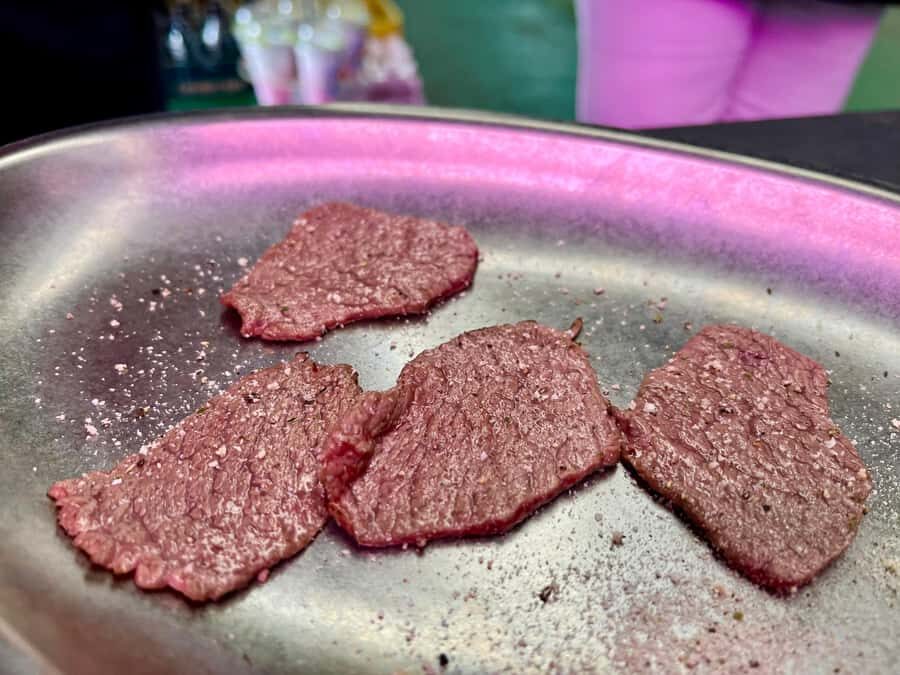
After the market walk, you move to a local restaurant tasting stop for about 40 minutes. This is where you go from “sampling” to a more complete food moment.
This tour includes homemade tofu and Hanwoo beef as local delicacies. That pairing is a smart choice because tofu gives you an anchor you can compare across Korean cooking styles, while Hanwoo brings the high-end richness. Together, they help you understand how Korean meals can feel both comforting and celebratory, depending on the ingredient and technique.
One detail worth noting: tofu and premium beef are listed as part of the experience, but market and restaurant availability can shift day to day. If tofu is a non-negotiable for you, I’d treat it as a “check in with the guide” moment rather than assuming it’s guaranteed in every single stall. Your guide can usually steer the plan once you arrive.
Then there’s the highlight from past guests: Jay has grilled premium Korean beef in the middle of the market for the group. That kind of moment matters because it turns food into a live lesson. Even if you know Korean cuisine already, watching cooking at the point of sale helps you catch details you’d miss if you only ate cold or pre-made dishes.
The Korean fried chicken finale (and why it works)
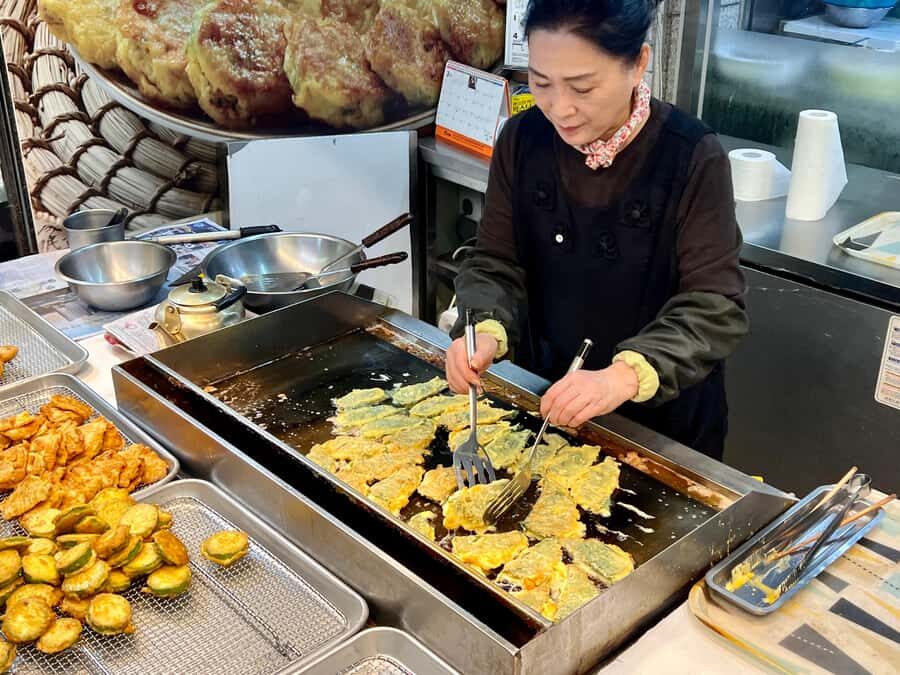
The tour wraps up with a Korean fried chicken meal as part of the included food. Fried chicken is a perfect ending because it’s familiar enough to enjoy immediately, but it’s also distinct in technique and flavor when done Korean-style.
In the guide’s own vibe, there’s also a beer pairing energy around this stage. Even if you don’t order alcohol, the fried chicken finale still makes sense as a closing act because it’s rich, crunchy, and satisfying after a walk-and-sample morning.
This is another reason I like the timing. Two hours is long enough to try multiple bites and still feel full without feeling trapped. You’re leaving with the sense that you actually ate a meal, not just collected snacks.
Price and food-value reality for $58
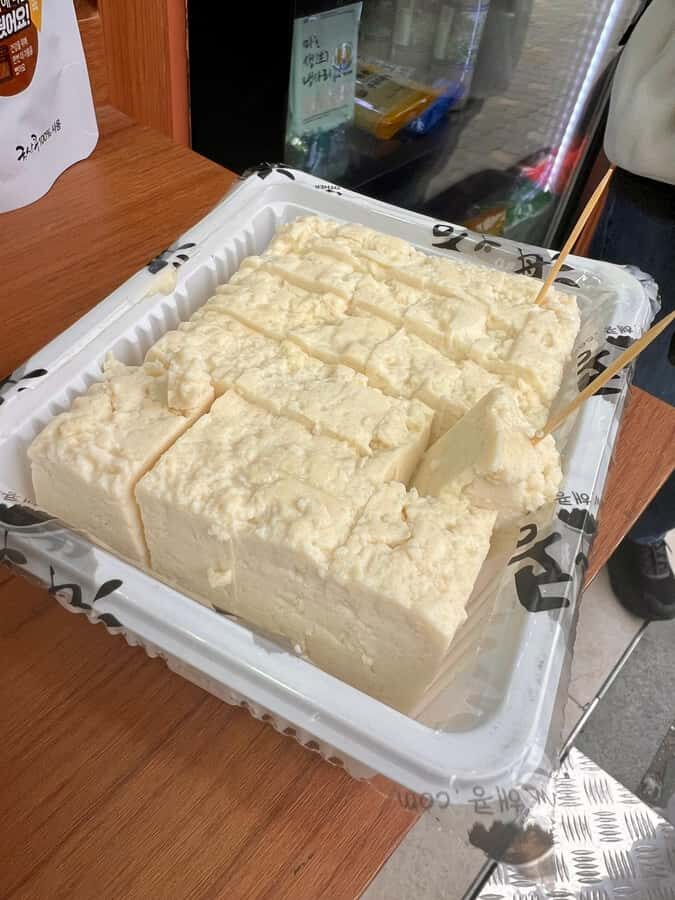
At $58 per person for roughly 2 hours, the real question isn’t just the price tag—it’s what you get for that time. This isn’t a “one dish” situation. The tour includes a series of freshly cooked street foods, plus a local delicacy stage featuring Hanwoo beef and homemade tofu, and it ends with Korean fried chicken.
So you’re paying for:
- guide-led selection (so you don’t waste time guessing),
- multiple tastings (so you try more than one thing),
- and at least one premium ingredient experience (Hanwoo).
One past comment flagged that it can feel pricey if you’re measuring value by the number of bites. That’s a fair way to think about it. Still, if you’re the type who wants a planned route and doesn’t want to spend your day bargaining for variety, the guide-driven portion selection can be worth it—especially with Hanwoo involved.
If you’re a super-fork-on-budget eater, you may prefer a DIY market run. But if you’re traveling with limited time and want a high-to-low food journey in one go, this price can make sense.
Who should book this Mangwon food tour
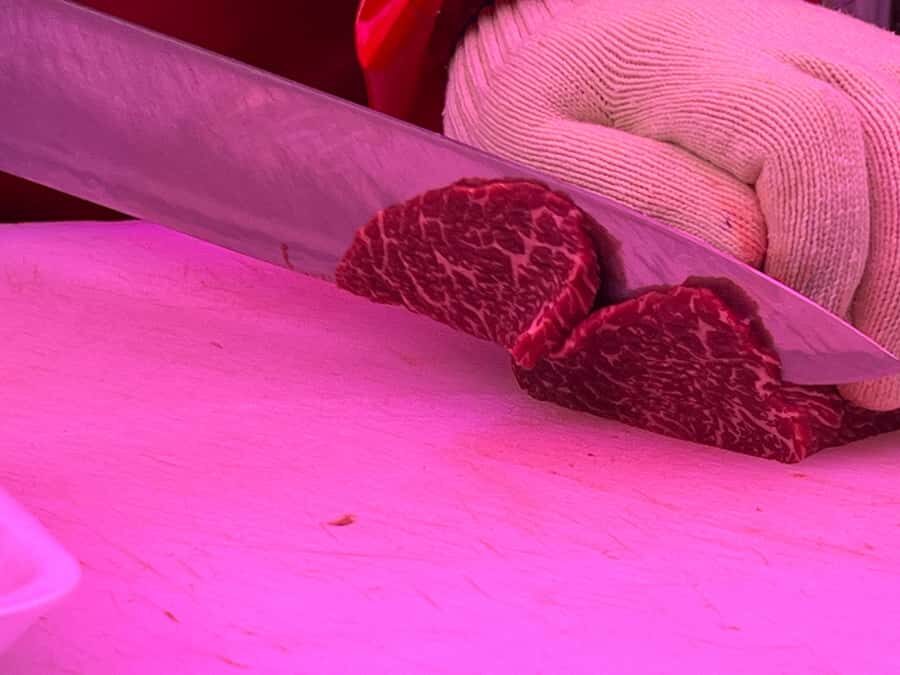
This is a great fit if you:
- want a market experience near Hongdae/Hongik University without dealing with the chaos alone,
- enjoy ingredient talk and cooking stories as you eat,
- eat meat and dairy (because the tour is not suitable for vegans or vegetarians),
- and like the idea of going from inexpensive classics to premium treats in one afternoon.
It may be less ideal if you:
- follow a vegan or vegetarian diet,
- expect a sightseeing-focused route,
- or want only low-cost snacks with no premium ingredients.
Tips to make your 2 hours easier (and tastier)
Come hungry, but don’t show up starving. A guided tastings format works best when you’re ready to enjoy multiple flavors in a row without your stomach starting a protest. Wear comfortable shoes; the market walk is the core part of the experience.
Also, be ready to ask questions. The guide approach is built around food talk—ingredients, cooking methods, and neighborhood context. If you want to know what to order later on your own, this tour is the time to do it.
Finally, go with curiosity, not a strict checklist. Even with tofu and Hanwoo listed, markets can shift. A flexible attitude helps you enjoy the plan your guide builds in the moment.
Should you book it or not?
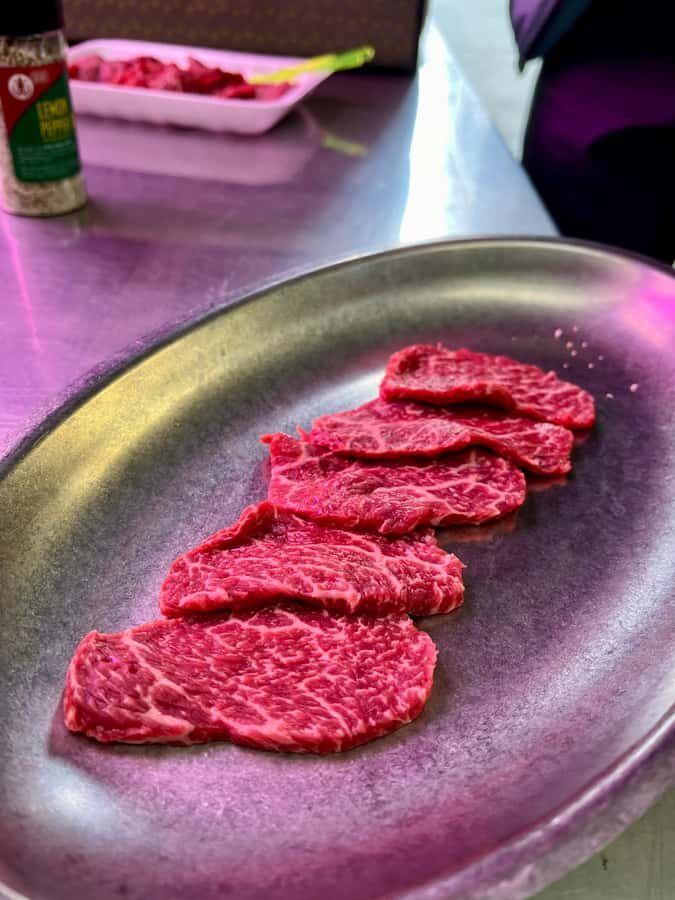
If you eat meat and you want a planned Mangwon Market food journey that mixes street snacks with Hanwoo and ends in Korean fried chicken, I think this is an easy yes. You’re paying for variety plus local expertise from resident guides Jay & Sam, and the structure keeps you from wasting time guessing where to go.
Skip it if vegan or vegetarian options are a must. And if you’re ultra-budget focused and only want cheap bites, you might find it better to do Mangwon on your own. But for a time-limited trip where you want a real neighborhood route and a fuller food story, this tour is a solid use of your afternoon.
FAQ
Where is the meeting point for the tour?
Meet outside Exit 2 of Mangwon station.
How long does the tour last?
The tour duration is 2 hours. Starting times vary, so you’ll need to check availability.
What language is the tour guide?
The tour is led by a live English guide.
What foods are included in the tour?
The tour includes freshly cooked street food, a local delicacy stage featuring Hanwoo beef and homemade tofu, and a Korean fried chicken meal.
Is the tour suitable for vegans or vegetarians?
No. The tour is listed as not suitable for vegans and not suitable for vegetarians.
Where does the tour end?
The tour ends back at the meeting point at Mangwon station.
How much does the tour cost?
It costs $58 per person.
What is the cancellation policy?
You can cancel up to 24 hours in advance for a full refund.
Do they offer reserve now and pay later?
Yes. The option is listed as reserve now and pay later, so you can book your spot and pay nothing today.
How long do they wait for late arrivals?
They only wait for late comers for another 15 minutes maximum. After that, you may not be able to join the tour.
Can I arrange a private tour?
Private tours are available by messaging the provider.
]]>